Quick answer
To grow Seed Potato 'Desiree' successfully, start with chitting (pre-sprouting) 4 to 6 weeks before planting, then plant in well-drained soil with consistent moisture and hill up the stems as they grow to protect developing tubers from light.
Why 'Desiree' is a great choice for beginners
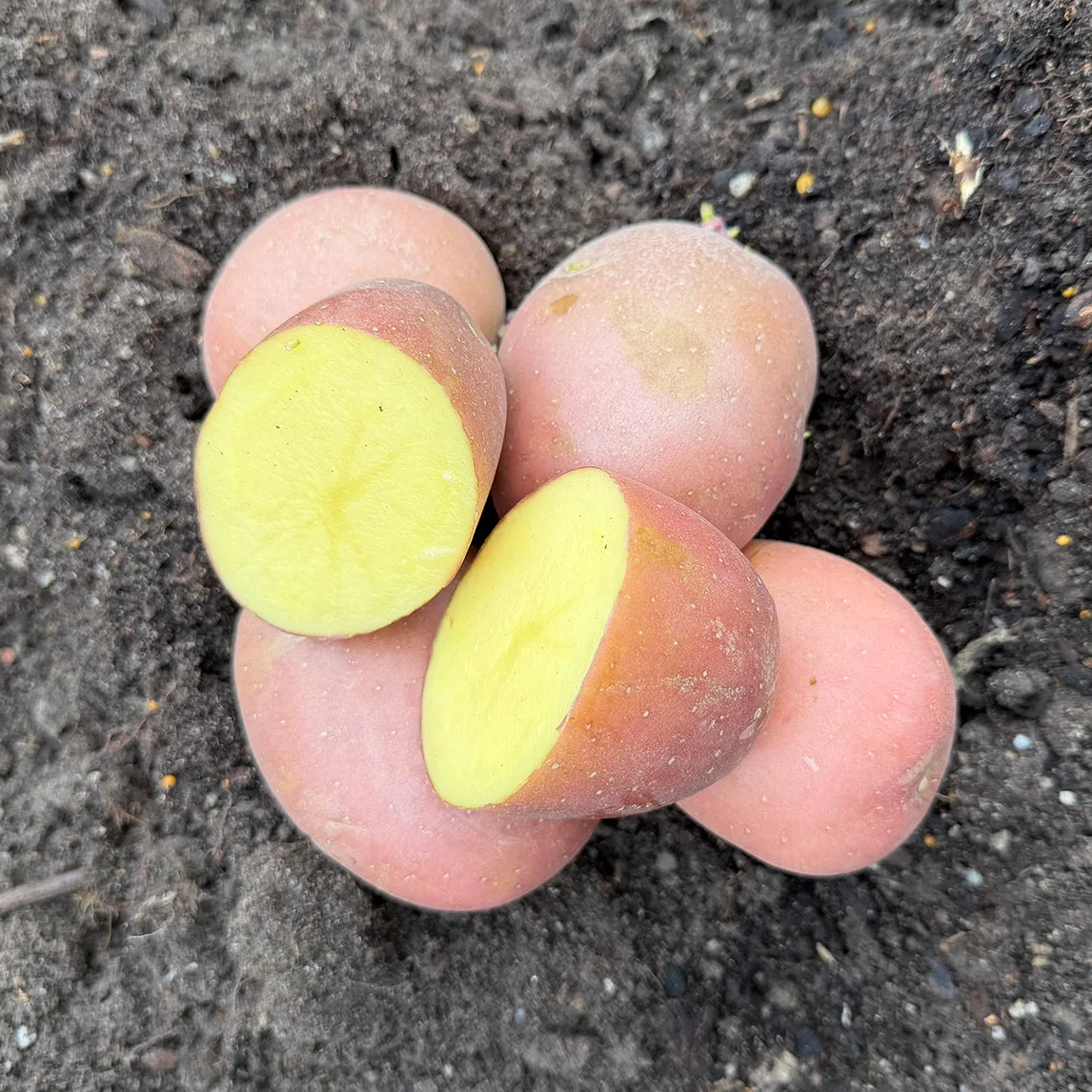
Seed Potato 'Desiree' is a reliable Dutch variety bred in the 1960s. It produces large, oval to elongated tubers with smooth red skin and firm pale yellow flesh. Its drought tolerance and consistent yields make it forgiving for new gardeners, and its versatility in the kitchen—suitable for mashing, roasting, baking, boiling, frying, or salads—means you'll have plenty of uses for your harvest.
Common beginner mistakes to avoid
The most frequent error is planting too deep or too shallow. 'Desiree' tubers need about 10–15 cm of soil cover initially, then extra hilling as they grow. Another mistake is skipping the chitting step: pre-sprouting gives your potatoes a head start and reduces the risk of rot in cool, wet soil. Finally, inconsistent watering can lead to misshapen tubers; aim for even moisture, especially after flowering.
Step-by-step growing guide
- 1. Chit the seed potatoes: Place Seed Potato 'Desiree' in a cool, bright spot (not direct sun) 4 to 6 weeks before planting. Each eye will sprout, giving your plants a strong start. Common mistake: chitting in a dark, warm cupboard, which leads to long, weak sprouts. Check sprouts weekly; aim for short, sturdy green shoots about 2 cm long.
- 2. Prepare the planting bed: Choose a sunny spot with well-drained soil. Dig a trench 10–15 cm deep and mix in a balanced organic fertiliser. Common mistake: planting in compacted or waterlogged soil, which causes tubers to rot. If your soil is heavy clay, consider raised beds or adding compost to improve drainage.
- 3. Plant the seed potatoes: Space each seed potato 30–40 cm apart in the trench, with sprouts facing up. Cover with 10–15 cm of soil. Common mistake: planting too close together, which reduces tuber size and increases disease risk. Mark the row so you know where to hill later.
- 4. Hill up as plants grow: When stems are 20–25 cm tall, draw soil up around them to form a mound, covering the lower leaves. Repeat every 2–3 weeks until the mound is 20–30 cm high. Common mistake: skipping hilling, which exposes tubers to light and turns them green and toxic. Use a hoe or your hands; be gentle to avoid damaging stems.
- 5. Water consistently: Keep soil evenly moist but not soggy, especially after flowers appear. Aim for 2–3 cm of water per week. Common mistake: letting soil dry out then flooding, which causes irregular tuber growth and cracking. Mulch with straw to retain moisture and keep soil cool.
- 6. Harvest at the right time: Wait until the foliage turns yellow and dies back completely. Cut off the stems and wait 10–14 days before digging. Common mistake: harvesting too early, resulting in thin skins that bruise easily and store poorly. Dig carefully with a garden fork to avoid slicing tubers.
Product facts
-
Seed Potato 'Desiree': Seed Potato 'Desiree' is a popular Dutch variety bred in the 1960s, producing large oval to elongated tubers with smooth red skin and firm pale yellow flesh. It is drought-tolerant and known for consistent yields. This means it's a forgiving choice for beginners who may not water perfectly, and its all-purpose texture works for many cooking methods.
Seed Potato 'Desiree'