Quick answer
Choose the Sekonic Speedmaster L-858D-U if you need incident and reflected metering, spot measurement, or wireless flash control in a studio or on location. Choose the Keks KM-Q if you want an ultracompact shoe-mounted meter for an analog camera that lacks a working meter.
Metering capabilities: incident vs reflected and spot
The Sekonic L-858D-U includes a retractable lumisphere for incident light measurement and a 1° spot for reflected light from distant subjects, making it suitable for landscape and studio work where you need to measure light falling on a subject or light reflected from a specific area. The Keks KM-Q is described as an ultracompact OLED light meter for analog cameras without a working meter; its catalog entry does not list incident or reflected metering modes, so you should verify its metering behavior before relying on it for critical studio lighting.
Flash and wireless triggering: who needs it
The Sekonic L-858D-U is the world's first multi-function, multi-brand wireless triggering light meter and can measure flash duration and brief flash bursts such as High Speed Sync (HSS), which matters if you are balancing strobes and need precise flash exposure control. The Keks KM-Q catalog entry does not mention flash metering or wireless triggering, so it is not the tool for a flash-heavy studio setup.
Size and mounting: shoe-mounted vs handheld
The Keks KM-Q is comparable in size to a sugar cube and has a top OLED display, so it can sit on a camera shoe without adding much bulk. The Sekonic L-858D-U is a handheld meter with a retractable lumisphere and spot functionality; its catalog entry does not state a shoe-mount design, so plan to hold it or use a lanyard rather than sliding it onto a hot shoe.
Trade-offs to weigh before you buy
- Metering flexibility vs simplicity: The Sekonic L-858D-U gives you incident metering with a retractable lumisphere and reflected metering with a 1° spot; the Keks KM-Q is a compact meter for analog cameras without a working meter, and its catalog entry does not list those metering modes. If you need to measure light falling on a subject and light reflected from a distant subject, the Sekonic is the safer choice.
- Flash control vs basic exposure: The Sekonic L-858D-U measures flash duration and brief HSS bursts and supports multi-brand wireless triggering; the Keks KM-Q catalog entry does not mention flash metering or wireless triggering. For strobe or HSS work, choose the Sekonic; for ambient-light readings on a meterless film camera, the Keks is enough.
- Portability vs handheld workflow: The Keks KM-Q is sugar-cube sized with a top OLED display and can sit on a camera shoe; the Sekonic L-858D-U is a handheld meter with a retractable lumisphere and spot, and its catalog entry does not state a shoe-mount design. If you want a meter that stays on the camera, the Keks is the more natural fit; if you prefer a handheld meter for studio setups, the Sekonic is built for that.
Product facts
-
Keks KM-Q Light Meter (Black, Top Display): Ultracompact OLED light meter with a top display, sized comparably to a sugar cube, designed for analog cameras without a working meter. It adds almost no bulk to a small camera and gives a quick reading from the top display, but its catalog entry does not list advanced flash or spot metering.
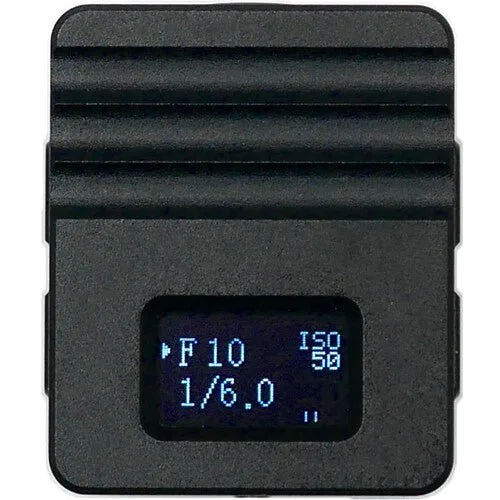
Keks KM-Q Light Meter (Black, Top Display)
-
Sekonic Speedmaster L-858D-U Light Meter: Multi-function, multi-brand wireless triggering light meter with a retractable lumisphere, 1° spot, and flash-duration measurement including HSS bursts. It covers incident and reflected metering plus precise flash control, which suits studio and location work where you need more than a basic exposure reading.
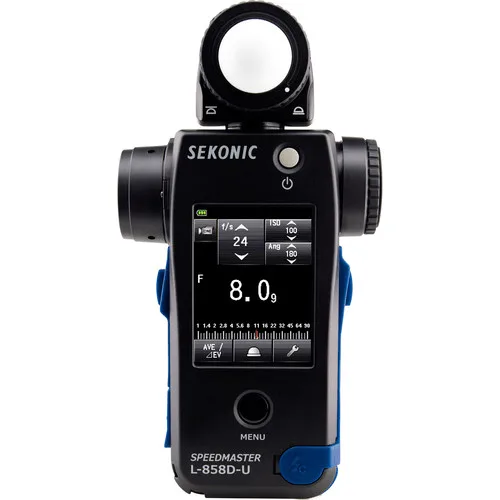
Sekonic Speedmaster L-858D-U Light Meter
Which meter fits your work?
Best for
- Studio photographers who need incident and reflected metering plus precise flash and HSS measurement
- Landscape or location photographers who want a 1° spot meter for distant subjects
- Photographers using multi-brand wireless triggering who want the meter to fire flashes
Not for
- Analog camera users who want a tiny shoe-mounted meter for basic ambient readings
- Buyers who prioritize a sugar-cube-sized meter over advanced flash features
- Photographers who do not need spot or incident metering and want to keep their setup minimal