Quick answer
Wash your silicone sensory ball with warm water and mild dish soap, rinse thoroughly, and let it air dry completely before storing it. Do a quick squeeze and stretch check each time you clean it, and repeat the wash whenever the ball has been in a mouth, on the floor, or in a diaper bag.
sensory ball
A sensory ball earns its keep by being handled constantly, which is exactly why it needs a cleaning routine. Silicone picks up drool, snack crumbs, carpet fuzz, and whatever else is on the floor, and a ball that smells or feels tacky is one kids stop reaching for.
This guide walks through a simple wash-and-check process you can finish in a few minutes, plus the habits that keep silicone sensory toys in good shape between washes. It applies to food-grade silicone balls such as the Jellystone Designs Sensory Ball, and the same steps work for most silicone sensory toys in your rotation.
What you need before you start
You do not need a cabinet full of specialty products. Warm water, a mild dish soap, a soft cloth or sponge, and a clean towel cover almost every situation. Skip abrasive scrubbers, bleach-based sprays, and anything labeled as a heavy-duty degreaser, since those are harsher than a silicone teether or toy needs.
Check the product listing or packaging for care instructions before you branch out. The Sensory Ball is made from food-grade silicone, and food-grade silicone generally tolerates a dishwasher, but heat exposure and detergent strength vary by machine, so hand washing stays the safest default when you are unsure.
- Keep a dedicated soft brush or cloth for sensory toys so you are not spreading kitchen grease onto them.
- If you use a dishwasher, place small silicone items in a basket on the top rack so they do not fall onto the heating element.
How often to clean a sensory ball
Daily use means frequent washing. If the ball goes in a mouth, wipe or rinse it before it goes back into the toy bin. If it only gets handled with clean hands during quiet play, a full wash every few days is usually enough, plus an immediate wash after it has been dropped outdoors, in a shopping cart, or on a bathroom floor.
Sensory ball hygiene matters more during teething and illness. When a baby is chewing on the soft surface to soothe aching gums, saliva and hands transfer quickly, so treat the ball like a pacifier: rinse it after each chewing session and give it a proper soap wash at the end of the day.
- Wash immediately after any outing where the ball touched a public surface.
- During a household cold or stomach bug, wash the ball daily and keep it out of shared toy bins until everyone is well.
Common cleaning mistakes to avoid
The most common mistake is soaking a hollow or open-frame design and assuming it dried. Water can sit in crevices and seams, which traps moisture and encourages that sour smell. Shake the ball out, blot it, and let it air dry in a well-ventilated spot rather than tossing it damp into a closed bin.
The second mistake is reaching for the strongest cleaner available. Harsh chemicals can leave residue on a surface a child puts in their mouth, and they can dull or degrade silicone over time. Mild soap and water do the job; save the heavy cleaners for the countertop.
- Never store a sensory ball while it is still damp.
- If a smell lingers after washing, re-wash with mild soap and dry it fully in open air before deciding the toy needs replacing.
Keeping silicone sensory toys in good condition
Maintaining sensory toys is mostly about storage and inspection. Keep silicone items away from direct sun, hot cars, and sharp objects in the toy bin. A quick monthly check of every silicone piece, not just the ball, catches small problems before they become a reason to throw something away.
Rotate toys rather than leaving everything out at once. Fewer items in reach means each one gets handled more carefully, and you spend less time tracking down which ball rolled under the couch. A simple bin with a lid keeps dust off and makes the next wash easier.
- Store silicone toys separately from battery-operated or wooden toys that could scratch them.
- Keep a small wet bag or pouch in your diaper bag so a dirty ball does not contaminate clean toys.
Sensory ball cleaning steps
- Step 1: Shake off loose debris: Tap the ball over a bin and pick off crumbs, hair, or lint before adding water. Common mistake: skipping this and turning debris into a paste that smears across the silicone. Checkpoint: the surface should look and feel free of grit before it gets wet.
- Step 2: Wash with warm water and mild soap: Add a drop of mild dish soap to warm water, then rub the ball with your hands or a soft cloth, working around the frame and any textured areas. Common mistake: using hot water or a harsh cleaner, which is unnecessary for silicone and can leave residue. Checkpoint: rinse until the surface no longer feels slippery.
- Step 3: Rinse thoroughly: Hold the ball under running warm water and turn it so water passes through the open frame and any gaps. Common mistake: a quick dip that leaves soap in the crevices a child will taste later. Checkpoint: no suds and no soap smell remain.
- Step 4: Air dry completely: Shake off excess water, blot with a clean towel, and set the ball on a rack or clean towel in open air. Common mistake: putting it away damp, which traps moisture and causes odor. Checkpoint: dry to the touch inside and out before it goes back in the toy bin.
- Step 5: Inspect for wear: Squeeze and stretch the ball gently and look for tears, sticky spots, or a lingering smell. Common mistake: assuming a silicone toy lasts forever and missing small damage. If you find a tear or a smell that survives a full wash and dry, retire the ball and replace it.
- Step 6: Store clean and dry: Return the ball to a clean, dry bin away from direct sun and sharp objects. Common mistake: tossing it in with damp towels or dirty outdoor toys. Next step: repeat the wash after any mouthing session, floor drop, or outing.
Product facts that affect cleaning
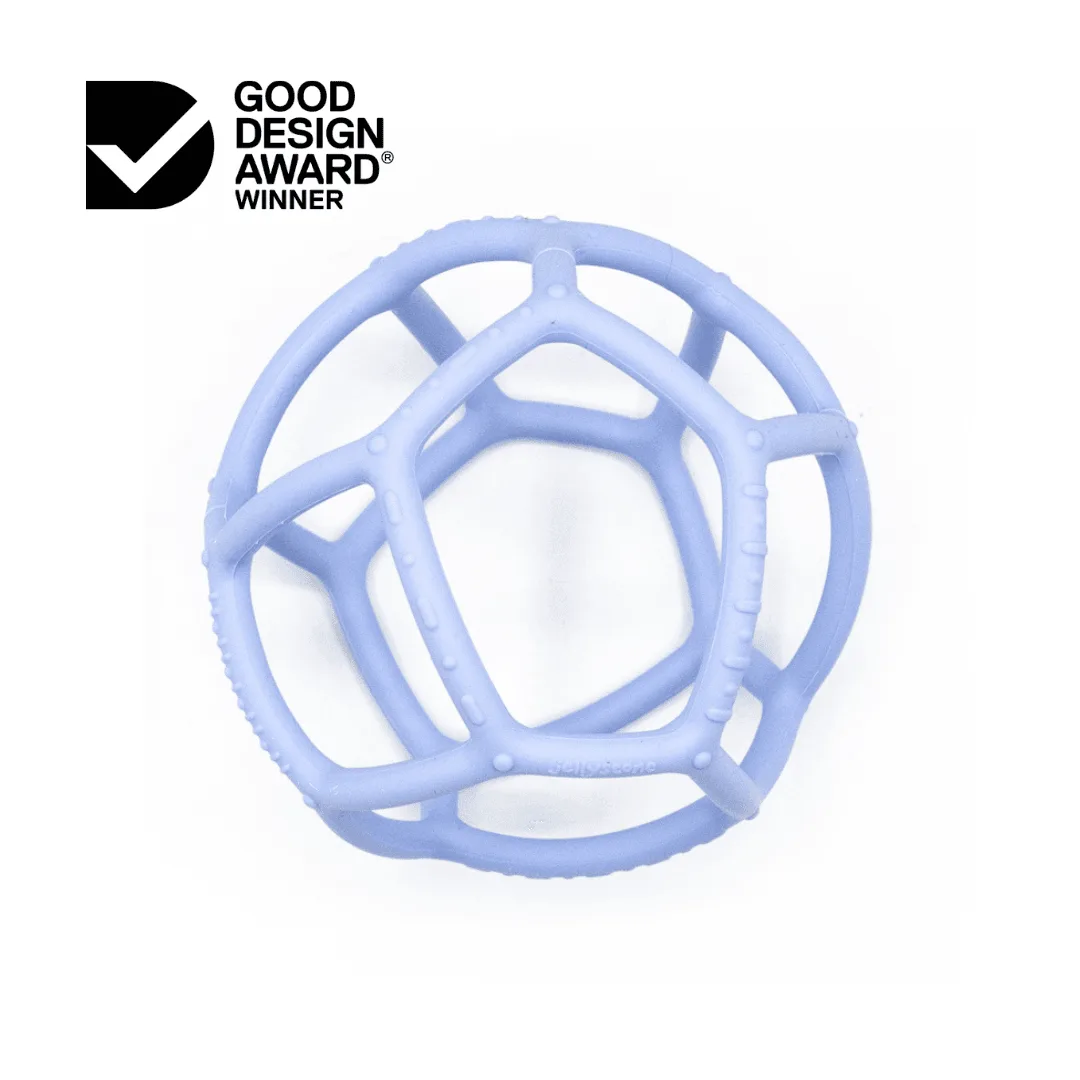
- Sensory Ball: Made from food-grade silicone with an open frame design that is easy to grab. Food-grade silicone is straightforward to wash with mild soap, and the open frame means water drains from the middle instead of pooling inside a sealed sphere, so air drying works well.
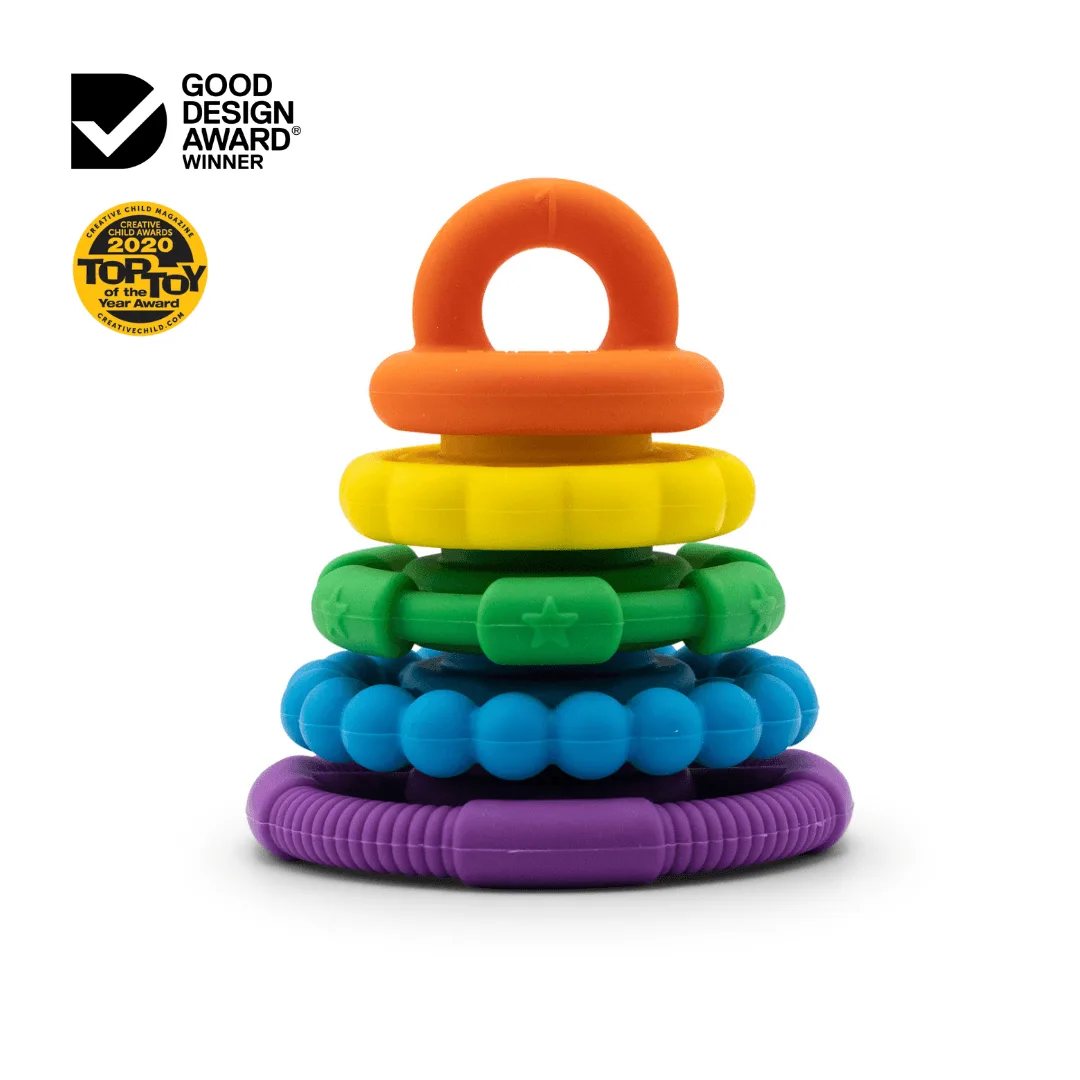
- Rainbow Stacker and Teether Toy: The stacking rings double as soothing teethers, and it won a Good Design Award in 2021. Because the rings go in mouths as often as they get stacked, they need the same wash-after-chewing habit as a sensory ball, especially during teething weeks.
- Peekaboo Sensory Bag: Filled with weighted beads and themed figurines and totally sealed for little ones to explore. A sealed bag cannot be rinsed inside like an open silicone ball, so surface wiping and full drying matter more; never submerge it or open the seal to clean the filling.
A sensory ball stays useful when cleaning is quick and routine rather than a big project. Wash with mild soap, rinse well, dry fully, and check for wear, and your silicone sensory toys will keep earning their place in daily play and teething.