Quick answer
Set up a wooden multi-activity sensory play table in a low-traffic corner, rotate a few open-ended activities at a time, and use it as a predictable calm-down station rather than a busy toy hub.
Why a dedicated calm-down corner works better than a toy rotation
A sensory table placed in the middle of a playroom competes with every other toy for attention. Moving it to a quiet corner signals that this space is for settling, not switching activities every few minutes. The table itself becomes a cue: when your child sits there, the expectation is focused, hands-on play.
This doesn't mean the table can only be used for calm-down moments. But keeping it in a consistent, low-distraction spot helps toddlers associate it with slower, more deliberate play—which is exactly what builds focus.
The trade-off: fewer activities, more repetition
It's tempting to fill every surface of a multi-activity table at once. But too many options can overwhelm a toddler who is already dysregulated. Rotating just two or three features—say, the bead maze and the xylophone—keeps the table fresh without turning it into a stimulation station.
Repetition is the point. Toddlers learn focus by returning to the same simple action, not by racing through every gadget. Expect to leave one activity out for a week or more before swapping it.
When a sensory table isn't the right calm-down tool
If your child is in full meltdown mode, a sensory table won't magically reset them. Use it as a prevention and recovery tool—after the storm has passed and they're ready to re-engage—rather than a first-response fix. For children who seek deep pressure or movement, a crash pad or rocking option may work better before table time.
How to set up a sensory play table for calm and focus
- Choose a low-traffic corner: Place the table away from doorways, TV screens, and main walkways. A corner with a soft rug or cushion nearby helps define the calm-down zone. Check that your child can sit at the table without being bumped or distracted by household traffic.
- Clear the surface to two or three activities: If your table has multiple features, cover or remove all but two or three. Start with the least stimulating options—bead mazes and gears—before introducing sound-based features like the xylophone. A common mistake is leaving every activity exposed at once; that turns calm-down time into a free-for-all.
- Set a predictable routine: Use the table at the same times each day—after lunch, before quiet time, or when your child needs to reset. Announce it simply: 'Table time.' Keep the session short, around 5–10 minutes for toddlers. If your child loses interest quickly, shorten the session rather than adding more activities.
- Model slow, repetitive actions: Sit beside your child and move one bead back and forth slowly, or turn a gear a few times. Narrate what you're doing in a calm voice. Avoid quizzing or directing; let them copy or take over. Resist the urge to demonstrate every feature. One repeated action is more regulating than a tour of the whole table.
- Rotate one feature at a time: Every week or two, swap one activity for another that was previously covered. Keep the other one or two features consistent so the table still feels familiar. Introduce new features at the start of a calm-down session, not in the middle, to avoid derailing focus.
Product facts
-
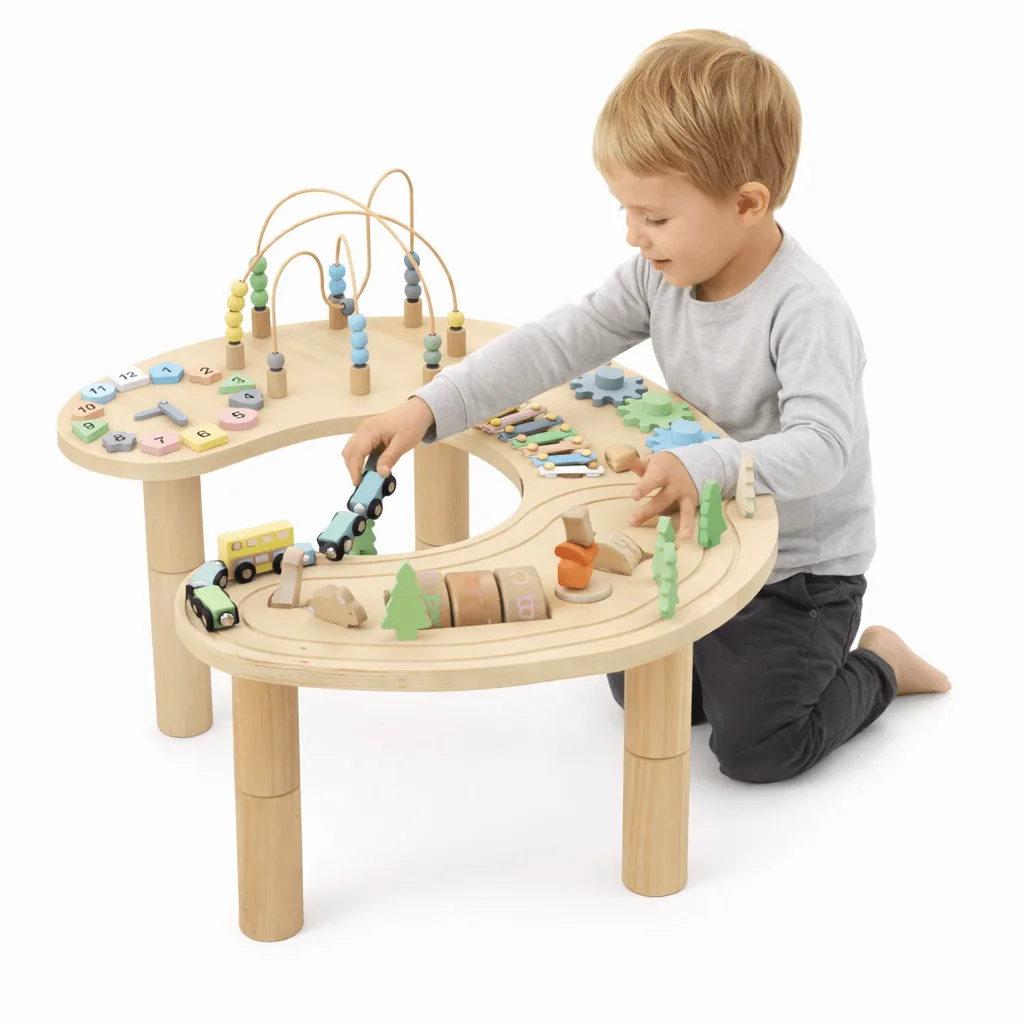
Wooden Multi-Activity Sensory Play Table: Features bead mazes, wooden gears, a pastel xylophone, and more in one wooden table. Multiple activities give you built-in rotation options without needing extra storage or setup.
Wooden Multi-Activity Sensory Play Table