Quick answer
Check the attachment and fabric before every use, spot-clean stains promptly, and keep swing sessions short and supervised. That routine covers most sensory swing care and indoor sensory swing safety needs.
Why the attachment point matters more than the swing itself
A hammock swing feels calming only when it stays put. The wall climber swing attachment carries the child’s weight and movement, so inspect it before each session. Look for loose hardware, frayed straps or fabric pulled tight around a connection point. If anything looks worn, stop using the swing until it is repaired or replaced.
Keep the swing clear of the climber’s hard edges and landing zones. A calming swing for kids works best when there is enough space to glide without bumping into rungs, walls or toys.
Cleaning without weakening the fabric
You do not need to wash the whole swing every week. Spot-clean small marks with a damp cloth and mild soap, then let the fabric air-dry fully before the next use. Avoid harsh cleaners, bleach or machine washing unless the care label specifically allows it. Harsh treatment can break down fibers and make the hammock less comfortable and less safe.
If the swing is used daily, set a regular cleaning day so crumbs, dust and sweat do not build up in the seams.
When to pause swinging
Sensory play should feel calming, not overstimulating. Watch for signs that your child has had enough: pushing away, covering ears, or getting more active instead of settling. A short pause is better than a long session that ends in frustration.
This swing is not designed for rough spinning, standing or multiple children at once. Use it as a cozy retreat, not a toy for acrobatics.
Daily sensory swing care and safe use steps
- Inspect the attachment: Before each use, check straps, hardware and fabric at the connection point for looseness, fraying or wear. Common mistake: skipping this check because the swing looks fine from a distance. If you find any wear, stop using the swing until it is fixed or replaced.
- Clear the swing zone: Remove toys, stools and sharp objects from the area around the swing. Make sure the swing can move freely without hitting the climber frame or walls. Common mistake: leaving clutter underneath that limits movement or causes trips. A clear zone also makes it easier to supervise your child.
- Spot-clean regularly: Wipe stains with a damp cloth and mild soap, then air-dry completely. Do not use bleach or harsh cleaners. Common mistake: washing the whole swing too often, which can weaken the fabric. Set a weekly cleaning reminder if the swing is used daily.
- Set a calm play routine: Start with short sessions and stay nearby. Encourage gentle rocking rather than spinning or standing. Common mistake: letting play continue until your child becomes overstimulated. End on a calm note so the swing stays a positive sensory tool.
- Store it properly: When not in use, keep the swing dry and away from direct sunlight if possible. Check that it is not twisted or pinched against the climber. Common mistake: leaving it crumpled in a damp corner. Proper storage extends fabric life and keeps the swing ready for the next calm moment.
Product facts
-
Sensory Swing for Wall Climbers – Soothing Play Add-On (Climber Not Included): Snuggly hammock swing for cozy, calming play and sensory support; compatible with Grove, Walnut, Walnut Modular, Neem, Betula and Sweetgum Jumbo climbers (not Medium Magnolia or Medium Grove). Check your climber model before buying so the swing attachment fits correctly and safely.
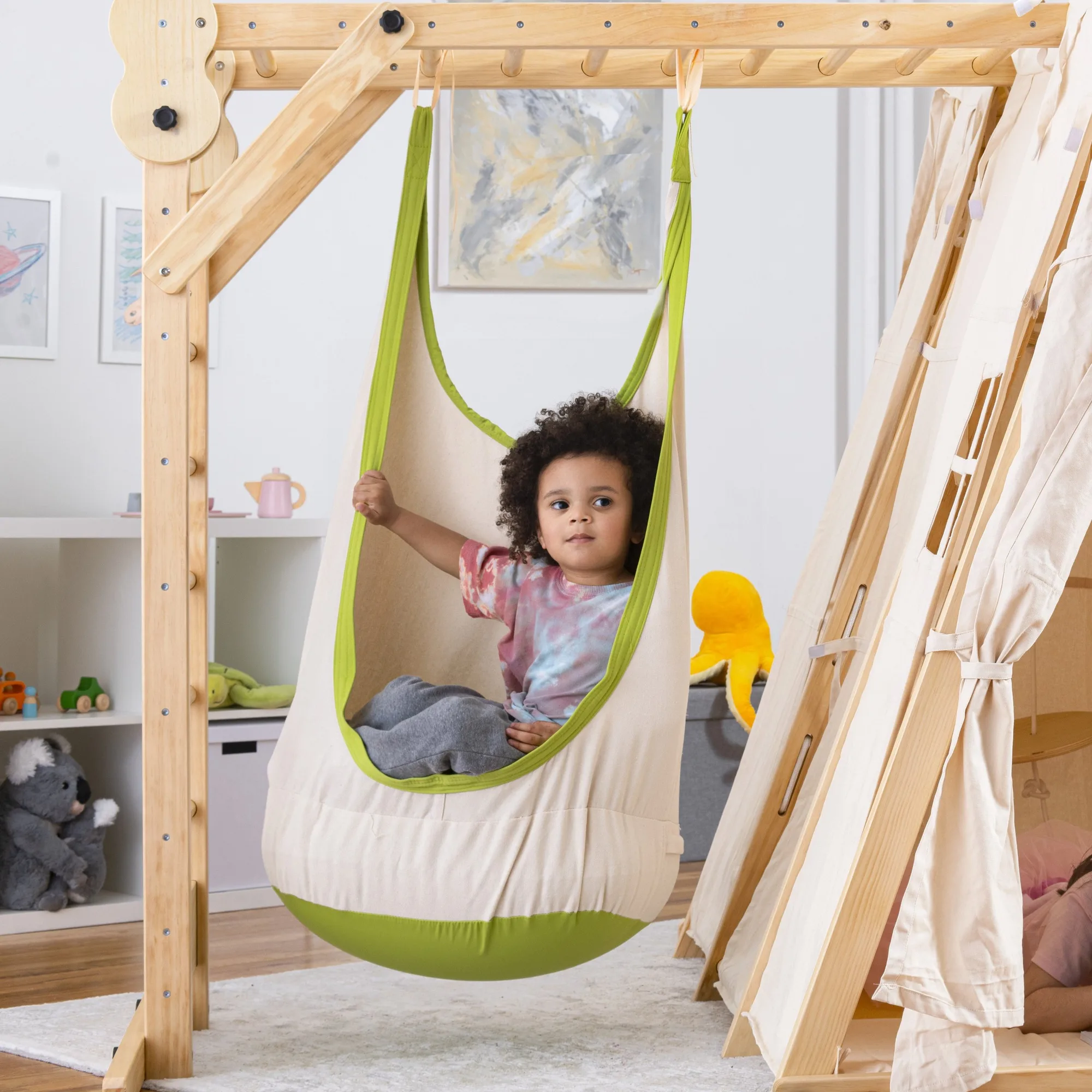
Sensory Swing for Wall Climbers – Soothing Play Add-On (Climber Not Included)