Quick answer
For most hosts, start with one low-profile serving bowl set, one oval platter, and one stackable tray, then add a nested bowl bundle only if you regularly serve multiple courses. Match pieces to your actual guest count and storage space rather than buying a matching set you cannot stack.
Hosting gets easier when your serveware fits the food you actually cook and the space you actually have. A giant platter that does not fit your cabinet or a shallow bowl that cannot hold saucy pasta creates more work, not less.
This serveware buying guide focuses on trays, serving bowls, and platters for real gatherings. You will find concrete size rules, material trade-offs, and honest limits so you can choose hosting serveware essentials without overbuying.
Start with guest count, not style
The most common hosting mistake is buying serveware for the table you wish you had. Count your typical guest list, then add two. For four to six people, a single low serving bowl plus one platter covers most meals. For eight or more, you need at least two serving vessels so hot and cold dishes do not compete for the same space.
Also count your oven and refrigerator. A platter that fits the table but not the fridge forces you to replate before serving, which defeats the purpose. Measure your deepest cabinet shelf and your refrigerator width before choosing anything wider than 14 inches.
- Rule of thumb: one serving vessel per two guests for shared dishes.
- If you host buffet-style, prioritize stackable and nestable pieces over display-only shapes.
Trays, bowls, and platters: what each does best
Trays are for carrying and containing: drinks, condiments, appetizers, or a coffee station. They are not ideal for saucy foods because low or no sides let liquids slide. Bowls are for volume and liquid: salads, pasta, grains, and anything you toss. Platters are for flat, arranged foods: roasted vegetables, sliced meat, cheese, or a whole fish.
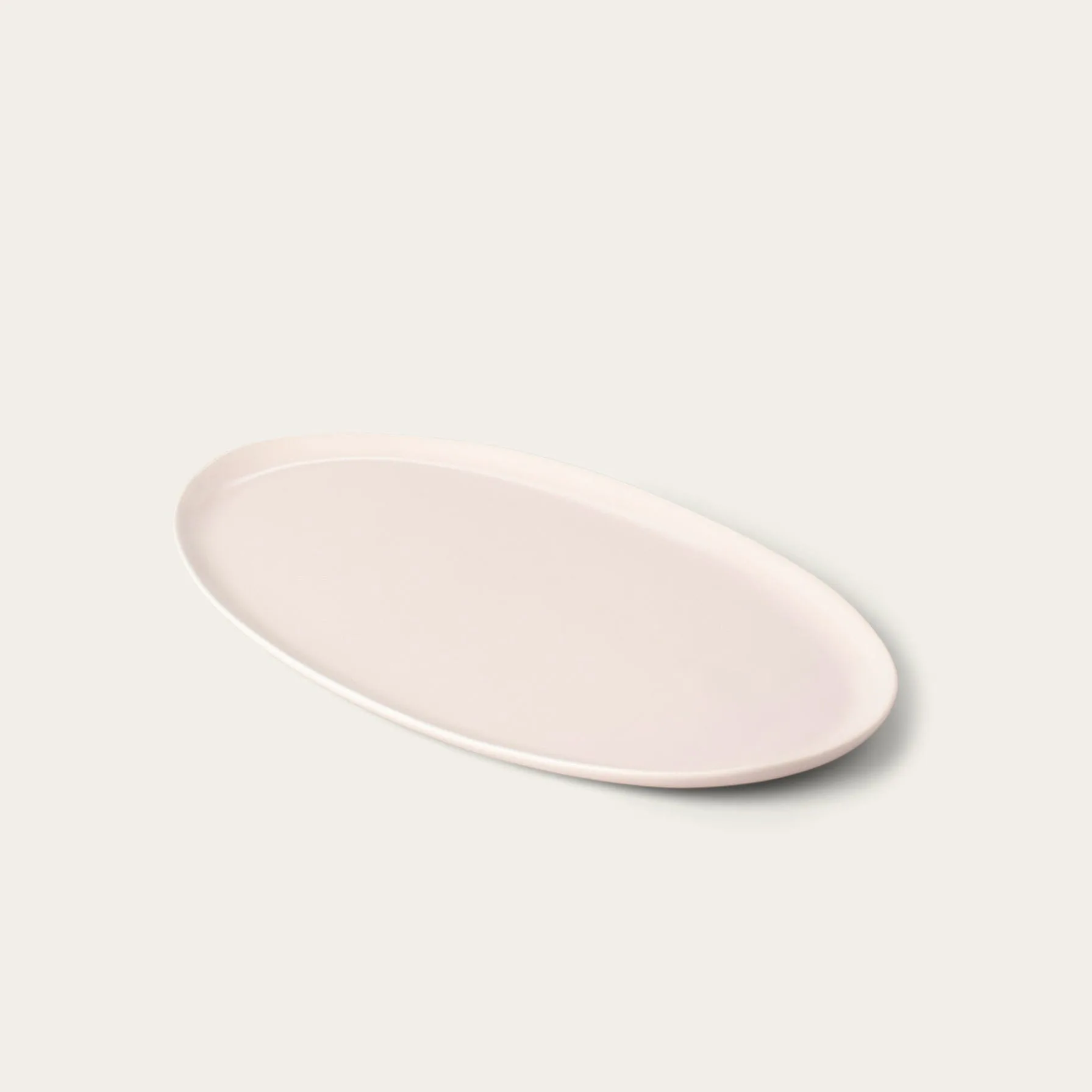
If you only buy one of each, choose a tray with a slight lip, a low bowl with enough depth to toss without spilling, and an oval platter that fits your longest protein. Oval beats round for most hosting because it uses table space more efficiently and accommodates whole roasts.
- Use a tray for anything you want to move in one trip.
- Use a platter when presentation matters and the food is not liquid-heavy.
Serving bowls for parties: depth, width, and nesting
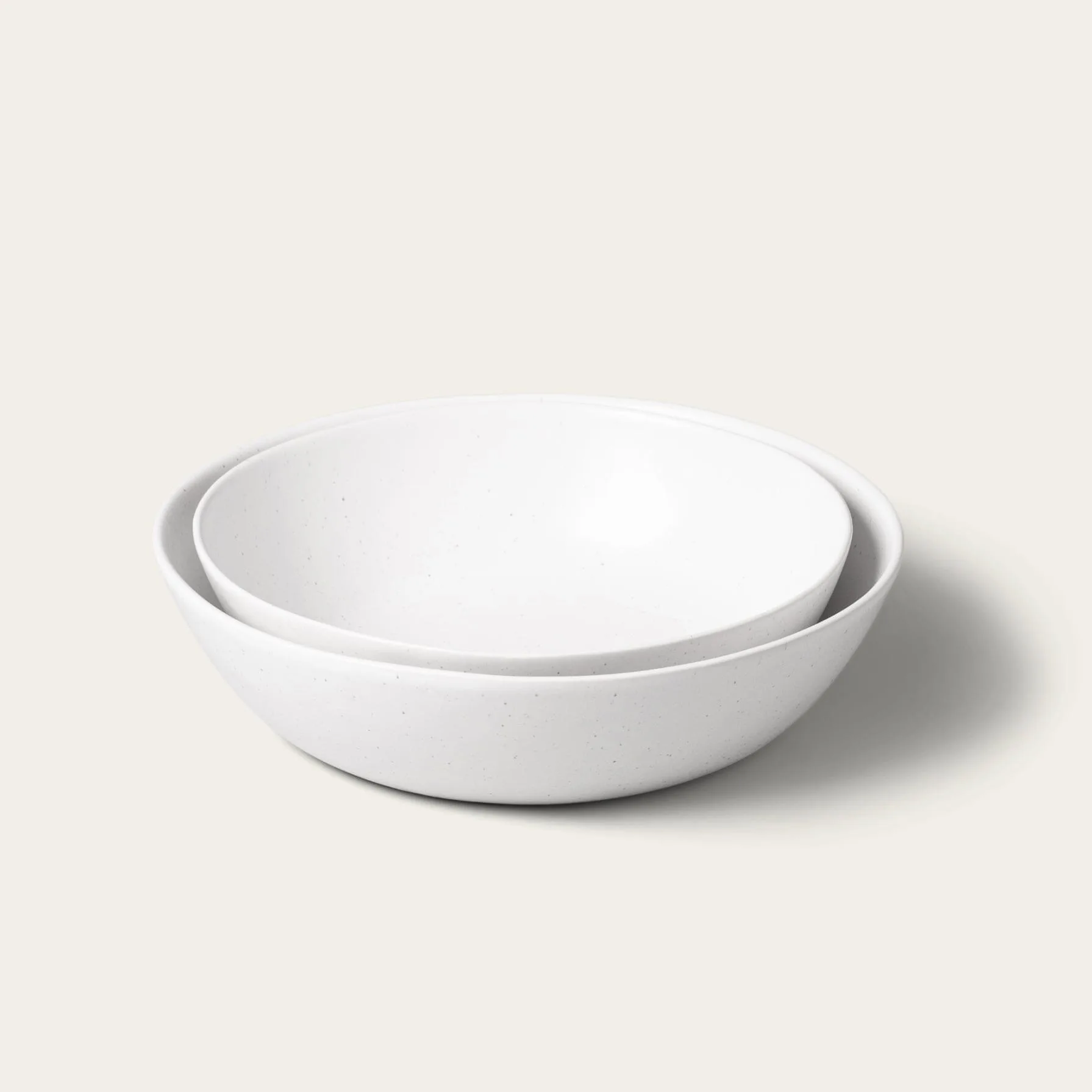
For parties, shallow bowls look generous but hold less than you think. A low serving bowl works for pasta, salads, and sides that you toss at the table, but it will not hold a full batch of soup or a double recipe of chili. If you serve liquid-heavy dishes, choose a deeper bowl or keep a separate soup tureen.
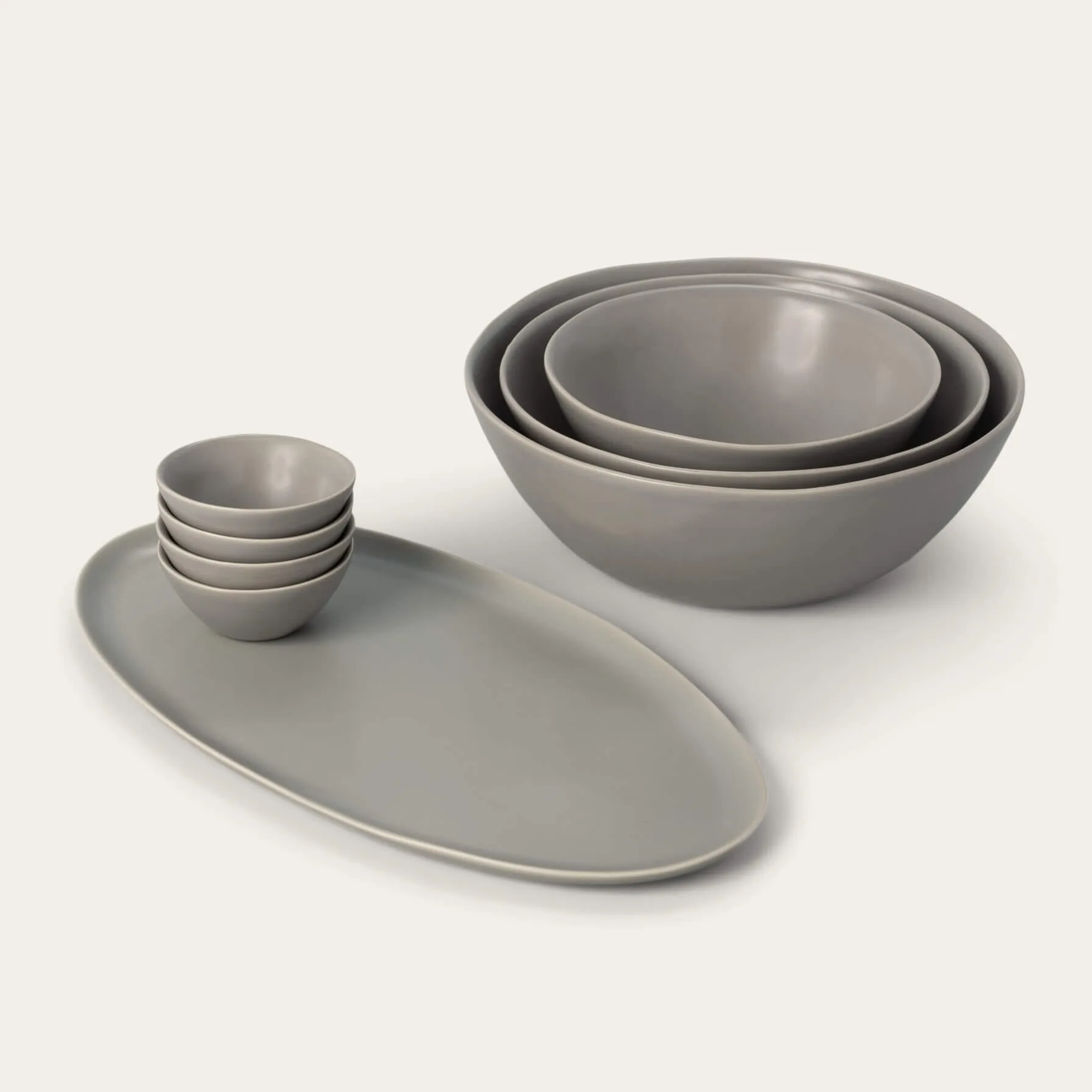
Nesting bowls save storage and let you serve multiple dishes without matching everything. A set of two or three nested bowls covers most gatherings. Check the largest bowl against your sink and dishwasher; if it does not fit, you will avoid using it.
- Low bowls: best for pasta, salads, and table-tossed sides.
- Deep bowls: best for soups, stews, and large batches of grains.
Tray and platter sizes that actually fit
Tray and platter sizes should be chosen by the food, not the shelf. A 12-inch round platter holds a small cheese selection or six cupcakes. An 18-inch oval platter holds a whole roasted chicken or a large sliced tenderloin. A 16-by-12-inch rectangular tray is the workhorse for appetizers and drinks.
Measure your table first. On a 36-inch round table, two 18-inch platters plus dinner plates leave almost no room for glasses. On a 60-inch rectangular table, you can fit three serving pieces across the center without crowding. If you host on a small table, choose one large platter and one nested bowl set instead of many medium pieces.
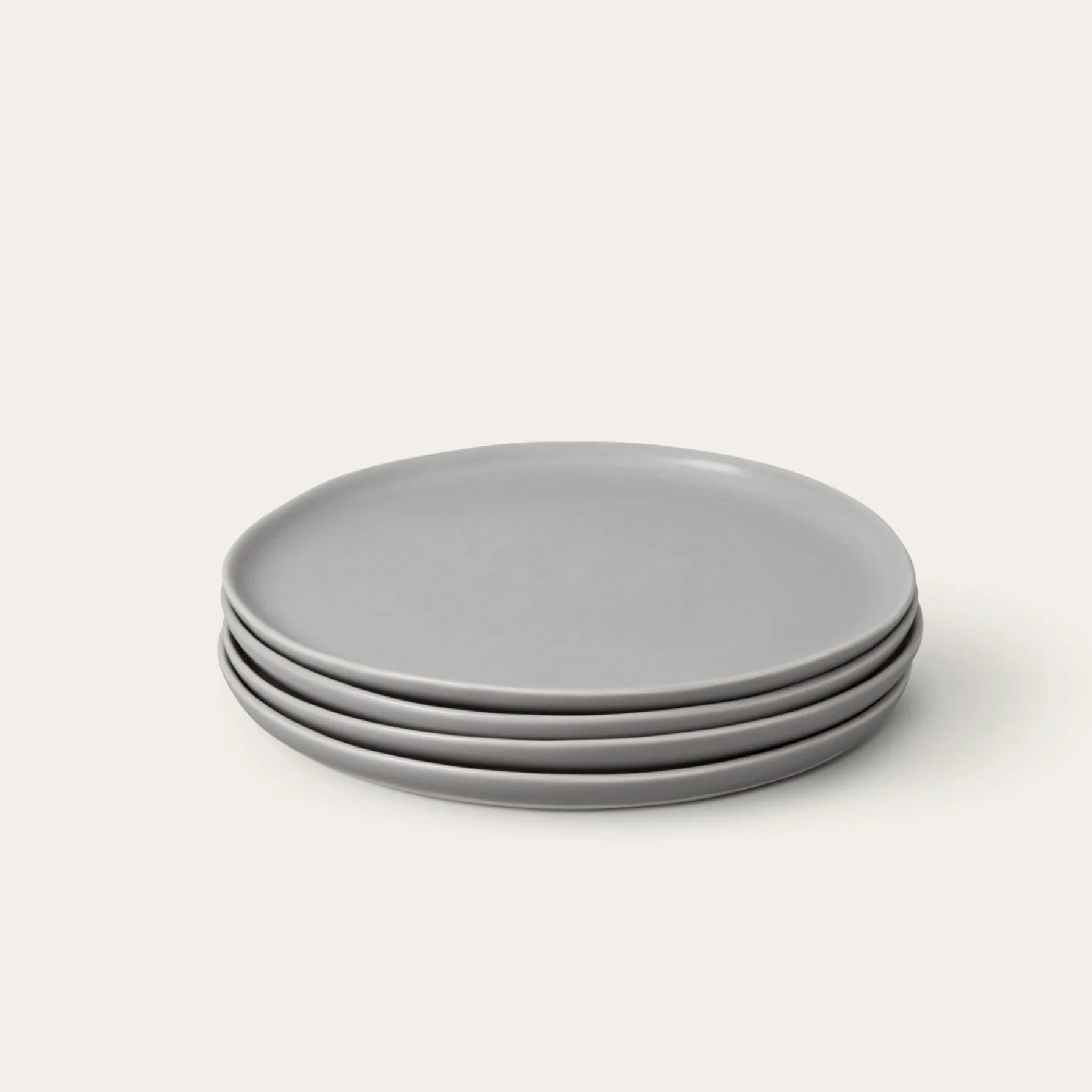
dinner plates
- Small platter: 12–14 inches for sides, cheese, or dessert.
- Large platter: 16–20 inches for roasts and main courses.
- Tray: 16–20 inches long for drinks and appetizers.
Materials: stoneware, ceramic, and crystal trade-offs
Stoneware and ceramic are the default for serving bowls and platters because they hold heat, resist scratching, and look good on the table. The trade-off is weight and breakage risk. Hand-finished stoneware may show natural flecks and slight variations, which is normal and part of the look, but it also means no two pieces are identical.
For glassware and trays, lead-safe crystal and durable glass offer clarity and stackability. Crystal is lighter and more chip-resistant than basic glass in many cases, but it still needs careful storage. If you host outdoors or with kids, choose stackable glass or ceramic over delicate crystal.
- Stoneware: best for hot foods and everyday hosting.
- Crystal: best for drinks and cold service, not oven use.
How many pieces do you actually need?
A realistic starter set for hosting is one low serving bowl, one oval platter, one tray, and one set of serving utensils. That covers a main, a side, and drinks. Add a nested bowl set if you regularly serve three or more dishes, and add a second platter if you host more than eight people.
Do not buy a full bundle unless you have the storage and the guest count to justify it. Bundles save money per piece, but only if you use every piece. If you host twice a year, two well-chosen pieces beat six that live in the garage.
- Minimum viable hosting kit: one bowl, one platter, one tray, one serving spoon set.
- Add pieces only when you have run out twice in the last year.
Decision rules for buying hosting serveware
- If you host six or fewer: Buy one low serving bowl and one oval platter. Skip the bundle until you host larger groups. Two pieces cover most meals without storage guilt.
- If you serve saucy or liquid dishes: Choose a deeper bowl or add a separate soup tureen. Low bowls are for tossing, not holding broth. Match depth to liquid volume, not to how the bowl looks on the shelf.
- If your cabinet shelves are under 12 inches deep: Measure before buying any platter over 14 inches. Nesting bowls and stackable trays are safer choices. If it does not fit, you will not use it.
- If you host buffet-style: Prioritize stackable and nestable pieces over display-only shapes. You need to move food, not style a single table. Function first, then finish.
Products that fit these rules
- Low Serving Bowls: Shallow take on nested serving bowls; set of 2; organically shaped and hand-finished in Portugal; stoneware with natural flecks. The low profile is ideal for pasta and salads you toss at the table, and nesting saves cabinet space. Not for soup or liquid-heavy dishes.
- Serving Ceramics Set: Bundle includes The Oval Serving Platter, set of 3 Nested Serving Bowls, and set of 4 Little Bowls; hand-finished in Portugal. Covers platter, serving bowls, and small bowls in one purchase, which suits hosts who serve multiple courses and have storage for a full set.
- Serving Spoons: Premium 18/10 stainless steel 2-piece set includes one serving fork and one serving spoon. 18/10 stainless steel resists staining and bends, and the fork-and-spoon pair handles both tossing and lifting without scratching stoneware.
- Highball Glasses: Set of 4 stackable lead-safe crystal tumblers crafted in Germany; taller take on Rocks Glasses. Stackable crystal saves space and works for cocktails, mocktails, and mixed drinks, but is not for hot beverages or oven use.
Who this serveware approach fits
Best for
- Hosts who serve family-style meals for four to eight people
- Small kitchens where nesting and stacking matter
- Buyers who want stoneware and crystal pieces that work for both everyday and occasional hosting
Not for
- Hosts who need oven-to-table pieces with high heat tolerance beyond standard stoneware use
- Buyers who want a single matched set with no variation between pieces
- Anyone hosting more than twelve people regularly without additional platters and bowls
Choose serveware by the food you cook, the guests you actually host, and the storage you actually have. Start with a low bowl, an oval platter, a tray, and a serving spoon set, then add nested pieces only when you have run out twice. That keeps hosting practical and your cabinets usable.