Quick answer
Dinnerware is what each person eats from: dinner plates, salad plates, and bowls. Serveware is what the food travels in: platters, serving bowls, and trays that sit at the center of the table. Buy dinnerware first for daily meals, then add serveware when you start hosting or serving family-style.
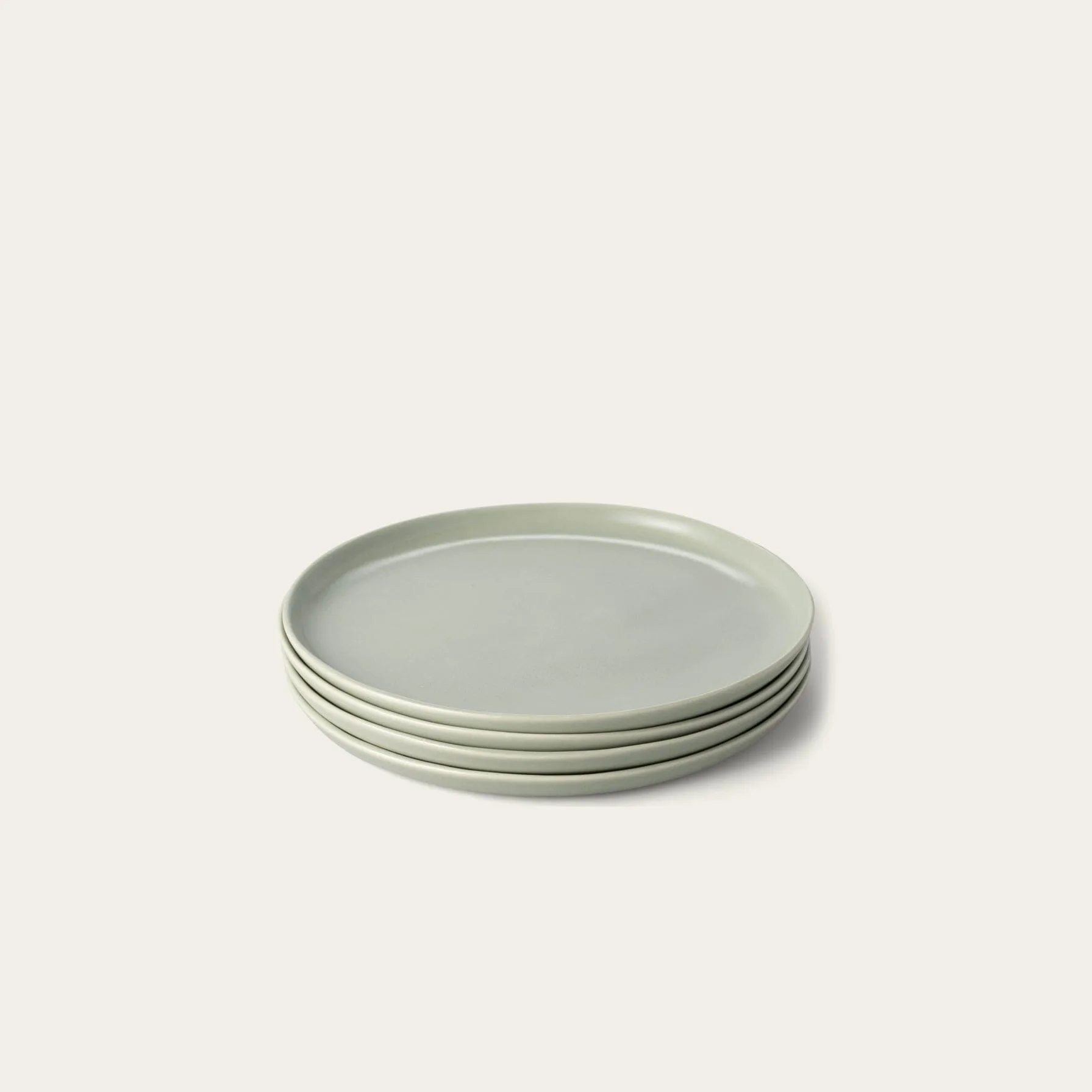
salad plates
The confusion usually starts at the store shelf. A low bowl and a salad plate can look like they belong to the same job, but they do different work at the table. One holds a portion for one person; the other holds enough for the table to share.
This guide separates the two categories using real products, explains where the line blurs, and gives you a simple rule for deciding what to buy next. If you have ever wondered why you own eight plates but no platter, this is for you.
The core difference: personal portion vs shared food
Dinnerware is sized for one person. A dinner plate, a salad plate, and a cereal bowl are all designed to sit at a single place setting. You eat directly from them, and they go into the dishwasher after the meal. Serveware is sized for the table. A platter, a large serving bowl, or a tray holds the roast, the salad, or the bread that everyone passes around.
That distinction matters because it changes how many you buy. Dinnerware is bought in sets or multiples of four because you need one per person. Serveware is often bought as singles because one large bowl or platter can serve the whole table. Mixing up the two leads to buying four platters you do not need or one plate for four people.
- If it touches one person's food directly, it is dinnerware.
- If it holds food that gets passed, scooped, or carved, it is serveware.
Where the line blurs: bowls, platters, and dual-purpose pieces
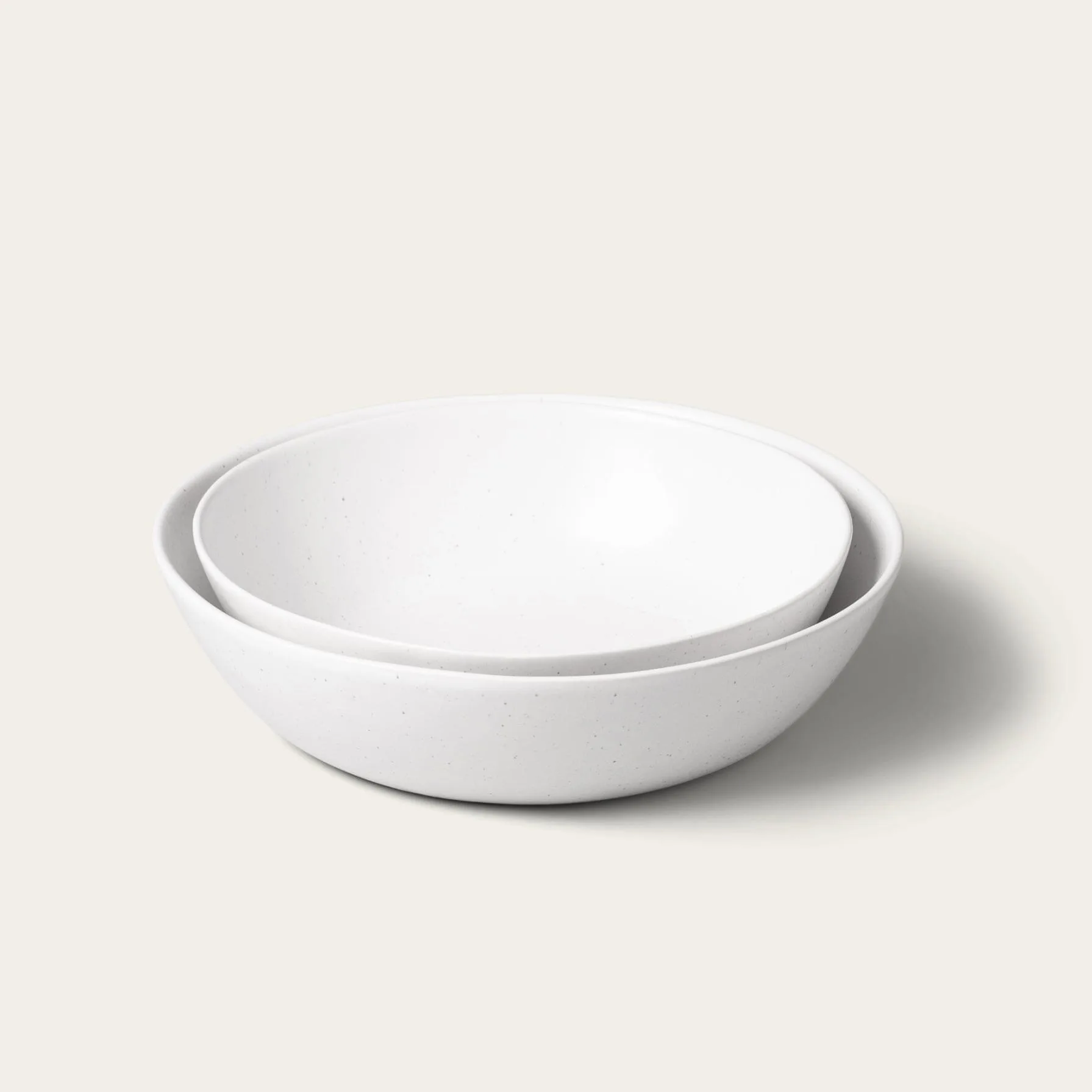
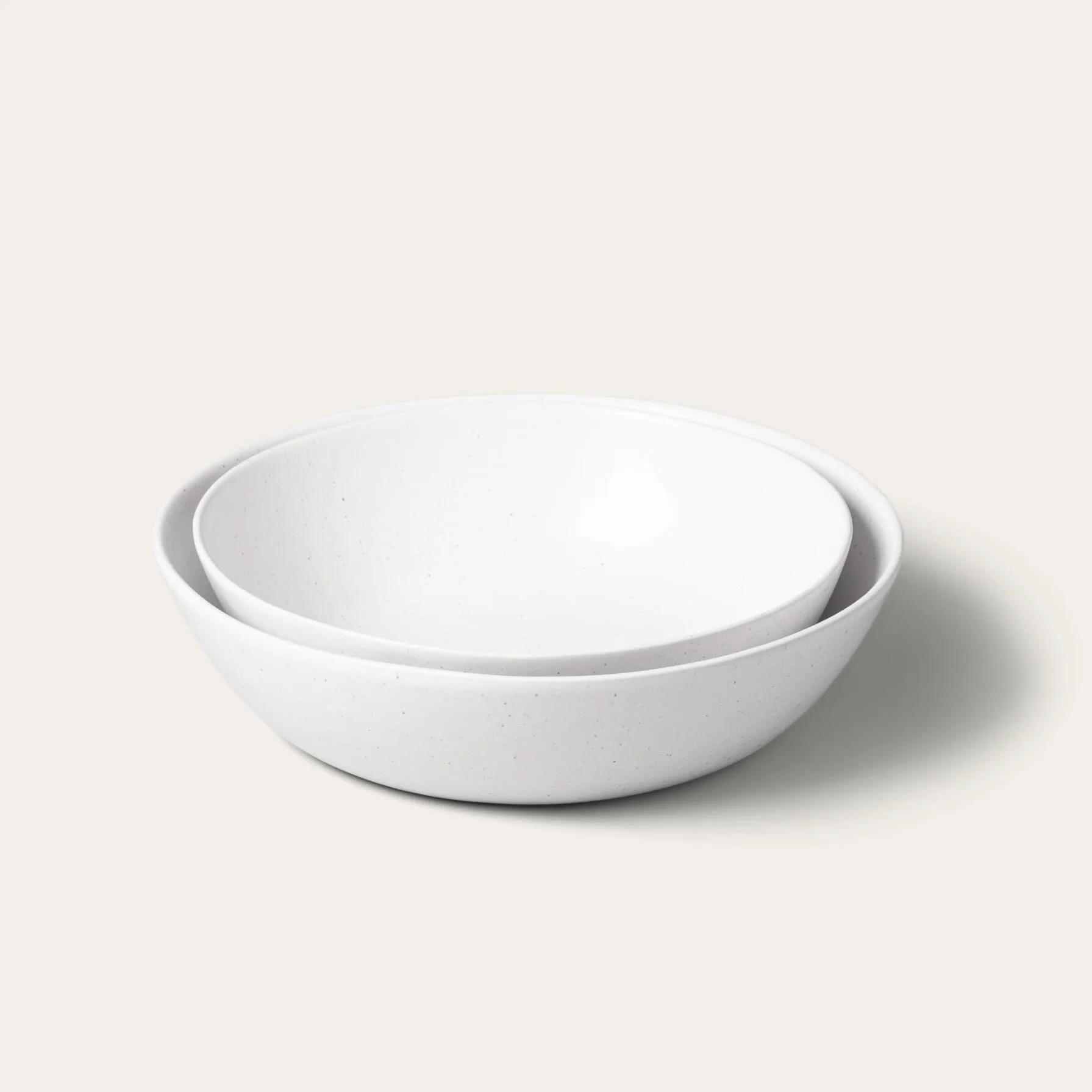
Some pieces genuinely work as both. A low serving bowl in a small size can hold a single portion of pasta, while the large size works as a shared salad bowl. The product itself is the same shape; the size decides the job. That is why checking dimensions and capacity matters more than the category label on the shelf.
The same is true for flat pieces. A salad plate is dinnerware, but a large flat platter is serveware. The difference is surface area and rim height, not material. When a product listing says it is stackable and low-rimmed, that usually signals dinnerware; when it says it is wide and shallow for sharing, that signals serveware.
- Buy dual-purpose bowls in two sizes if you want fewer pieces that do more.
- Check the listed size options before assuming a bowl is single-serve or family-size.
How to decide what to buy first
Start with dinnerware. You cannot eat without a plate or bowl, and most households need at least four to six place settings before they need a single platter. Once daily meals are covered, add serveware based on how you actually eat. If you serve from the stove, you need fewer serving pieces. If you put everything on the table family-style, you need more.
A practical order is: dinner plates, then bowls, then salad plates, then one large serving bowl, then one platter or tray. That sequence matches how most people host, and it prevents you from owning three gravy boats and no dinner plates.
- Count your regular eaters, then add two settings for guests.
- Buy serveware one piece at a time as your hosting style becomes clear.
Trade-offs: dinnerware vs serveware
- Cost per piece: Dinnerware is usually bought in sets, which lowers the per-piece cost but forces you to buy four or more at once. Serveware is often sold as singles, so you pay more per piece but only buy what you need. Buy dinnerware in sets for value; buy serveware as singles for flexibility.
- Storage space: Dinnerware stacks, so a set of four plates takes about the same shelf space as one large platter. Serveware is wider and often does not nest, so it claims more cabinet real estate per piece. If your kitchen is small, prioritize stackable dinnerware and add one multi-use serving bowl instead of several specialty platters.
- Durability and use frequency: Dinnerware gets used and washed daily, so chips and wear show up fast. Serveware is used less often but often at higher-stakes moments, like a holiday meal, where a crack is more visible. Spend more on the pieces you use every day; choose serveware that can handle oven-to-table or refrigerator-to-table transitions if you host often.
Products that show the difference
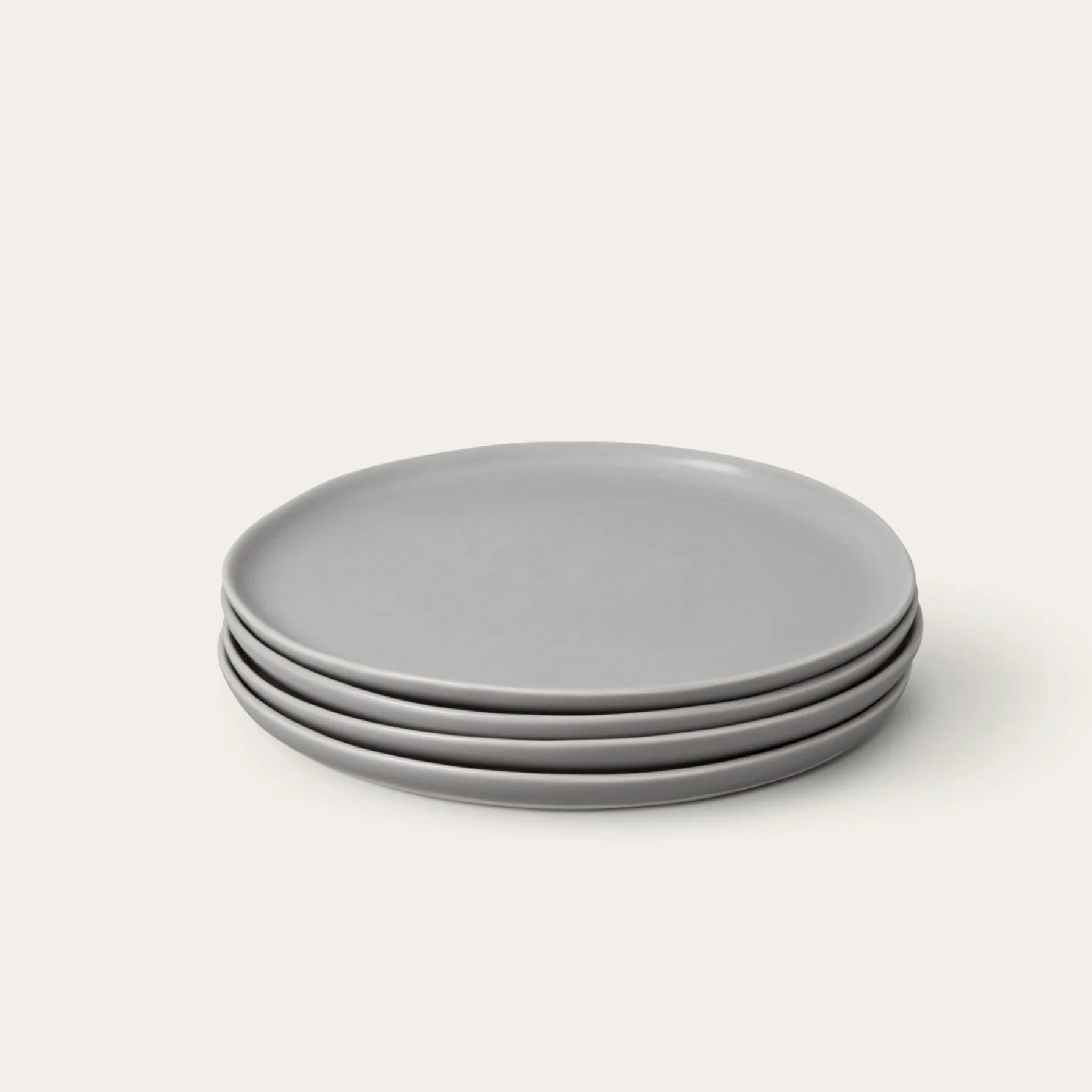
- Salad Plates: The smaller version of dinner plates, flat with a low rim, easily stackable, hand-finished in Portugal, sold as a set of 4. These are dinnerware: each person gets one for a side salad or a small meal. The low rim and stackability make them easy to store, but they are not designed to hold a shared portion for the table.
- Single Low Serving Bowls: Available in Small and Large sizes and three colors, sold as a single bowl, part of the Dinnerware category. This is the dual-purpose piece. Choose Small for a single serving of pasta or cereal; choose Large to serve a shared salad or side. Buying one at a time lets you match the size to how you actually host.
- Chopsticks: Hand-painted Japanese-crafted chopsticks made from carbonized moso bamboo, squared shape, rounded tips, sold as a set of 2 pairs. Flatware, not serveware or dinnerware, but it belongs at the place setting. If you serve noodles or nigiri from a shared bowl, each person needs their own pair, so buy by the set.
- Single Stemless Wine Glass Pro: Clear glass, stemless, sold as one glass. Drinkware rounds out the table. Stemless means fewer breakages and easier storage, but it also means fingerprints on the bowl. Buy one per guest if you want a matched table.
Which should you buy?
Best for
- Setting up a first apartment or first full table: start with dinnerware, including plates and bowls.
- Daily family meals where everyone serves themselves from the stove.
- Anyone who wants a matched, stackable set that is easy to store.
Not for
- Hosting family-style dinners where food goes on the table in shared bowls and platters.
- Holiday meals or dinner parties where presentation matters as much as portion size.
- Anyone who already has eight plates but no way to serve a whole roast chicken.
Dinnerware feeds one person; serveware feeds the table. Buy dinnerware first, then add serveware as your hosting habits grow. If you are unsure, start with a dual-purpose low serving bowl in two sizes and build from there.