Quick answer
A serving fork is a large, sturdy utensil designed to lift, hold, and transfer portions of meat, vegetables, or side dishes without piercing or damaging them. Use it alongside a serving spoon to create a balanced buffet station that lets guests serve themselves easily.
Why a dedicated serving fork matters
Unlike a dinner fork, a serving fork has longer tines and a broader head, giving you better leverage when lifting heavier items like a roast or a stack of grilled vegetables. Its sturdier build also prevents bending when you press down to secure a portion.
Using the correct fork for serving protects both your tableware and the food. A delicate dinner fork may scratch non-stick serving platters or bend under the weight of a large cut of meat. A proper serving fork keeps your dishes in good condition and your presentation intact.
When to choose a satin finish vs. an engraved handle
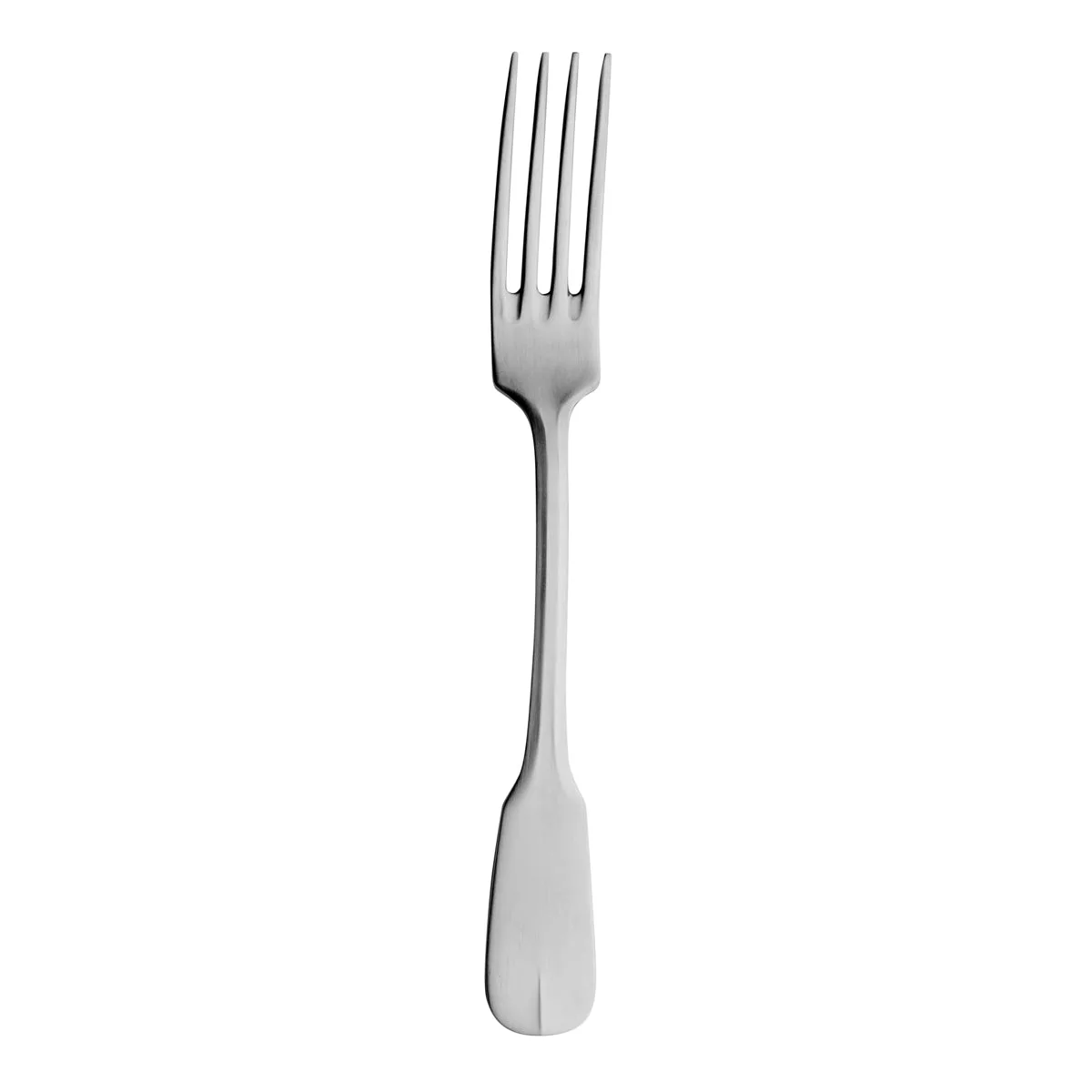
The finish on your serving fork affects both grip and visual harmony. A satin finish, like that on the Vieux Paris Satiné collection, offers a soft, non-reflective surface that resists showing fingerprints—ideal for busy buffets where the fork is handled frequently. Over time, the satin surface develops a gentle patina that suits a relaxed bistro-style table.
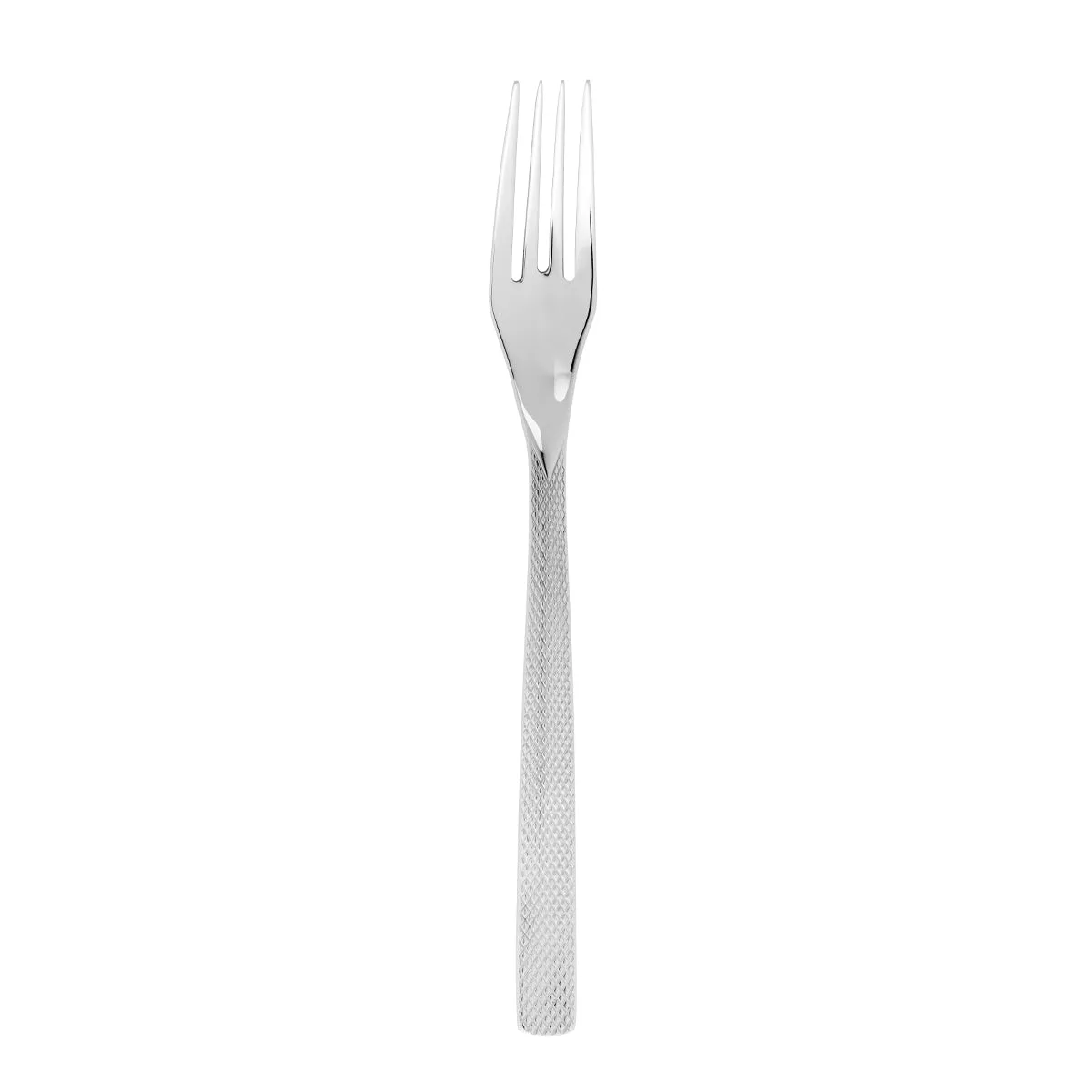
An engraved or chiseled handle, such as the Guest Star collection, provides a textured grip that stays secure even with slightly greasy hands. The engraved facets catch the light, adding a decorative accent to the table. Choose this style when the serving station is part of a more formal or visually curated setting.
How to set up a serving station with a serving fork
- 1. Place the fork and spoon together: Set the serving fork and a serving spoon as a pair to the right of each dish. The fork should be tines up and positioned so guests can pick it up with their right hand (or dominant hand). Common mistake: placing the fork alone without a spoon forces guests to use the same utensil for both lifting and scooping, which can be messy. Always pair the fork with a serving spoon for each dish.
- 2. Position the fork for the dish type: For platters of meat or poultry, lay the fork with the tines pointing toward the dish so guests can spear a portion. For vegetable medleys or composed salads, place the fork with the tines facing away from the dish to allow scooping. Common mistake: using the same orientation for every dish, which can make serving awkward. Adjust fork orientation based on whether the dish is solid or composed.
- 3. Keep the handle accessible and clean: Rest the fork on a small plate or napkin next to the serving dish, not directly on the tablecloth. This prevents the handle from touching the surface and keeps the station tidy. Common mistake: letting the fork handle rest on the table, which can transfer food residue to the cloth or counter. Use a small liner plate or napkin under the fork handle.
- 4. Use the fork to guide, not stab: When serving, slide the fork under the portion to lift it, or use the tines to gently hold the item in place while the spoon scoops. Avoid jabbing the tines deep into the food, which can break apart delicate items and create an untidy appearance. Common mistake: stabbing the food as if it were a dinner fork, which damages both the presentation and the utensil. The fork is a guide, not a spear—use gentle pressure.
- 5. Clean between dishes: If you are serving multiple courses, replace or wipe the serving fork between dishes to avoid flavor transfer. For a buffet, provide a separate fork for each dish. Common mistake: reusing the same fork for a dessert after it touched savory meat juices. Have one serving fork per dish, or rinse it thoroughly between courses.
Serving fork options for your station
-
Serving Fork: The Guest Star collection features stainless steel cutlery with handles finely engraved with a chiseled motif, offering a textured relief that captures the light. The textured handle provides a secure, non-slip grip when serving heavy dishes, and the engraved pattern adds a refined visual accent to your buffet table.
Serving Fork
-
Serving Fork: The Vieux Paris Satiné cutlery is crafted from stainless steel with a satin finish and a familiar silhouette that ensures an intuitive grip. The satin finish resists fingerprints and develops a patina over time, making it a practical choice for frequent use in casual or bistro-style serving stations.
Serving Fork
-
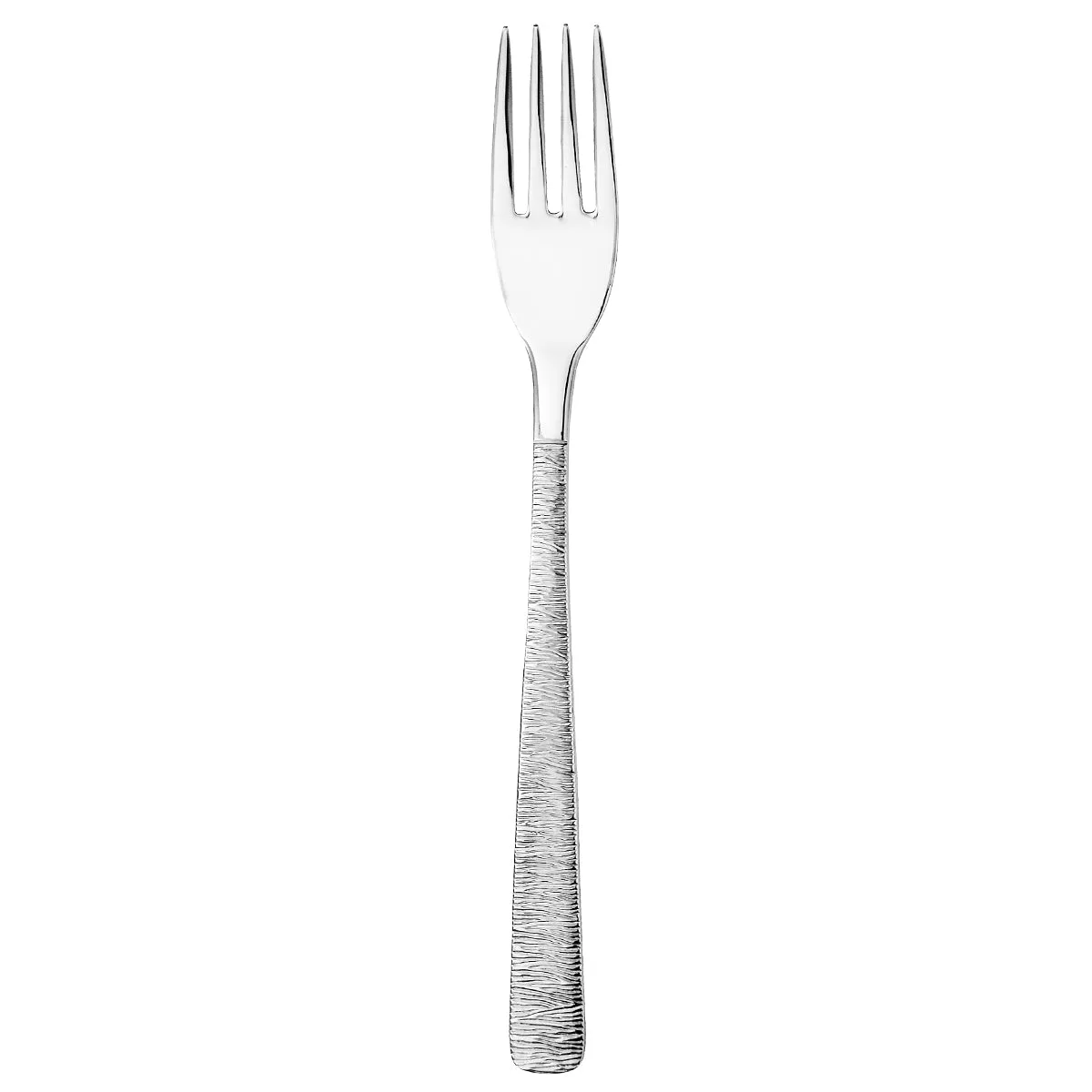
Serving Fork: The Astrée Ciselé stainless steel cutlery has a slender handle delicately engraved with a textured pattern, designed for ergonomic precision. The slender, engraved handle gives you a precise touch when plating individual portions, which is especially useful for composed salads or delicate fish dishes.