Why the serving stage matters as much as the brew
You can brew a clean, balanced batch of iced coffee and still end up with a weak, watery drink if the serving step works against you. Most of the flavor loss happens after the coffee leaves the brewer: ice melts, condensation waters down the surface, and a thin glass lets the cold escape. The fix is not a more complicated recipe — it is a more deliberate serving setup.
This guide focuses on the glassware, ice, and pour decisions that protect the coffee you already made. It applies whether you are working with cold brew, Japanese iced coffee, or a flash-brewed batch.
Start with a glass that fights dilution and condensation
A double-wall glass is the most direct upgrade for iced coffee service. The air gap between the two walls slows heat transfer, so the drink stays cold longer without relying on extra ice. That matters because every extra ice cube is a future puddle of water in your cup. The same insulation also keeps the outside of the glass dry, which is why double-wall designs are common in modern coffee service.
One example in the Breville catalog is the Iced Coffee Duo 14oz/400ml, made from double-wall heat-resistant borosilicate glass. It uses a patented Bodum air silicone valve to equalize air pressure and reduce condensation. That valve is the detail that separates a functional double-wall glass from a decorative one: without pressure equalization, moisture can build between the walls over time.
What the Iced Coffee Duo confirms about serving
-
the Iced Coffee Duo™ 14oz/400ml: Double-wall borosilicate glass construction keeps hot drinks hot and cold drinks cold. For iced coffee, the insulation slows warming and reduces the need for excess ice, which is the main cause of a watery finished drink.
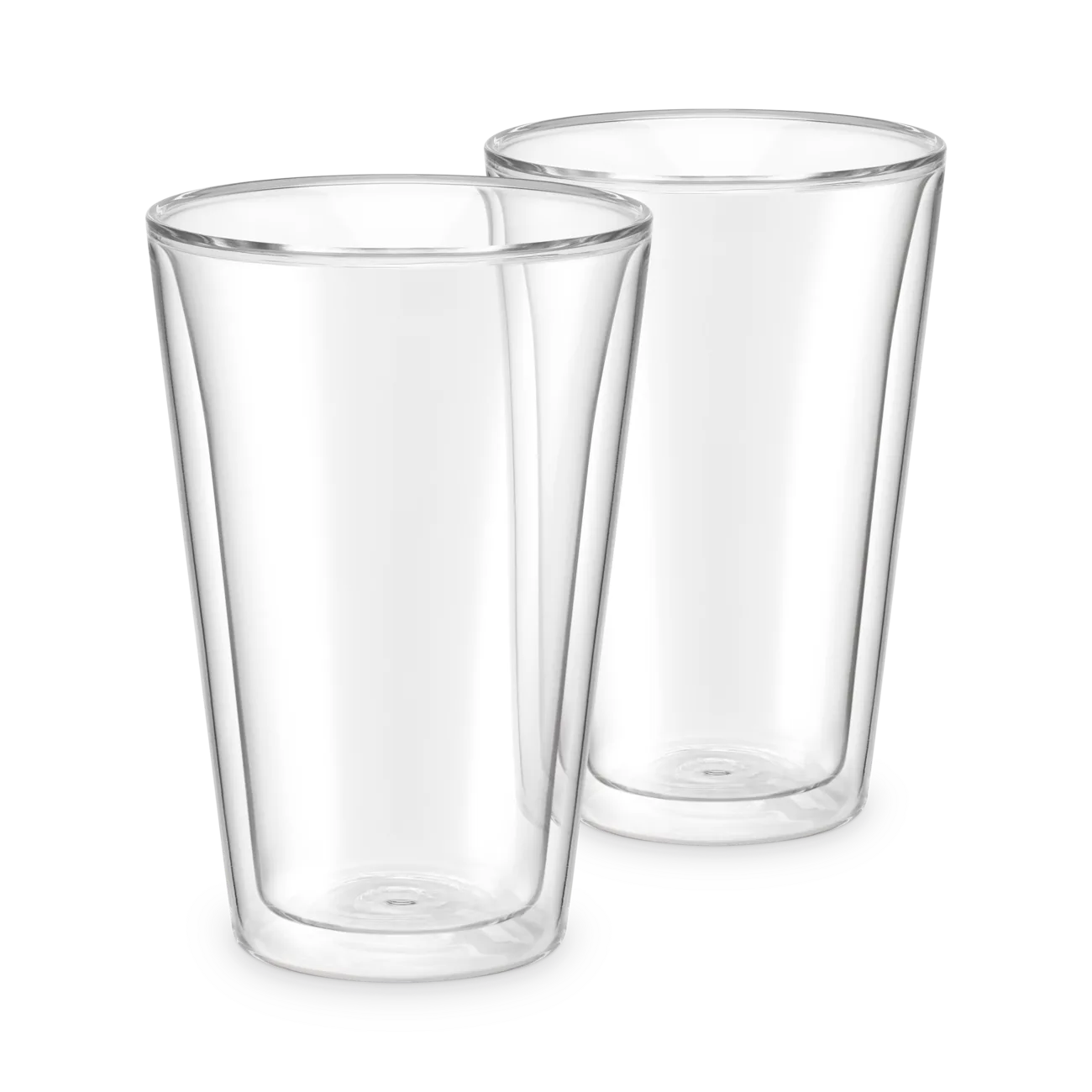
the Iced Coffee Duo™ 14oz/400ml
-
the Iced Coffee Duo™ 14oz/400ml: Patented Bodum air silicone valve equalizes air pressure and reduces condensation. Less condensation means a drier grip and a clearer view of the coffee, which matters when you are serving guests or taking a photo.
-
the Iced Coffee Duo™ 14oz/400ml: 400ml (14oz) capacity. That is a realistic single-serving size for iced coffee with ice and a splash of milk, without overfilling the glass.
-
the Iced Coffee Duo™ 14oz/400ml: Dishwasher, microwave, freezer, and oven safe. The freezer-safe rating is useful for pre-chilling the glass before serving, a step that helps keep the first pour cold.
A serving routine that keeps flavor ahead of dilution
Use this sequence when you want a consistently cold, full-flavored glass of iced coffee. It assumes your coffee is already brewed and chilled.
- Pre-chill the glass: Place a double-wall glass in the freezer for a few minutes before serving. The Iced Coffee Duo is freezer safe, so this is a supported step. A cold glass slows the first round of ice melt.
- Choose the right ice: Larger, clearer ice cubes melt more slowly than small or crushed ice. If you only have small cubes, use fewer of them and rely on the pre-chilled glass to carry the cold.
- Pour coffee over the ice, not ice into coffee: Adding ice to a room-temperature glass of coffee shocks the drink and speeds melting. Put the ice in first, then pour the chilled coffee gently down the side of the glass.
- Leave room for milk or cream: A 400ml glass fills quickly. If you plan to add milk, pour the coffee to about two-thirds full and top with dairy or a non-dairy alternative. This avoids overflow and keeps the ratio balanced.
- Serve immediately: Double-wall glass slows warming but does not stop it. Iced coffee is at its best in the first ten to fifteen minutes, before the ice has fully given up.
The ice-to-coffee ratio that keeps flavor intact
There is no universal ratio, but a useful starting point for iced coffee service is to fill the glass about one-third with ice and the rest with chilled coffee, leaving a small headspace. That gives enough surface contact to chill the drink without turning it into a diluted mess. If you prefer a stronger cup, brew your coffee at a slightly higher concentration before chilling — the serving ratio then becomes a matter of taste rather than damage control.
For cold brew, the same logic applies. Cold brew concentrate is usually diluted with water or milk before serving, so the ice becomes part of that dilution. Use the concentrate at full strength over ice if you like a bold drink, or mix it with a splash of water first if you prefer a lighter body.
Cold brew serving ideas that avoid the watery finish
- Serve concentrate over a single large cube: One big cube melts slowly and keeps the drink cold without flooding it. This works especially well in a double-wall glass where the insulation does half the work.
- Use coffee ice cubes for a second round: Freeze leftover cold brew in an ice tray and use those cubes in the same drink. As they melt, they add coffee rather than water. This is a practical way to use up a batch without waste.
- Keep the glass in the freezer between servings: If you are serving several people, pre-chill the glasses and keep them in the freezer until the moment you pour. The Iced Coffee Duo is freezer safe, so this is a low-risk habit.
Where the supplied information stops short
The catalog does not provide specific care instructions beyond the dishwasher, microwave, freezer, and oven safety ratings, nor does it list a recommended maximum temperature for the glass. Treat those ratings as the boundary of confirmed use: the glass is safe in those appliances, but the catalog does not confirm stovetop use or broiler use. For anything beyond the listed appliances, follow the manufacturer's full documentation rather than guessing.
Similarly, the catalog does not specify whether the silicone valve requires periodic removal or cleaning. If you notice moisture or residue between the walls, contact Bodum or consult the product's full manual. The absence of that detail in the supplied information is not evidence that the valve is maintenance-free.
A simple checklist before your next pour
Pre-chill the glass, use large ice, pour gently, and serve promptly. Those four habits will do more for your iced coffee than any single accessory. If you want a glass that supports the routine, the Iced Coffee Duo 14oz/400ml is a practical choice: double-wall insulation, a condensation-reducing valve, and a size that fits a standard serving. It is not the only way to serve iced coffee, but it removes several common failure points at once.