Quick answer
Mount your Savotta Trinket Pouch inside a pack or on a belt for instant access to small essentials. Choose the hook-back version for loop-lined compartments or the standalone version for external attachment.
Hook-back vs standalone: which fits your carry style
The hook-back Trinket Pouch uses hook-and-loop material on its back, letting you attach it directly to loop-lined panels inside packs, bags, or on compatible gear. This keeps the pouch secure and accessible without adding bulk to your belt or straps.
The standalone Trinket Pouch has no hook backing, making it better for use on a belt, inside a non-loop-lined compartment, or as a loose organizer that you can grab and move between bags. It’s slightly lighter and costs less, but you lose the instant stick-and-go mounting.
Both pouches share the same internal volume and shape, so your choice depends on where you want to carry it—not how much it holds.
What to store for quick access
A trinket pouch works best for items you reach for several times a day: a multitool, flashlight, lighter, small first-aid supplies, earplugs, charging cable, or a pen. Avoid overstuffing it—if the pouch bulges, you’ll struggle to close it and items will be harder to find.
Keep heavier items (like a multitool) toward the bottom so the pouch hangs naturally. Lighter items (bandages, cable) can go on top. This also prevents the pouch from sagging when mounted vertically.
Step-by-step setup guide
- Choose your mounting surface: For the hook-back pouch, press it firmly onto a clean loop-lined panel inside your pack, bag, or on compatible gear. For the standalone pouch, thread your belt through the sleeve on the back, or simply drop it into a compartment. Common mistake: attaching a hook-back pouch to dusty or worn loop material reduces grip. Wipe the surface first.
- Position for one-handed access: Mount the pouch where your dominant hand can reach it without shifting the pack. On a backpack, the inside of the front flap or the top of a side pocket works well. On a belt, place it at your hip or slightly forward. Common mistake: mounting too low on a backpack strap—the pouch can swing and hit your arm while walking.
- Load and test the closure: Fill the pouch with your daily essentials, then close the zipper or flap fully. Shake the pack gently to check that nothing shifts or unzips. Adjust the load if the pouch bulges or the closure feels strained. Common mistake: overfilling so the zipper doesn’t close fully—items can fall out and the pouch may snag on gear.
Product facts
-
Trinket Pouch, hook back: The hook-back Trinket Pouch attaches to loop-lined surfaces inside packs or bags via its hook-and-loop back panel. This lets you position the pouch exactly where you need it—like on the inside of a backpack lid—without adding straps or clips.
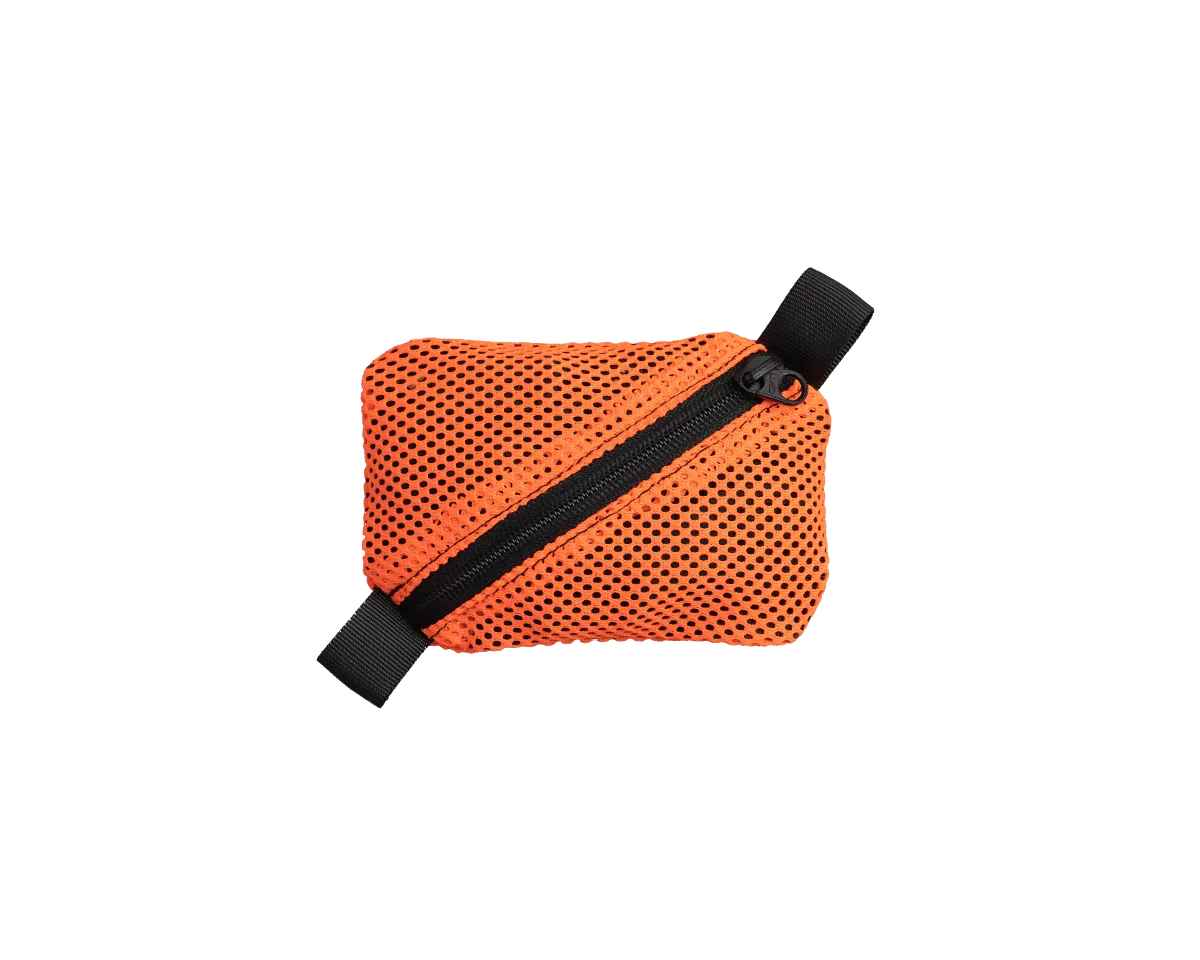
Trinket Pouch, hook back
-
Trinket Pouch, standalone: The standalone Trinket Pouch has no hook backing, making it suitable for belt carry or as a loose organizer. It’s lighter and more flexible for users who switch between bags or prefer a pouch that doesn’t permanently stick to one spot.
Trinket Pouch, standalone