Quick answer
Choose a setubandh bench if you want a stable, fixed-height platform for supported bridge pose and restorative backbends. If you need to adjust the curve under different parts of your spine, an adjustable stump set gives more control. For deeper, active backbends, a tall backbender is the better tool. Match the prop to your current flexibility and the kind of support you want, not to the deepest shape you hope to reach.
What a setubandh bench actually does
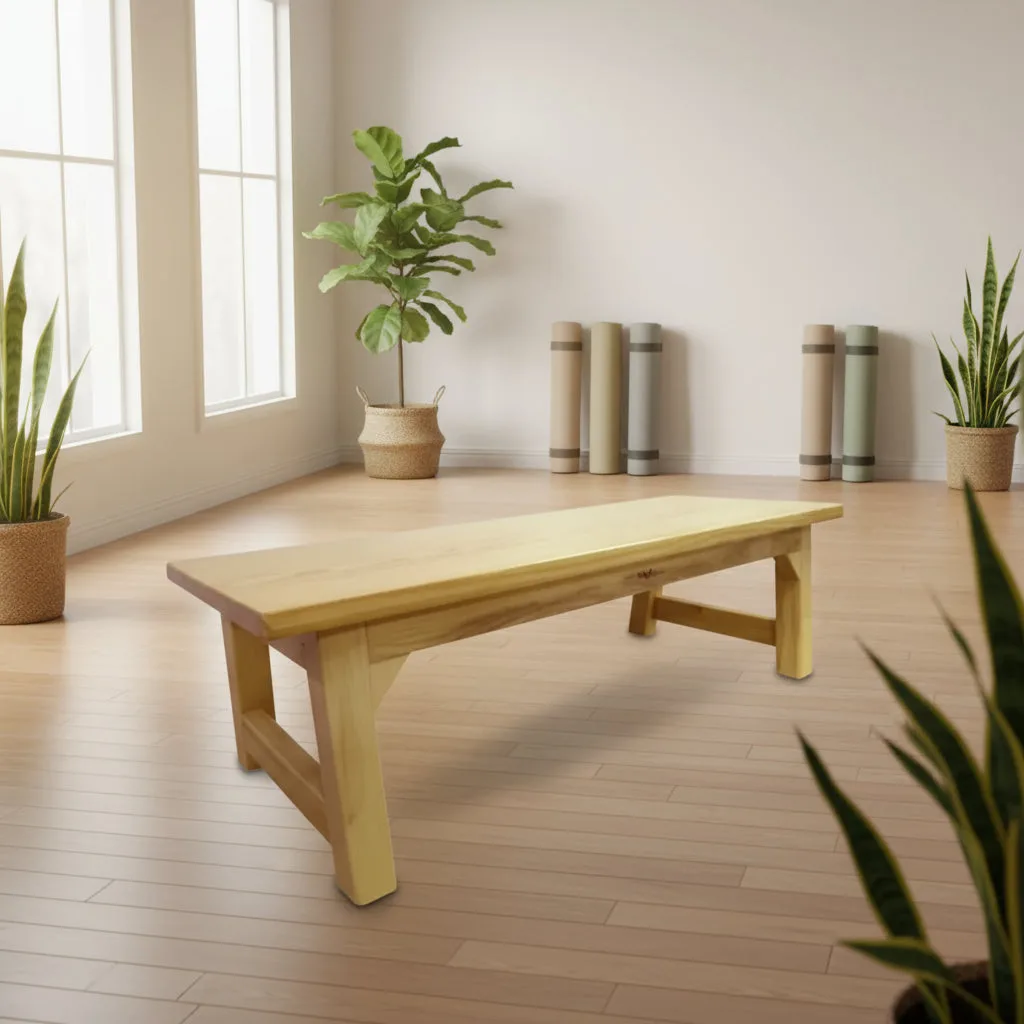
A setubandh bench, also called a setu bandha bench, is a wooden platform that supports your upper back and shoulders while you lie back into a bridge shape. It holds the lift for you, so your legs and core do not have to. That makes it useful for restorative backbend work, for holding a supported bridge pose longer, and for opening the chest without collapsing into the lower back.
The key difference from a block or bolster is stability. A bench does not squish or shift as you settle in, so the height under your shoulder blades stays consistent. That consistency is what makes it a backbend support prop rather than just a cushion.
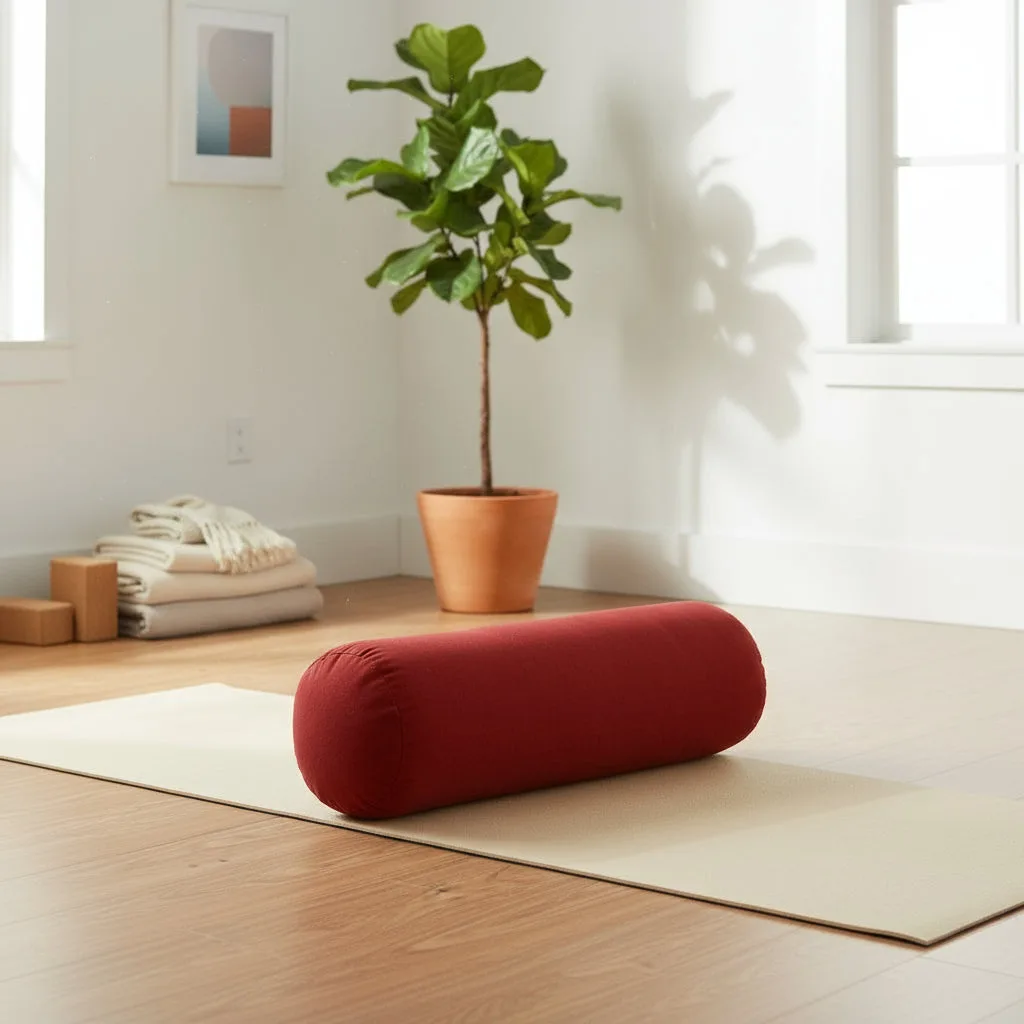
bolster
Fixed bench vs adjustable stump set
A fixed setubandh bench gives you one height and one curve. You set it down and lie back. That simplicity is its strength: less setup, fewer decisions, and a predictable shape every time. It suits a regular restorative practice where you want the same support session after session.
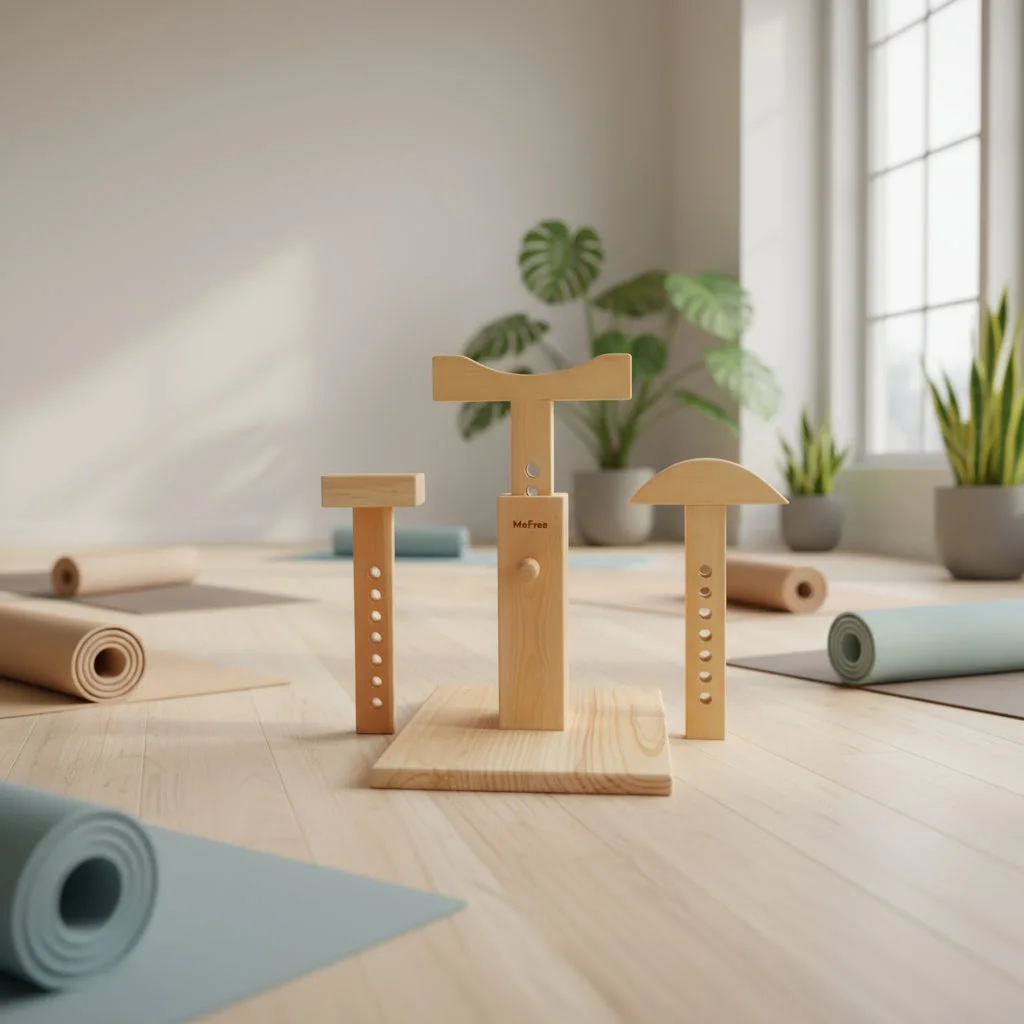
An adjustable stump set trades that simplicity for range. With interchangeable tops and multiple height settings, you can change where the support meets your spine and how much lift you get. That matters if your back feels different from week to week, or if you are working gradually toward a deeper backbend and need to progress in small steps.
When a taller backbender makes sense
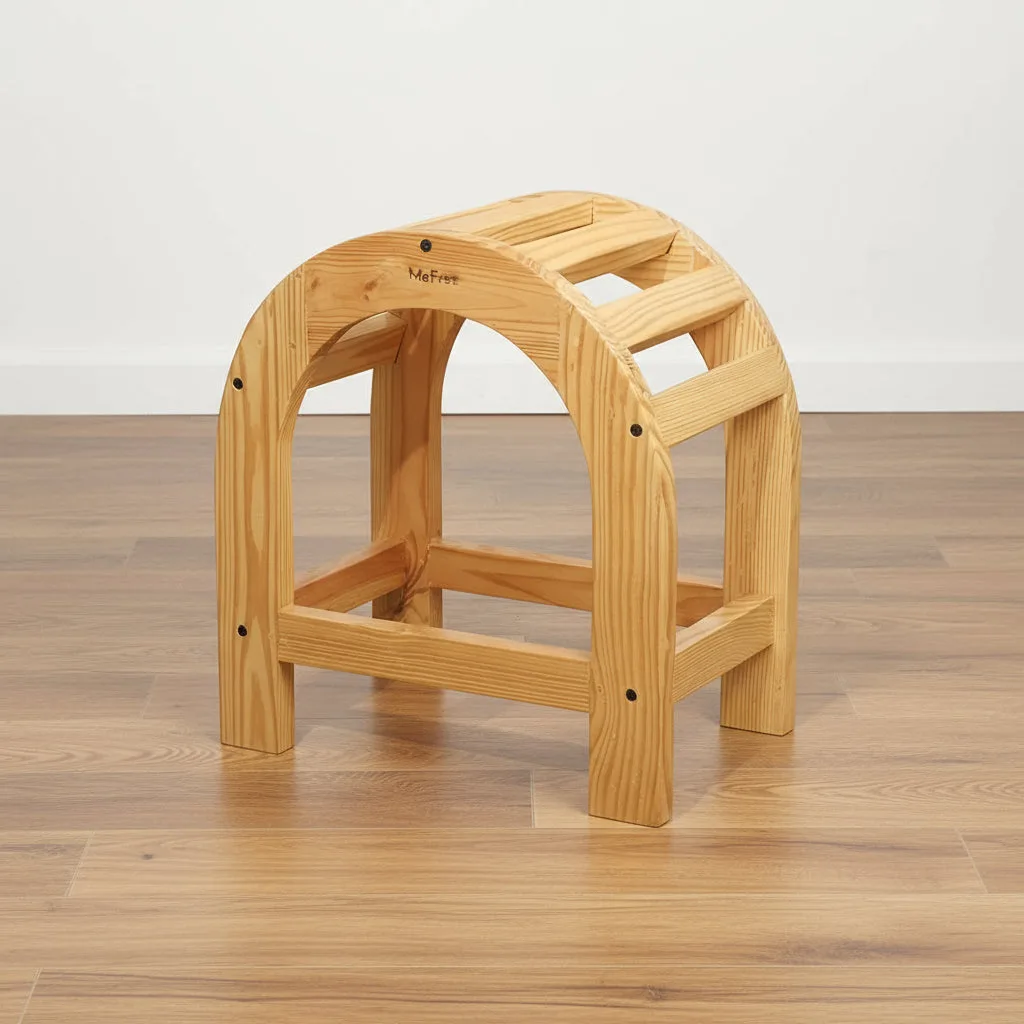
A tall backbender is not a replacement for a setubandh bench. It is a different tool for a different job. Where a bench supports a passive, held bridge, a tall backbender is built for experienced practitioners who want to deepen spinal extension and heart-opening in a more active backbend practice.
If you are still building comfort in supported bridge, a tall backbender is likely too much prop too soon. Start with a bench or stump set, build tolerance for extension, and only then consider a taller prop.
Height, material, and setup practicalities
Height is the first spec to check. Too low and you will not feel the lift; too high and your lower back may take the strain. If a product listing does not state a height range, treat that as a limitation and ask before buying rather than guessing.
Material matters for stability and longevity. Solid wood props are heavy, which is good for staying put but awkward to move. If you practice in a shared space or need to store props between sessions, factor in where the bench will live and whether you can lift it safely.
Decision rules for buying a backbend support prop
- If you want one height and no setup decisions: Choose a fixed setubandh bench. You lie back and the support is already correct. Best for a consistent restorative or Iyengar-style practice.
- If your back feels different week to week: Choose an adjustable stump set with interchangeable tops and height settings so you can match the support to your spine that day. Best for gradual progression and varied sensitivity.
- If you are already comfortable in supported backbends: Consider a tall backbender built for experienced practitioners who want to deepen extension. Do not buy this as your first backbend prop.
Products to consider
- Setubandh Bench: The MeFree Setubandh Bench is described as designed to withstand heavy use while maintaining its elegant form, and is positioned as an essential tool for Iyengar Yoga practitioners working on alignment and flexibility. If you practice frequently and want one stable platform for supported bridge and alignment work, this is the most direct match for that job.
- Stump Set: The MeFree Adjustable Stump Set offers three interchangeable tops and various height settings to tailor support to the contours of your spine. Choose this over a fixed bench if you want to change the curve or height as your backbend practice develops, or if one fixed shape does not suit your spine.
- Tall Backbender: The MeFree Tall Backbender is handcrafted from solid, sustainable pinewood and is designed specifically for experienced practitioners looking to safely deepen their backbend practice. This is the prop to consider only after you are already comfortable with supported backbends and want to work deeper, not as a first backbend support purchase.
Who should buy which
Best for
- Iyengar Yoga practitioners who want a stable platform for supported bridge pose
- Restorative practitioners holding backbends for longer periods
- Anyone who wants a backbend support prop with no adjustment decisions
Not for
- Practitioners who need to change height or curve frequently (choose an adjustable stump set instead)
- Experienced backbenders seeking deep active extension (a tall backbender is the better fit)
- Anyone unable to safely lift or store a heavy wooden prop