Quick answer
Most fraying and fading comes down to three things: an unfinished cut edge, heat or harsh detergent in the wash, and thread that cuts rather than grips the label. Trim and seal the edge, wash in cool water on a gentle cycle, and stitch with a small zigzag or backstitch at each corner. If the label itself is already shedding threads or the print is gone, replace it rather than repair it.
You finish a quilt, gift it, and a month later the label looks tired: fuzzy edges, a faded line of text, or a corner lifting away from the backing. It is frustrating, but it is rarely random. Sew-in labels fail in a handful of recognizable ways, and each one points to a different cause and a different fix.
Below you will find a diagnosis-first approach. Match what you see to the symptom, check the likely cause, apply the corrective action, and know when it is smarter to swap the label out than to keep patching it.
Symptom 1: The cut edges unravel into threads
This is the most common complaint and almost always a raw-edge problem. Fabric labels are woven or printed on a substrate that will fray once cut, especially if you trimmed the label down to fit a smaller seam allowance. The more you handle and wash the item, the more those loose threads travel.
The fix is to give the edge something to hold. Cut with sharp scissors so you are slicing rather than crushing fibers, then either fold the raw edge under as you stitch or run a narrow zigzag along the perimeter before attaching. If the label is going into a frequently washed item, sealing the edge with a thin line of fray-check liquid is a reasonable extra step.
- Cut labels with dedicated fabric scissors, not pinking shears, unless you want a decorative edge.
- Leave at least a 1/4-inch seam allowance so the raw edge is buried, not exposed.
- Test fray-check on a scrap first; some products darken certain fabrics.
Symptom 2: The print fades after washing
Fading is usually a wash-condition problem rather than a label defect. Hot water, chlorine bleach, and high-heat drying are the three biggest contributors. If a label is printed rather than woven, repeated exposure to any of these will dull the ink faster than the fabric itself wears out.
Switch to cool water and a gentle cycle, skip bleach, and air-dry or tumble on low. Turn the item inside out so the label is not rubbing against other garments in the drum. For quilts and bags that rarely get washed, this is mostly preventive; for baby items and garments, it is the difference between a label that lasts a season and one that lasts years.
- Cool water, gentle cycle, no bleach.
- Air-dry or low heat; high heat is the fastest way to fade a printed label.
- Wash handmade items inside out or in a mesh bag.
Symptom 3: The label is still attached but coming apart at the stitching
If the label is intact but the thread has pulled loose, the problem is usually stitch choice or thread tension, not the label. A straight stitch with a short stitch length can perforate the label edge and tear through under stress. A slightly longer stitch with a backstitch at each corner distributes the load better.
Match your thread to the label's weight. All-purpose polyester thread works for most sew-in labels, but if the label is stiff or the item will be washed often, a finer thread with a small zigzag catches more fabric and resists pull-out. Check that your needle is sharp; a dull needle pushes fibers aside instead of piercing cleanly.
- Backstitch at the start and end of every label seam.
- Use a small zigzag on stretchy or frequently washed items.
- Replace your needle if it has sewn through several projects.
When to repair and when to replace
Repair makes sense when the label is structurally sound and the issue is attachment: a loose corner, a single pulled thread, a slightly fuzzy edge you can tuck under. A few minutes with a needle and matching thread will usually solve it, and the label keeps its history with the item.
Replace when the label itself is failing. If the printed text is illegible, the weave is shedding across the surface, or the fabric has thinned to the point where new stitches tear through, no amount of stitching will bring it back. In that case, remove it carefully with a seam ripper, clean up any residual thread, and sew in a fresh label.
- Repair: loose corner, single pulled thread, minor edge fuzz.
- Replace: illegible print, widespread shedding, thinned fabric.
- When replacing, choose a label sized for the seam allowance you actually have.
Label failure diagnosis
- Fuzzy, unraveling edges: Raw cut edge exposed to friction and washing. Fold under, zigzag the perimeter, or seal with fray-check before attaching. If edges still shed after sealing, the label substrate is too loosely woven for the wash routine; replace it.
- Faded print after washing: Hot water, bleach, or high-heat drying degrading the print. Switch to cool water, gentle cycle, no bleach, and low or air dry. If the print is already illegible, the label is past repair; replace it.
- Stitching pulling out: Short straight stitches perforating the label edge, or a dull needle. Use a longer stitch with backstitching, or a small zigzag, and a fresh needle. If the fabric around the stitches is torn, the label is too fragile to reattach; replace it.
Labels and accessories that hold up
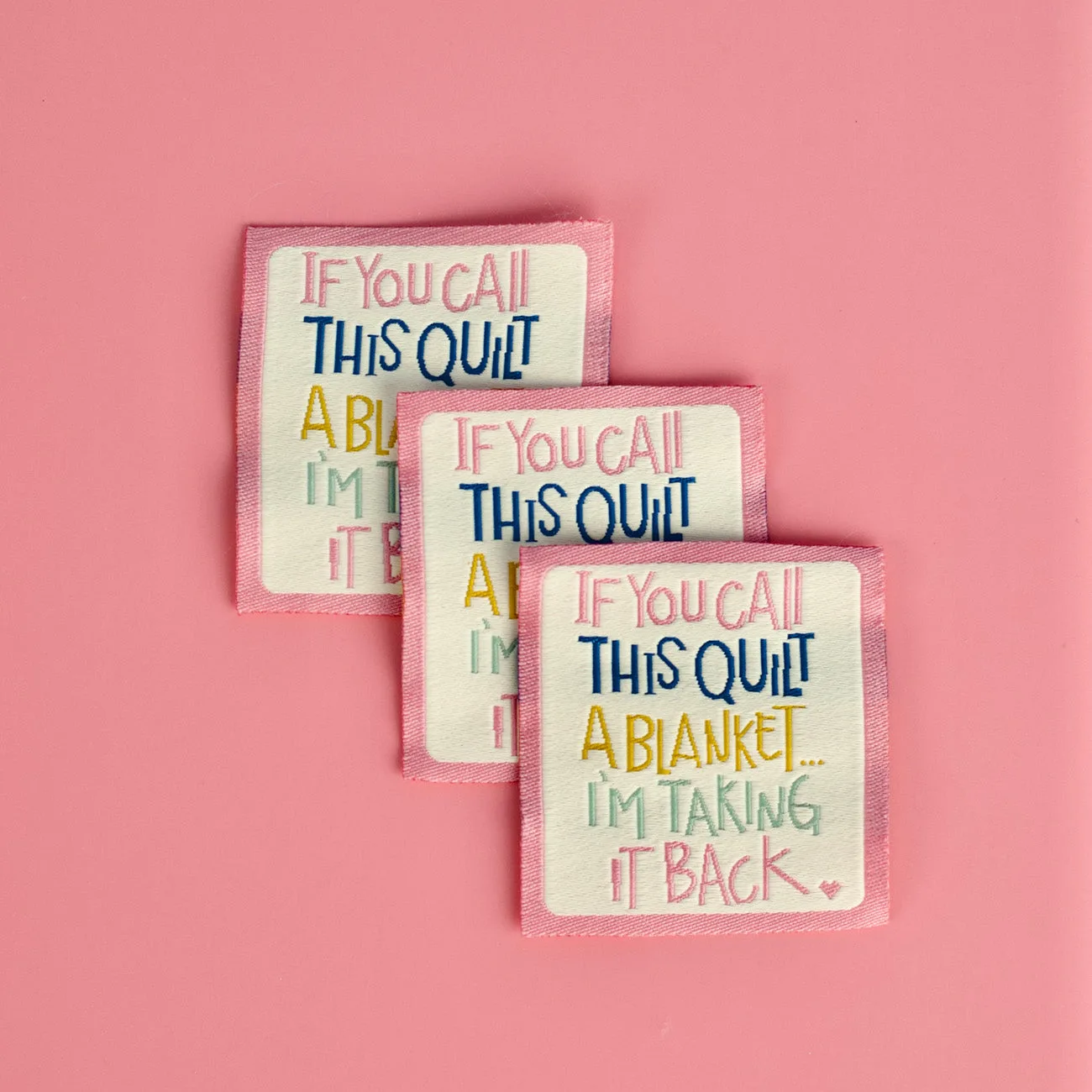
- If You Call This Quilt - Labels: Premium designer sew-in labels crafted for quilters, sewists, and makers, suitable for handmade garments, quilts, bags, and accessories. A label designed for the wash and wear of real handmade items gives you a better starting point than a generic tag, so you spend less time repairing edges.
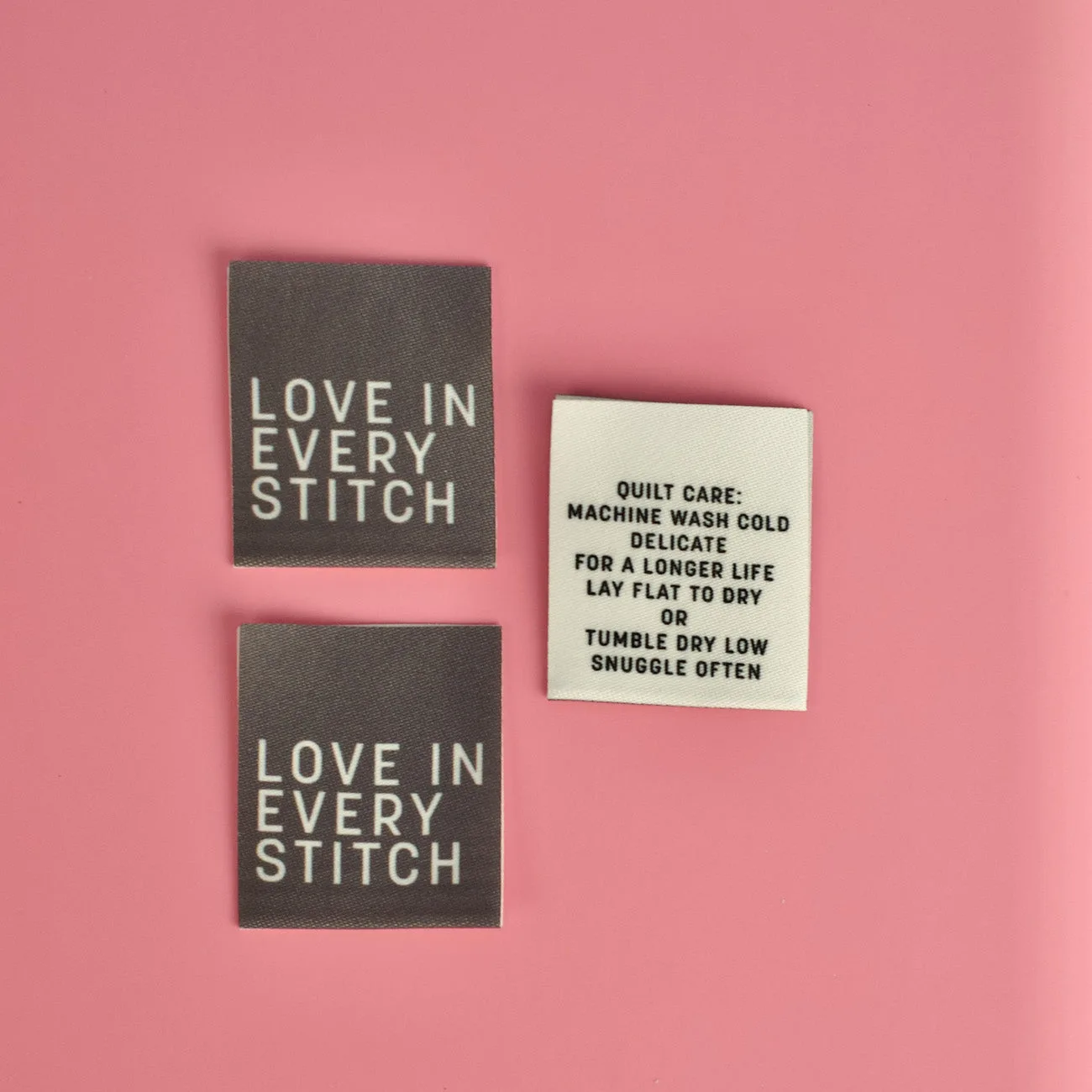
- Love in Every Stitch - Sew In Label (Grey): Easy to sew and designed to add a personal touch to quilts, garments, bags, and accessories. Easy-to-sew labels reduce the risk of skipped stitches and pulled corners, which are two of the most common attachment failures.
- Handmade with love and - Sticker: Printed on high-quality durable vinyl with a matte finish, approximately 2.75 by 2 inches. For items that will not be washed, a durable vinyl sticker is a practical alternative to a sew-in label and avoids fraying entirely.
Fraying and fading are not inevitable. Match the symptom to the cause, apply the fix, and know when a label has done its job and deserves a replacement. A little care at the sewing stage saves a lot of repair later.