Quick answer
Sew-in labels are small fabric tags stitched into a seam or binding so a quilt, garment, or bag carries your name, a date, or a message. Sew them into a seam allowance or under a binding edge with a matching thread, keep stitches loose enough that the label lies flat, and choose a label size that fits the spot before you start stitching. If you sell your work, add fiber content and care information on a separate tag.
Sewing labels raise the same handful of questions every time: where do they go, will they survive the wash, and how do you keep them from puckering? The answers below are short and standalone, so you can jump straight to the one you need.
Everything here applies to the sew-in fabric labels sold in this shop, including the mini woven style and the designer labels with printed messages. Where a detail depends on your project rather than the label itself, that is called out instead of guessed.
Where should you sew a label on a quilt?
The bottom right corner on the back is the standard spot, and it is standard for a reason: it stays visible when the quilt is folded, and it does not interrupt the quilted design on the front. Turn the quilt over, find the bottom right corner, and place the label just inside the binding so the binding edge covers the top of the label.
If the quilt will hang on a wall, put the label on the back near the hanging sleeve instead, so it is not hidden by the sleeve itself. Either way, position the label before you stitch so you can check that it sits flat and reads the right way up when the quilt is turned over.
- Test the placement by pinning the label first, then flip the quilt to confirm the orientation.
- Keep the label clear of the quilting lines so your stitching does not cross the text.
How do you attach a sew-in label so it stays flat?
Hand sewing with a small slip stitch around the label edges gives you the most control and the flattest result. Use a thread that matches the label background rather than the quilt fabric, and take tiny bites of the label edge so the stitches disappear into the weave.
Machine sewing works too, but sew around the perimeter rather than across the middle, and slow down at the corners. If the label is stiff or the fabric underneath is bulky, a few extra stitches at each corner will stop the corners from curling after the first wash.
- Leave a little slack in the thread at each corner; tight thread is what causes puckering.
- Avoid stitching through the printed text if you want it to stay crisp.
Can sewing labels go through the washing machine?
Yes, fabric sew-in labels are made to be washed as part of the project. The main risks are abrasion and heat, not water. Wash on a gentle cycle with like colors, and skip the dryer on high heat if you want the label to keep its shape and print quality over many washes.
If the label is on a gift quilt that will be used hard, sew it into a seam allowance rather than on top of the backing. A label tucked into a seam is protected on all sides and takes far less wear than one stitched flat to the surface.
- Turn quilts and garments inside out before washing to reduce surface rubbing.
- Air dry or use a low dryer setting when a label matters to you.
Do you need a label on every project?
No. Labels matter most on three kinds of projects: gifts, quilts that will be handed down, and anything you sell. For everyday tote bags and practice pieces, a label is optional and often skipped.
That said, a small label is the cheapest way to make a handmade item feel finished. If you are deciding where to spend your time, label the pieces that leave your house and skip the ones that stay in your sewing room.
- Gift quilts: label with a name, date, and a short message.
- Items for sale: label with your brand plus a separate care tag.
What should you write on a sewing label?
For a gift, the essentials are who made it, when, and for whom. A first and last name, a month and year, and a short line like "made with love for" covers almost every situation. For a sale item, keep the label to your brand name and add care details on a separate tag.
If the label is small, write less rather than shrinking your handwriting. A mini label with just a name and year reads better than a crowded one, and you can always add a longer note on a card that travels with the quilt.
- Use a permanent fabric pen and let it dry fully before washing.
- Write on a scrap of the same fabric first to test the pen.
How many labels come in a pack, and what do they cost?
The mini woven labels come as a set of six: three black and three white, each measuring 3/8 inch by 1/2 inch, packaged in a clear bag. The designer sew-in labels in this shop are priced at USD 4.00, with a catalog comparison price of USD 7.99.
Pack counts for the designer styles are not listed in the catalog details here, so check the product page if the exact quantity matters to your project. For most quilters, one pack covers several gifts, which is why buying a few styles at once is common.
- Mini labels suit tight spots like garment hems and small pouches.
- Buying two styles lets you match the label tone to the recipient.
Which label suits a gift versus something you sell?
For gifts, choose a label with a message that fits the recipient. The funny designer labels work well for friends and family who will get the joke, while the mini handmade woven labels stay neutral and suit any project. For sale items, a plain woven label with your brand reads more professionally than a joke label.
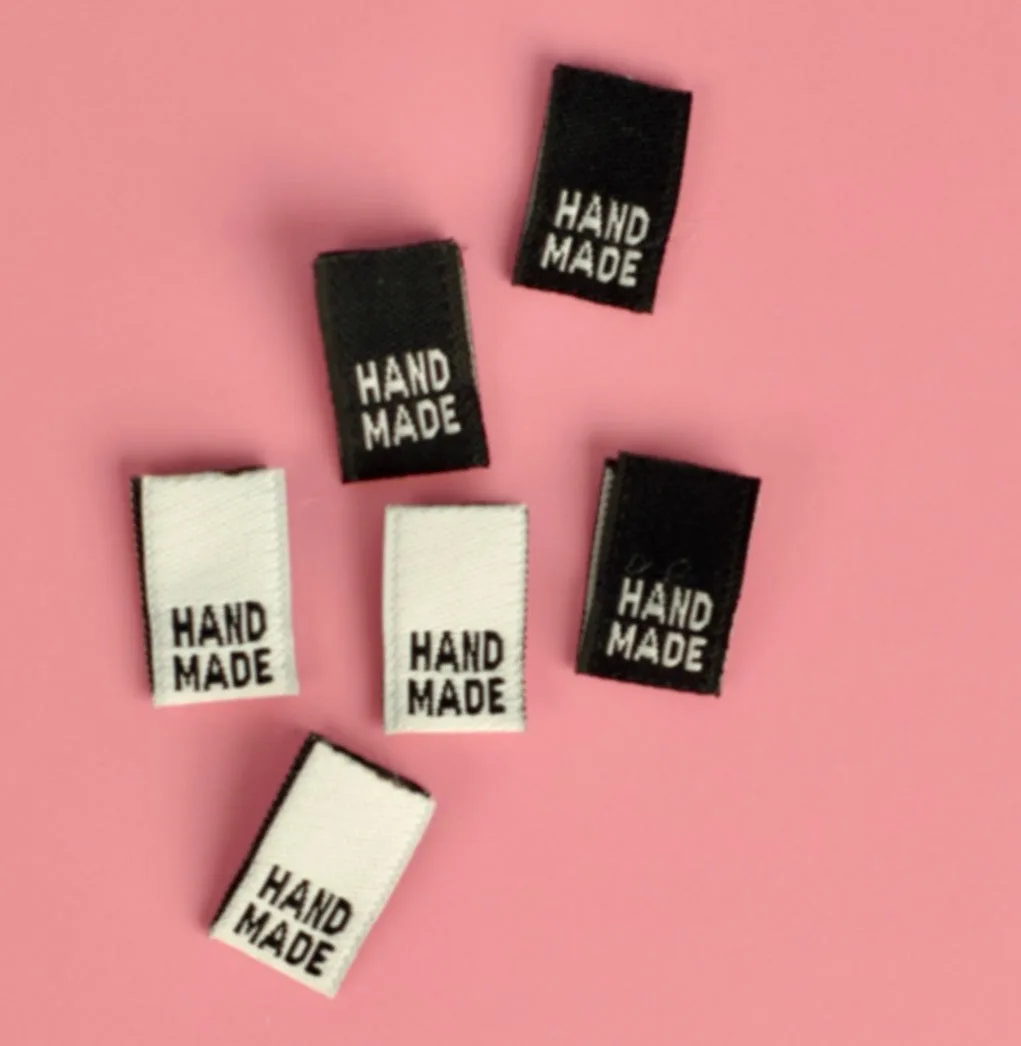
mini handmade woven labels
You can also use both on one piece: a small woven label in the seam for identification and a printed label on the back for personality. Just keep them apart so neither one crowds the other.
- Gift: message label plus a handwritten card.
- Sale: brand label plus a care and fiber tag.
Quick answers at a glance
Where does the label go?
Bottom right corner on the back of a quilt, tucked just inside the binding; on garments, inside the back neckline or side seam. Pin it first and check the orientation before stitching.
Hand sew or machine sew?
Hand slip stitch gives the flattest finish; machine stitching around the perimeter is faster but needs slower corners. Leave slack at corners to prevent puckering.
Will it survive washing?
Yes, on a gentle cycle; heat and abrasion cause the most wear, not water. Air dry or use low heat when the label matters.
Label options in this shop
- Mini Handmade Woven Labels: Mini handmade sew-in labels, three black and three white, measuring 3/8 inch by 1/2 inch and packaged in a clear bag. The small size fits narrow seam allowances and garment hems where a full-size label would be too wide.
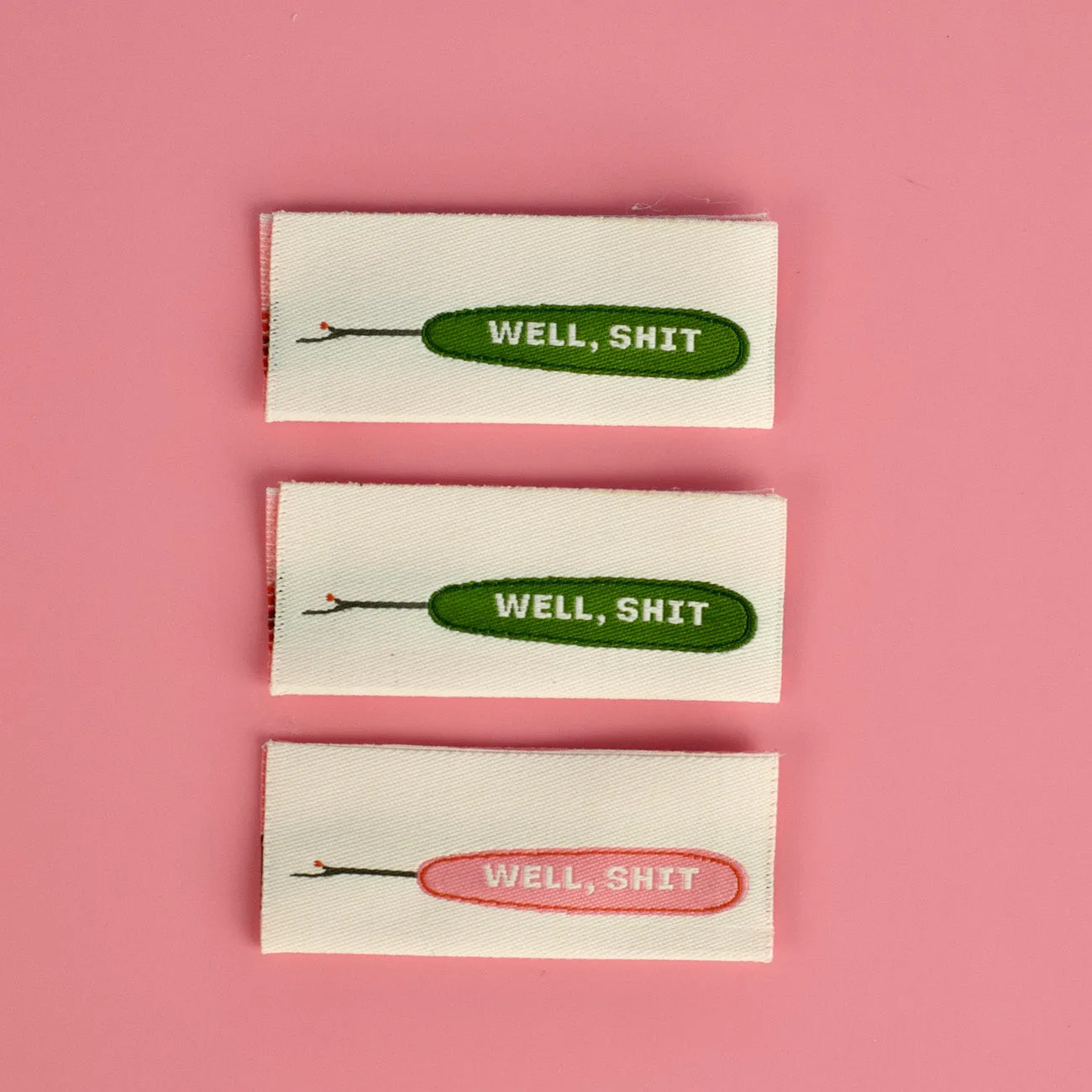
- Well, Shit - Designer Sewing Labels: Premium designer sew-in labels described as easy to sew and suited to handmade garments, quilts, bags, and accessories. A good pick when the label is meant to be seen and to carry a bit of humor on a gift.
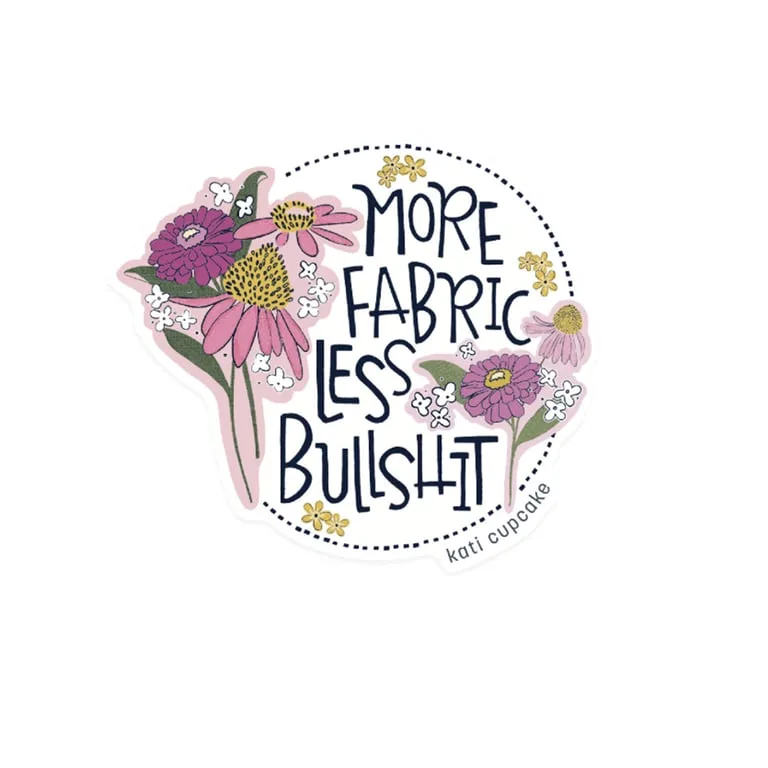
- More Fabric Less Bullshit - Sticker: A premium vinyl sticker with a matte finish, approximately 2.75 inches by 2 inches, made for stitchers, sewists, and quilters. Pairs with a labeled project as a small extra for a sewing friend, and sticks to machines, bins, or a water bottle.
Most label questions come down to placement, thread tension, and choosing a label that matches the occasion. Pin it, stitch it flat, and label the pieces that leave your house.