Quick answer
Use a stretch needle, a narrow zigzag or overlock stitch, and test on a scrap first. Marigold deadstock textured knit has 50% stretch, so gentle handling and the right needle prevent skipped stitches and stretched seams.
Why textured knits behave differently
Textured knits like Marigold deadstock have a raised surface that can snag on standard needles and presser feet. The 48% rayon, 28% polyester, 20% nylon, and 4% spandex blend gives it softness and 50% stretch, but the texture means you need to reduce friction and avoid over-handling.
Unlike smooth jersey, textured knits can hide skipped stitches until you stretch the seam. Always test on a scrap of the same fabric before sewing your garment.
When to choose a different approach
If your machine lacks stretch stitches, use a narrow zigzag (width 0.5–1 mm, length 2.5–3 mm) instead of a straight stitch. For seams that need to stretch a lot, like necklines, consider a walking foot to feed the fabric evenly.
For projects where stretch is less critical, such as structured tops or loose dresses, you can use a slight zigzag on a straight stitch to add give without bulk.
Step-by-step sewing guide
- Pre-wash and prepare: Pre-wash the fabric in cool water and tumble dry low to shrink it before cutting. Common mistake: skipping this step can cause shrinkage after sewing. Always test a small square for shrinkage first.
- Choose the right needle: Use a stretch needle (size 75/11 or 90/14) to prevent skipped stitches. Common mistake: using a universal needle can snag the texture. Replace needle at the start of each project.
- Set stitch length and width: Set a narrow zigzag (width 0.5–1 mm, length 2.5–3 mm) or a stretch stitch. Common mistake: too wide a zigzag can look messy on textured fabric. Test on a scrap to check stitch appearance and stretch.
- Sew seams with gentle tension: Use a walking foot if available and sew slowly. Common mistake: pulling the fabric while sewing distorts the texture. Let the machine feed the fabric; don't tug.
- Finish edges: Overlock or use a zigzag stitch on raw edges to prevent curling. Common mistake: skipping finishing can lead to fraying after washing. Finish edges before assembling garment where possible.
Fabric facts
-
Textured Knit Fabric | Marigold Exclusive Deadstock | Multiple Colors: Composition: 48% Rayon 28% Polyester 20% Nylon 4% Spandex; weight 270 gsm; stretch 50%. The spandex content gives good recovery, so seams need to stretch with the fabric to avoid popping.
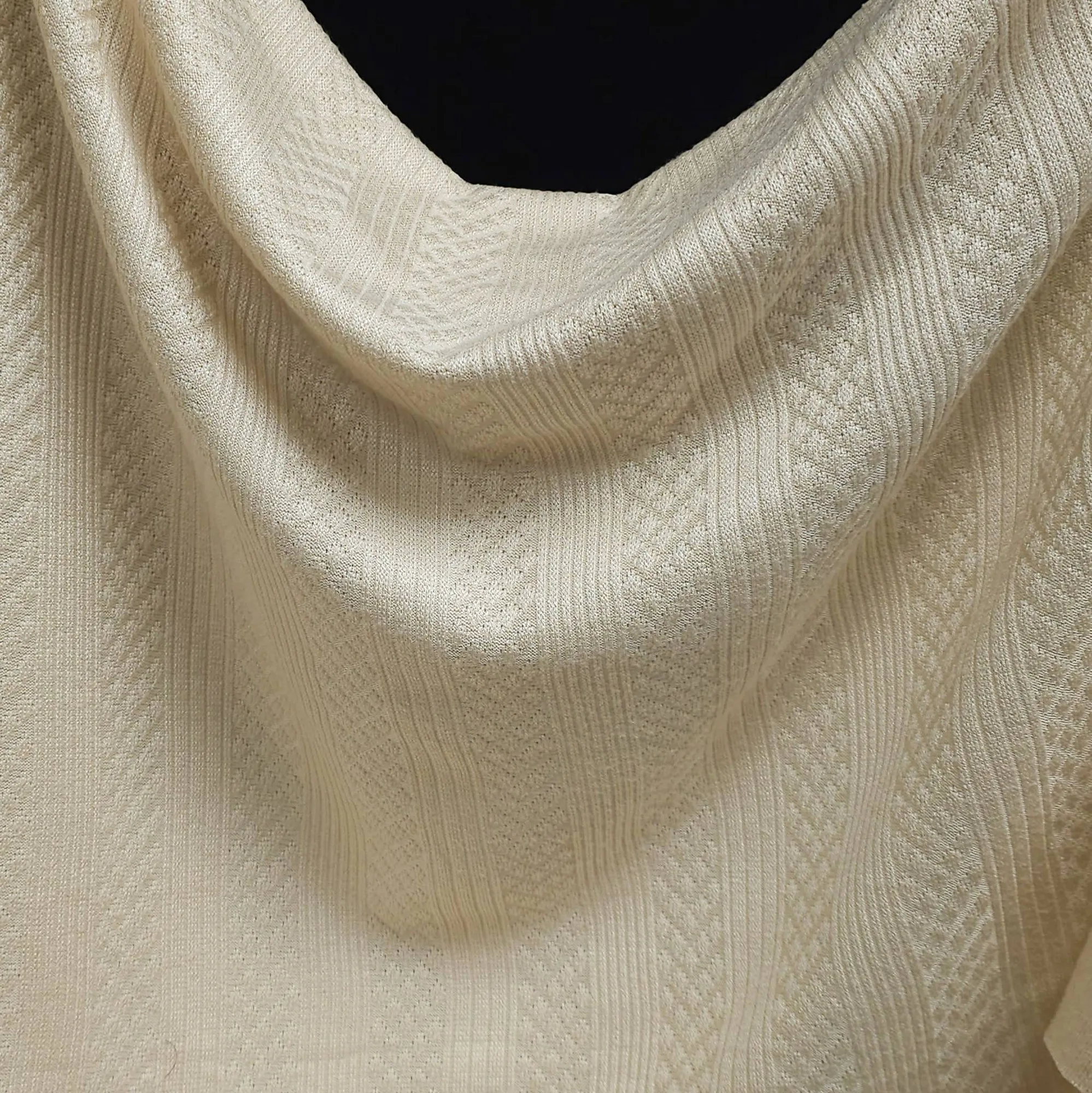
Textured Knit Fabric | Marigold Exclusive Deadstock | Multiple Colors