Quick answer
Buy a shadowbox when you want a solid, dimensional centerpiece that reads well from across the room, and buy a lenticular poster when you want a lighter, more playful piece that changes as you walk past. If your shelves are the real collection, spend the difference on display stands so cartridges and DS cases stay upright instead of sliding into a pile.
Match the format to the wall, not the fandom
Shadowboxes and lenticular posters both hang on a wall, but they behave differently once they are up. A shadowbox is a deep, boxed object, so it casts a small shadow and holds its own on a wall that gets direct light or sits across from a window. A lenticular frame is flatter and relies on changing viewing angle, so it looks best on a wall you walk past rather than one you face from a fixed chair. If your game room is a hallway or a narrow space, the lenticular piece gives you motion without needing depth. If it is a dedicated room with a couch aimed at one wall, the shadowbox is the stronger anchor.
How much wall do you actually have?
Measure the wall before you buy anything. A 9x9 inch shadowbox is roughly the footprint of a large hardcover book, so it works above a shelf, between two posters, or on a narrow strip next to a door. Lenticular frames are typically wider than they are tall, which makes them good for filling horizontal gaps above a TV or a low shelf. Do not buy two large pieces for the same wall unless you have at least a hand's width of bare wall between them; crowded art makes even a good piece look like clutter.
Light changes everything
Lenticular art is designed to shift as your viewing angle changes, so it needs some light to show that effect, but harsh direct sun can wash out the image and fade printed material over time. Shadowboxes with a deep frame handle side light better and often include a commemorative element inside the box, so they reward a closer look. If your room has a big south-facing window, plan to hang either format on a side wall rather than the window wall, and keep the art out of the direct beam for most of the day.
Where display stands fit in
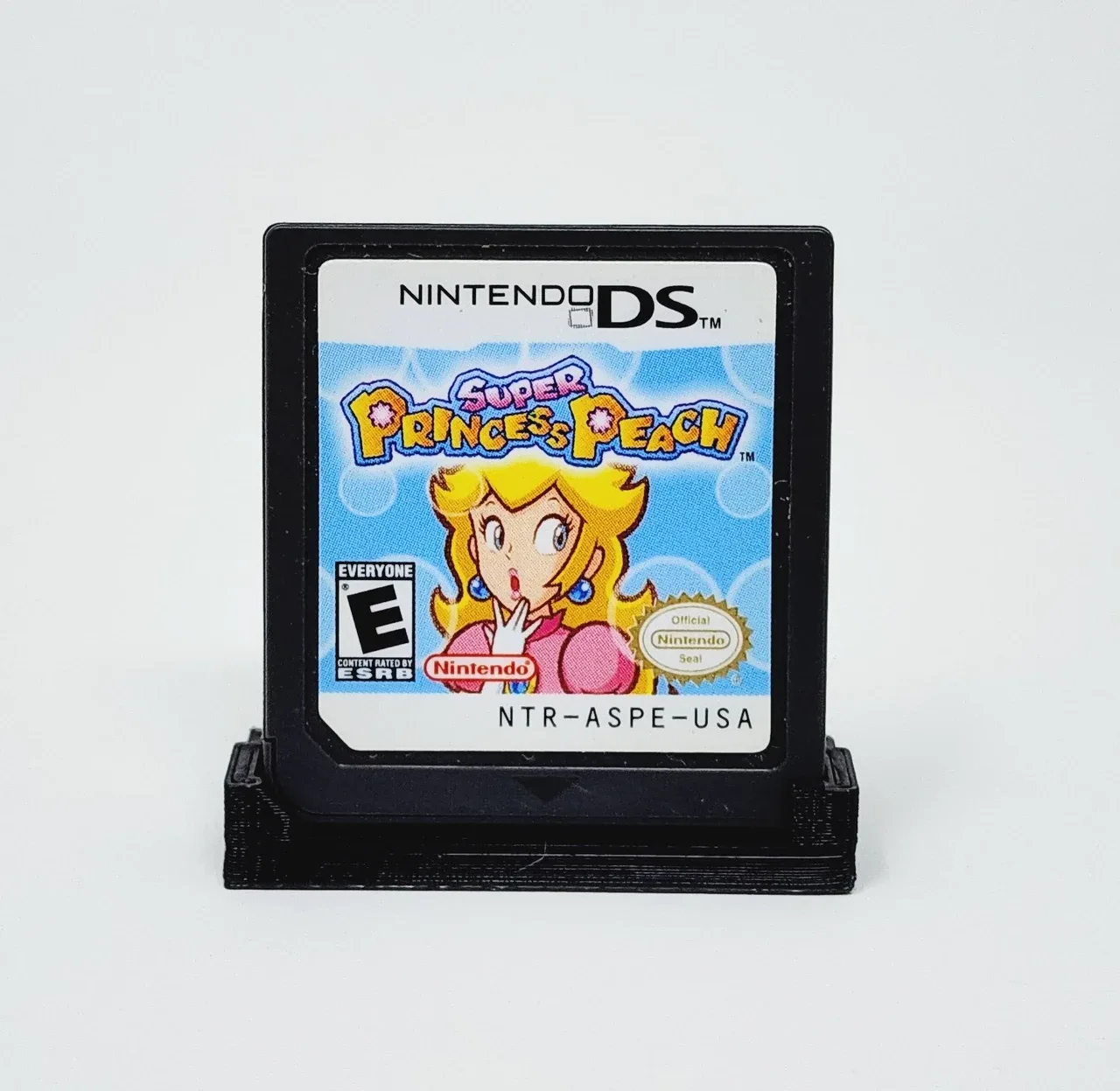
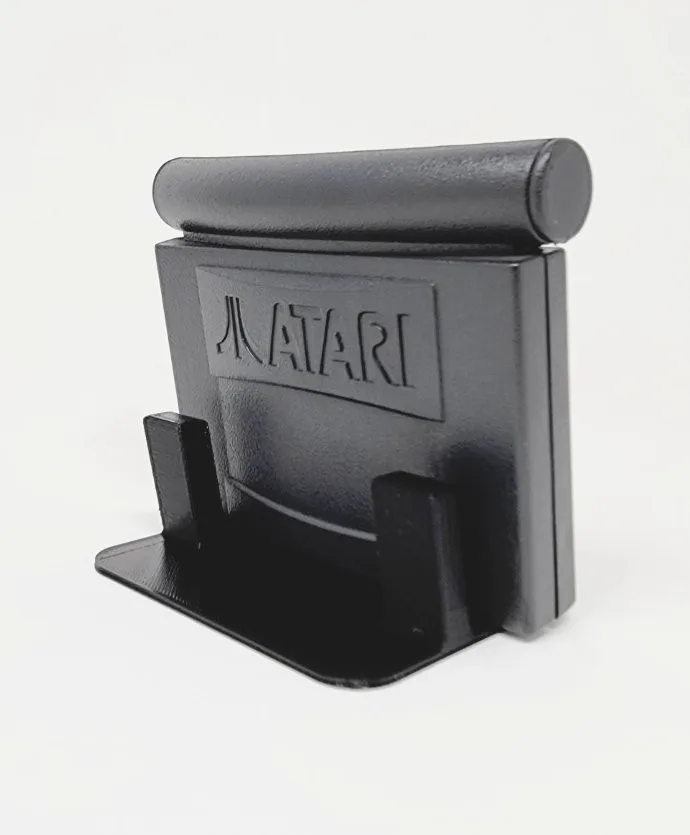
Wall art covers the vertical space, but the fastest way to make a retro room look intentional is to get the games themselves off the shelf and into a standing row. That is where display stands earn their place. A stand for Atari Jaguar cartridges holds each cart at about a 10 degree angle, which keeps the label readable and stops the stack from leaning. A stand for Nintendo DS and 3DS games uses a plug-in fit, so the cases sit at the same angle and stay put when you pull one out. Both are 3D printed with a slim profile, which matters because thick stands eat the shelf depth you need for the games behind them. Note that the stands do not include the games shown in product photos.
A practical order of operations
Start with the piece you will see most. If you sit facing one wall for hours, that wall gets the shadowbox. If you walk through the room to get to the couch, the lenticular frame goes on the path. Then fill the shelf with stands so the games are visible instead of hidden behind each other. Finally, leave one empty spot on the wall. Retro collections grow, and a blank space is cheaper than re-hanging everything in six months.
Decision rules for retro game room decor
- Rule 1: Buy the shadowbox if you face the wall: A deep, boxed piece holds up as a focal point on the wall you look at from your chair, and the 9x9 inch size fits above a shelf or in a narrow strip. One shadowbox per wall is usually enough.
- Rule 2: Buy the lenticular poster if you pass the wall: Lenticular art depends on changing viewing angle, so it earns its price on a hallway, entry wall, or path through the room. If you never walk past it, you are paying for an effect you will not see.
- Rule 3: Buy stands before a second piece of art: A slim stand with a 10 degree angle makes an existing collection look curated for a few dollars, while a second poster mostly adds clutter. Fix the shelf first, then the wall.
- Rule 4: Check the fit before you commit: The Jaguar stand and the DS/3DS stand are built for specific cartridge and case shapes, and the games shown in photos are not included. Match the stand to the exact format you own.
Products that fit this approach
- Streets of Rage "Fighting in the Streets" Shadowbox Art: Officially licensed by SEGA, 9 x 9 inches (23 cm x 23 cm), and designed to display on walls and flat surfaces with an optional commemorative element. The square format is easy to place above a shelf or beside a door, and the flat-surface option means you can lean it on a desk before committing to a hook.
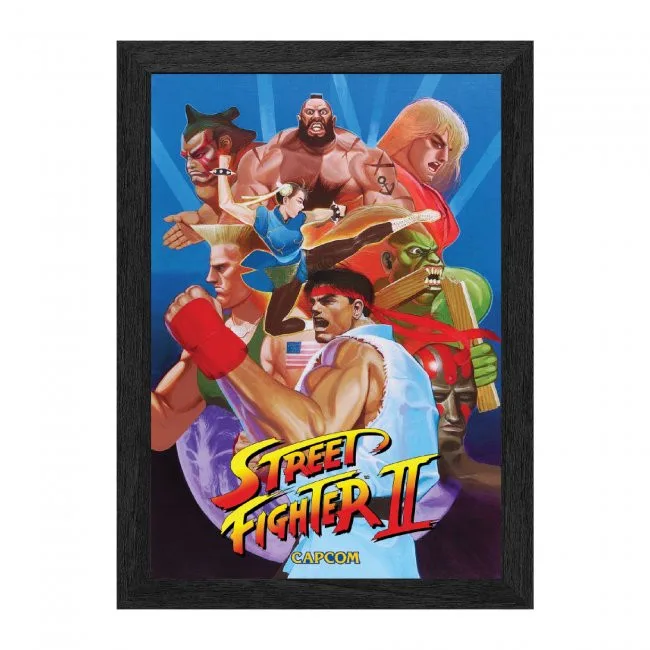
- Street Fighter II: The World Warriors Framed Lenticular Poster: Officially licensed lenticular frame from Pixel Frames Plax, built around 3-dimensional artwork from gaming archives. The lenticular effect is the point, so this piece works best where people move past it rather than stare at it from one seat.
- Display Stand for Atari Jaguar Game Cartridges - Trogg Tech: Trogg Tech 3D printed stand for Atari Jaguar cartridges with a slim profile and about a 10 degree angle. The slim footprint preserves shelf depth, and the angle keeps labels readable without propping carts against the back wall.
- Display Stand for Nintendo DS and Nintendo 3DS Games - Trogg Tech: Trogg Tech 3D printed stand for Nintendo DS and 3DS games where the games plug in for a perfect fit, with a slim profile and about a 10 degree angle. The plug-in fit keeps small DS cases from sliding when you remove one, which is the usual failure point of generic stands.
Who this decor approach is for
Best for
- Collectors with one wall they actually look at and a shelf that needs tidying
- Rooms where people walk past the display rather than sit in front of it
- Buyers who want officially licensed pieces instead of generic prints
Not for
- Collectors who want to rotate art weekly and need a cheap, disposable option
- Rooms with no safe wall space away from direct sun
- Anyone shopping for games rather than display pieces, since the stands do not include games