Quick Answer
Choose blunt tip scissors when you need to cut near delicate tissue without causing damage; choose sharp tip scissors for precise cutting of sutures, gauze, or tougher materials. Many first aid kits benefit from having both.
Understanding the Trade-Off: Precision vs. Safety
The main difference between sharp tip and blunt tip scissors comes down to precision versus safety. Sharp tip scissors allow you to make precise cuts in thin materials like suture threads or gauze, but the pointed tip can accidentally puncture skin or tissue if you slip. Blunt tip scissors, on the other hand, are designed to minimize damage to surrounding tissue when you need to cut or dissect, but they may not be as precise for fine work.
In a first aid setting, you often need both capabilities. For example, when removing a bandage or cutting clothing away from a wound, a blunt tip is safer because it reduces the risk of cutting the patient. But when you need to trim a suture or open a package, a sharp tip gives you the control you need.
Consider what tasks you perform most often. If you primarily handle minor cuts and scrapes, blunt tip scissors might be sufficient. If you do more advanced first aid or have medical training, sharp tip scissors could be more versatile.
Evaluating Your First Aid Kit Needs
Think about the types of injuries you are likely to encounter. For everyday household use, blunt tip scissors are often recommended because they are safer for use around children and in emergency situations where you might be cutting clothing or bandages. For professional or advanced use, sharp tip scissors are preferred for tasks that require precision.
Also consider the material and build quality. Stainless steel scissors are durable and resistant to corrosion, making them a good choice for first aid kits that may be stored for long periods. The length and weight of the scissors can also affect comfort and control during use.
Ultimately, the best approach is to have both types in your kit so you are prepared for any situation. Many first aid professionals carry a pair of each.
Sharp vs. Blunt: The Trade-Offs
- Sharp Tip Scissors: Choose sharp tip scissors when you need precise cuts on sutures, gauze, or other thin materials. The pointed tip allows for detailed work but increases the risk of accidental punctures. If you opt for sharp tips, handle them carefully and store them with guards.
- Blunt Tip Scissors: Choose blunt tip scissors when you need to cut near skin or tissue without causing damage. The blunt tip is safer but may lack the precision needed for fine cutting tasks. Blunt tips are a good choice for general first aid and for use around children.
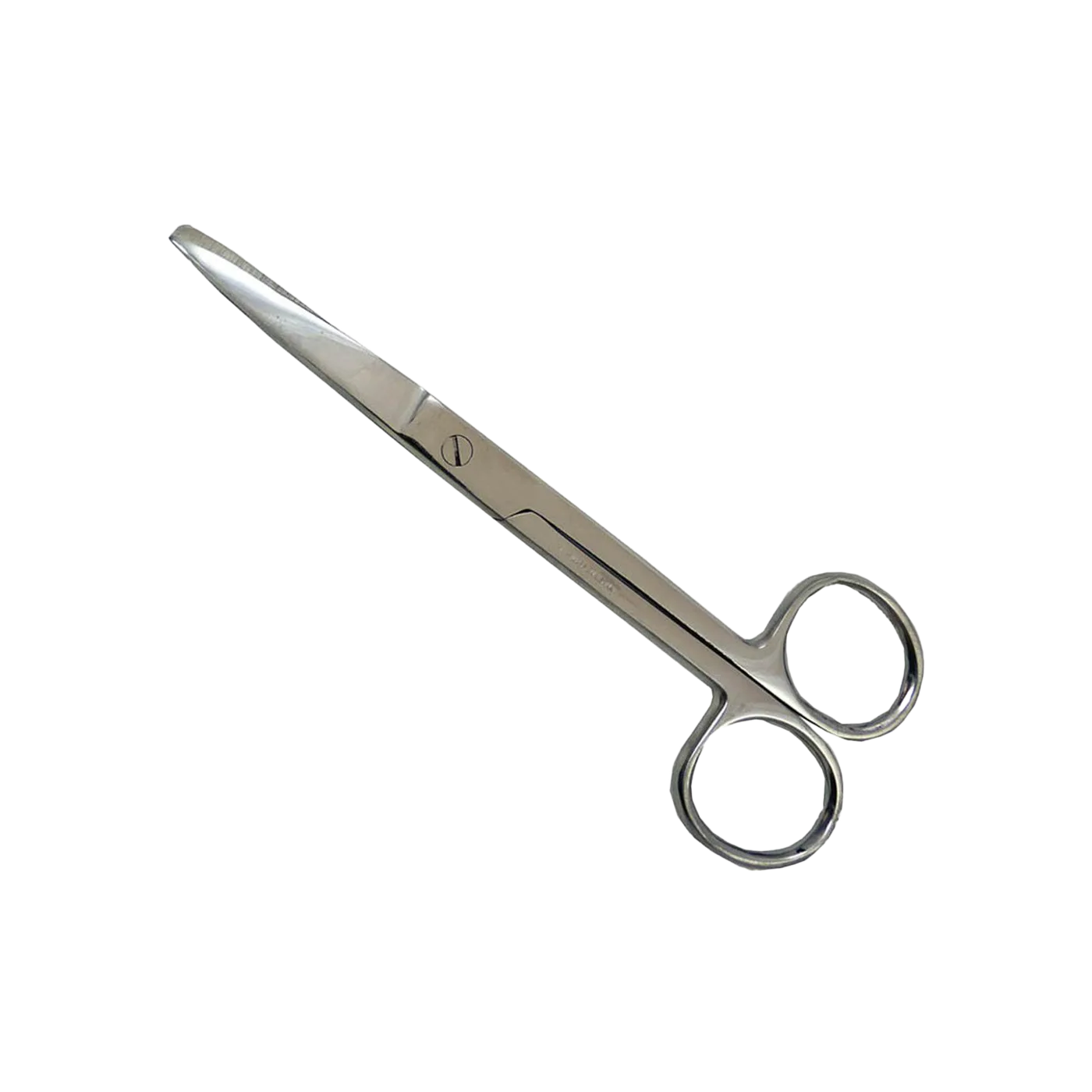
- Hybrid Option: Consider a pair with one sharp and one blunt tip, like the Sharp/Blunt Tip Scissor. This combines precision and safety in one tool, but the blunt tip may still limit precision compared to a dedicated sharp pair. A hybrid pair can be a practical compromise for many first aid kits.
Product Facts
-
Sharp/Blunt Tip Scissor: The Sharp/Blunt Tip Scissor has one blunt tip and one sharp tip, is 5 inches long, and weighs 1.3 ounces. This hybrid design lets you cut precisely with the sharp tip while using the blunt tip to safely navigate around delicate tissue, making it a versatile single-tool option.
Sharp/Blunt Tip Scissor
-
Stainless Steel Scissors: The Stainless Steel Scissors are 5.5 inches long, straight, with sharp tips, and feature a chrome finish. The sharp tips and chrome finish make these scissors ideal for cutting suture threads and thin gauze with accuracy, and the stainless steel construction ensures durability.
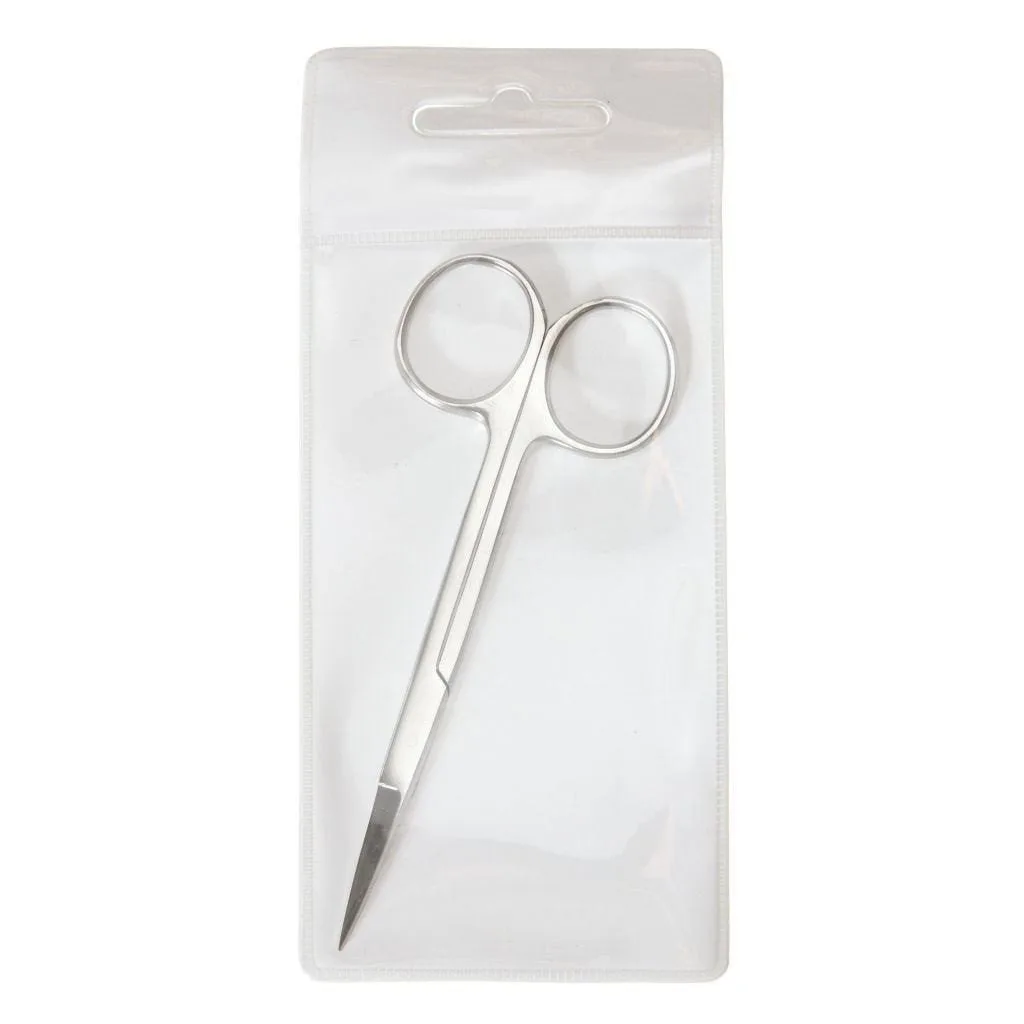
Stainless Steel Scissors
Which Should You Choose?
Best for
- Sharp tip scissors are best for medical professionals or trained individuals who need to cut sutures or perform precise tasks.
- Blunt tip scissors are best for household first aid kits, especially when children may be present or when cutting clothing or bandages near the skin.
Not for
- Sharp tip scissors are not ideal for cutting clothing away from a wound where you might accidentally cut the patient.
- Blunt tip scissors are not ideal for precise cutting of sutures or thin materials where accuracy is critical.