Start with the tool you actually own
The triangle Flossenschere is a heavy-duty pair of fish scissors with lacquered handles, an ergonomic grip area and a single-serrated stainless steel blade with a 12 cm cutting edge. That combination matters for care: the serrated edge is what grips slippery fins and scales, and the lacquered handles need gentler treatment than bare metal.
Before you sharpen or store anything, check the blade and handle condition. A quick visual inspection tells you whether you are doing routine maintenance or dealing with a specific problem such as a loose pivot or a damaged edge.
Catalog facts that guide care
-
Flossenschere: Edelstahl, Klingenlänge 12cm. Stainless steel resists rust but still benefits from prompt drying; the 12 cm blade length tells you how much edge you need to clean and inspect.
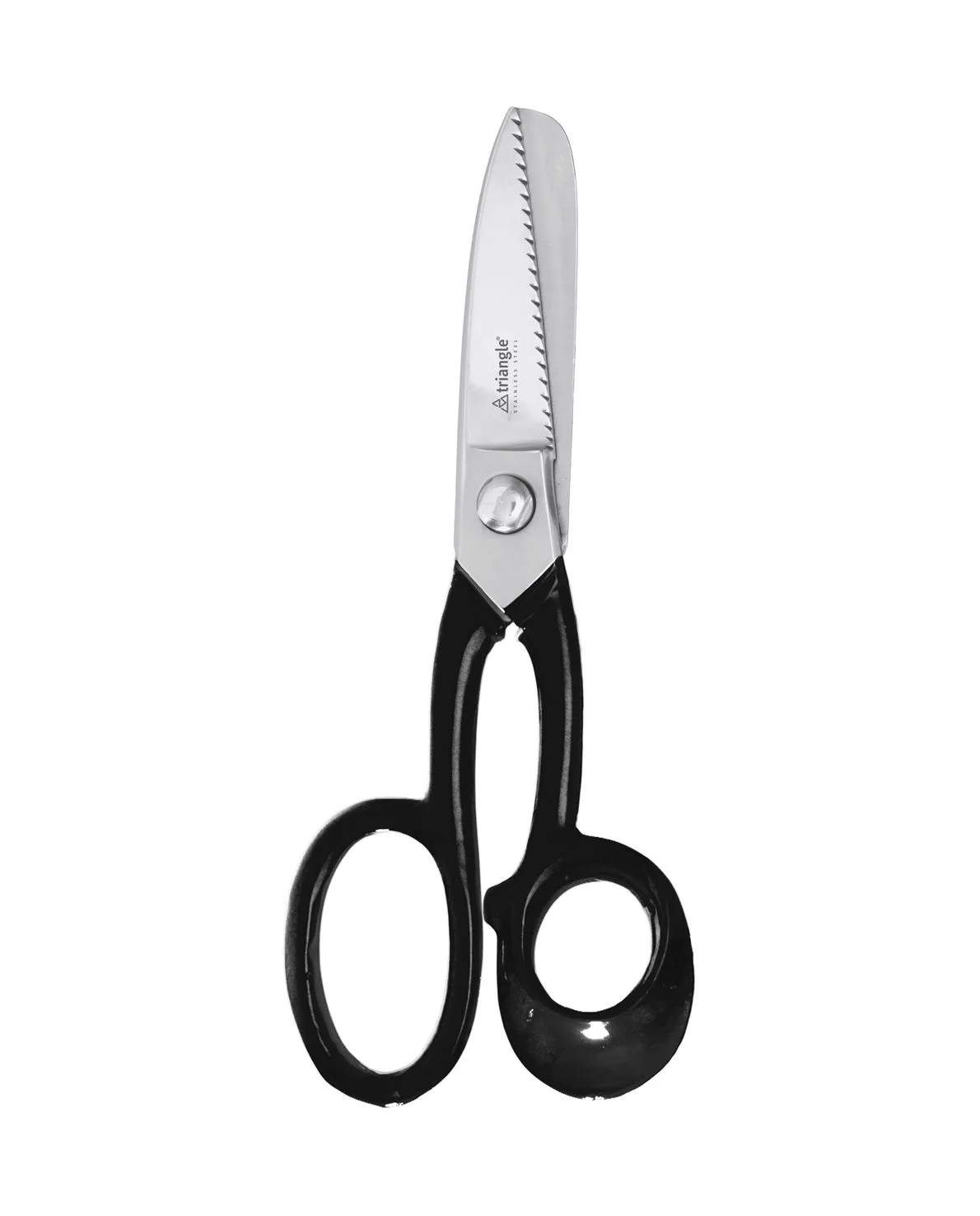
Flossenschere
-
Flossenschere: Massive Flossenschere mit lackierten Griffen von triangle. The lacquered handles should not be soaked or scrubbed aggressively, because the coating is the part most likely to wear.
-
Flossenschere: Ergonomischer Griffbereich und einseitig gezahnte Klinge. The single-serrated edge grips slippery fish fins; sharpening should preserve the serration rather than flatten it.
Cleaning the Flossenschere after fish prep
Fish scissors collect scales, slime and fine membrane in the pivot area. Clean them promptly after use so residue does not harden in the joint.
- Rinse the blades under warm running water: Hold the scissors slightly open so water reaches both sides of the blade and the pivot. Avoid soaking the lacquered handles for long periods.
- Wash with mild dish soap and a soft brush: A small brush reaches the serrations and the pivot without scratching the stainless steel or the handle coating.
- Dry immediately with a soft cloth: Dry the blade, the serrations and the pivot area thoroughly. Stainless steel is rust-resistant, but trapped moisture in the joint is still worth avoiding.
- Leave the scissors slightly open to air-dry: A little airflow through the pivot helps finish the job. Do not store the scissors closed while still damp.
How to sharpen a serrated fish scissor edge
The Flossenschere has a single-serrated blade, so sharpening is not the same as honing a plain chef's knife. The goal is to restore the teeth and the cutting edge without grinding the serrations flat. The catalog does not supply a manufacturer sharpening method, angle or grit recommendation, so treat the following as general workshop practice rather than an official triangle instruction.
Use a fine sharpening rod or a tapered diamond file that fits into the serration grooves. Work one serration at a time, following the existing angle and removing only the minimum material. Finish with a few light passes on the flat side of the blade to remove any burr. If the edge is badly damaged or the pivot feels loose, contact triangle or a professional knife sharpener rather than attempting a repair the catalog does not describe.
Checkpoints before and after sharpening
- Inspect the serrations: Look along the edge in good light. Even, distinct teeth mean the edge is intact; flattened or chipped teeth mean you need to be more careful with the file.
- Test on paper, not on your finger: A clean cut through thin paper or a soft tomato skin shows whether the edge grips. Never test sharpness by running a finger along the blade.
- Check the pivot action: The scissors should open and close smoothly. If they feel gritty or loose, clean and dry the pivot before sharpening further.
- Look at the lacquered handles: Sharpening should not involve the handles. If the coating is chipped, avoid harsh cleaners that could lift more of the lacquer.
Storing the Flossenschere so the edge lasts
Storage is where many kitchen scissors lose their edge. The Flossenschere should be stored closed, dry and away from other metal tools that can knock against the blade. A dedicated drawer slot, a magnetic strip or the original packaging all work, provided the scissors cannot slide around.
Avoid storing the scissors in a damp drawer or next to a sink. Even stainless steel benefits from a dry environment, and the lacquered handles stay in better condition when they are not exposed to standing water. If you keep the scissors in a knife block, choose a slot that fits the handle and does not force the blades against the sides.
Everyday habits that support kitchen scissors maintenance
- Clean after every fish session: Fish residue is the main reason scissors become stiff or smelly. A quick rinse and dry takes less time than a deep clean later.
- Do not use the Flossenschere as a general-purpose cutter: The serrated edge is designed for fish fins and similar tasks. Cutting wire, cardboard or tough packaging can damage the teeth.
- Keep the pivot dry: A drop of moisture in the joint is easy to miss. Open the scissors fully when drying and leave them open until you are sure they are dry.
- Store away from other loose tools: A simple sheath or a dedicated drawer divider prevents the blade from being nicked by neighbouring utensils.
When the catalog does not give you an answer
The supplied product record for the Flossenschere confirms the stainless steel blade, the 12 cm blade length, the lacquered handles and the single-serrated edge. It does not include a manufacturer sharpening angle, a recommended grit, dishwasher guidance or a specific storage method. That means the advice above is practical general care, not a set of official instructions.
If you are unsure about sharpening the serrated edge yourself, a professional sharpening service is the safer route. For anything involving the pivot or the handle coating, ask triangle directly rather than forcing a repair. The scissors are a durable tool, and a little restraint keeps them that way.