Why a Field Sharpener Works for a Toor Folder
Toor's Bateman folding knife uses a precision-machined MagnaCut steel blade in a lightweight TwinFrame construction. Keeping that edge sharp in the field calls for a tool that is compact, guided, and versatile. The Work Sharp Guided Field Sharpener is designed to do exactly that: it fits in a pack or pocket and uses built-in angle guides to maintain a consistent bevel across the blade.
What the Guided Field Sharpener Provides
-
Work Sharp Guided Field Sharpener: The Guided Field Sharpener incorporates 5 stages of sharpening and honing, each with built-in angle guides for a consistent bevel across the entire blade. The angle guides remove guesswork, so you can sharpen a folding knife like the Bateman without worrying about holding the wrong angle.
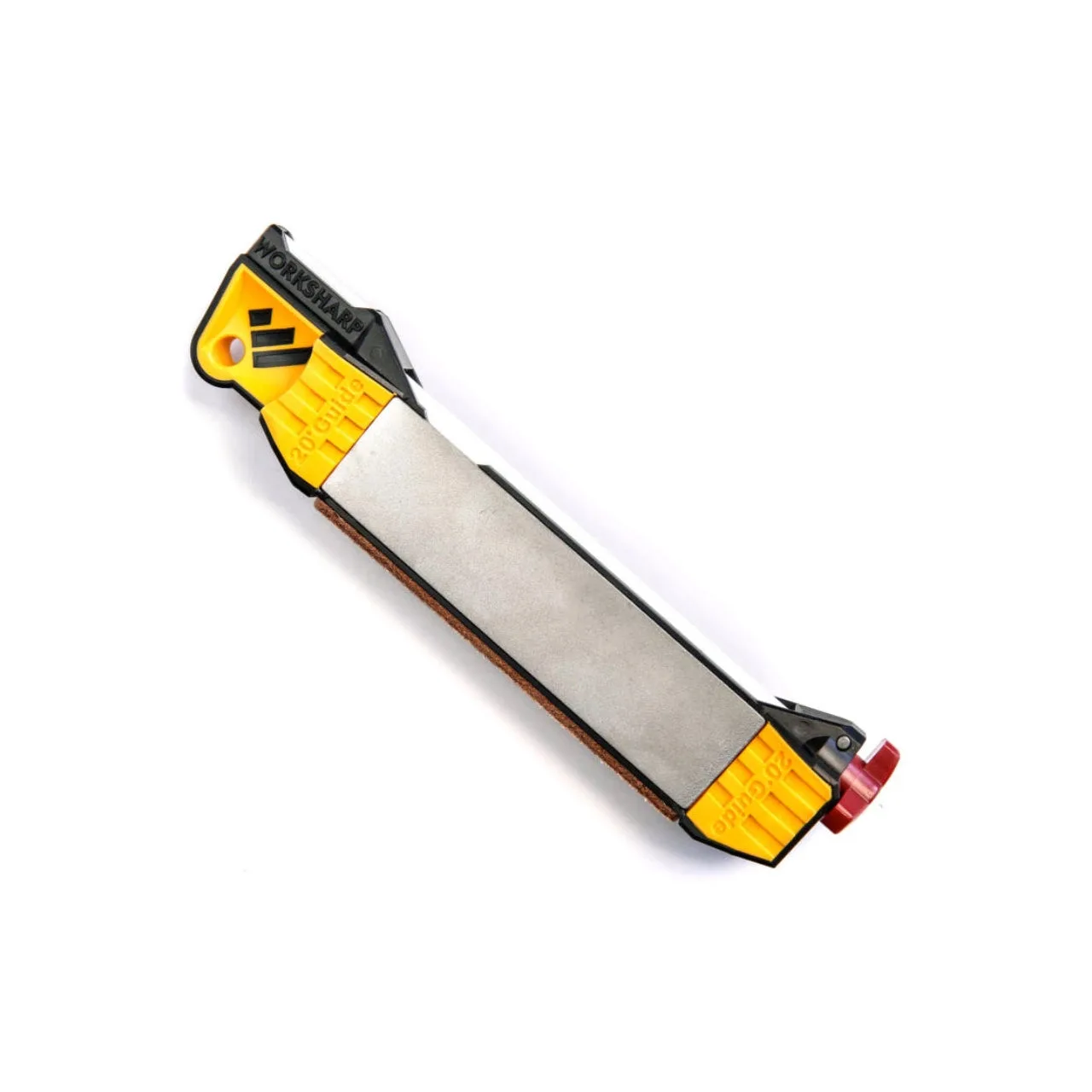
Work Sharp Guided Field Sharpener
-
Work Sharp Guided Field Sharpener: It includes 2 diamond plates: coarse (220 grit) for shaping and repairing, and fine (600 grit) for sharpening. Plates measure 4.0" x 1.0". Coarse grit handles nicks or dull edges; fine grit restores a working edge. Both are sized to work on folding knife blades.
-
Work Sharp Guided Field Sharpener: It also has 2 ceramic rods (a 3-position rod with coarse, fine, and fish hook honing sides, plus a smaller serration sharpener) and a leather strop conditioned with micro-abrasive. Ceramic rods refine the edge further, and the strop finishes the blade to a razor-sharp edge. The serration sharpener is useful if your folding knife has a serrated section.
Step-by-Step Field Sharpening Process
Set the sharpener on a stable surface. The compact dimensions (6.75" x 1.5" x 1.0") and light weight (2.5 ounces) make it easy to use on a tailgate, table, or flat rock.
- 1. Shape or repair with the coarse diamond plate: If the blade is very dull or has small nicks, use the coarse (220 grit) diamond plate first. Place the blade flat on the plate and pull it across the abrasive surface. The built-in angle guide keeps the bevel consistent.
- 2. Sharpen with the fine diamond plate: Switch to the fine (600 grit) diamond plate. Repeat the same pulling motion to refine the edge. This step removes the scratches from the coarse plate and creates a sharper edge.
- 3. Hone with the ceramic rods: Use the 3-position ceramic rod: start with the coarse side, then the fine side. The rod's angle guides maintain consistency. For serrated sections, use the smaller diameter serration sharpener.
- 4. Finish with the leather strop: The conditioned leather strop polishes the edge to a razor finish. A few light passes on each side remove any remaining burr.
What to Expect from the Bateman's Edge
The Bateman folding knife uses MagnaCut steel, which is known for edge retention and corrosion resistance. The 5-stage process above restores a sharp working edge without needing a bench stone or water. The Guided Field Sharpener's angle guides are especially helpful for a folding knife because the blade is shorter and requires consistent strokes. If your Bateman has a titanium clip or crossbar lock, they do not interfere with sharpening—the sharpener only contacts the blade.
Limitations to Keep in Mind
The supplied information does not specify a recommended sharpening angle for the Bateman. The Guided Field Sharpener's built-in guides are fixed, so you cannot adjust the angle. This is fine for general maintenance but may not match a specialized edge geometry. For heavy damage or reprofiling, the coarse diamond plate can handle shaping, but a bench stone or professional service may be more effective. Also, the sharpener is designed for field use—it is compact and light, not a full shop system.