Quick Answer
Use a shelf pin jig with a sharp 5mm brad point drill bit to drill evenly spaced, perfectly aligned holes for adjustable shelving. The jig guides the bit, while the bit's tip prevents wandering on entry.
Why a Dedicated 5mm Bit Matters
Standard twist drill bits can wander or tear the wood grain when drilling shelf pin holes. A brad point bit, like the Kreg Shelf Pin Jig Drill Bit (5mm), has a sharp center spur that starts the hole exactly where you want it, and its high-speed steel construction stays sharp through many holes. The 1/4" hex shank also fits quick-change chucks, so you can swap bits without re-chucking.
Step-by-Step: Drilling Shelf Pin Holes
- Mark Your Hole Locations: Use a pencil and square to mark the center of each shelf pin hole row on the cabinet side. For adjustable shelving, mark the first hole at your desired height, then measure equal spacing (typically 32mm or 1-1/4") for the rest. Common mistake: marking holes freehand without a square leads to crooked rows. Always use a square to keep marks plumb.
- Set Up the Shelf Pin Jig: Align the jig's bushing over your first mark and clamp it firmly to the cabinet side. Ensure the jig is level and the bushing sits flat against the wood so the bit enters perpendicularly. Checkpoint: If the jig shifts while drilling, the hole will be angled. Double-check clamp tightness before drilling.
- Insert the 5mm Drill Bit: Place the Kreg Shelf Pin Jig Drill Bit (5mm) into your drill's chuck or quick-change adapter. The hex shank locks securely without slipping. Make sure the bit is fully seated and centered. Common mistake: using a partially inserted bit can cause wobble and oversized holes. Push the bit in until it stops.
- Drill the Hole: Position the bit tip into the jig bushing and start the drill at a moderate speed. Apply steady, light pressure—let the brad point do the work. Drill to the depth required for your shelf pins (usually about 1/2" to 3/4"). Checkpoint: drilling too fast or with excessive force can burn the wood and dull the bit. Use a smooth, controlled feed.
- Repeat for All Holes: Move the jig to each marked location, reclamp, and drill. For multiple rows, use a spacer block to maintain consistent spacing between rows. Common mistake: skipping the spacer block leads to uneven shelf support. Use a simple block cut to your spacing measurement.
- Test Fit the Shelf Pins: Insert shelf pins into the drilled holes. They should fit snugly but not require force. If a pin is loose, the bit may have dulled or the hole was drilled at an angle. Checkpoint: If pins wobble, stop and inspect the bit tip. A dull brad point can tear fibers and enlarge the hole.
Product Used in This Guide
-
Shelf Pin Jig Drill Bit (5mm): High-speed steel construction with an ultra-sharp brad point tip that drills smooth holes fast. The brad point tip prevents the bit from skating across the surface, giving you clean, accurate holes without splintering.
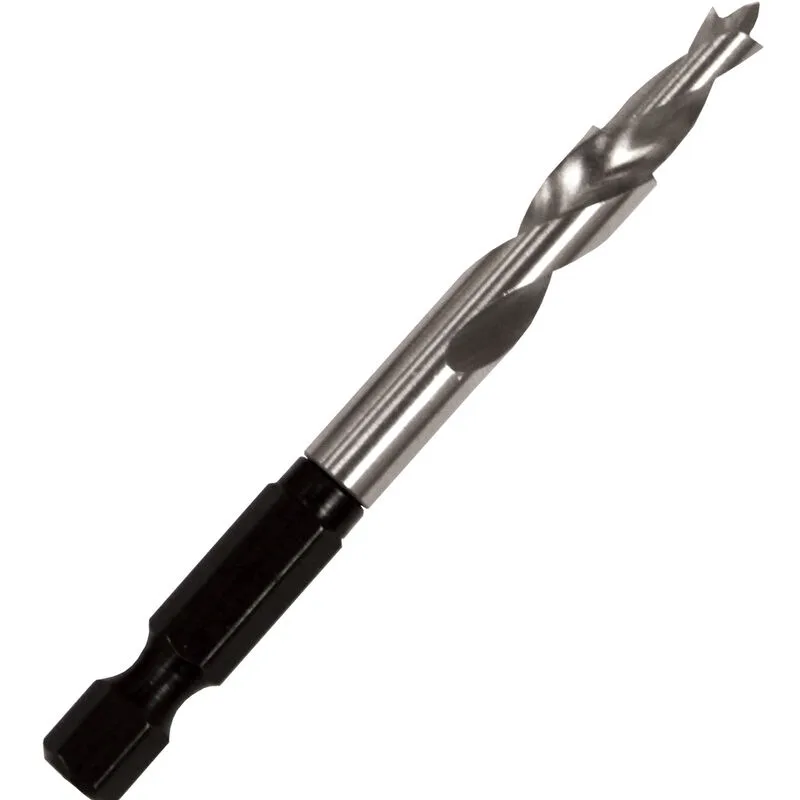
Shelf Pin Jig Drill Bit (5mm)