Start with the layer underneath, not the jacket
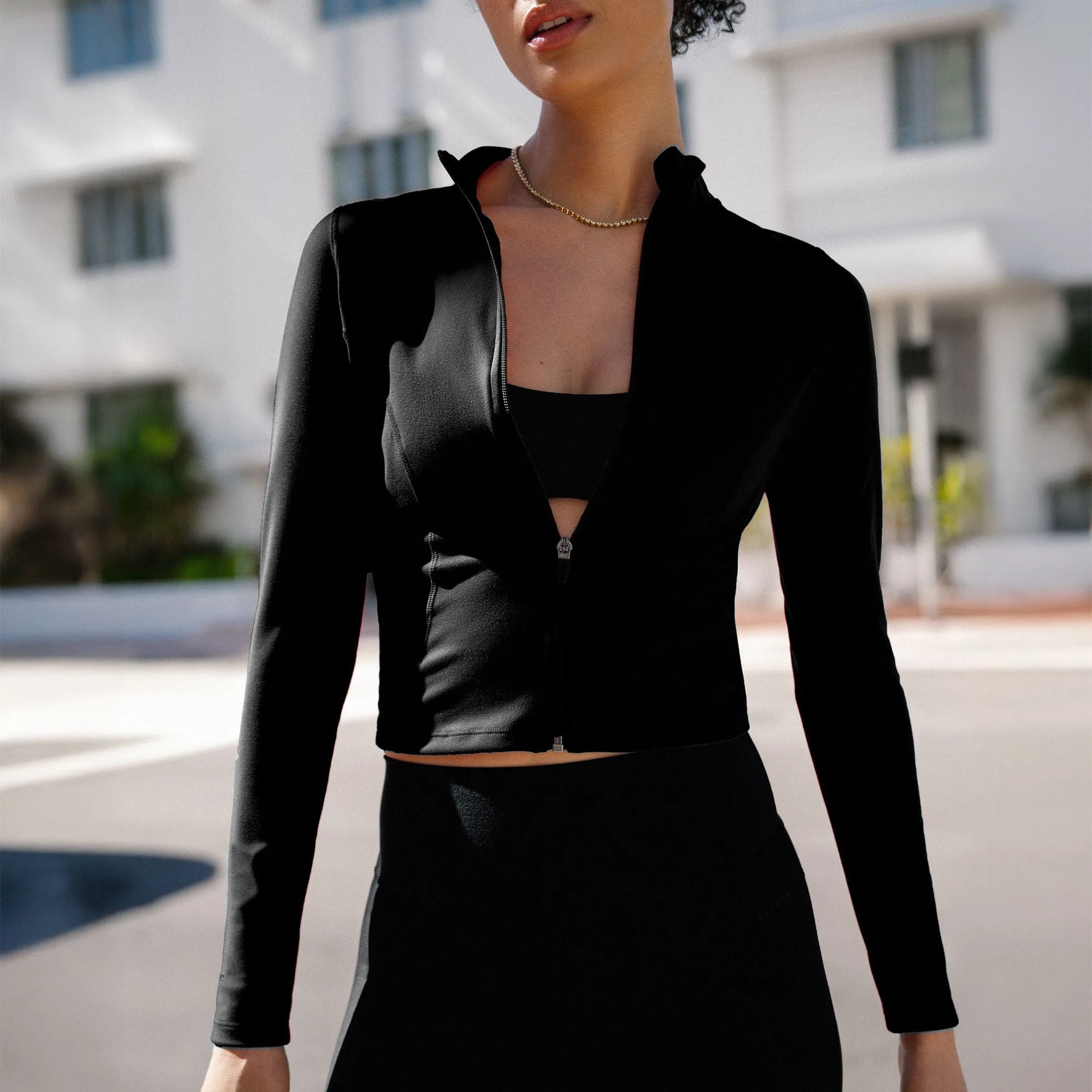
The Sherpa Zip-Up Jacket works best as an outer layer over a close-fitting base, such as a bodysuit. That order keeps the jacket from rubbing directly against skin and gives you an easy way to adjust warmth: add or remove the base layer first, then decide whether the sherpa goes on.
The jacket itself is 100% polyester sherpa fleece with a 100% cotton lining. That combination is soft and lightweight, but the supplied record does not include a warmth rating, so treat it as a cozy extra layer rather than a guarantee for extreme cold. For very cold outings, plan on a base layer plus the sherpa, and check your child's comfort as you go.
What the Sherpa Zip-Up Jacket record confirms
-
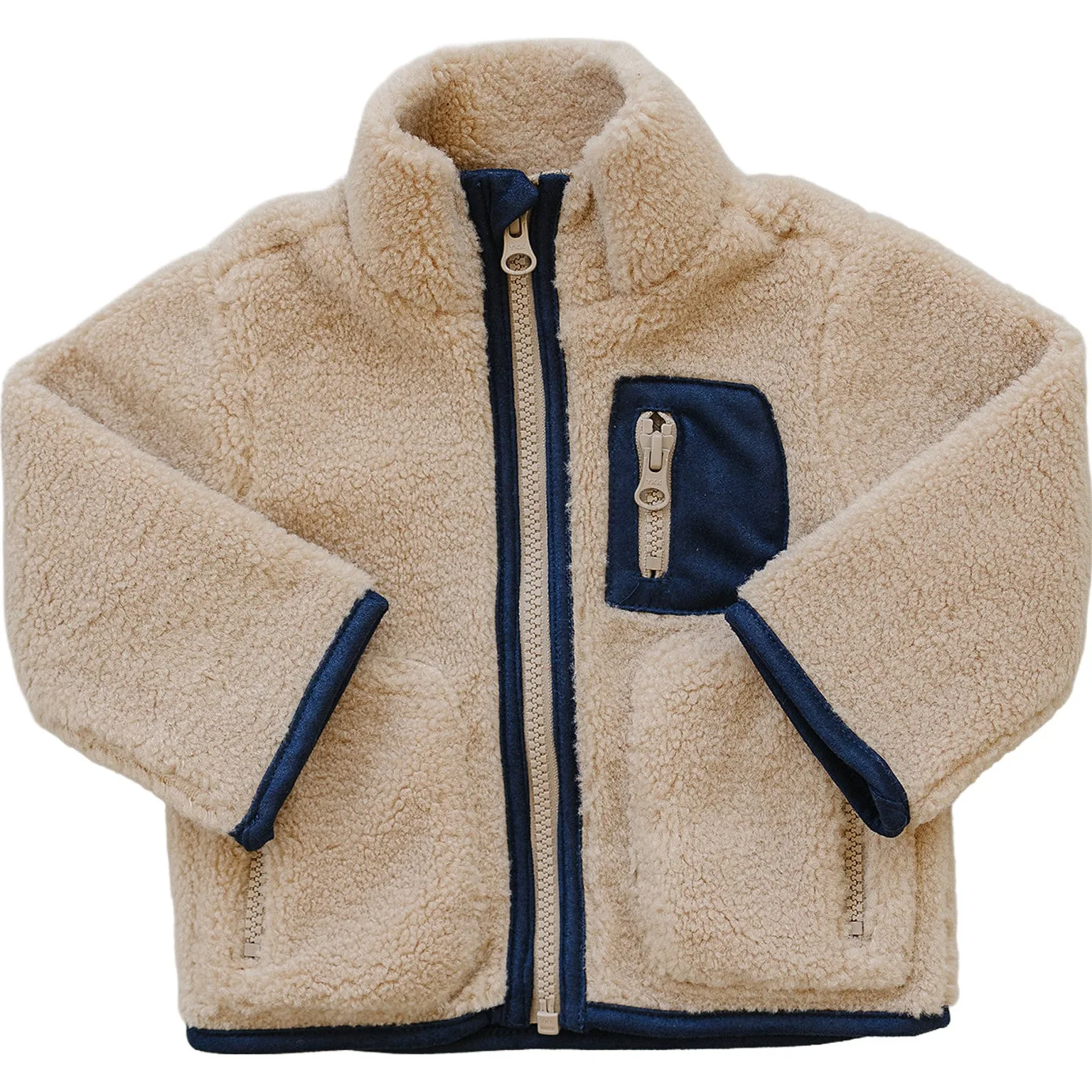
Sherpa Zip-Up Jacket: 100% Polyester shell with 100% Cotton lining. The cotton lining sits next to the base layer, while the polyester sherpa provides the soft outer texture.
Sherpa Zip-Up Jacket
-
Sherpa Zip-Up Jacket: Full front zipper and roomy pockets. The zipper makes the jacket quick to put on and take off during layering changes; pockets give little hands a place to warm up.
-
Sherpa Zip-Up Jacket: Wash in cold water, tumble dry low. These are the only care steps supplied, so follow them exactly and avoid guessing at other treatments.
How to layer the sherpa jacket over a bodysuit
Use this sequence as a practical routine. It relies only on the jacket features and care facts in the supplied record.
- 1. Put on the bodysuit first: A close-fitting bodysuit keeps the base layer smooth under the jacket and makes diaper changes easier without removing the outer layer.
- 2. Add the sherpa jacket as the outer layer: Zip the full front zipper up to the neck, leaving room for comfortable movement. The roomy pockets are there for hands, not for storing bulky items.
- 3. Check the fit at shoulders and wrists: The jacket should allow arm movement without riding up. If the sleeves bunch or the shoulders pull, revisit the size chart before heading out.
- 4. Adjust layers instead of adding more jackets: If your child feels chilly, add a warmer base layer under the sherpa rather than stacking a second outer jacket, which can restrict movement.
- 5. Remove the jacket indoors: Unzip and take off the sherpa when you move inside so your child does not overheat. The full zipper makes this quick.
Sizing tips from the supplied length and width chart
The record lists length and width measurements for sizes 0-3m through 7Y. Use them as a starting point, not a guarantee of fit.
- 0-3m: Length 12in, width 10.75in. The smallest listed size; check the chart against your baby's current measurements.
- 3-6m: Length 12.75in, width 11.25in. A small step up in both length and width.
- 6-12m: Length 13.5in, width 12.25in. Confirm the sleeve and body length suit your baby's torso before choosing.
- 18m: Length 14in, width 12.5in. Note that the size label is 18m rather than 12-18m; match to the chart, not the label alone.
- 2T: Length 15.25in, width 13.5in. Toddler sizing begins here; compare with how your child's current jackets fit.
- 3T: Length 16.25in, width 14.5in. A wider body than 2T, which matters if you plan to layer over thicker bodysuits.
- 4T: Length 17.5in, width 15.25in. Check the chart if your child is between sizes; the roomier width may suit layering.
- 5Y: Length 18.5in, width 16in. The chart lists 5Y rather than 5T; use the measurements as your guide.
- 6Y: Length 19.25in, width 16.5in. Measure your child's torso and compare before ordering.
- 7Y: Length 20.5in, width 17.5in. The largest listed size; confirm the sleeve length works for your child.
What the sizing chart does not tell you
The supplied record gives length and width but not sleeve length, shoulder width, or a recommended age-to-size conversion. It also does not state how much room the jacket leaves for layering. If your child is between sizes or you plan to wear it over a bulky bodysuit, use the measurements as a comparison tool rather than a promise of fit.
The available variant evidence lists sizes 0-3, 3-6, 4T, 5Y, 6Y, and 7Y, while the measurement chart also includes 6-12m, 18m, 2T, and 3T. Check the size selector on the product page to confirm which sizes are currently offered before you rely on a specific chart row.
Cold-weather layering checkpoints that stay within the facts
These checkpoints focus on what you can observe and adjust, without assuming a temperature rating for the jacket.
- Check the base layer first: A bodysuit that fits closely under the sherpa keeps the lining against a smooth surface and makes the jacket easier to put on.
- Use the zipper for quick adjustments: The full front zipper lets you open the jacket without removing it, which helps when moving between outdoors and a warm room.
- Watch for overheating: Sherpa fleece is described as warm and cozy, but the record gives no thermal rating. Remove the jacket indoors and check your child's comfort regularly.
- Keep the pockets for hands, not heat packs: The record describes roomy pockets for little hands. It does not mention heat packs or hand warmers, so do not assume the pockets are designed for them.
Care steps that protect the sherpa and lining
The only care instructions supplied are to wash in cold water and tumble dry low. Follow those two steps and avoid adding bleach, fabric softener, or high heat, since the record does not confirm those treatments are safe for the polyester sherpa or cotton lining.
Because the jacket is an outer layer, it may not need washing after every wear. Use your judgment based on visible soil or odor, and always follow the two supplied care steps when it does need a refresh.
When the sherpa jacket is the right outer layer
Choose the Sherpa Zip-Up Jacket when you want a soft, easy-on layer for chilly days and your child will wear a bodysuit underneath. The full zipper and roomy pockets make it practical for quick outings and for children who are learning to dress themselves.
Skip it as a stand-alone cold-weather coat if you need a verified warmth rating or weather protection; the supplied record does not confirm either. In that case, use the sherpa as a mid-layer or choose a different outer layer for the coldest days.