Quick answer
If you drive a Honda or Acura with a manual transmission, your shift lever is almost certainly M10x1.5 — a 10 mm nominal diameter with a 1.5 mm thread pitch. Buy an M10x1.5 knob and it threads straight on. If your car uses something else, match the knob to the lever or use a threaded adapter, and always verify with a thread pitch gauge or a known-good nut before you order.
Shift knobs are one of the easiest interior upgrades you can make, but they are also one of the easiest parts to order wrong. The reason is simple: thread pitch is invisible until the knob refuses to thread on, and by then you have already paid for return shipping.
This guide explains what M10x1.5 actually means, how to measure your own lever in about two minutes, which thread sizes you will run into on other platforms, and how to choose between a low-profile aluminum knob, a titanium knob, and an insulated knob once you know your thread size.
What M10x1.5 Actually Means
The first number is the nominal thread diameter in millimeters — 10 mm across the threads. The second number is the pitch: the distance in millimeters between one thread crest and the next. So M10x1.5 is a 10 mm thread with 1.5 mm between threads. An M10x1.25 knob looks identical at a glance but will bind after half a turn.
This matters because Honda and Acura manual shift levers have used M10x1.5 for decades across Civic, Integra, Accord, and RSX platforms. That consistency is why an M10x1.5 shift knob is the default answer for most Honda owners — but it is not universal, and a previous owner may have installed an aftermarket lever with a different thread.
- M10x1.5 = 10 mm diameter, 1.5 mm pitch — the Honda/Acura manual default
- M10x1.25 uses the same diameter but a finer pitch and will not interchange
- Thread diameter alone is not enough; pitch must match too
How to Measure Your Shift Lever Thread
The fastest check is a thread pitch gauge — a small set of toothed leaves you press against the threads until the teeth seat perfectly. A 1.5 mm leaf that sits flush confirms M10x1.5. If you do not own a gauge, a known-good M10x1.5 nut from a hardware store does the same job for a couple of dollars.
If you have no gauge and no nut, measure the outside diameter of the threaded section with calipers. A reading near 9.8 mm points to a 10 mm nominal thread. Then measure the distance across ten thread crests and divide by ten to estimate pitch. It is less precise than a gauge, but it will tell you whether you are dealing with 1.5 mm or 1.25 mm pitch.
- A thread pitch gauge is the only tool that confirms pitch directly
- Calipers get you close; ten-crest averaging reduces error
- Check whether the lever is stock before assuming Honda sizing
Other Thread Sizes You Will Run Into
Outside the Honda world, M12x1.25 is common on many Japanese performance cars, and some European platforms use M12x1.5 or a coarse M10x1.25. Subaru and several others have used M12x1.25 for years. If you are shopping across platforms or swapping a lever between cars, the knob has to match the lever, not the badge on the hood.
This is also why used knobs are a gamble. A knob listed as fitting a specific model may have been rethreaded, or the listing may simply be wrong. When in doubt, ask the seller for the thread size in writing, or buy new from a source that states it clearly.
- M12x1.25 is the other very common Japanese performance size
- M12x1.5 shows up on some European applications
- Never assume a used knob's thread from the car it came off
Adapters: When They Help and When They Hurt
Threaded adapters let you run a knob with a different thread than your lever. They work, but they add a joint between the lever and the knob, which can introduce a small amount of play and change the installed height. A quality steel or aluminum adapter with clean threads is fine for a street car; a loose or soft adapter is a rattle waiting to happen.
Adapters also change your geometry. If you are chasing a specific knob height, factor in the adapter length. If you already have an M10x1.5 lever, skip the adapter entirely and buy an M10x1.5 knob — fewer parts, fewer failure points, and the knob sits exactly where the manufacturer intended.
- Use an adapter only when no matching knob exists for your lever
- Check adapter length if installed height matters to you
- A direct-thread knob is always the more solid choice
Matching Knob Style to Thread Size
Once you know your thread, the real decision is shape, weight, and material. Low-profile knobs sit close to the lever and shorten the visual and mechanical throw. Heavier knobs change the feel of the shift without changing the linkage. Insulated knobs trade a little directness for comfort in extreme climates.
ACUiTY's M10x1.5 lineup covers all three approaches: the POCO series for low-profile aluminum, the POCO-Ti for titanium weight and temperature behavior, and the ESCO-Insulated for comfort with a weighted core. All three use the same thread, so the choice comes down to how you want the car to feel, not whether it will fit.
- Low-profile = shorter throw feel and a cleaner look
- Heavier = more momentum through the shift
- Insulated = less heat and cold transfer to your hand
Decision Rules for Buying a Shift Knob
- Confirm your thread before anything else: Use a thread pitch gauge or a known M10x1.5 nut on the lever. If it threads on smoothly, order an M10x1.5 knob and skip adapters entirely. Thread mismatch is the number one return reason — verify first.
- Choose low-profile if you want a shorter throw feel: A knob that sits 3-4 mm above the lever top shortens the effective lever and typically reduces throw by 5%-10% versus stock, without touching the linkage. Pick POCO or POCO-Ti for geometry; pick ESCO for grip comfort.
- Choose titanium if temperature and weight matter: Titanium's lower thermal conductivity and higher density make it more forgiving in hot or cold climates and give the shift a more weighted feel than aluminum. Worth the premium in harsh climates or if you want more mass.
- Choose insulated if you drive in extremes daily: The ESCO-Insulated uses an insulated body with a stainless core, so it stays comfortable to grab and still carries 185 grams of weight. Best daily-driver compromise between comfort and feel.
- Use an adapter only as a last resort: Adapters add a joint and change installed height. If your lever is M10x1.5, there is no reason to introduce one. Direct thread is stronger and simpler.
ACUiTY M10x1.5 Knobs: What the Specs Tell You
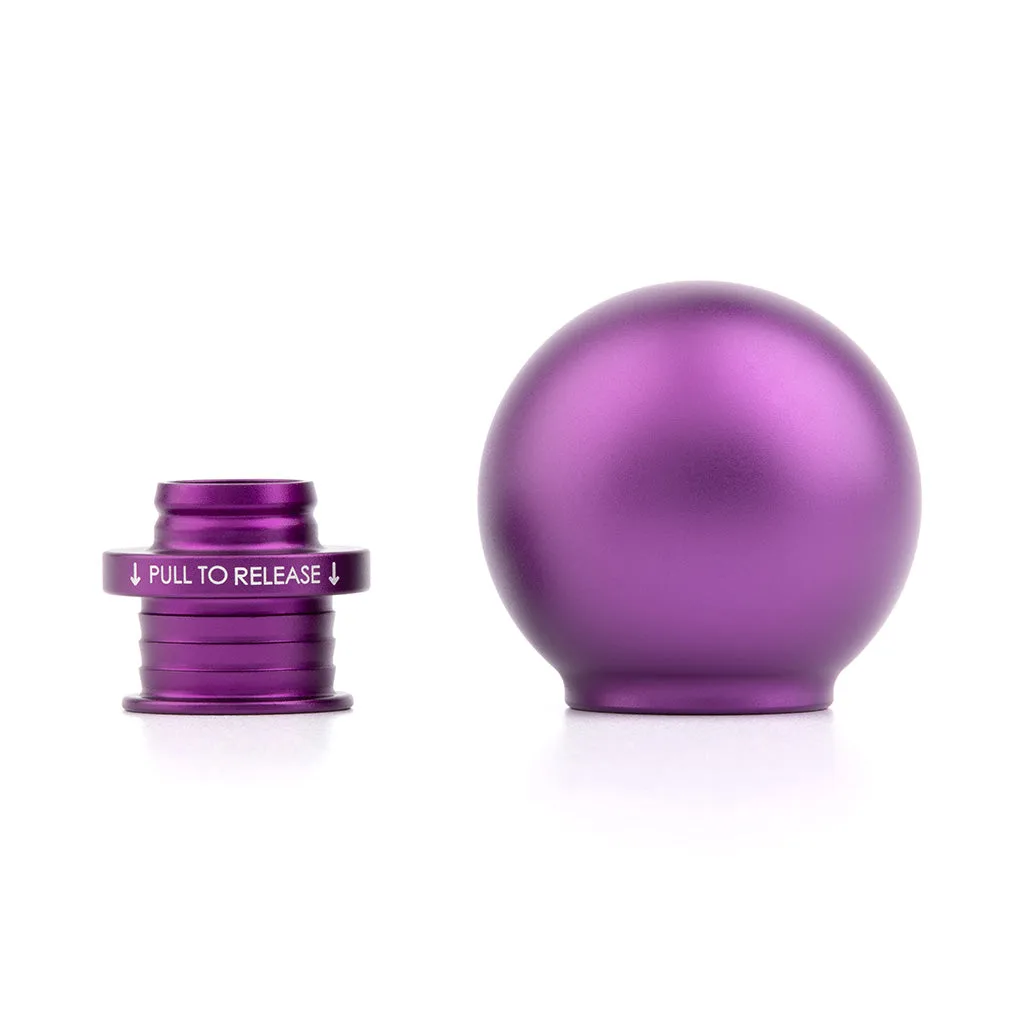
- POCO Low-Profile Shift Knob in Satin Purple Finish (M10X1.5): Sits only 3-4 mm above the top of the threaded shift lever and typically offers 5%-10% less throw than a stock knob; 6061-T6 outer shell with a stainless steel core at 185 grams. If you want a shorter-feeling shift without changing the linkage, the low installed height is the mechanism that delivers it — and the stainless core keeps weight in a compact package.
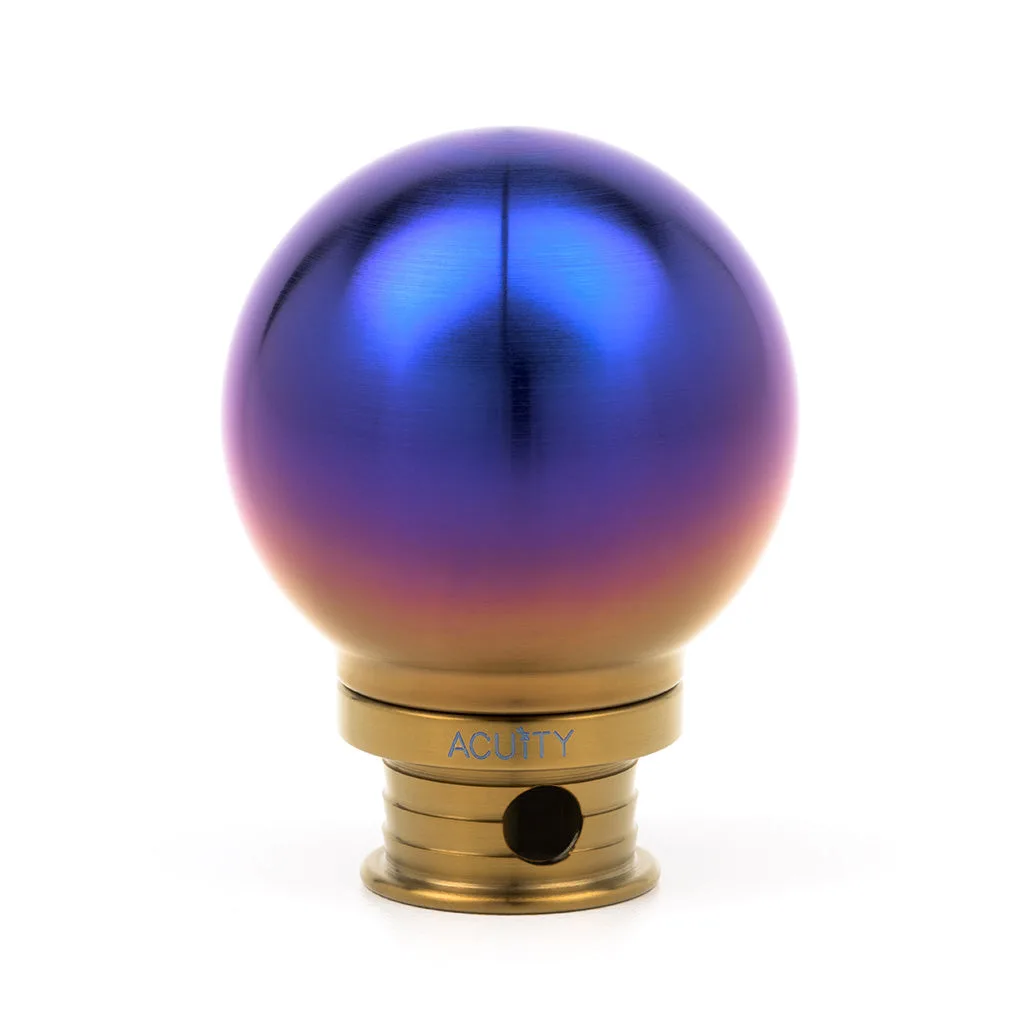
- POCO-Ti Low Profile Shift Knob in Burnt Titanium Finish (M10x1.5): Titanium is 65% denser, has 95% lower thermal conductivity, and 40% lower heat capacity than aluminum, giving a more weighted feel and more forgiving temperatures. In a climate with hot summers or cold winters, the titanium shell transfers less heat to your hand while adding mass — you pay more for both comfort and feel.
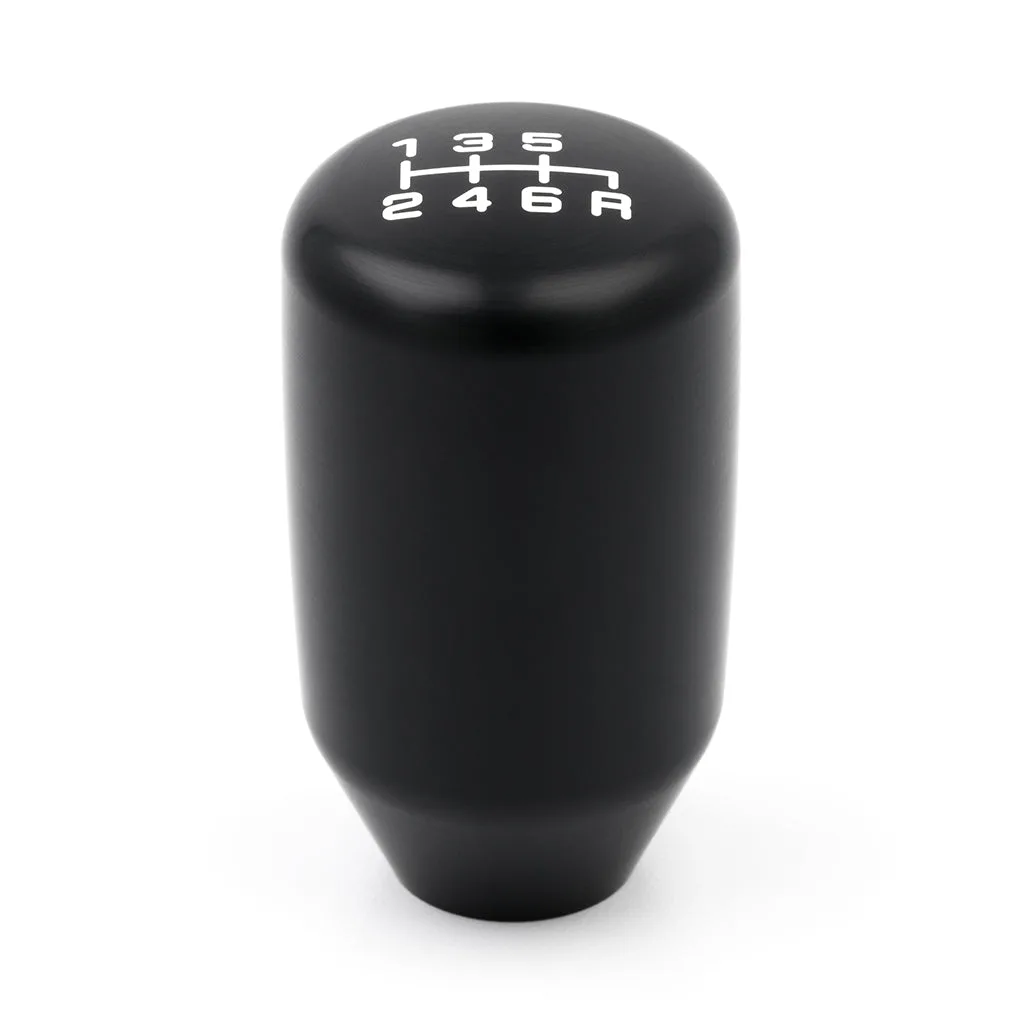
- ESCO-Insulated 6-Speed Shift Knob in Black (M10X1.5): Insulated design, 40 mm diameter and 70 mm height, 185 grams, with a hand-filled 6-speed pattern that is 2+ mm deep and will not wear off like printed lettering. The insulation and larger grip suit daily drivers in harsh climates, and the engraved pattern stays legible long after printed markings would fade.
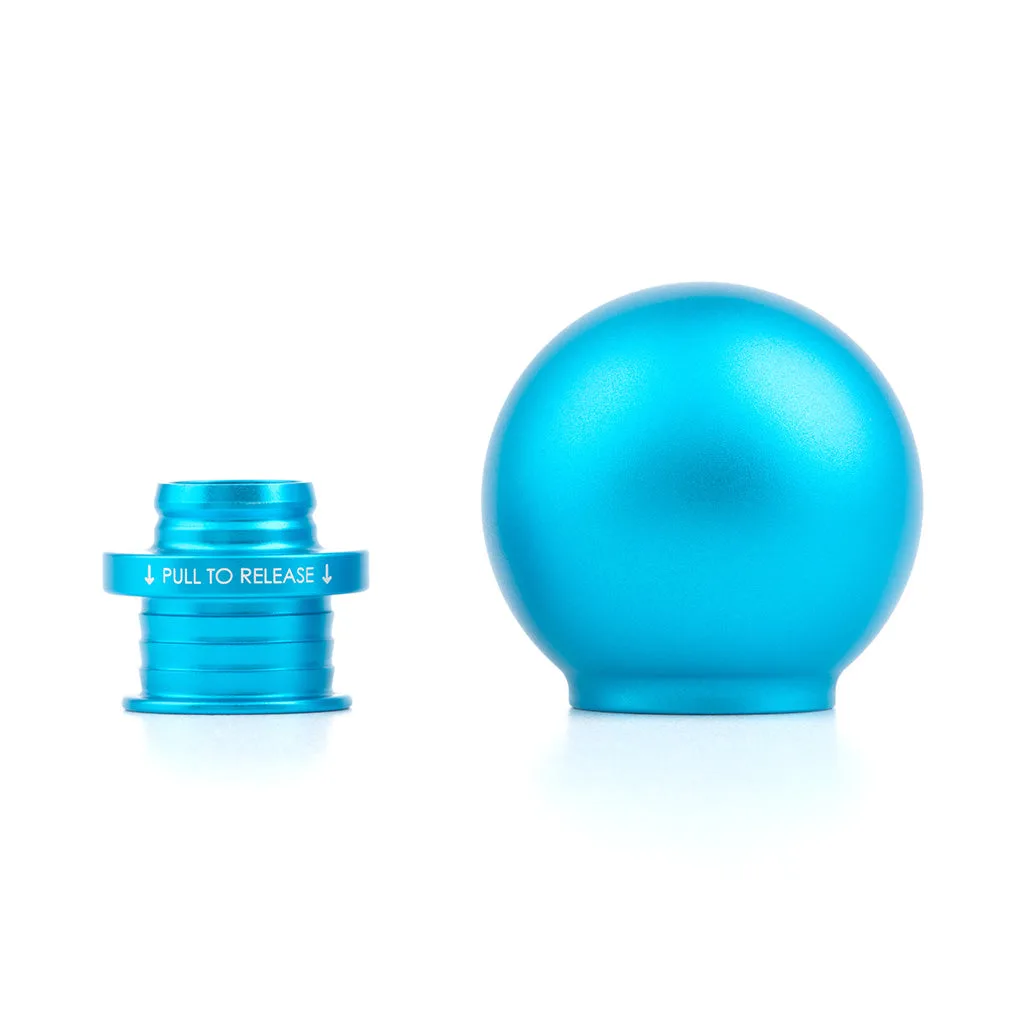
- POCO Low-Profile Shift Knob in Satin Teal Finish (M10X1.5): Same low-profile geometry as the purple POCO: 3-4 mm above the lever top, 5%-10% less throw, built-in shift boot collar, 185 grams. The built-in boot collar means you do not need a separate collar to connect the shift boot, which simplifies installation and keeps the boot seated.
Will It Fit Your Car?
Best for
- Honda and Acura manual owners with stock M10x1.5 levers
- Drivers who have confirmed their thread with a gauge or test nut
- Anyone wanting a low-profile, weighted, or insulated feel in one thread size
Not for
- Cars with M12x1.25, M12x1.5, or M10x1.25 levers unless an adapter is used
- Owners who have not verified their thread size
- Vehicles with non-threaded or push-on shift levers
Thread pitch is the one specification you cannot work around, so measure it before you shop. Once you know you have M10x1.5, the choice between a low-profile aluminum POCO, a titanium POCO-Ti, or an insulated ESCO comes down to how you want the shift to feel — and all three will thread straight onto a stock Honda or Acura lever.