Quick answer
Treat the Winter Officer Sprue as your detail source and the Mk1 shoulder pads as your silhouette tool. Dry-fit both against your 28mm heroic plastic guard before cutting anything, then commit to one focal conversion per model so the officer reads clearly at arm's length.
Why these two bits work together
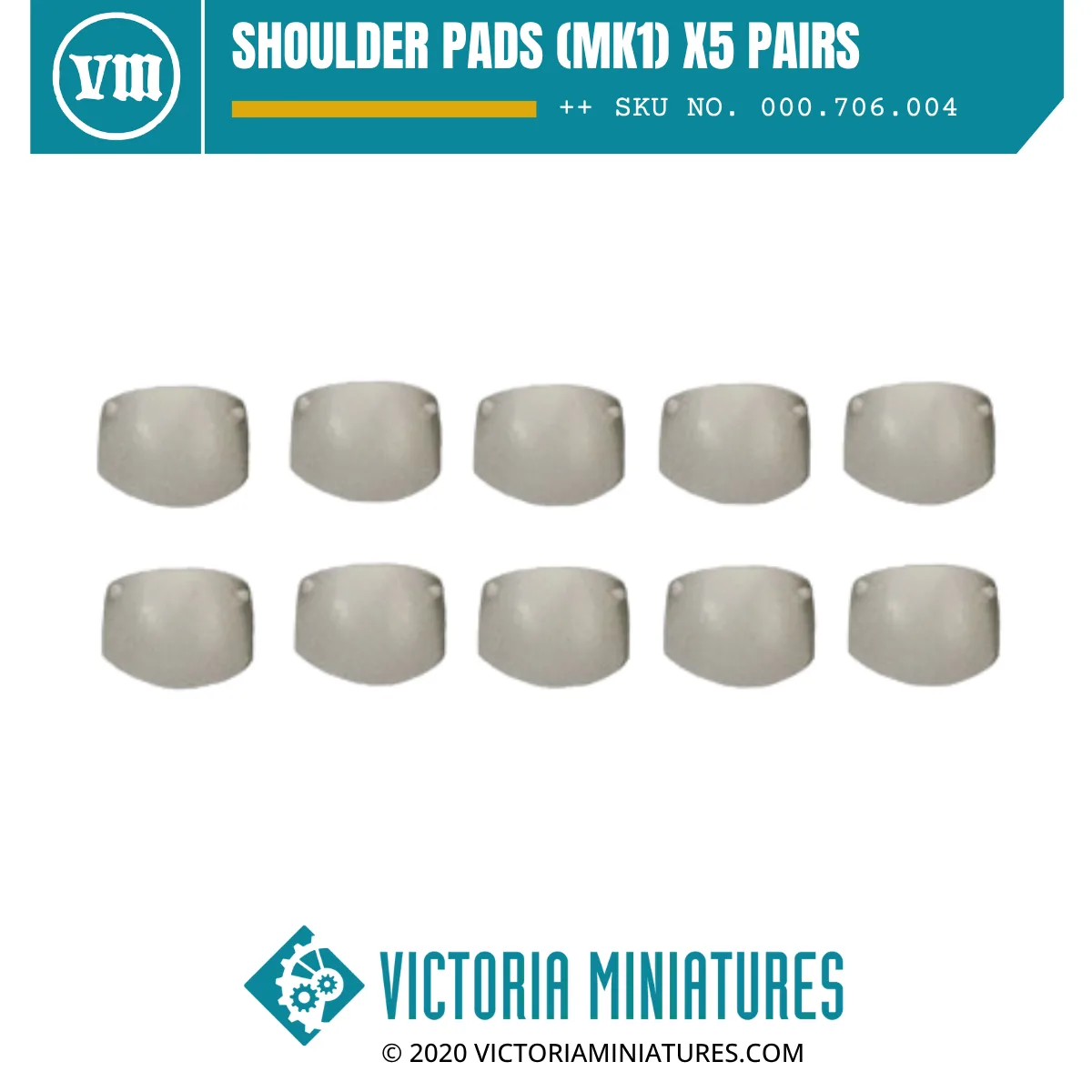
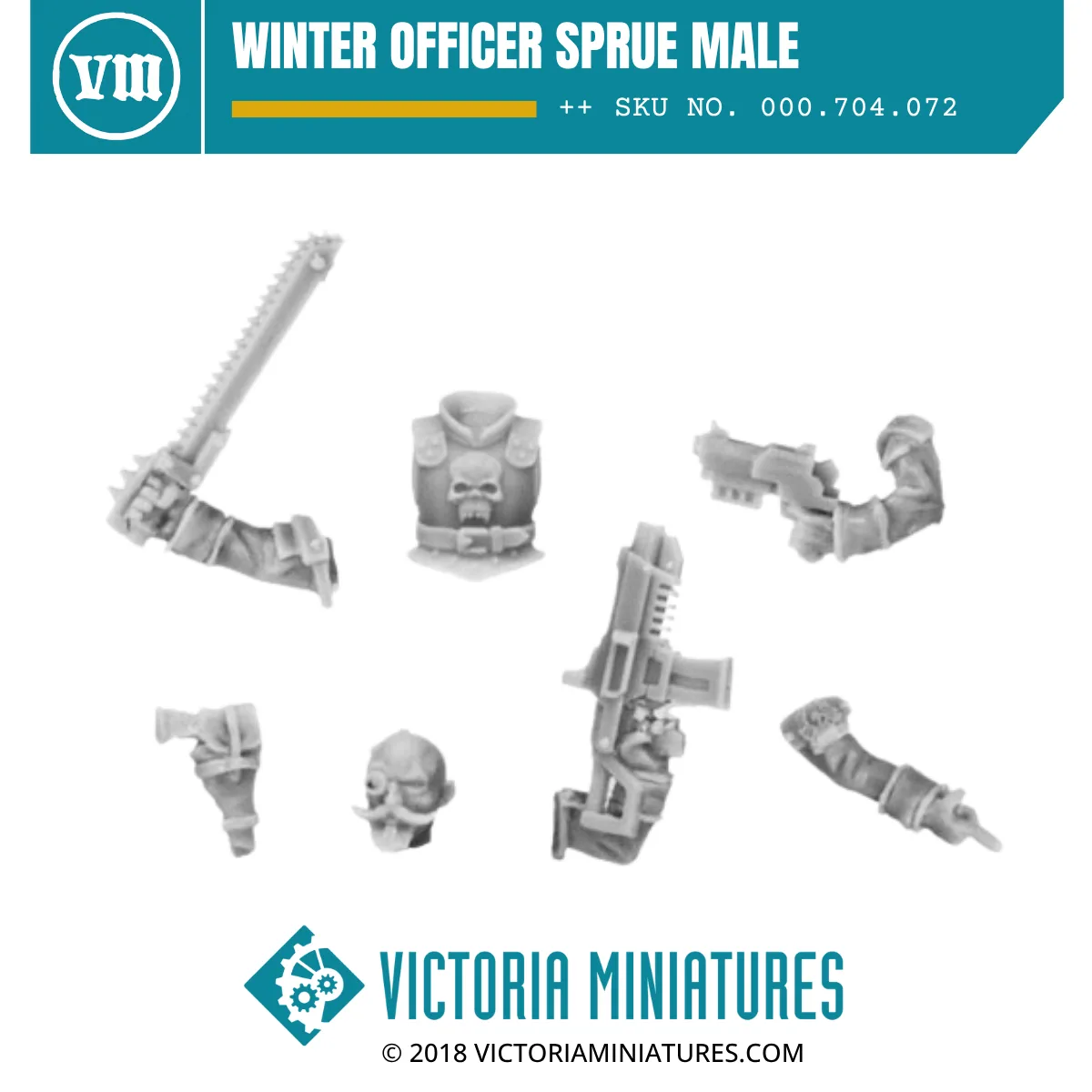
The Winter Officer Sprue is a male officer conversion set scaled for 28mm heroic troops and compatible with Victoria Miniatures and popular plastic guard. The Mk1 shoulder pads are 3D-printed resin accessories sold in packs of five pairs, sized for 28mm fantasy and sci-fi troops. Used together, the sprue changes the head, arms, or gear that define the officer's role, while the pads change the shoulder line that makes the model look armoured and distinct from the rank and file. The two jobs are different, which is why the order below matters.
What to check before you cut
Resin and plastic behave differently under glue and knife, so inspect both before committing. Hand-cast resin parts can carry a thin flash line or a slightly offset mold seam; 3D-printed pads may show fine support marks on hidden faces. Clean those first, because a pad that sits flush before cleanup may rock afterward. Also confirm the shoulder joint on your chosen plastic body is not already covered by a molded pad or a raised trim ring, since that changes how much material you must remove.
Kitbash steps with checkpoints
- 1. Dry-fit the officer bits to the body: Hold the Winter Officer head, arms, and gear against your plastic guard torso without glue. Rotate each piece to find the pose that reads as an officer rather than a line trooper. Checkpoint: if a piece only fits at an awkward angle, stop and test a different torso before cutting.
- 2. Mark the shoulder pad contact points: Press a Mk1 pad onto the bare shoulder and trace its inner edge with a pencil. This shows exactly where the pad will sit and how much of the existing shoulder you need to clear. Common mistake: trimming the shoulder before marking, which removes material you may have needed for a clean glue joint.
- 3. Clear the shoulder joint: Use a sharp knife and a fine file to remove molded trim or raised detail only inside the traced area. Work slowly and re-test the pad after every few passes. Checkpoint: the pad should sit flat with no rocking and no visible gap at the front edge.
- 4. Glue the pads before the officer details: Attach the Mk1 pads first with a small amount of superglue, holding each in place until it sets. Pads are easier to align while the arms and gear are still loose. Common mistake: gluing arms first, which blocks access to the shoulder and makes pad alignment harder.
- 5. Add one focal officer element: Choose a single Winter Officer piece, such as a head or a weapon arm, and fit it last. Keep the rest of the body simple so the conversion has one clear point of interest. Checkpoint: view the model at arm's length; if you cannot tell it is an officer at a glance, remove one competing detail.
- 6. Test the silhouette before priming: Stand the model next to a rank-and-file trooper and compare shoulder width, head height, and overall outline. Adjust pad angle or swap the officer piece if the model looks top-heavy or lost. Common mistake: priming before this comparison, which locks in a silhouette you may regret.
Product facts
- Winter Officer Sprue male: Male officer conversion bits to suit 28mm heroic scale troops; compatible with Victoria Miniatures and popular plastic guard; hand cast in quality resin; sculpted by Victoria Lamb. Gives you a defined officer identity that slots into common heroic-scale plastic bodies rather than forcing a whole new squad.
- Shoulder Pads (Mk1) x5 Pairs: Five pairs of 3D-printed resin shoulder pads per pack, suitable for 28mm fantasy and sci-fi troops. Enough pads to armour a small squad or spread across several officers, with a consistent shape across the unit.