Quick Answer
Choose the SHTC3 if you need a compact, I2C-based sensor with better accuracy and simpler wiring for Arduino projects. Stick with the DHT22 only if you already have one on hand or need a wider temperature range.
Why Interface Matters for Arduino Projects
The SHTC3 uses the I2C protocol, which means it connects with just two wires (SDA and SCL) plus power and ground. This frees up digital pins on your Arduino for other components. The DHT22 uses a proprietary single-wire protocol that requires a dedicated digital pin and precise timing in your code.
I2C also lets you chain multiple sensors on the same bus, which is handy for multi-sensor environmental monitoring. The DHT22's one-wire interface is simpler in concept but more error-prone in practice, especially with long wires or noisy power supplies.
Accuracy and Range Trade-offs
The SHTC3 offers typical accuracy of ±0.2°C for temperature and ±2% RH for humidity, which is better than the DHT22's ±0.5°C and ±2-5% RH. However, the DHT22 has a wider temperature range (-40°C to 80°C) compared to the SHTC3 (-40°C to 125°C for temperature, but humidity range is 0-100% RH for both).
For most indoor projects like weather stations, terrariums, or HVAC monitoring, the SHTC3's accuracy is more than sufficient. The DHT22's wider range only matters if you're measuring extreme conditions like freezers or ovens.
Cost and Availability
The SHTC3 module is priced at USD 3.34 (compared to USD 4.45 catalog price), making it slightly cheaper than a typical DHT22 module. Both sensors are widely available from Arduino component suppliers.
The DHT22 has been around longer and is often found in starter kits, so you might already have one. But if you're buying new, the SHTC3 offers better performance for a similar or lower price.
SHTC3 vs DHT22: Trade-offs at a Glance
- Interface: SHTC3 uses I2C (2 wires + power); DHT22 uses single-wire protocol (requires one digital pin and precise timing). I2C is more reliable for complex projects.
- Accuracy: SHTC3: ±0.2°C temp, ±2% RH. DHT22: ±0.5°C temp, ±2-5% RH. SHTC3 is more accurate for most indoor uses.
- Temperature Range: SHTC3: -40°C to 125°C (humidity 0-100% RH). DHT22: -40°C to 80°C. DHT22 covers extreme cold better; SHTC3 handles higher temps.
- Price: SHTC3 module at USD 3.34; DHT22 modules typically USD 3-5. SHTC3 offers better value per dollar.
Product Facts
-
SHTC3 Temperature Humidity Sensor Module: SHTC3 Temperature Humidity Sensor Module with I2C interface I2C simplifies wiring and leaves more Arduino pins free for other sensors or actuators.
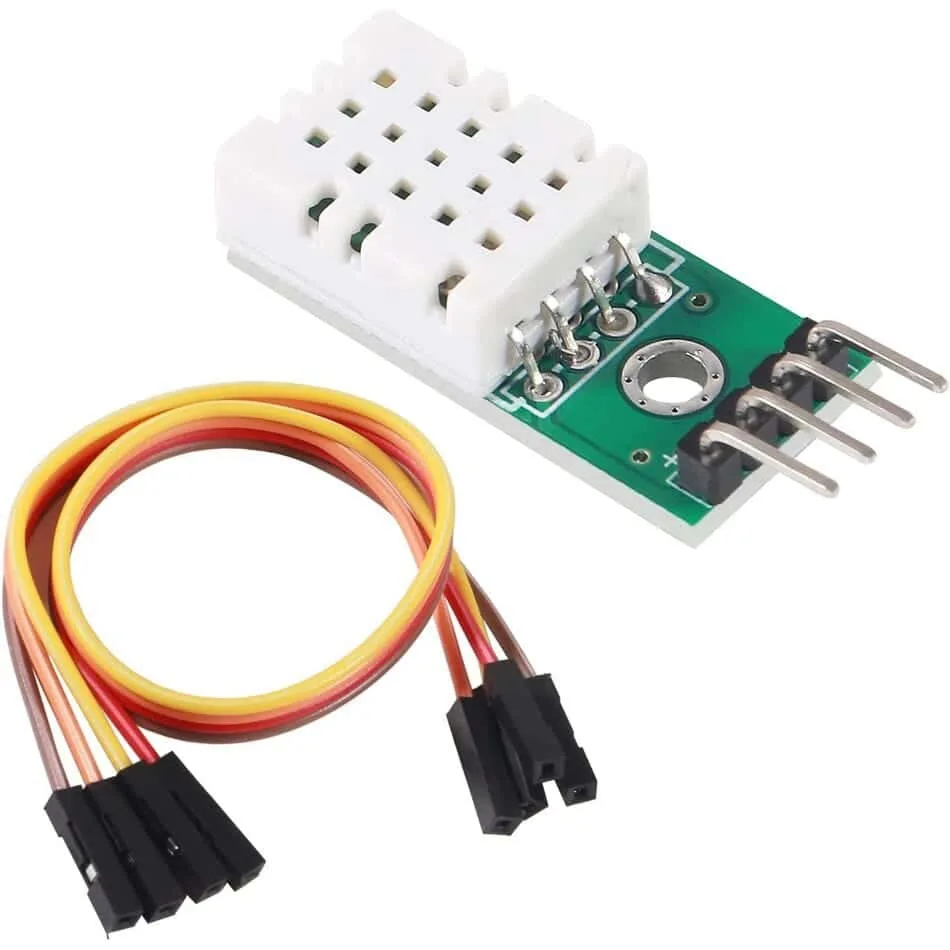
SHTC3 Temperature Humidity Sensor Module
Which Sensor Should You Choose?
Best For
- Arduino projects needing accurate indoor temperature and humidity monitoring
- Builds with limited free digital pins or multiple I2C sensors
Not For
- Projects requiring a temperature range below -40°C or above 80°C
- Hobbyists who already have a DHT22 in their parts bin and want to avoid buying a new sensor