Start with the pistol, not the plate
The SIG Sauer Titanium Optic Plate is designed for the military-issue SIG Sauer M17 and M18 pistols. That distinction matters because military-issue models can differ from civilian versions. Before you order or install anything, confirm your pistol is compatible with these plates. The product record notes that SIG Sauer uses a large variety of optic cut patterns, so a visual check against the supplied reference image is part of the job.
If your pistol is not a military-issue M17 or M18, stop here. This plate is not a universal fit, and the supplied information does not confirm compatibility with other SIG Sauer models or aftermarket slides.
What the plate is built to solve
-
SIG Sauer Titanium Optic Plate: Machined from 6al-4v titanium with precision tolerances to sit tightly in the optic pocket and support the optic. The tight fit is the point: it addresses loose tolerances on factory SIG Sauer optic plates and gives the optic a stable seat.
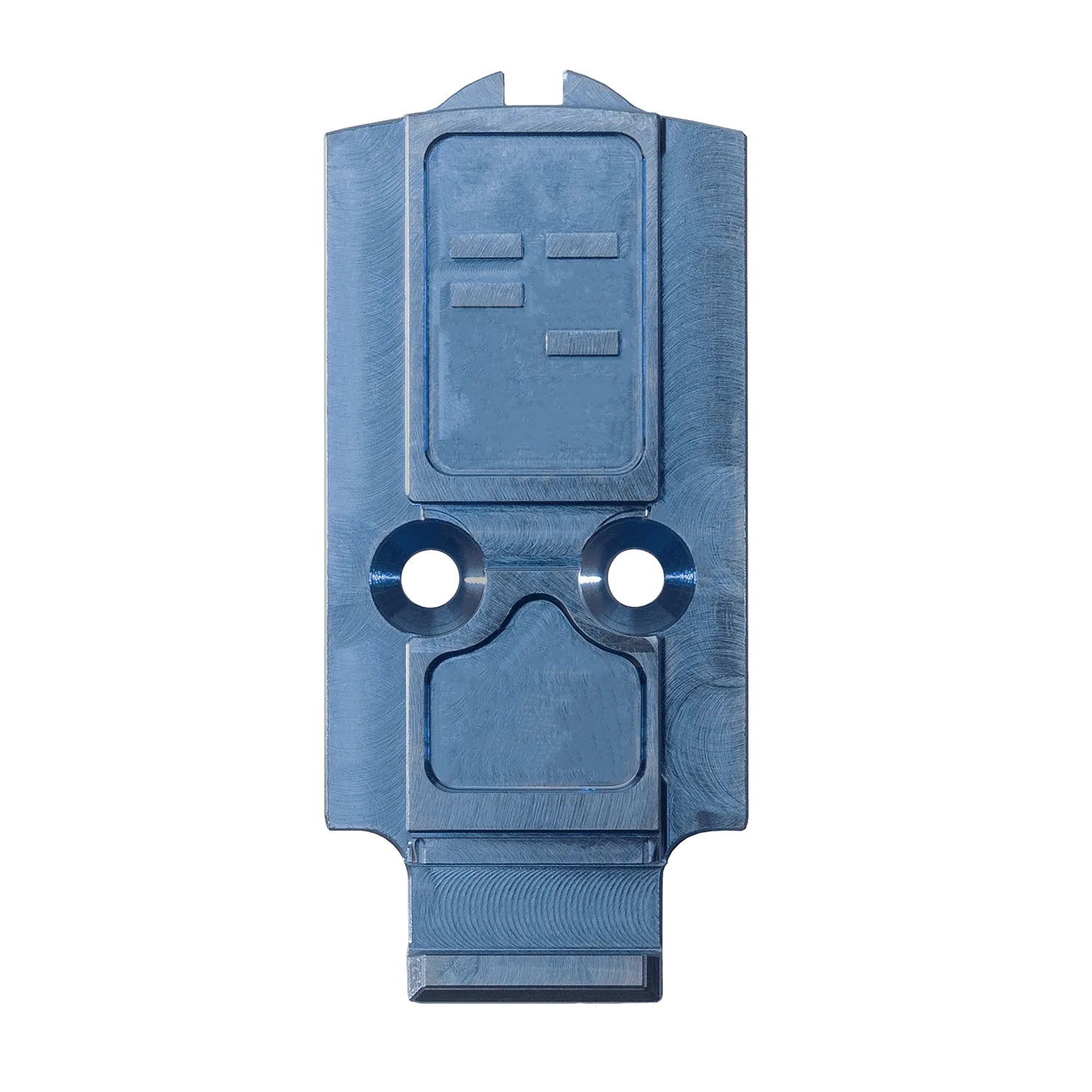
SIG Sauer Titanium Optic Plate
-
SIG Sauer Titanium Optic Plate: The plate has a rear dovetail cutout for rear irons. If you plan to keep or add rear iron sights, that cutout is a mounting feature to account for before you tighten anything.
A supported installation sequence
The supplied record does not include a torque specification or a full manufacturer procedure. Do not guess a torque value. The steps below cover only what the record supports: fit, hardware handling, optic matching and final verification.
- Verify the pistol and optic cut: Confirm you have a military-issue M17 or M18 and that its optic cut matches the plate. Use the reference image and reach out to [email protected] if anything is unclear.
- Match the plate variant to your optic: Two variants are listed: one for Aimpoint Acro and Steiner MPS, and one for Trijicon RMR/SRO plus Holosun 507T/508T. The full compatibility list also includes Holosun 507 Comp, Aimpoint ACRO P1/P2 and Lead & Steel PB-3. Choose the variant that matches your optic footprint.
- Check the fit before tightening: The plate should sit snug and flush in the optic pocket. A flush fit is the checkpoint the record calls out for a secure mount without damaged hardware.
- Use the right Torx bit: Always verify you are using the exact matching, high-quality Torx bit for your optic plate hardware before you begin tightening. A poor-fitting bit is a common way to damage screw heads.
- Use the included hardware and Vibratite: Mounting hardware and Vibratite are included. The record does not specify a torque value, so follow the hardware maker's guidance rather than inventing a number.
- Add rear irons if you plan to use them: The plate's rear dovetail cutout supports rear irons. The record recommends Trijicon SG201-C-600907 iron sights or similar.
Where the torque question actually stands
Searches for optic plate mounting torque usually want a number in inch-pounds. The supplied record for this plate does not provide one. That is a documentation gap, not a reason to improvise. Tighten in small increments, stop when the plate and optic are seated per the hardware you are using, and confirm the fit stays flush. If you need a torque value, get it from the optic or screw manufacturer rather than applying a generic figure to titanium hardware.
The same caution applies to threadlocker: Vibratite is included, but the record does not give a cure time or application procedure. Use it as directed on its packaging.
Care that follows from the material
- SIG Sauer Titanium Optic Plate: The plate is made of 6al-4v titanium and will never rust. That removes rust prevention from your maintenance list, but it does not make the plate immune to wear, loosening or damage from poor installation.
- SIG Sauer Titanium Optic Plate: No sealing plate is needed. You do not need to source or stack an extra sealing plate under this one, which keeps the stack height and parts count down.
- SIG Sauer Titanium Optic Plate: The plate has a durable clear anodizing finish and is made in the USA. The finish is a surface treatment to preserve, not a guarantee against scratches from tools or repeated mounting.
Checkpoints after the plate is on
- Flush seat: The plate should sit tightly in the optic pocket with no rocking or visible gap that suggests it is not seated.
- Hardware condition: Inspect screw heads after tightening. Damaged heads usually mean the wrong bit or too much force, not a plate problem.
- Optic match: Confirm the optic you mounted is on the compatibility list for your chosen variant. A plate that fits the pistol but not the optic is the wrong plate.
- Rear irons: If you installed rear irons in the dovetail, verify they are seated and that the recommended sight model or similar is what you used.
What to do when the record runs out
The supplied information does not cover torque values, threadlocker cure times, expected round counts or long-term maintenance intervals. Treat those as open questions rather than assuming a procedure. For compatibility questions, the record points to [email protected]. For everything else, the plate's own fit and the hardware you use are your best checkpoints.