Two Art primes for Nikon F-mount
If you're building a Nikon FX prime kit with Sigma's Art series, the 35mm f/1.4 DG HSM and 40mm f/1.4 DG HSM are both strong contenders. They share the same f/1.4 maximum aperture, similar optical ambitions, and compatibility with the Sigma USB Dock for fine-tuning. But the difference in focal length changes the field of view noticeably, and the two lenses are built to different physical standards. This comparison lays out the evidence so you can match the lens to your shooting style.
Focal length and field of view
The 40mm lens gives a 56.8° angle of view on full-frame, while the 35mm covers 63.4°. That 6.6° difference is enough to change how you frame a scene.
- Sigma 40mm f/1.4 Art (Nikon): 40 mm focal length; 56.8° angle of view. Closer to a 'normal' perspective, with less distortion and a slightly tighter crop that suits environmental portraits and street photography where you want to isolate your subject without going too long.
- Sigma 35mm f/1.4 Art (Nikon): 35 mm focal length; 63.4° angle of view. A classic wide-angle that fits more into the frame, making it a staple for landscapes, architecture, and full-body environmental shots. It's also a popular choice for indoor event work where you need to capture a wider scene.
Optical design and build evidence
-
Sigma 40mm f/1.4 DG HSM Art Lens Nikon Mount: The Sigma 40mm f/1.4 DG HSM Art is designed within the rigorous tolerances of a cine lens. Its optical design uses three FLD elements, three SLD elements, and one aspherical element. A Super Multi-Layer Coating minimizes flare and ghosting. The cine-level build and extensive special glass aim for very high sharpness and contrast, even wide open. The 40mm is noticeably heavier (2.65 lb / 1.2 kg) and larger (3.46 x 5.16″ / 87.8 x 131 mm), which may affect handling on smaller Nikon bodies.
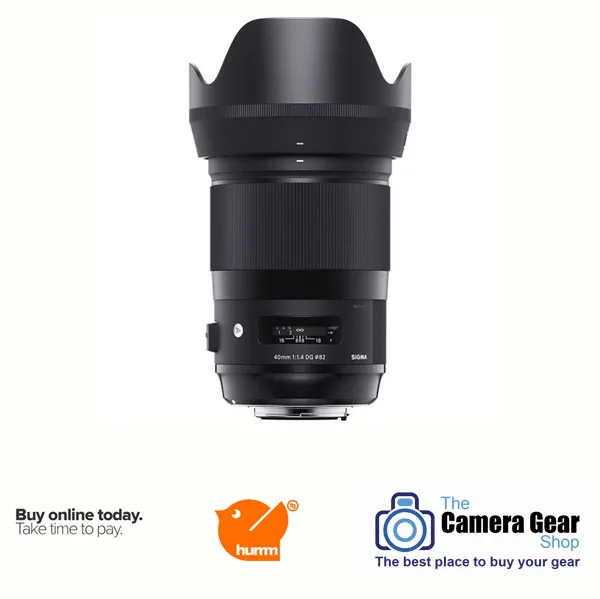
Sigma 40mm f/1.4 DG HSM Art Lens Nikon Mount
-
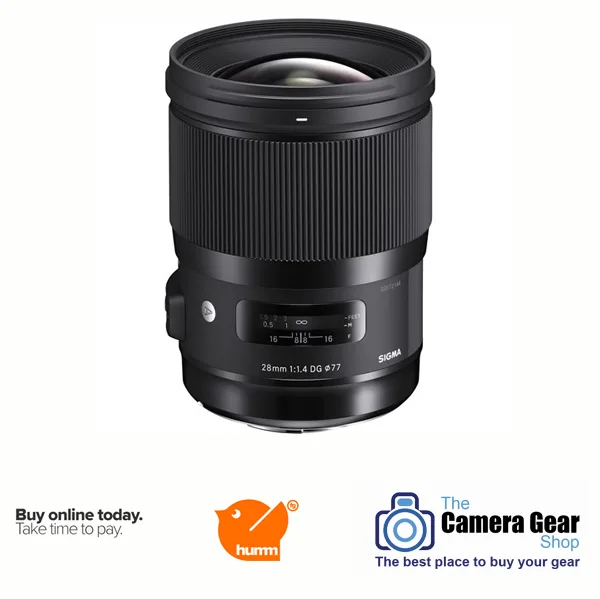
Sigma 35mm f/1.4 DG HSM Art Lens Nikon Mount: The Sigma 35mm f/1.4 DG HSM is the first Art-series lens. It includes FLD and SLD glass elements (equivalent to fluorite) to correct chromatic aberration, plus a Hyper Sonic Motor and floating internal focusing system. The 35mm is lighter and more compact (77mm x 94mm, 67mm filter thread) than the 40mm. The floating focusing system helps maintain sharpness at close distances (minimum focus 30 cm / 11.8 in), which is useful for detail shots and tabletop work.
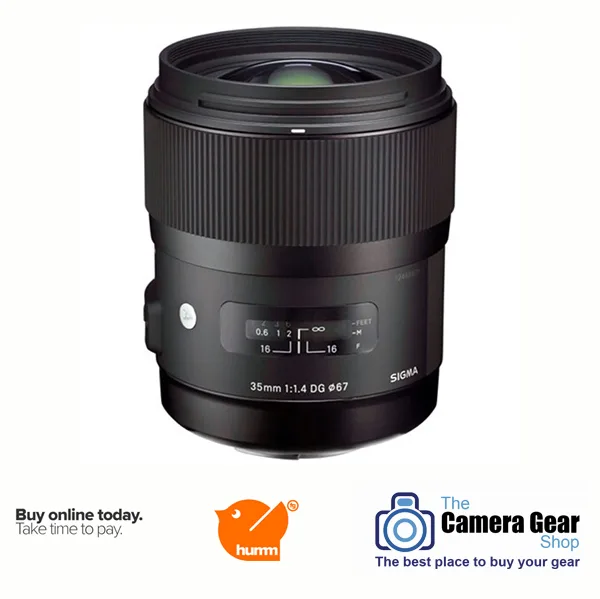
Sigma 35mm f/1.4 DG HSM Art Lens Nikon Mount
Handling and everyday carry
The 35mm Art is the more portable option. It weighs less and uses a 67 mm filter thread, which keeps your filter kit affordable. The 40mm Art, at 2.65 lb (1.2 kg) and an 82 mm filter thread, is a substantial piece of glass. It's weather-sealed and has a protective front coating, so it's built for tougher conditions, but you'll feel it on a long walk. If you shoot all day from a tripod or in a studio, the extra weight is less of a concern. For a walkaround prime, the 35mm is easier to carry.
Both lenses are compatible with the Sigma USB Dock, letting you adjust focus parameters and fine-tune performance on your specific Nikon body.
Which one fits your style?
Choose the 40mm f/1.4 Art if you want a lens that approaches cine-level optical tolerances, a slightly tighter normal view, and you're willing to carry a heavier, larger lens for maximum sharpness and contrast. It's a good match for controlled portrait work and video applications where build consistency matters.
Choose the 35mm f/1.4 Art if you prefer a lighter, more compact prime with a wider field of view that's versatile enough for street, travel, and general photography. Its floating focusing system gives you better close-distance performance, and the 67 mm filter thread keeps accessory costs lower.