Quick answer
Choose Signal Primrose when you want a soft yellow, hand-produced 13 x 13cm tile that adds warmth without dominating a room. It suits kitchen splashbacks and calm living-space walls, but commit to a base tile and grout before ordering so the yellow reads as intended.
What the soft yellow actually does in a room
Primrose sits between cream and butter, so it reflects light gently rather than bouncing a saturated yellow around the room. That makes it easier to live with than a bright mustard or lemon, especially in north-facing kitchens where stronger yellows can turn sharp.
The trade-off is presence. In a very large, brightly lit room the colour can read almost neutral, so the nautical-inspired Signal shapes do more of the visual work than the yellow itself. If you want the colour to be the statement, use it on a contained wall rather than a whole open-plan space.
Where the 13 x 13cm format helps and where it limits you
A 13 x 13cm tile gives you a small, repeatable square that suits splashbacks, half-walls and chimney breasts. The size means more grout lines, which is an advantage if you want a hand-made, slightly crafted look and a disadvantage if you want a seamless, monolithic surface.
Because the format is small, layout planning matters more than with a large-format tile. Dry-lay a metre before fixing so you can see how the Signal shapes repeat and where cuts will fall at edges and sockets.
The base tile decision changes the finished colour
Signal is available on a choice of three base tiles, and the design shown in the catalog is on an English White base. The base is not a detail you can defer: it shifts how pale or warm the primrose reads once installed, and it affects which grout looks intentional rather than accidental.
Ask to see the primrose design on each available base before you commit, ideally in the room's own light. If you cannot view samples, choose the English White base shown in the catalog as the most predictable starting point for a soft yellow scheme.
Pairing primrose with other finishes
Soft yellow works best when it is the warm note in a mostly quiet palette. Pair it with off-white, pale timber, aged brass or matte black hardware rather than with strong blues or saturated greens, which can make the primrose look washed out by comparison.
If you want a warmer neutral scheme, treat primrose as your colour and keep worktops, cabinets and flooring in cream, stone or light oak. That keeps the tile as the focal point without the room feeling like a colour match exercise.
Decision rules for buying Signal Primrose
- Choose primrose if the room needs warmth, not brightness: Pick Signal Primrose when you want a soft yellow that sits closer to cream than to lemon, and when the room already has decent natural light. In a dark room, expect the colour to read deeper and warmer than the sample. View the tile in the actual room light before committing to a full wall.
- Choose a different Signal colour if you want a strong statement: If your goal is a bold kitchen splashback, a more saturated Signal colour will do that job with less risk of the yellow disappearing next to strong cabinetry. Primrose is a quiet colour, not a loud one.
- Lock the base tile before you order grout: Decide between the three available base tiles first, then match grout to the installed tile rather than to a screen image. The English White base shown in the catalog is the safest reference for a pale, soft-yellow result. Order a sample on your chosen base and grout a small test board.
- Use the 13 x 13cm size on contained surfaces: Plan primrose for splashbacks, half-walls or a single feature wall where the repeat is visible. For large open-plan walls, accept that more grout lines will break up the colour, or choose a larger-format tile instead.
- Budget for hand-produced variation: Because Signal is hand produced, expect slight variation between tiles. Order a small surplus for cuts and future repairs, and mix boxes before fixing so any variation is spread evenly. Keep spare tiles from the same batch for later repairs.
Product facts
-
Signal Primrose: Signal Primrose is a 13 x 13cm hand-produced tile inspired by nautical shapes, available on a choice of three base tiles. The small square format and base-tile choice mean you should plan layout and base colour together before ordering.
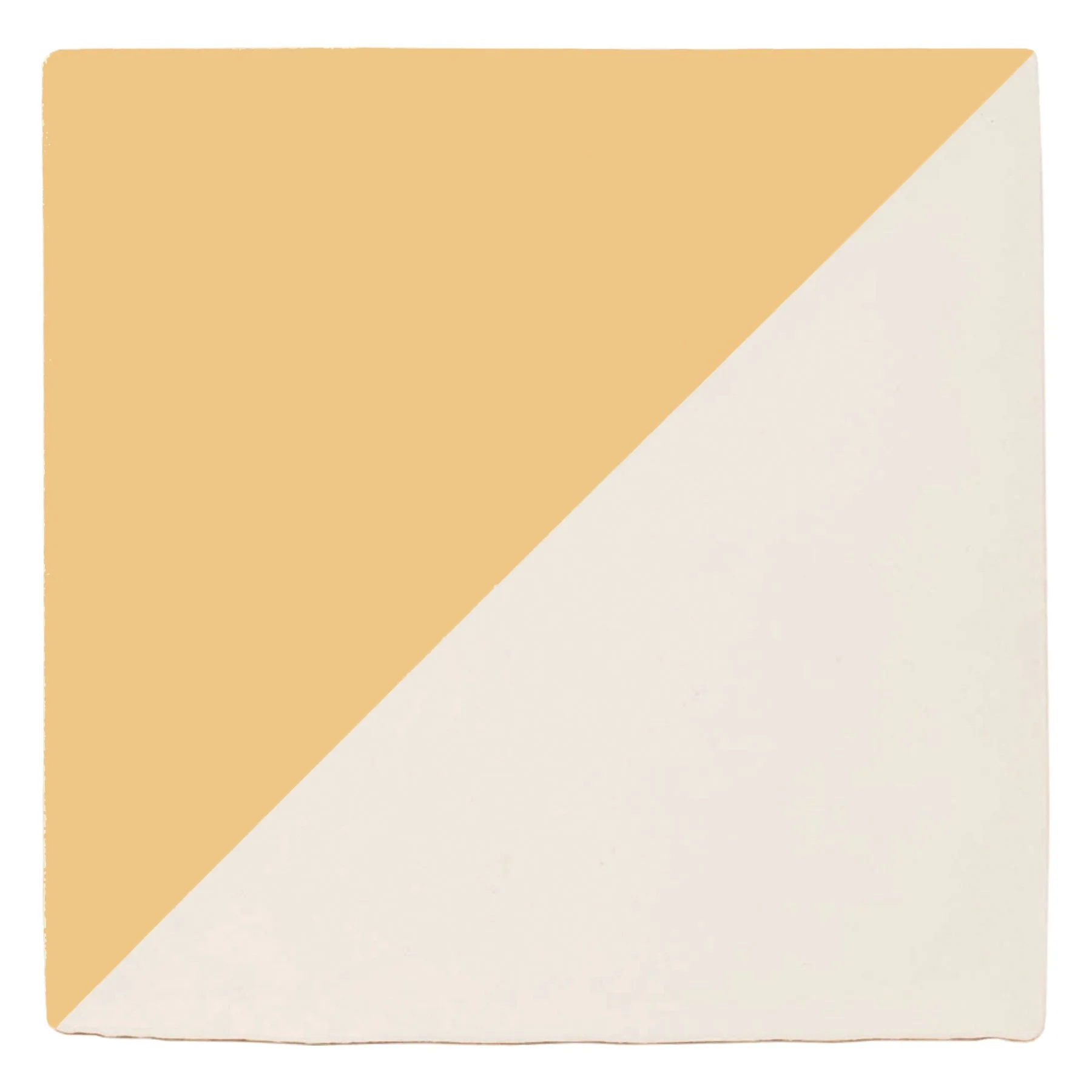
Signal Primrose
Is Signal Primrose right for you?
Best for
- Kitchen splashbacks that need a soft, warm yellow rather than a bold one
- Living rooms or hallways where a quiet colour and hand-made texture are wanted
- Period or coastal-style interiors that suit small square tiles and nautical shapes
Not for
- Anyone wanting a saturated, high-impact yellow feature wall
- Large seamless surfaces where grout lines should be minimal
- Rooms with very little natural light where a pale yellow may read muddy