Quick answer
Start an emotion kit when your child can name a few feelings, asks why emotions happen, and will sit through a short guided activity with you. If they still mainly need comfort during big feelings, wait and use simpler tools first. The Emotion Science Starter Kits fit children ready for hands-on emotion science, while the Aha! Growth Mindset kit is a lighter first step for the 'yet' idea.
Aha! Growth Mindset
Most parents ask when to start an emotion kit after a meltdown, not before one. The honest answer is that readiness is less about a birthday and more about what your child can already do with your help.
This guide gives you concrete signs to look for, trade-offs between waiting and starting now, and where each Meandmine option fits. Use it to decide, not to collect another box that sits on a shelf.
Readiness signs you can observe this week
Watch for three behaviors over a normal week. First, your child uses feeling words without prompting, even roughly, like 'mad' or 'scared.' Second, they ask cause questions: why did that happen, why do I feel funny in my tummy. Third, they can follow a two-step instruction during play, such as find the card and then match it.
These signs matter because emotion kits ask children to do something with a feeling, not just have one. If your child can label and wonder, a guided kit turns that into a shared activity instead of a lecture. If they cannot yet, the same kit becomes a power struggle.
- Try a five-minute test: name a feeling, ask where they feel it in their body, and see if they stay engaged.
- Note whether they recover from small frustrations within a few minutes with your help.
How age changes the decision
Age is a rough filter, not a rule. Younger children usually need more adult narration and shorter sessions, while older children can handle the cause-and-effect parts of emotion science and ask sharper questions. The age for an emotion science kit depends more on language and attention than on a number.
A practical approach is to match the kit to the support you can give. If you can sit alongside for fifteen minutes, a structured kit works earlier. If your child mostly plays alone, choose a simpler tool and revisit the kit in a few months.
- If your child is not yet using two-word sentences about feelings, build vocabulary first.
- If your child reads or asks detailed why questions, they are likely ready for the science angle.
What changes when you start now versus waiting
Starting now gives you a shared language before a hard phase, such as a school transition or a new sibling. The trade-off is that you must lead the activity and repeat it often. Waiting costs you that head start but avoids buying something your child ignores.
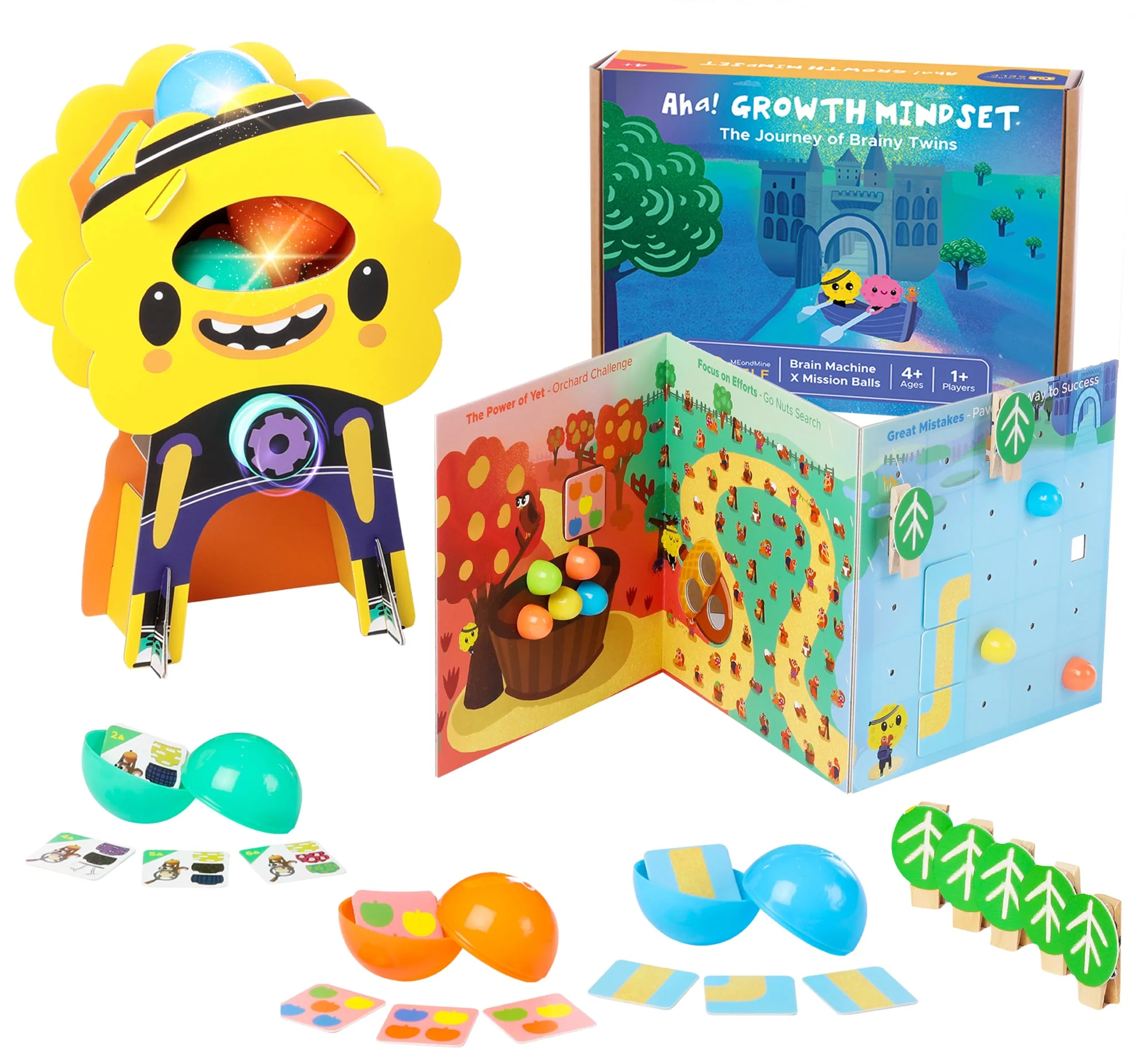
One middle path is to begin with a single, narrow kit that teaches one idea well. The Aha! Growth Mindset kit is built around the power of 'yet' and the difference between growth and fixed mindset, which gives you a small, clear concept to practice before a larger kit.
- Start now if a predictable change is coming in the next two months.
- Wait if your child is currently in a period of frequent, intense tantrums and needs co-regulation more than activities.
Using readiness to choose between Meandmine options
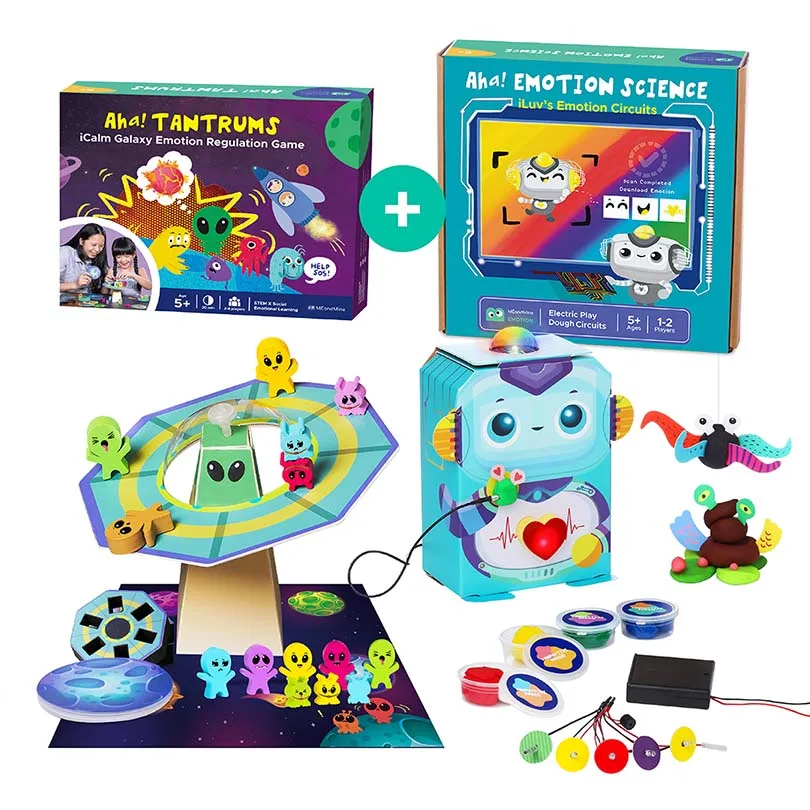
The Emotion Science Starter Kits are designed by pediatricians and psychologists to help kids understand how emotions work, label feelings, and build a toolkit of calming skills through play. That makes them a fit for a child who is ready to explore cause and effect with you.
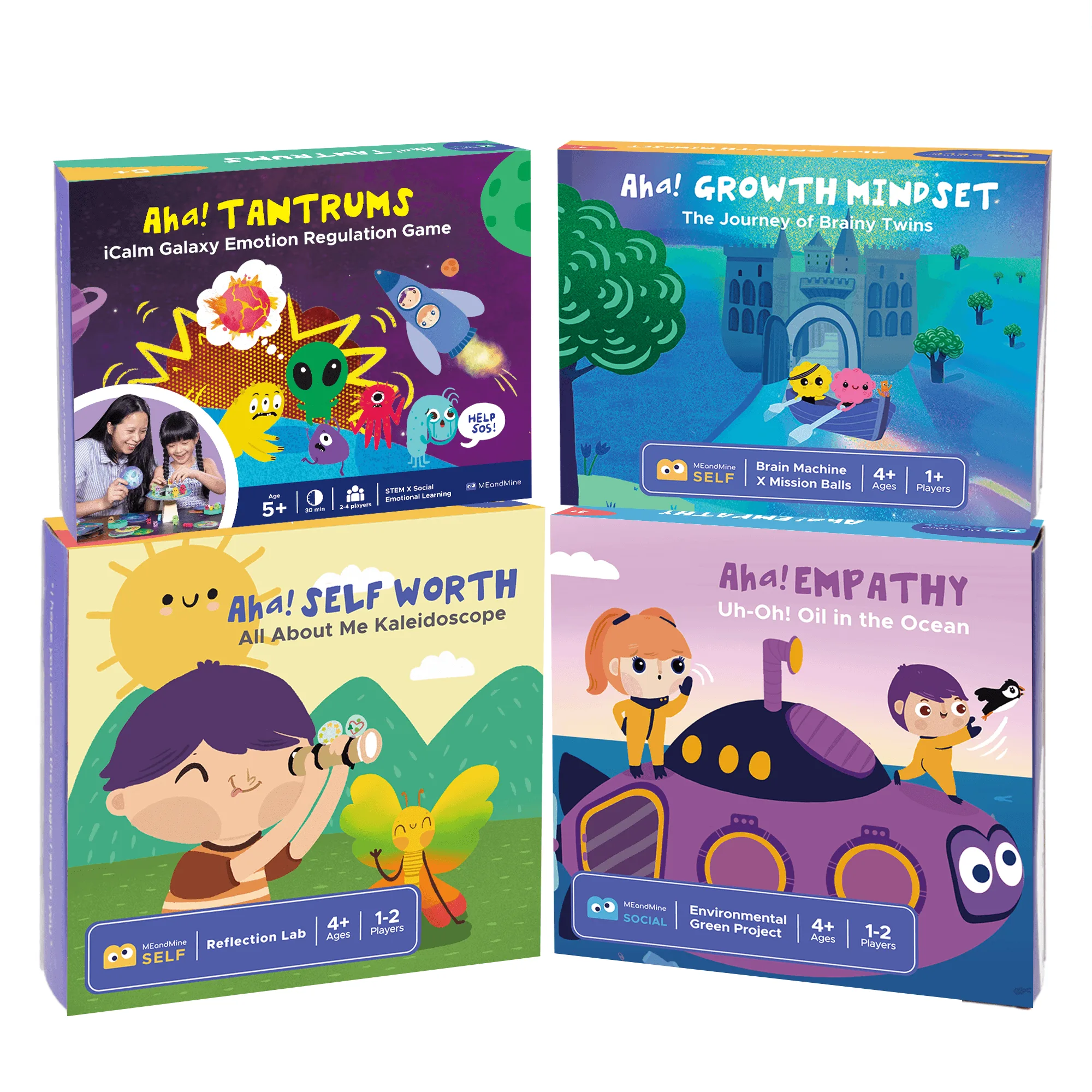
The Back To School Toolkit bundles four play kits, including Self Worth, Growth Mindset, Tantrum, and Empathy, which suits a child facing a specific transition and a parent who wants a set rather than a single theme. Choose the narrower kit when you want to test readiness without committing to a full bundle.
- Pick the Emotion Science Starter Kits when labeling and calming skills are the goal.
- Pick the Back To School Toolkit when the goal is easing a known transition.
How to run a low-pressure trial
Before you buy anything, run a trial with what you already have. Draw a face, ask what feeling it shows, and see if your child adds a story. If they do, they are likely ready for structured emotion tools. If they walk away, that is useful information, not a failure.
When you do introduce a kit, keep sessions short and stop while it is still fun. Readiness is not a one-time gate; it is a pattern you can build. Repeating a short activity beats one long session every time.
- Set a timer for ten minutes and end on a high note.
- Let your child choose the order of activities to keep ownership.
Decision rules for starting an emotion kit
- If your child names two or more feelings without prompting: They have the vocabulary base a kit builds on. Start with the Emotion Science Starter Kits and keep sessions to about ten minutes. Green light: begin with a labeling-focused kit.
- If your child asks why feelings happen: Cause-and-effect curiosity is the strongest readiness signal. Use the science angle in the Emotion Science Starter Kits and answer questions as they come. Green light: lean into the science explanations.
- If your child only seeks comfort during big feelings: Comfort is the right response now. Wait on a full kit, or try the Aha! Growth Mindset kit as a short, single-idea introduction. Yellow light: co-regulate first, revisit in a few months.
- If a known transition is two months away: A bundled set such as the Back To School Toolkit gives you several themes to practice before the change, rather than one. Choose the bundle only when the transition is specific and near.
- If you cannot sit alongside for short sessions: Emotion kits work best as shared activities. Without that time, a simpler tool or a wait-and-see approach serves your child better. Red light: fix the time budget before the purchase.
Product facts that affect your decision
- Emotion Science Starter Kits: Designed by pediatricians and psychologists to help kids understand how emotions work, label feelings, and build a toolkit of calming skills to express emotions healthily. The design backing means the activities target labeling and calming, which are exactly the skills you are checking for in a readiness assessment.
- Aha! Growth Mindset: Backed by neuroscience, this play kit explains growth mindset versus fixed mindset and includes three activities for kids to embrace challenges through their senses. With only three activities and one core idea, it works as a lower-commitment first step if you are unsure about full readiness.
- Back To School Toolkit: Includes four play kits: Self Worth, Growth Mindset, Tantrum, and Empathy, aimed at easing back to school anxiety. A bundled set fits a specific transition, but it is more than a readiness test, so choose it only if the transition is real for your family.
Who each option fits
Best for
- Children who already use feeling words and ask why emotions happen
- Parents who can lead short, repeated activity sessions
- Families preparing for a specific transition who want a themed bundle
Not for
- Children who mainly need comfort and co-regulation during big feelings
- Parents looking for a toy their child will use independently without guidance
- Families who want a quick fix rather than a repeated practice habit
Readiness is visible in what your child already does: naming feelings, asking why, and staying with you for a short activity. If you see those signs, start with the Emotion Science Starter Kits. If you do not, wait, keep talking about feelings, and revisit the decision in a few months.