Quick answer
If your band rides up, your cups gape, or the wires dig in, the bra no longer fits you as it should. First try the loosest hook and a scoop-and-settle adjustment; if the band still shifts or the cups still gap, it is time to replace that bra or move to a different style. A bra that fit last year may not fit this year, and that is normal.
Bras do not last forever, and neither does a perfect fit. Weight changes, hormonal shifts, washing habits, and simple elastic fatigue all move the goalposts. The tricky part is knowing whether a bra needs a quick adjustment or a full replacement.
This guide walks through the most common bra fit problems one by one. For each symptom, you will see the likely cause, a corrective action to try, and a clear point where you should stop adjusting and either replace the bra or choose a different style.
Symptom: the band rides up your back
A band that climbs toward your shoulder blades is one of the clearest signs a bra doesn't fit anymore. The band does most of the support work, so when the elastic relaxes, the straps take over and the back rises. Before you blame the size, fasten the bra on the loosest hook and check whether the band sits level all the way around.
If the band is level on the loosest hook, you are fine for now. If it only stays put on the tightest hook, the elastic is near the end of its life. Move to a smaller band size or replace the bra. A band that leaves red marks or feels hard to breathe in is too tight, not too loose.
- Try the bra on the loosest hook first, then work inward as the elastic ages.
- A band should feel snug enough to stay level, not tight enough to hurt.
Symptom: cups gape or wrinkle at the top
Bra cup gaping usually means the cup is too large, too tall, or the wrong shape for your breast tissue. It can also happen when the band has stretched and no longer pulls the cups flat against your ribcage. Scoop your breast tissue into the cup and smooth the top edge; if the gap disappears, the fit was the issue, not the size.
If the gap stays after adjusting, size down in the cup or try a different cup construction. A bralette with softer, unstructured cups often sits closer to the body than a molded cup, which can solve gaping without changing your band size.
- Always scoop and settle before judging cup fit.
- Molded cups gap more easily than seamed or lace cups.
Symptom: underwires dig in or poke
Wires that press into your ribs or poke under the arm usually mean the cup is too small or too shallow, so the wire sits on breast tissue instead of around it. It can also mean the band has stretched and the whole bra has shifted downward. Check whether the wire sits flat against your ribcage and fully surrounds the breast.
If the wire still digs after a scoop-and-settle, the cup size or shape is wrong for you. Do not bend the wires to force a fit; that damages the bra and rarely solves the problem. Try a larger cup, a different wire shape, or a wire-free style if your ribs are sensitive.
- The wire should sit on your ribcage, not on breast tissue.
- Never bend or cut wires to make a bra fit.
Symptom: straps slip or leave deep grooves
Straps that slide off the shoulder or cut deep grooves are often a band problem in disguise. A loose band lets the straps carry weight they were not designed to carry, so they dig in. Tightening the straps only makes the grooves worse and can pull the cups out of place.
Loosen the straps until they sit flat, then check the band. If the band is level and snug, the straps should stay put with minimal tension. If they still slip, the strap placement or style may not suit your shoulder shape, and a cross-back or racerback design may work better.
- Straps should be adjusted last, after the band and cups are set.
- Slipping straps often mean the band is too loose, not the straps too long.
Symptom: the center gore floats away from your body
The center gore is the piece between the cups. On a well-fitting underwire bra, it should rest against your sternum. If it floats forward, the cups are usually too small or too shallow to contain your breast tissue, so the whole bra gets pushed away from your body.
Try a larger cup size first. If the gore still floats, the cup shape may be too shallow for your tissue, and a deeper cup or a different style will fit better. A floating gore is a fit problem, not something you can fix by tightening the band.
- A floating gore is a cup issue, not a band issue.
- Deeper cups often solve a gore that will not lie flat.
When to stop adjusting and replace the bra
Some fit problems cannot be fixed with adjustments. If the band only works on the tightest hook, if the elastic is visibly wavy or stretched, if the wires have poked through the fabric, or if the cups stay misshapen after washing, the bra is done. Replacement is the honest answer, not another round of tugging.
As a rule of thumb, a bra you wear weekly will last roughly six to twelve months before the elastic and shape give out. Rotating several bras and washing them gently extends that window. When you replace, use the fit checks above to confirm your current size before buying the same style again.
- Replace when the tightest hook is the only one that works.
- Rotate at least three bras to slow elastic fatigue.
Bra fit diagnosis: symptom, cause, action, and stopping point
- Band rides up: Likely cause: stretched elastic or a band size that is too large. Action: fasten on the loosest hook and check whether the band sits level. If it only stays put on the tightest hook, size down or replace. Stop adjusting when the tightest hook is your only option.
- Cups gape at the top: Likely cause: cup too large, too tall, or the wrong shape. Action: scoop and settle, then size down in the cup or switch to a softer, unstructured style. If the gap remains after both, the cup construction is wrong for you. Choose another style when gaping persists across two cup sizes.
- Wires dig in or poke: Likely cause: cup too small or too shallow, or a band that has shifted. Action: check that the wire surrounds the breast and sits on the ribcage. If it still digs, go up a cup or move to a wire-free design. Stop wearing the bra if the wire leaves marks or pain.
- Straps slip or groove: Likely cause: loose band forcing the straps to carry weight. Action: loosen straps, confirm the band is snug and level, then retighten only as needed. If slipping continues, try a cross-back or racerback style. Choose another strap design when slipping continues after band correction.
- Center gore floats: Likely cause: cups too small or too shallow. Action: go up a cup size and check whether the gore rests against the sternum. If it still floats, the cup shape is too shallow for your tissue. Choose a deeper cup when the gore will not lie flat in your size.
Styles that solve common fit problems
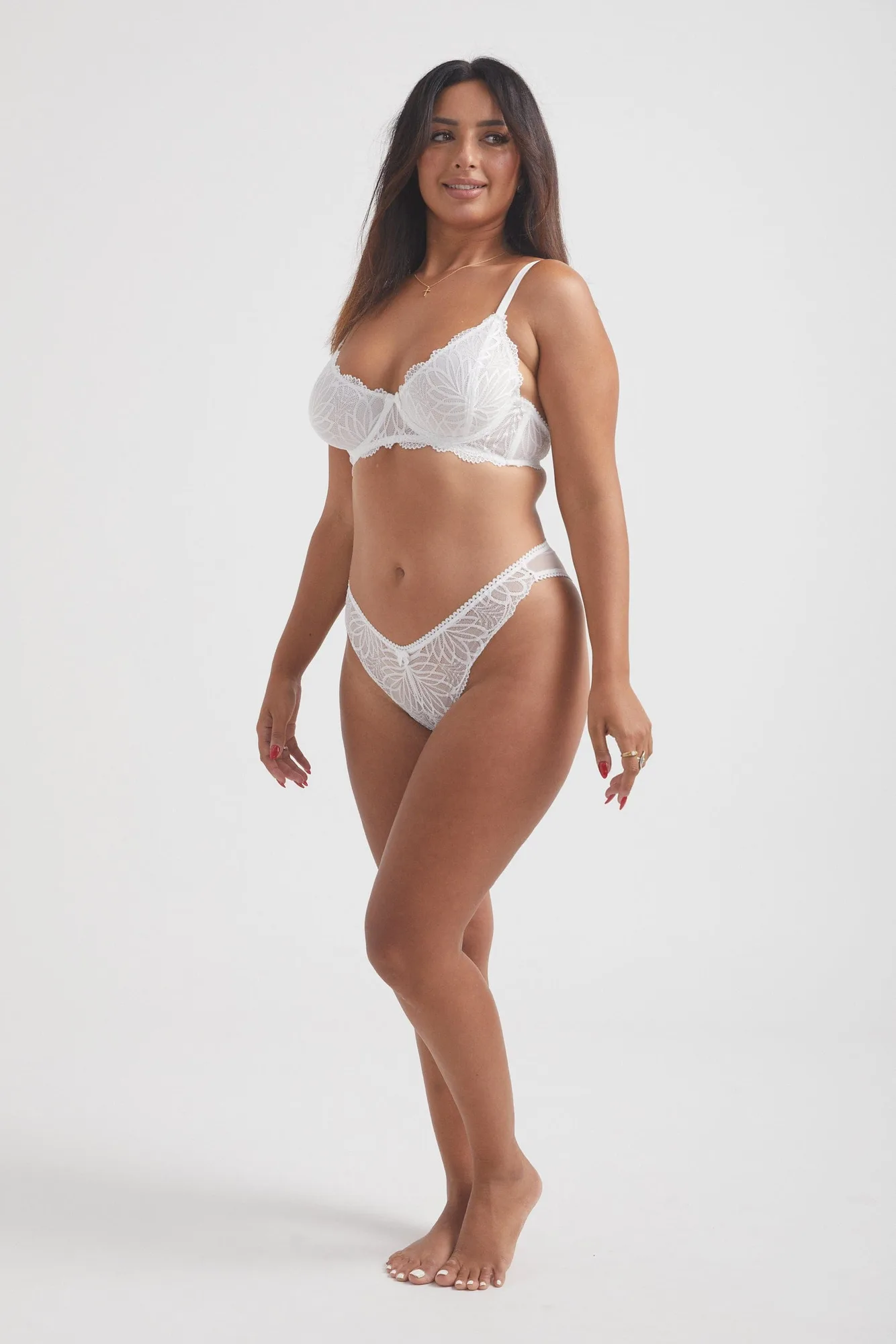
- Olivia Bra - White: Soft power mesh lining offers support without compromising on comfort, and it is designed as a daily essential. The mesh lining gives structure without bulk, which helps when a molded cup gaps or feels stiff against the body.
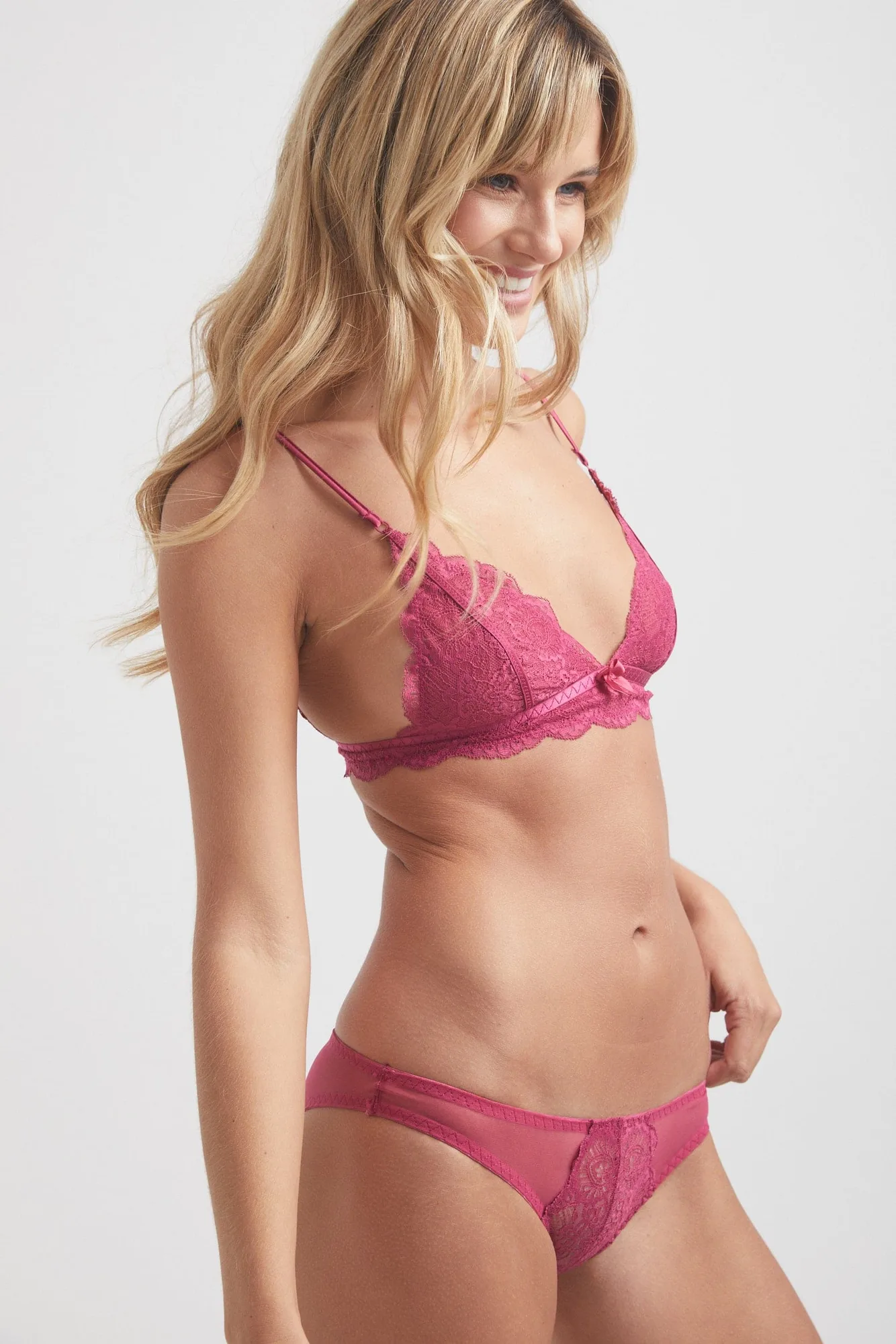
- Holly Bralette - Sangria: Soft-to-the-touch lace with buttery-soft yet supportive power mesh lining, plus silky straps and an exposed statement back. An unstructured lace bralette often sits closer to the body than a molded cup, making it a good option when cup gaping is the main problem.
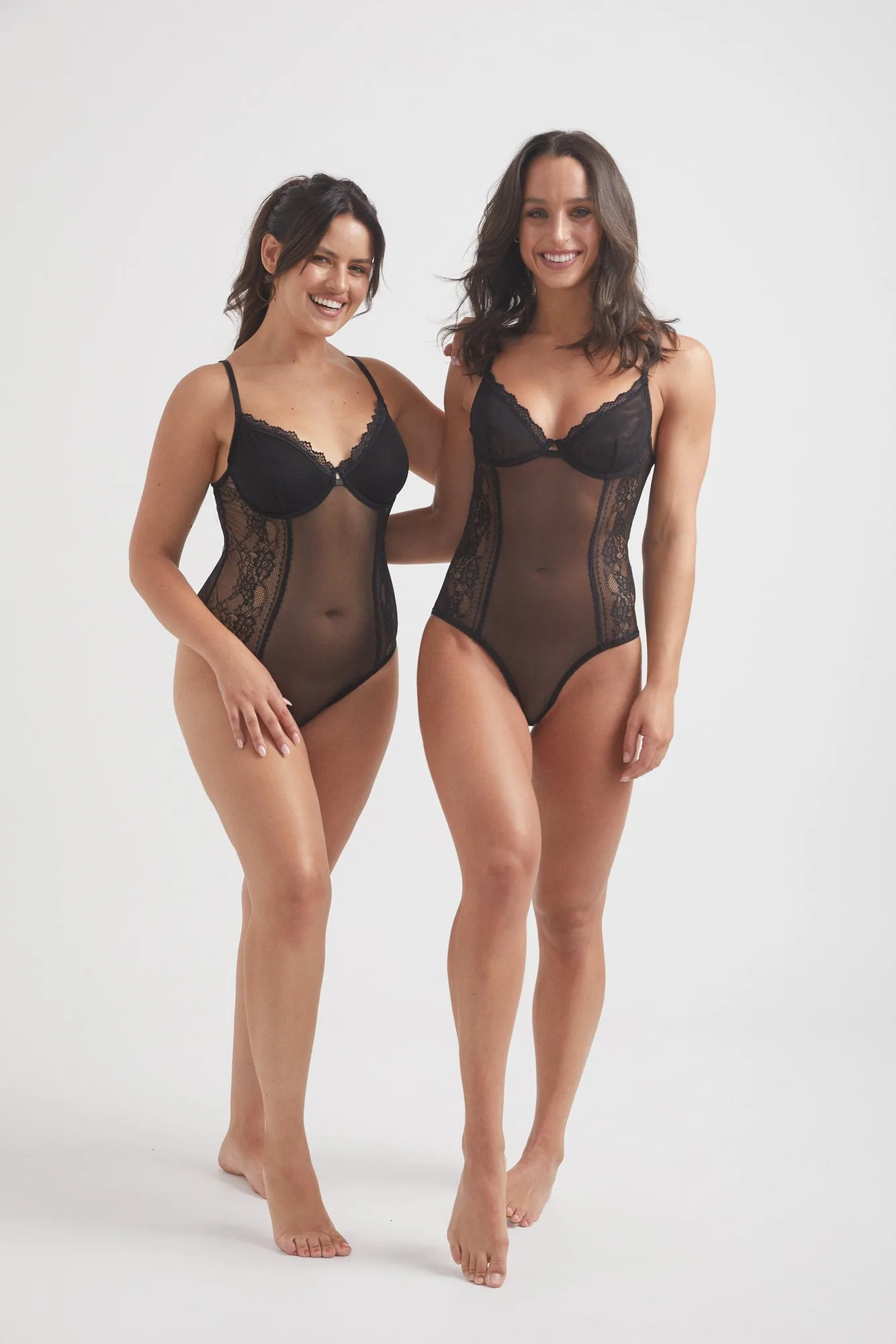
- Skye Bodysuit: Underwire cups with double-layered power mesh and a 2x3 back closure for a perfect fit. The adjustable back closure lets you fine-tune band tension, which helps if you are between sizes or your band size fluctuates.
A bra that no longer fits is not a failure on your part; it is information. Use the symptom checks above to decide whether to adjust, replace, or switch styles, and replace any bra that only works on its tightest hook or has lost its shape. Your next bra will fit better because you know exactly what to look for.