Quick answer
If your bra band rides up, straps dig in, or cups gap or spill, your bra no longer fits. First try adjusting the band and straps; if the problem persists, re-measure and size up or down in the band or cup. Replace any bra that is stretched, damaged, or consistently uncomfortable.
A bra that fit perfectly a year ago can start to feel wrong without any change in your weight. Fabric relaxes, elastic fatigues, and your body naturally shifts over time. The tricky part is telling the difference between a bra that needs a quick adjustment and one that genuinely no longer fits.
This guide walks through the most common bra fit problems, what likely causes each one, and the exact step to take next. You will also see when to stop troubleshooting and simply replace the bra, plus a few Timpa styles that solve specific fit issues for smaller busts.
How to tell if your bra is too loose
The clearest sign of a too-loose bra is a band that rides up your back. Fasten the bra on the loosest hook and check the band in a mirror. It should sit level all the way around. If it climbs, the band has stretched or the size is too big. Another sign is straps that fall off your shoulders even after you tighten them, because the band is no longer anchoring the cups.
A too-loose band also lets cups shift and gap when you move. Before you replace the bra, try tightening the straps and fastening on a tighter hook. If the band still rides up on the tightest hook, the bra has reached the end of its life or is the wrong size.
- Band rides up in back: try a smaller band size or a tighter hook.
- Straps slip constantly: the band is too loose, not the straps.
- Cups gap when you raise your arms: the band is not holding the bra in place.
How to tell if your bra is too tight
A bra that is too tight leaves red marks that last for hours, makes it hard to take a deep breath, or digs into your ribs and shoulders. The band should feel snug but not painful. If you can only fasten the bra on the loosest hook and it still leaves deep marks, the band is too small. If the underwire presses into your breast tissue instead of sitting flat against your ribcage, the cup is likely too small.
Sometimes a too-tight feel comes from a cup that is too small rather than a band that is too small. When the cup cannot contain your breast, it pushes the wire into your ribs. Try going up one cup size before you go up a band size. If that does not help, go up a band size and down a cup size to keep the same volume.
- Red marks that last: band is too tight or cup is too small.
- Underwire digs into breast tissue: go up a cup size.
- You can only wear the bra on the loosest hook: the band is too small.
Cup fit problems: gaping, spilling, and digging
Gaping at the top of the cup usually means the cup is too big or the style is too shallow for your shape. Spilling over the top or sides means the cup is too small. Digging underwire at the sides often means the cup is too narrow. Before you replace the bra, check the band first. A band that is too loose can make a cup gap even when the cup size is correct.
If you are between sizes, choose the style that matches your shape. A demi bra with a lower cut can work well for a petite frame, while a plunge bra centers the bust for low necklines. For smaller busts, a padded bra adds light volume without a gap, and a wireless bra removes underwire pressure entirely.
- Gaping at top: try a smaller cup or a demi style.
- Spilling over: go up a cup size.
- Wire digging at sides: try a wider or deeper cup.
When to replace your bra instead of adjusting it
Stop adjusting and replace the bra when the band no longer stays put on the tightest hook, when the elastic is visibly stretched or cracked, when the underwire pokes through the fabric, or when the cups have lost their shape after repeated washing. A bra that has been worn two or three times a week typically lasts six to twelve months before the elastic gives out.
If your size has changed, replacing is the only real fix. A bra that is two band sizes off cannot be saved by tightening straps. Re-measure yourself or get fitted, then choose a new size. If you are unsure between two sizes, start with the larger band and adjust the cups from there.
- Band rides up on tightest hook: replace.
- Elastic cracked or stretched: replace.
- Underwire pokes through: replace immediately.
- Size changed by more than one band or cup: re-measure and replace.
Fit diagnosis: symptom, cause, and what to do
- Band rides up your back: The band is too loose, either from stretched elastic or a band size that is too big. Fasten on the tightest hook and check if it still climbs. If it still rides up, replace the bra or go down a band size.
- Straps dig into your shoulders: The band is not supporting enough weight, so the straps take over. Tightening the straps makes it worse. Check that the band is snug on the loosest hook. If the band is already snug, the cup is likely too small. Go up a cup size.
- Cups gap at the top: The cup is too big or too shallow for your shape. A band that is too loose can also cause gaping. Try a smaller cup or a demi style. If gaping continues in a smaller cup, switch to a padded bra designed for smaller busts.
- Underwire digs into your ribs or breast tissue: The cup is too small or too narrow, pushing the wire into your body. Try going up one cup size before changing the band. If the wire still digs, switch to a wireless bra.
- Bra leaves deep red marks that last for hours: The band is too tight or the cup is too small. A bra should feel snug, not painful. Check the band on the loosest hook. If marks persist after going up a band or cup size, the style may not suit your shape.
Timpa styles that solve specific fit problems
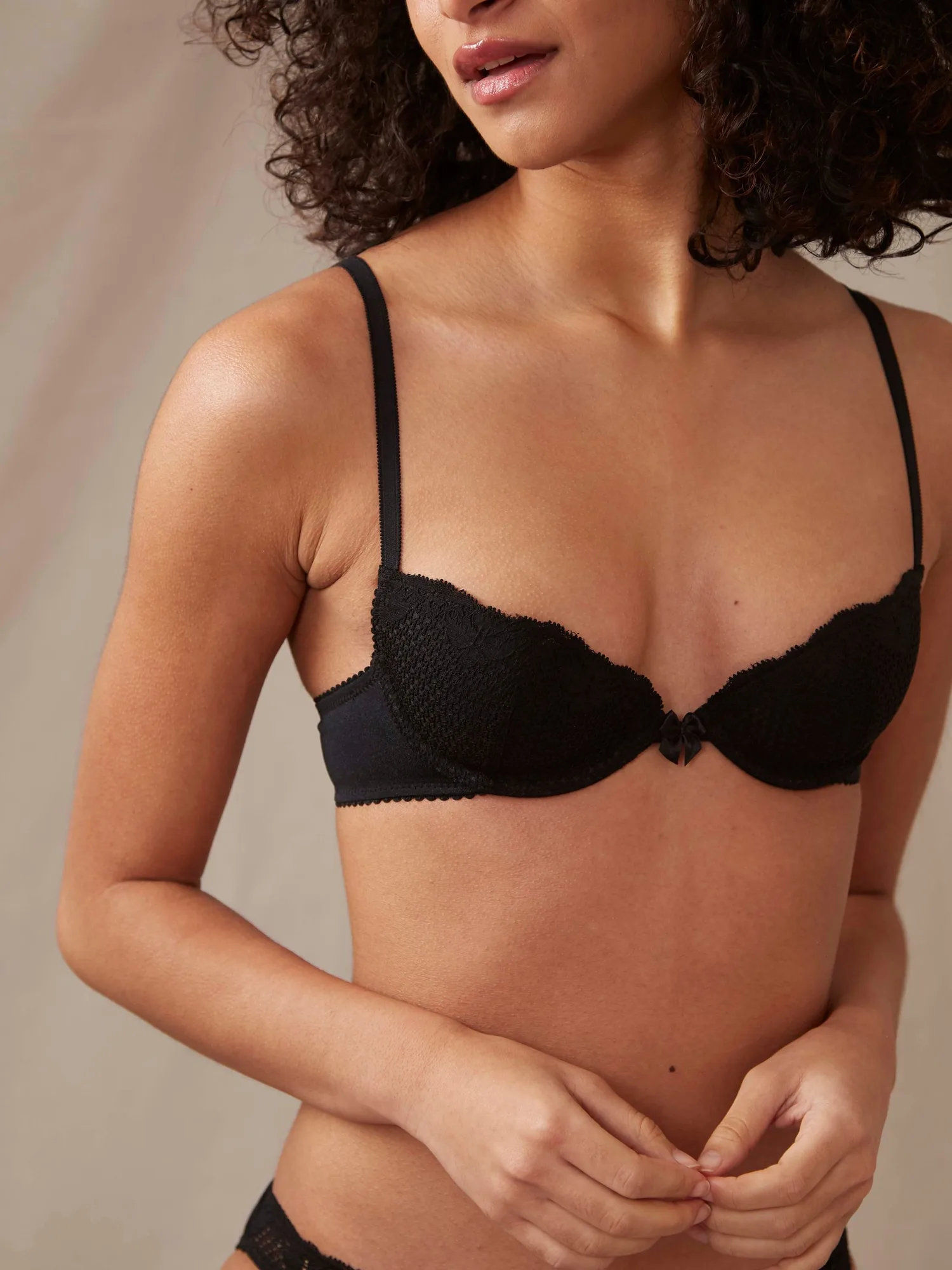
- Alice Padded Bra: Designed specifically for smaller busts (A-C cups) with light foam padding for a smooth, rounded shape without the gap. If your cups gap because you have a smaller bust, this style adds volume without creating empty space at the top.
- Alice Bandeau bra: Wire-free with fully adjustable, sewn-on straps and a straight-across silhouette for smaller busts. A good choice if underwire pressure is your main problem and you want a bandeau that stays in place.
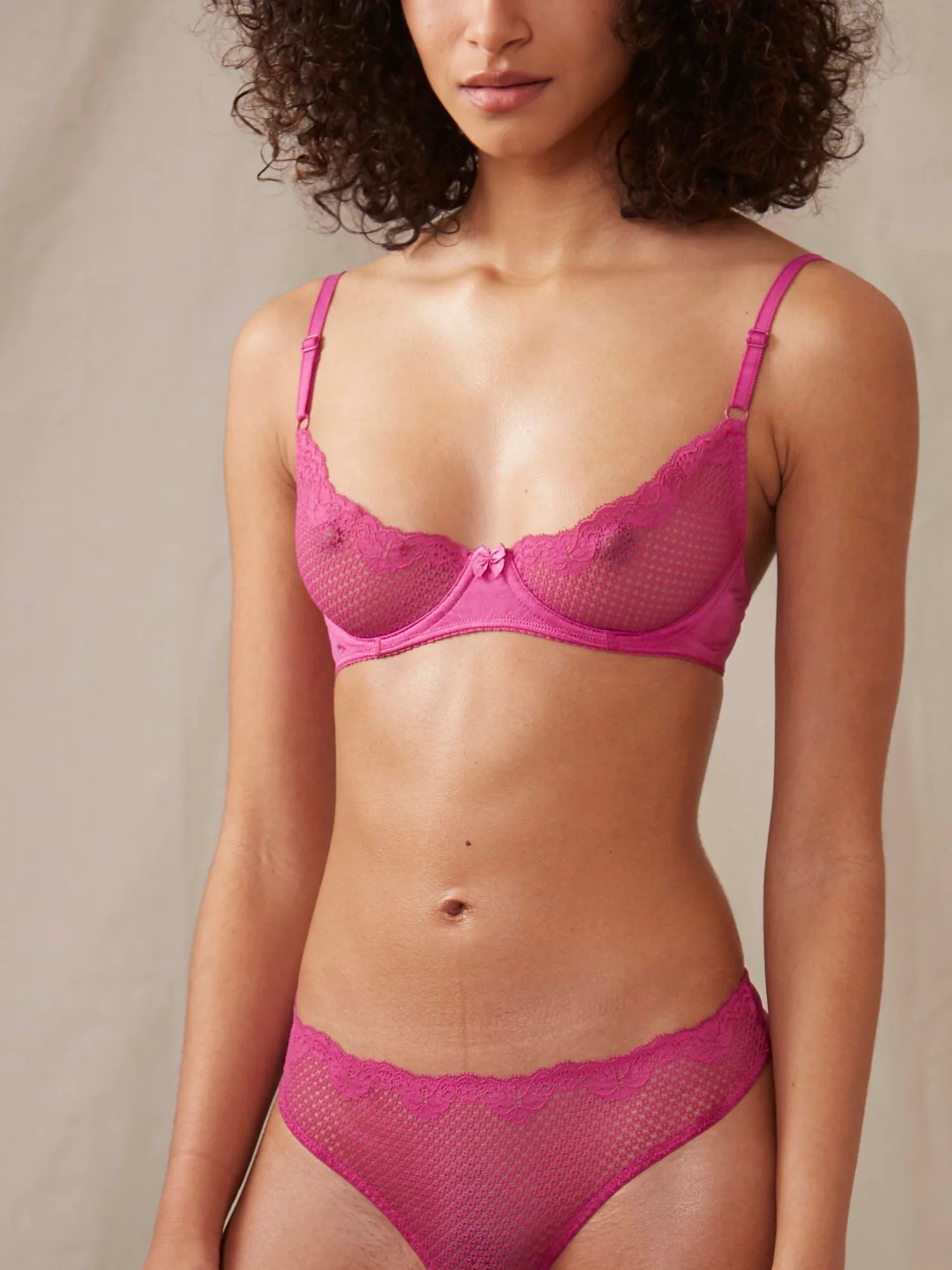
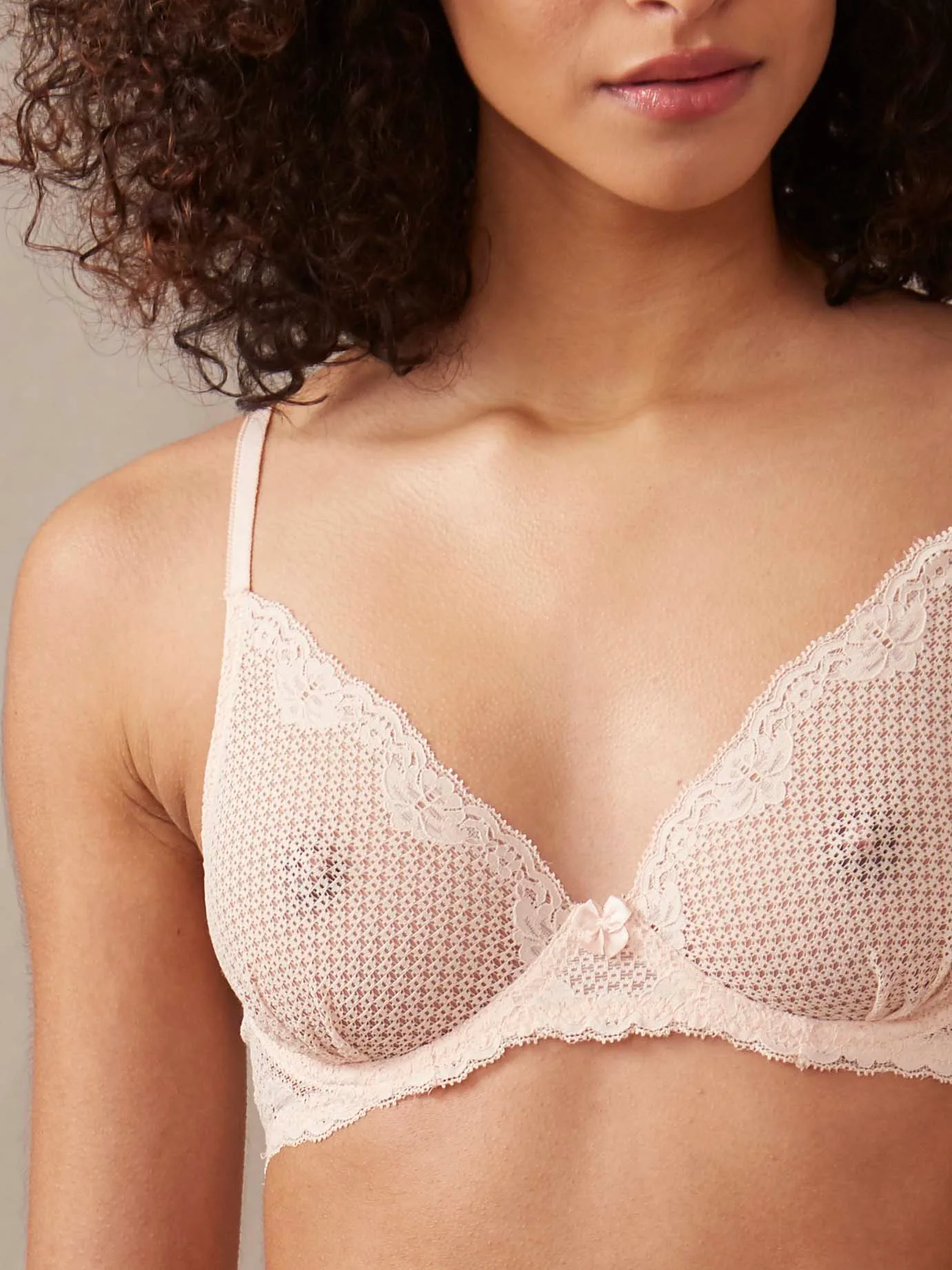
- https://timpalingeriecn.com/products/alice-demi-bra-sale-94ac6208aed76f9852aa7f64-1422755Alice Demi Bra - Sale: Soft underwire and delicate lace with gentle lift, no padding, and cups made from a single panel of lace with no middle seams. If seams irritate your skin or you want a natural shape with light support, this demi bra removes the middle seam and the padding.
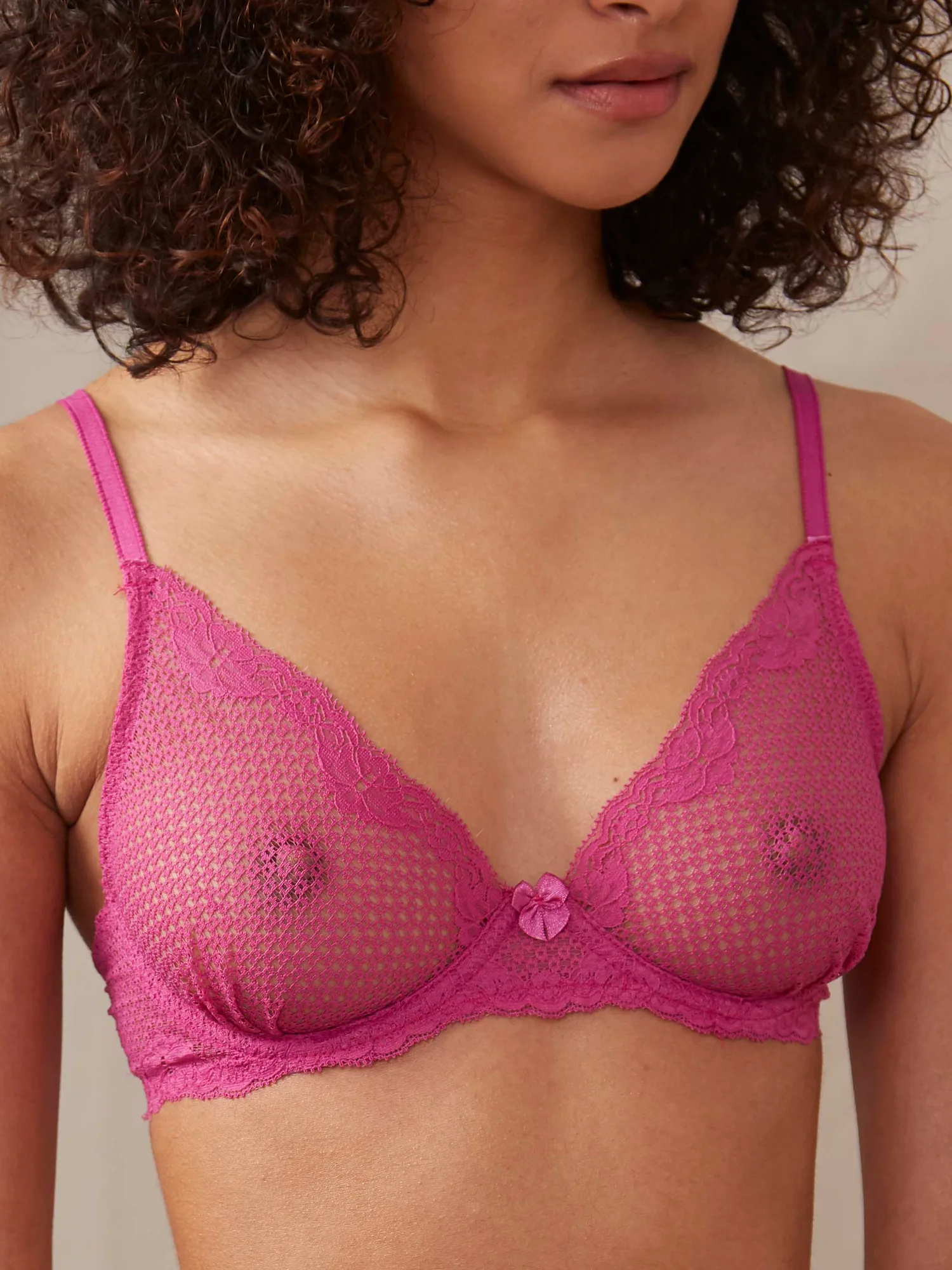
- Alice Plunge Bra - Sale: Deep V silhouette engineered to center your bust and disappear under low-cut tops. If your bra shows under a low neckline or your bust feels wide-set, a plunge style brings everything toward the center.
Your bra should support you without constant adjusting, digging, or gaping. Use the diagnosis above to match your symptom to a cause, try the simple fix first, and replace the bra when the band, elastic, or wire has given out. A well-fitting bra is worth the swap.