Quick answer
Start with Silicone Chewtensils in Marble as a gum-friendly teether, then move to dipping practice with soft purées. Use one spoon at a time, model the motion, and let your baby set the pace.
Why the Marble Chewtensils work for the in-between stage
The Hearts + XOXO collection pairs a soft, textured silicone body with bendable spoon heads, so the same utensil can serve as a teether and a first spoon. That dual role matters because babies often reject a spoon that feels hard or unfamiliar; a silicone head is gentler on tender gums and easier to grip during early hand-to-mouth practice.
The sensory bumps on the back of the spoon head give your baby something to explore while teething, which can make the utensil feel less like a tool and more like a familiar object. Use that familiarity to your advantage: the transition from chewing to scooping is smoother when the spoon is already a known item.
When to switch from teething to dipping
There is no fixed age for moving from chewing to scooping. Watch for your baby bringing the spoon to their mouth independently and showing interest in what you are eating. If they still mostly gnaw on the handle, keep the utensil in the teething role and revisit dipping in a week or two.
A common exception: babies who are teething heavily may prefer to chew rather than dip. In that case, offer the Chewtensils chilled (not frozen) as a teether before meals, then bring out a second spoon for dipping so the two jobs stay separate.
Step-by-step: from first grip to self-feeding
- Introduce the Chewtensils as a teether: Hand your baby one Chewtensils during a calm, supervised moment, not at the start of a meal. Let them mouth the sensory bumps and handle the grip. Common mistake: offering it only when they are hungry and frustrated, which teaches them to associate the spoon with pressure. Aim for short, positive sessions before meals rather than during them.
- Model dipping with a second spoon: At mealtime, dip your own spoon into a soft purée and bring it to your mouth slowly. Then dip the Chewtensils and offer it to your baby. Common checkpoint: your baby should be reaching for the spoon, not turning away. If they turn away, stop and try again next meal; forcing the dip can backfire.
- Pre-load the spoon and hand it over: Scoop a small amount of purée onto the Chewtensils and place it on the tray or hand it to your baby handle-first. Let them bring it to their mouth however they choose. Common mistake: guiding their hand too firmly, which removes the learning. Keep the load small so a miss is easy to clean and low-stress.
- Practice the dip-and-lift motion together: Once your baby is comfortable holding the pre-loaded spoon, show them how to dip the head into a shallow bowl and lift it out. Use a bowl with a stable base so it does not slide. Common checkpoint: the bendable head may fold under pressure, so choose a soft purée or mashed food rather than thick chunks. Thick or sticky foods can overwhelm a first utensil; keep textures soft and scoopable.
- Build a two-spoon routine: Keep one Chewtensils for your baby and one for you. When your baby drops theirs, offer the clean one rather than retrieving the dropped spoon mid-meal. Common mistake: wiping the dropped spoon on your shirt and handing it back, which adds mess and delays the meal. A spare spoon keeps practice going without a mid-meal wash.
- End on a calm note and clean up: Stop when your baby loses interest or starts throwing the spoon. Rinse the Chewtensils promptly and check the silicone for tears before the next use. Common checkpoint: if the head feels sticky or damaged, retire that spoon. Inspect silicone utensils regularly; replace any that are torn or degraded.
Product facts
-
Silicone Chewtensils®: Marble: Made from soft, textured, food-grade silicone with bendable heads for safety. The flexible head is gentler if your baby bites down or pushes the spoon too far, which is common in early self-feeding.
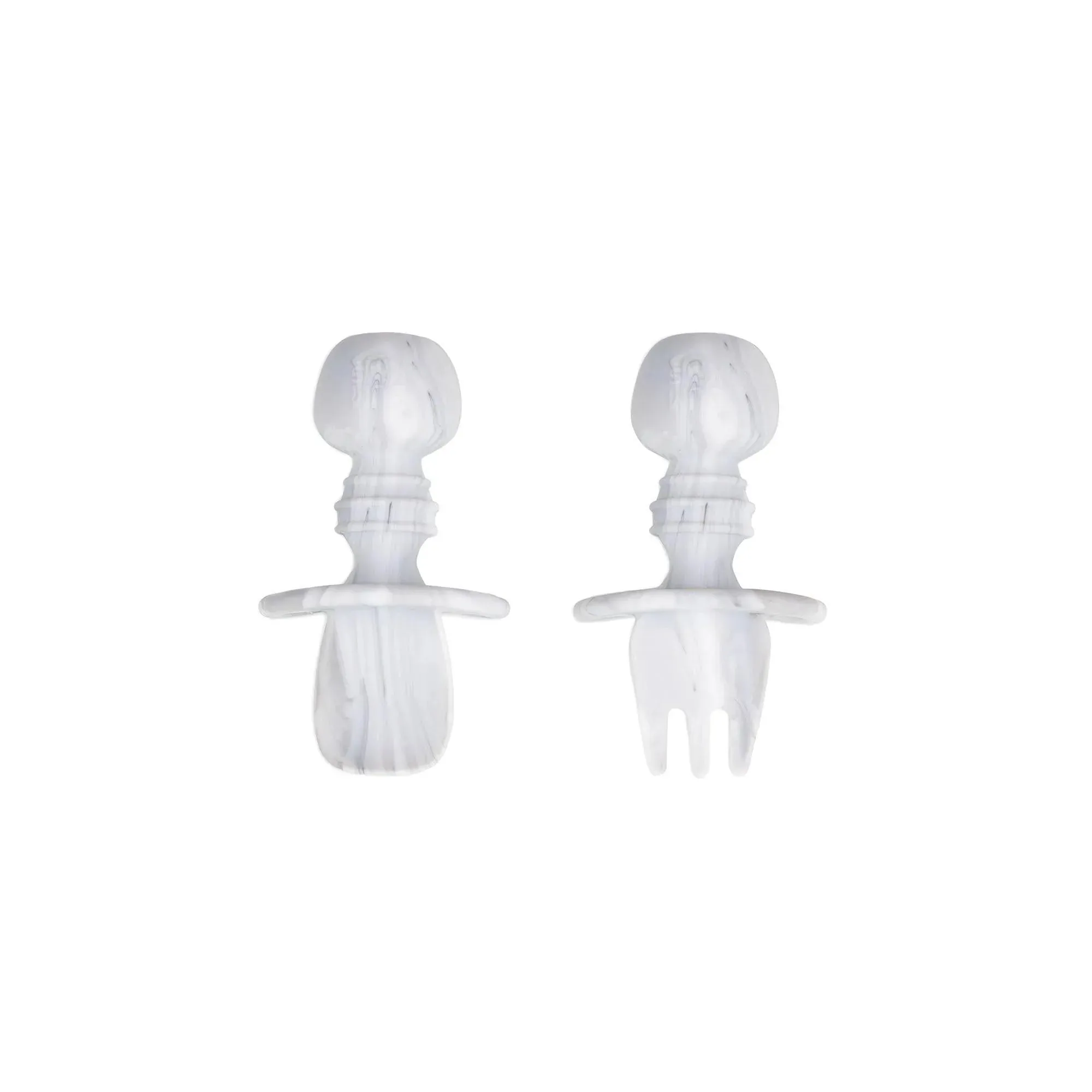
Silicone Chewtensils®: Marble
-
Silicone Chewtensils®: Marble: Designed for Stage 1 of baby-led weaning to introduce holding a utensil and self-feeding. It sets realistic expectations: this is a first utensil for grip and mouthing, not a precision scoop for thicker foods.
-
Silicone Chewtensils®: Marble: The back of the spoon head has sensory bumps to stimulate gums. Those bumps give teething babies a safe place to chew, so the same tool can bridge teething and feeding.