Two restraint styles, two different learning curves
If you are new to bondage, the first real decision is not which knot to learn or which color looks best. It is whether you want a restraint that goes on like a cuff or one that goes on like a rope. Silicone cuffs and bondage rope solve the same basic problem, but they ask different things of you. Cuffs are a fixed, pre-shaped loop you fasten around a wrist or ankle. Rope is a length you wrap, tie, and adjust yourself.
That difference shapes everything else: how much practice you need, how precisely you can adjust fit, how much cleanup is involved, and how confident you will feel the first time. The catalog records for the Sex & Mischief Amor Small Silicone Cuffs and the Adam & Eve BONDAGE ROPE give enough detail to compare those trade-offs honestly, and to flag what the listings do not settle.
Silicone cuffs vs bondage rope at a glance
- How it fastens: Cuffs are pre-formed loops sized to secure wrists or ankles. Rope is a 3 metre (10 feet) length you wrap and tie into knots, ties, or styles you choose.
- Adjustability: Rope lets you adjust tightness and style by how you tie it. The cuff record describes them as sized to comfortably secure wrists or ankles but does not confirm a buckle, strap, or sliding adjuster.
- Practice required: Rope asks you to learn simple knots first. Cuffs ask mainly that you position and fasten a loop, so there is less technique to rehearse before a first session.
- Material feel: The Amor cuffs are smooth, flexible silicone. The Adam & Eve rope has a satin finish described as soft to the touch and gentle on the skin.
- Cleaning: The cuff record calls them easy to clean. The rope record also describes the material as easy to maintain. Neither record supplies a specific cleaning method, so follow the care guidance that comes with your purchase.
- Best fit for: Cuffs suit beginners who want a straightforward, pre-shaped restraint. Rope suits beginners who want length, versatility, and are willing to practice knots before using it on a partner.
What the Amor Small Silicone Cuffs record confirms
-
Sex & Mischief Amor Small Silicone Cuffs - Red Small Restraints: Crafted from body-safe silicone in a fiery red hue, sized to comfortably secure wrists or ankles. The pre-shaped loop and silicone material are the core of the beginner case for cuffs: less setup, a smooth surface, and a clear intended placement.
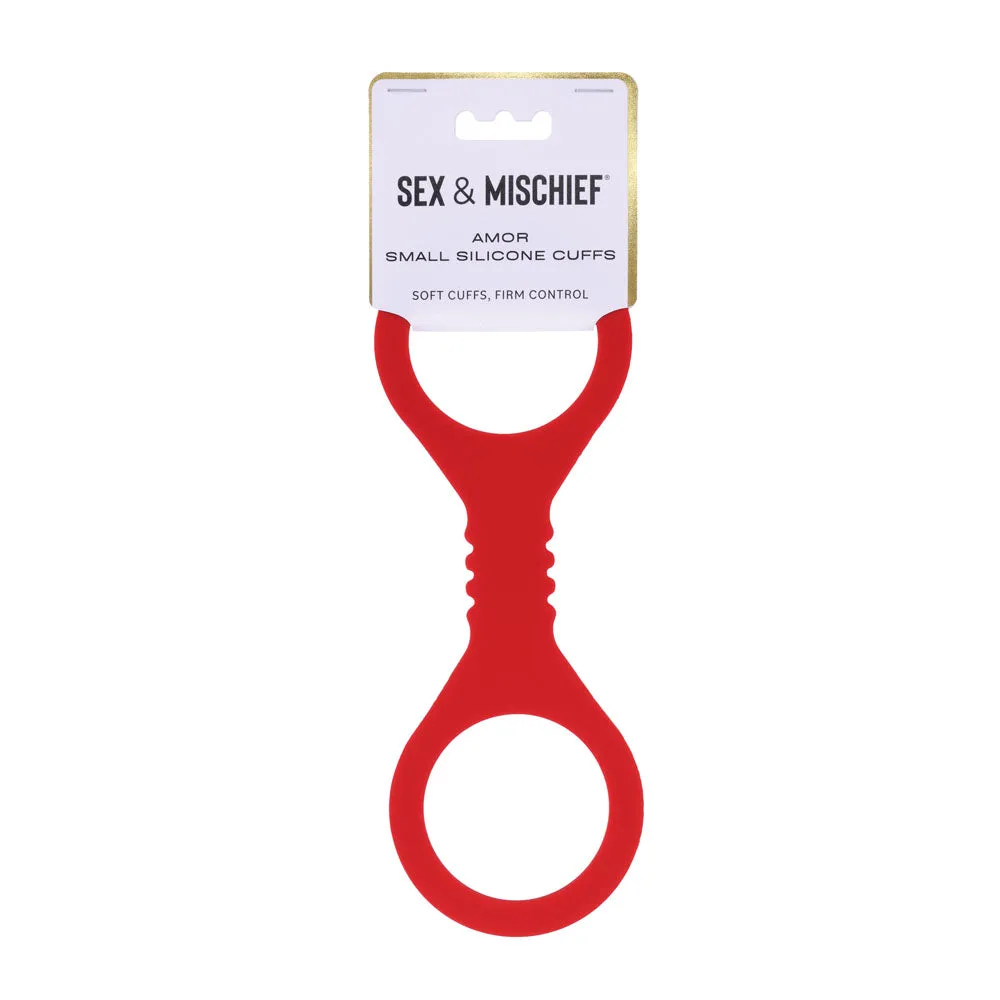
Sex & Mischief Amor Small Silicone Cuffs - Red Small Restraints
-
Sex & Mischief Amor Small Silicone Cuffs - Red Small Restraints: Described as lightweight, durable, and easy to clean. Those three traits matter most for repeat use, especially if you want a restraint that is simple to wipe down and store between sessions.
-
Sex & Mischief Amor Small Silicone Cuffs - Red Small Restraints: Available in Red. Color is the only option type shown for this product, so the buying decision is about fit and fastening rather than a range of sizes or finishes.
What the Adam & Eve BONDAGE ROPE record confirms
-
Adam & Eve BONDAGE ROPE - 3 metre - Black Bondage Rope - 3 metre: Measures 3 metres (10 feet) in length, with a satin-finished black surface. The length is the rope's main advantage: it gives you room to wrap, adjust tightness, and try different ties rather than committing to one fixed loop.
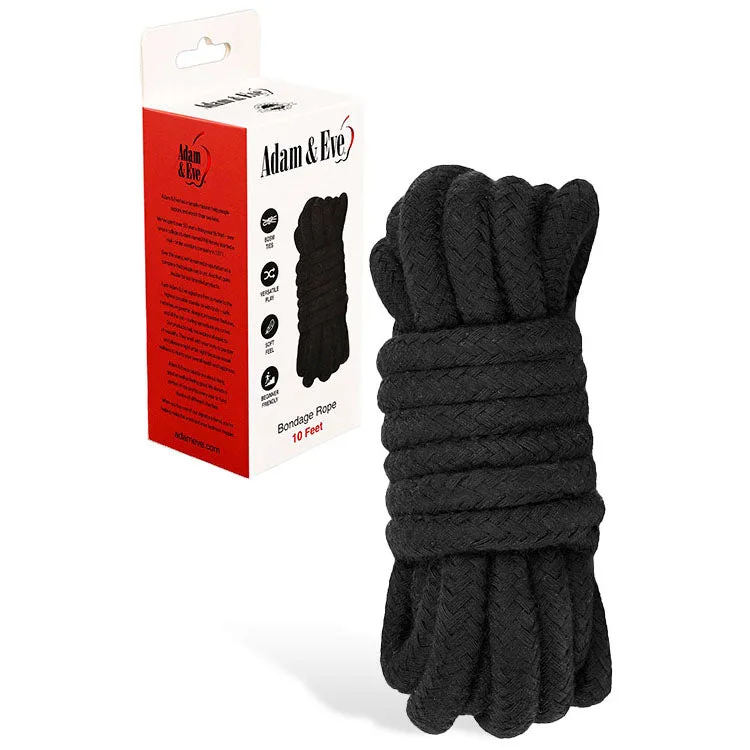
Adam & Eve BONDAGE ROPE - 3 metre - Black Bondage Rope - 3 metre
-
Adam & Eve BONDAGE ROPE - 3 metre - Black Bondage Rope - 3 metre: Soft to the touch yet strong, with a silky texture described as preventing chafing or discomfort during use. Comfort against skin is the main concern beginners raise about rope, and the record addresses it directly.
-
Adam & Eve BONDAGE ROPE - 3 metre - Black Bondage Rope - 3 metre: Easy to untie, making it practical for quick release. Quick release is a practical safety feature for anyone still learning tension and knots.
-
Adam & Eve BONDAGE ROPE - 3 metre - Black Bondage Rope - 3 metre: Available in Black. Like the cuffs, this rope is offered in a single color, so the choice comes down to style and use rather than color matching.
Where each option asks more of a beginner
Cuffs are the lower-effort entry point. You do not need to learn a knot before your first session, and the pre-shaped loop removes some of the guesswork about where the restraint sits. The trade-off is that the record describes them as sized to secure wrists or ankles but does not confirm an adjustable buckle or strap. If fit precision is your main concern, ask before buying rather than assuming a one-size loop will sit the way you want.
Rope rewards practice. The Adam & Eve record explicitly frames the 10-foot length as an introduction for newcomers and recommends starting with simple knots before working up to more complex designs. It also stresses establishing a safe word and discussing limits before play. That is sound beginner advice, and it points to the real cost of rope: your first sessions are partly rehearsal, not just play. If you want something you can use confidently on the first try, cuffs are the easier start. If you want room to experiment and are willing to practice, rope gives you more ways to adjust tightness and style.
A practical way to choose
- Choose silicone cuffs if: You want a simple, pre-shaped restraint for wrists or ankles, you prefer a smooth silicone surface, and you would rather not learn knots before your first session. The Amor Small Silicone Cuffs fit that brief, with the caveat that the record does not confirm an adjustable fastening.
- Choose bondage rope if: You want a longer, more versatile restraint you can wrap and tie in different ways, you are willing to practice simple knots first, and quick release matters to you. The Adam & Eve BONDAGE ROPE covers that with its 3 metre (10 feet) length and easy-to-untie design.
- Consider both if: You are building a first kit. Cuffs give you a reliable default for low-fuss sessions, while rope gives you room to learn ties over time. Buying both is a reasonable beginner path if your budget allows, since each covers a different kind of session.
What the catalog does not settle
Neither record supplies a specific cleaning method, drying instruction, or storage recommendation. Both describe their materials as easy to clean or maintain, but that is not the same as a step-by-step care routine. Use the care guidance included with your purchase and avoid improvising harsh treatments.
The cuff record also does not confirm whether the fastening is adjustable, what the maximum or minimum circumference is, or whether a buckle, strap, or other closure is used. The rope record does not state a maximum safe load or a recommended knot list. Those are questions to raise with the retailer before you buy, not gaps you should fill by guessing. What the records do give you is a clear sense of the two styles: cuffs for a pre-shaped, low-setup restraint, and rope for length, adjustability, and practice.