
Quick answer
Choose the Gray Silicone Sensory Placemat if you want the lowest price and a neutral look that hides stains; choose the Marble version if you prefer a patterned surface that adds visual interest for sensory play and don’t mind paying a little more. Both share the same nonslip silicone design, suction base, and raised edge.
What actually differs between Gray and Marble
The two placemats are the same Bumkins Silicone Sensory Placemat design, so the real differences come down to color and price. Gray is a solid, understated tone, while Marble has a variegated pattern that looks like stone. Neither option changes the mat’s size, suction performance, or cleanup method. If you’re comparing a gray silicone placemat with a marble silicone placemat, the decision is mostly about aesthetics and budget, not function.
How color affects everyday use
A solid gray mat tends to camouflage crumbs and light-colored spills less than a busy pattern, but it also shows fewer stains than white or light pastels. The Marble pattern breaks up the visual surface, which can make small food bits less obvious between cleanings. For sensory play, the Marble pattern may hold a child’s attention slightly longer because there’s more to look at, while Gray offers a calmer backdrop for focused eating. These are practical preferences, not performance differences.
Price and value trade-off
At the catalog prices shown, Gray is the lower-cost option, while Marble costs a bit more for the decorative pattern. Both are marked down from the same comparison price, so the value gap is small. If you need multiple mats for daycare, travel, or a sensory bin station, Gray stretches your budget further. If you’re buying a single mat as a gift or want a specific look on the table, the Marble pattern may justify the extra cost.
Key trade-offs to weigh
- Price vs pattern: Gray costs less; Marble costs more for a decorative look. If budget is tight or you need several mats, Gray is the practical pick. If the mat will be visible on your table or you want a more engaging surface for sensory play, Marble’s pattern may be worth the small premium. Decide whether the pattern adds enough value for your table setting or play routine.
- Stain visibility vs visual calm: Solid Gray can show light-colored residue more readily than a busy pattern, but it hides darker stains better than white. Marble’s varied pattern can make crumbs less noticeable between wipes. For sensory play, Marble offers more visual texture; Gray offers fewer distractions for focused eating. Consider how often you clean and whether your child is easily distracted by patterns.
- Same suction and portability: Both mats share the same suction base and roll-up design, so neither has an advantage for highchair use or travel. Choose based on color and price alone; do not expect one to stick better than the other. If suction is your top priority, either mat performs the same—pick the color you prefer.
Product facts
-
Silicone Sensory Placemat: Gray: Lightweight nonslip silicone that suctions to most tables and rolls up for storage. Makes it easy to bring to restaurants or store in a diaper bag without taking up much space.
Silicone Sensory Placemat: Gray
Silicone Sensory Placemat: Gray
-
Silicone Sensory Placemat: Marble: Raised inside edge catches food and spills while the outside edge is sloped to meet the table edge. Helps contain messes during self-feeding and reduces the chance of spills sliding off the mat.
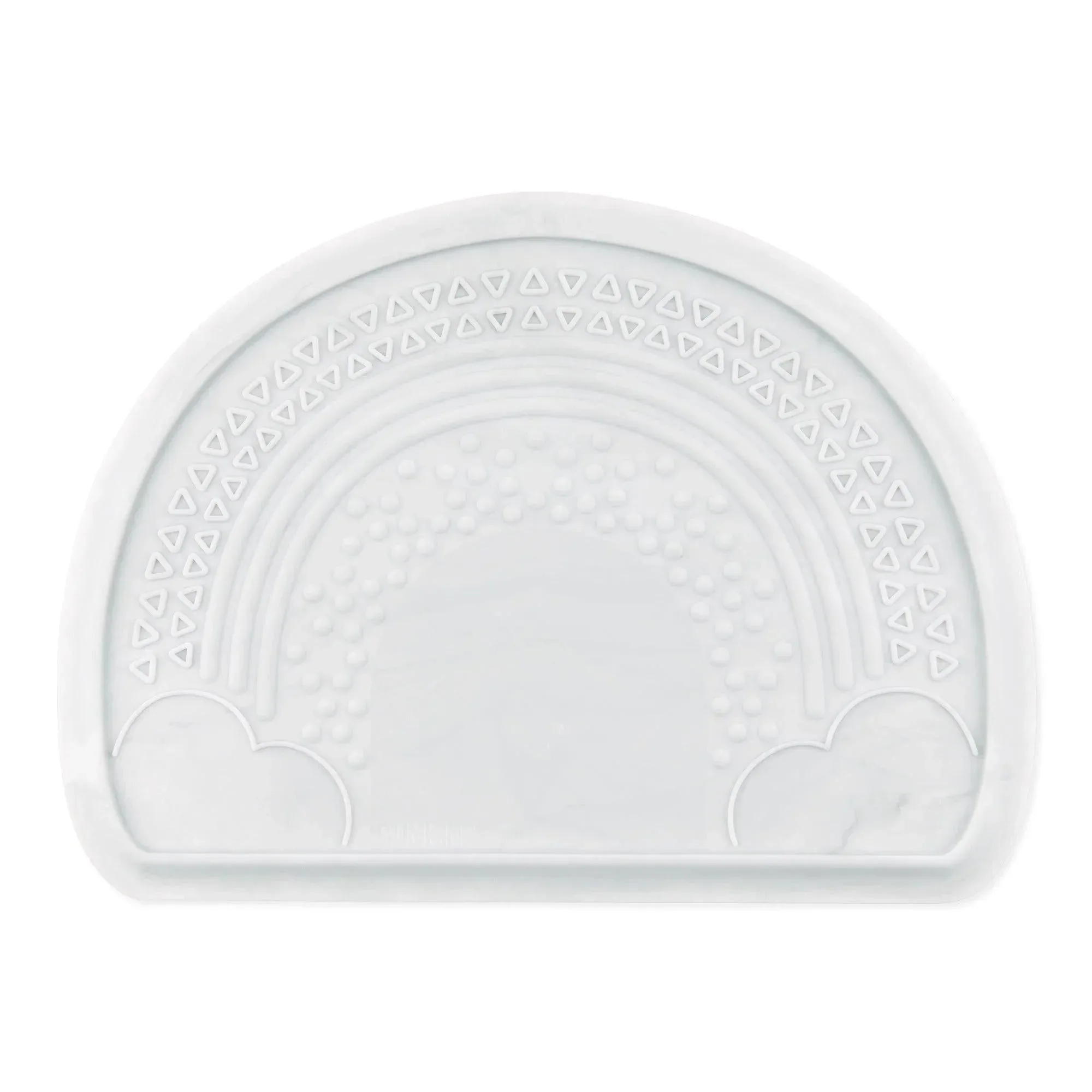
Silicone Sensory Placemat: Marble
Which mat fits your needs?
Best for
- Budget-conscious families who need multiple mats for home, daycare, or travel
- Parents who prefer a neutral, understated look that hides darker stains
- Toddlers who focus better on a solid, non-distracting surface
Not for
- Shoppers who want a decorative pattern that adds visual interest to sensory play
- Those who find solid colors show light-colored crumbs too easily and prefer a busier surface