Quick Answer
For toddlers still learning to scoop, a suction bowl contains loose foods like cereal, yogurt, or diced fruit better because the high walls keep food centered. A suction plate works better for finger foods and meals with separate components, since the flat surface and divided sections let kids see and pick up each item. Many families end up using both: bowls for spoon practice, plates for finger-food meals.
How Suction Bowls and Plates Solve Different Problems
A suction bowl's main job is containment. The deep walls and curved interior help a toddler scoop food onto a spoon without pushing it over the edge. This makes bowls the better choice for oatmeal, yogurt, applesauce, and any meal where the food moves. The trade-off is that bowls can be harder to clean around the suction base and may not fit neatly on a highchair tray with other items.
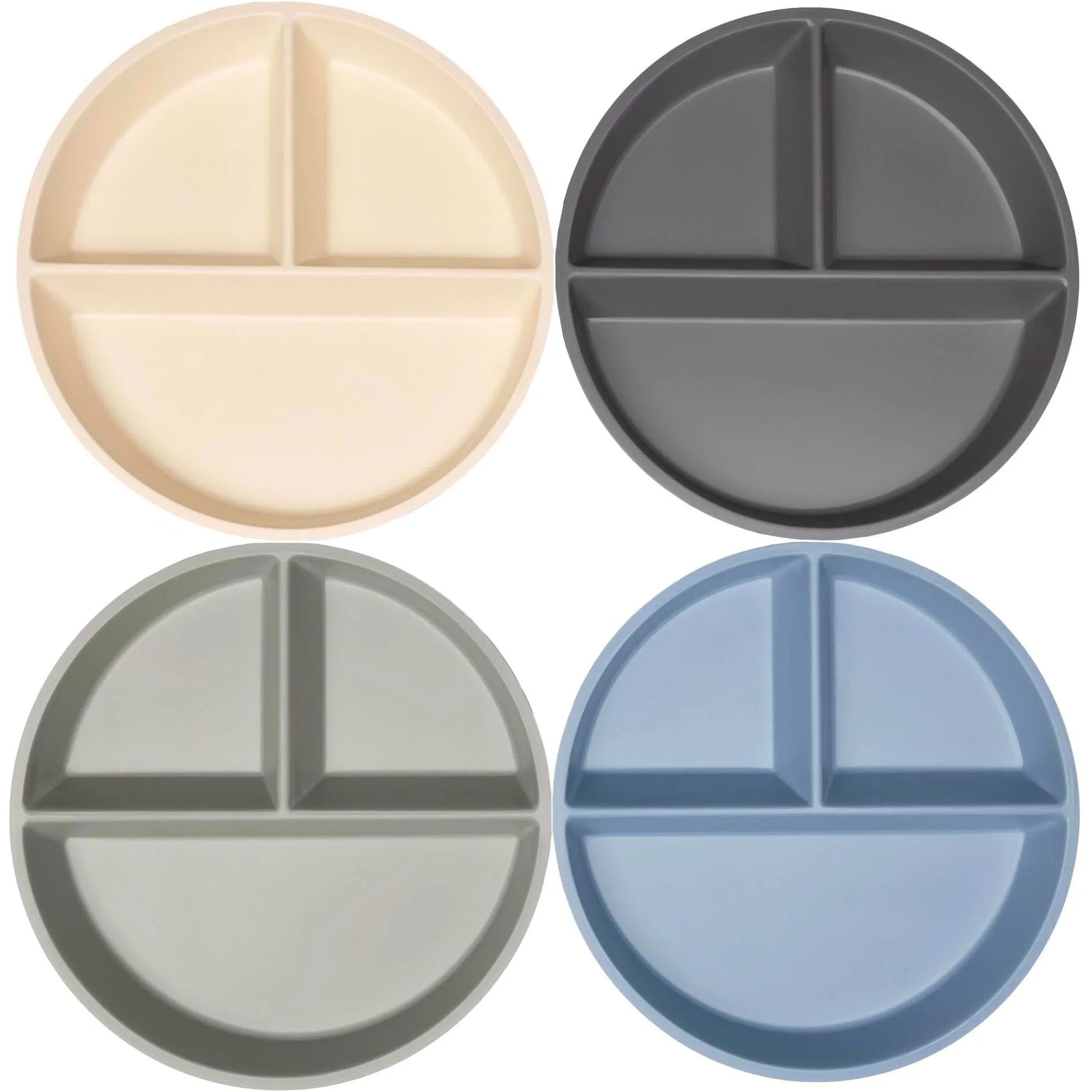
A suction plate's main job is organization and access. The flat surface keeps food spread out so small hands can grab pieces easily, and divided versions separate foods for picky eaters. Plates are better for sandwiches, cut fruit, cheese cubes, and meals with multiple components. The trade-off is that loose or saucy foods spread across the plate and can be harder to scoop, especially for kids still developing wrist control.
Neither shape is universally better. The right pick depends on what your child is eating and which self-feeding skill you're practicing this month.
What to Look For in Either Shape
Suction strength matters most. A base that releases with a tab is easier for adults to remove without yanking the whole tray. Measurement markings help when you're portioning or tracking intake, but they're only useful if they're easy to read after washing. Depth and wall angle affect scooping: deeper bowls with a gentle curve help beginners, while shallow bowls work better for older toddlers who already have spoon control.
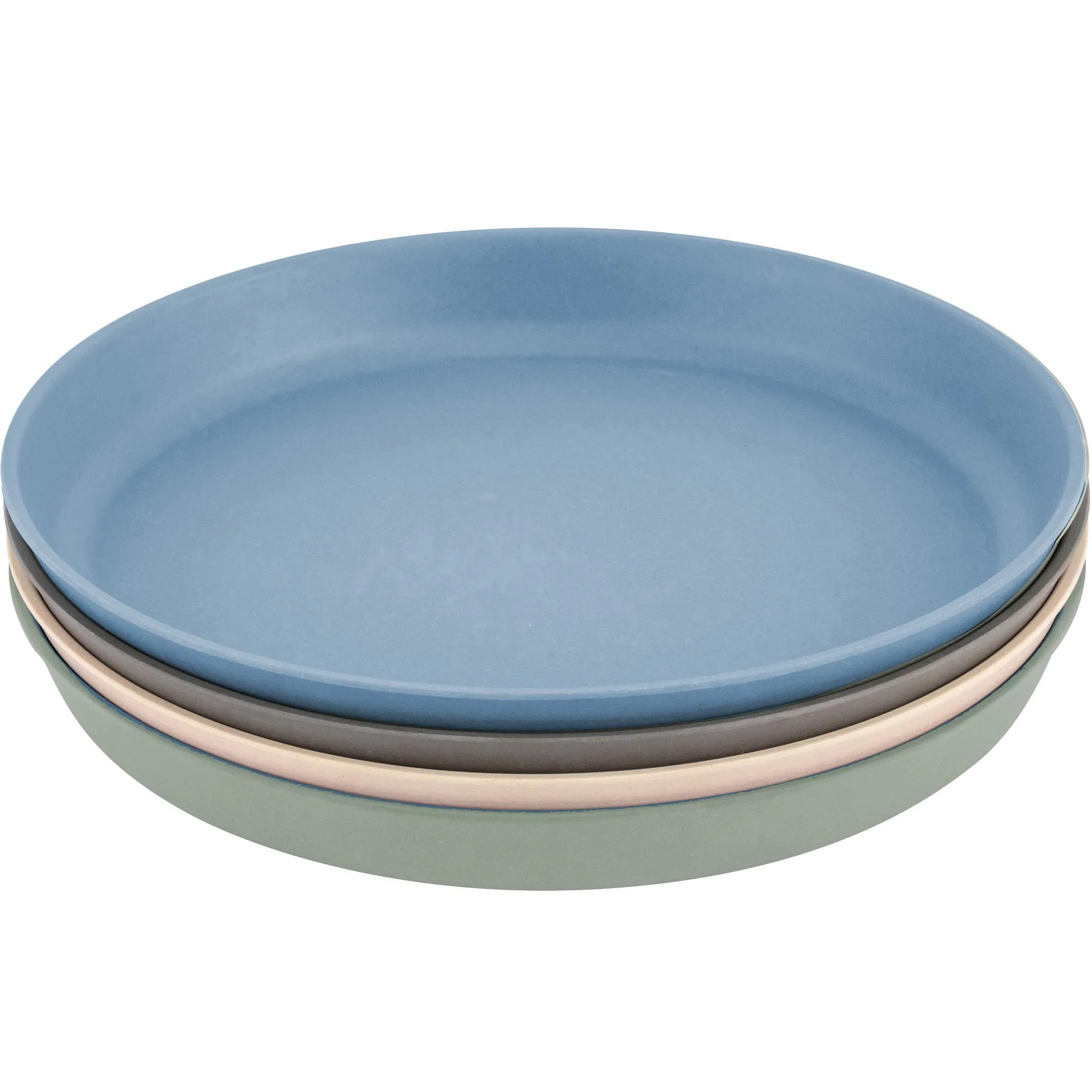
Material and cleaning also matter. Silicone is flexible, quiet on the table, and generally dishwasher safe. Bamboo plates offer a firmer surface and a more grown-up look, but they don't suction to the table, so they suit kids who have moved past the throwing stage. If you're comparing materials more broadly, our bamboo vs. silicone tableware guide covers that decision separately.
When a Bowl Beats a Plate (and Vice Versa)
Choose a bowl when the meal is spoonable or saucy: yogurt, oatmeal, soup, rice, or anything that would slide off a flat plate. Choose a plate when the meal is finger food or has distinct components: sliced fruit, crackers, cheese, or a deconstructed sandwich. For mixed meals, a plate with a small bowl section can split the difference, but separate pieces usually work better than one compromise dish.
If your toddler is in the throwing phase, suction helps but isn't magic. A strong suction base reduces tipped bowls and plates, but a determined toddler can still pry them up. Pair suction tableware with consistent mealtime boundaries for the best results.
Trade-Offs at a Glance
- Containment vs. access: Bowls contain loose, saucy, or spoonable foods but make it harder to see and grab separate pieces. Plates spread food out for easy grabbing but let saucy foods slide around. Match the shape to the meal, not to a single 'best' pick.
- Suction dish vs. suction surface: A suction bowl or plate anchors the dish itself. A suction placemat anchors the table surface and works with whatever dish you already own. If your toddler has a favorite plate, a placemat may be the more flexible fix.
- Cleaning and storage: Silicone bowls and plates are generally dishwasher safe and stack, but deep bowls take more space. Placemats roll or lay flat and protect the table, but add one more thing to wash. Count your dishwasher space and cabinet storage before buying a full set of either.
Two Suction Options That Show the Difference
- Silicone Suction Bowls with Lids – 12 oz (Set of 2): Silicone Suction Bowls with Lids – 12 oz (Set of 2) have a strong suction base with a quick-release tab, measurement markings from 2 oz to 10 oz, and come in a set of two. The 12 oz size and markings make portioning easy, while the release tab means you won't fight the bowl at cleanup. Best for yogurt, cereal, and other spoonable meals.
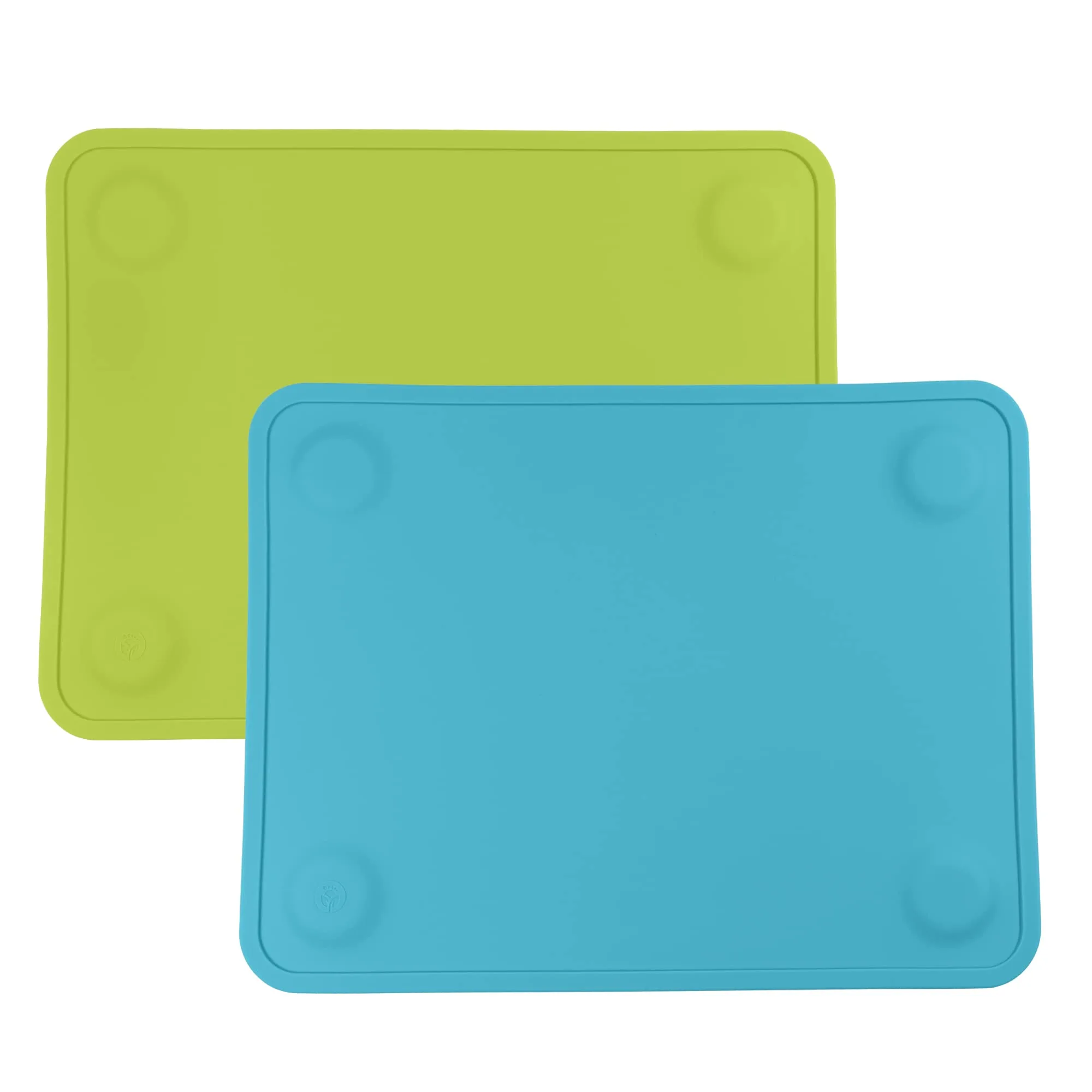
- Silicone Suction Placemats – Set of 2 (Small or Large): Silicone Suction Placemats – Set of 2 (Small or Large) use four built-in suction cups, a thick flexible silicone design that lays flat without curling, and raised edges to catch spills and crumbs. This is a different approach to staying put: instead of suctioning the dish, you anchor the surface. It protects the table and works with your existing plates, which is useful if your toddler prefers a specific plate.
- Stainless Steel & Silicone Toddler Utensils – Set of 6 (3 Forks + 3 Spoons): Stainless Steel & Silicone Toddler Utensils – Set of 6 (3 Forks + 3 Spoons) have thick, easy-grip silicone handles sized for small hands and mouths, bridging baby spoons and full-sized silverware. The right utensil matters as much as the dish. A fork that actually spears food and a spoon that holds a scoop make suction tableware more effective because kids can get food to their mouths instead of pushing it around.
Which Should You Choose?
Best for
- Toddlers practicing spoon skills with yogurt, oatmeal, or cereal
- Families who want portion markings for tracking intake
- Parents who need table protection during messy meals or dining out
Not for
- Toddlers who already eat mostly finger foods and prefer a flat surface
- Families looking for a single dish that handles every meal type equally well
- Kids who have moved past the throwing phase and don't need suction at all