Quick answer
Most silicone teether myths come from treating every teething toy the same. A food-grade silicone teether is a safe, chewable option when it is independently safety tested and free of BPA and phthalates — but the freezer myth, the 'chemical-free' label, and the idea that harder always works better are worth correcting. Check the material, the testing claim, and how you store it before you buy.
Teething advice travels fast between parents, and a lot of it sounds convincing until you look at what is actually on the label. The result is a set of silicone teether myths that keep circulating: that every teether belongs in the freezer, that 'chemical-free' means something specific, or that a harder toy must work better on sore gums.
None of these are deliberately misleading — they are just shortcuts. This guide takes the most common claims one at a time, gives a clear verdict, and explains what to check instead using the facts brands actually publish, such as material, safety testing, and care instructions.
Myth: Every silicone teether should go in the freezer
This is the teether freezer myth in its most common form. Cold can feel soothing on swollen gums, which is why the freezer tip spreads so easily, but not every teething toy is made to be frozen. Silicone stays flexible at low temperatures, while wooden parts, painted finishes, and filled or plush sections may not tolerate freezing and thawing well.
The practical fix is to follow the maker's storage guidance rather than a general rule. If a product's care information does not mention freezing, treat that as a decision limitation and use it at room temperature instead of guessing. A chilled — not frozen — teether from the fridge is usually the safer middle ground for silicone-only designs.
- Check the care instructions before any teether goes in the freezer.
- If freezing is not mentioned, use the teether at room temperature.
- Never freeze a teether that combines silicone with wood or plush parts.
Myth: 'Chemical-free' is a meaningful label on a teething toy
No plastic or silicone product is literally chemical-free — everything is made of chemicals. What parents actually want to know is which ones were avoided. That is why specific claims such as 'BPA & Phthalate Free' are more useful than a vague 'chemical-free' badge, because they name the substances being excluded.
When you compare teething toy materials, look for named exclusions plus an independent safety testing claim. 'Independently Safety Tested' tells you a third party checked the product against a standard, which is a stronger signal than a marketing phrase. If a listing says nothing about material or testing, that absence is your answer: you cannot verify it, so keep looking.
- Prefer labels that name what is excluded, such as BPA and phthalates.
- Look for an independent safety testing statement.
- Treat missing material information as a reason to skip the product.
Myth: A harder teether works better on sore gums
Pressure feels good on swollen gums, so parents often assume firmer is more effective. In practice, babies chew for relief, not for force, and a teether that is too hard or too large for a small mouth gets rejected. Soft silicone and food-grade silicone designs let a baby gnaw comfortably without pressing something rigid against new teeth.
Material choice matters more than hardness. Food-grade silicone is flexible, easy to rinse, and free of BPA and phthalates in the products that state it. Wooden teethers have their own place, especially for babies who prefer a firmer surface, but they are a different material with different care needs — not a straight upgrade.
- Match the teether to what your baby actually chews on, not to hardness.
- Rotate between silicone and wooden options if your baby likes variety.
- Replace any teether that becomes cracked, sticky, or discolored.
Myth: One teether covers every stage
Teething runs from early gum discomfort through to back molars, and a toy that suits a six-month-old may be ignored at twelve months. A silicone teether, a soft rattle toy, and a pacifier chain all serve different moments: chewing, holding and shaking, and keeping a pacifier off the floor.
That is why a small rotation usually works better than one favourite. Keep two or three options within reach, clean them regularly, and swap them when your baby loses interest. If a product is only offered in one size or format, that is a limitation to plan around rather than a flaw.
- Keep a small rotation rather than relying on a single teether.
- Clean teethers often — they spend a lot of time on the floor.
- Reassess what your baby reaches for as new teeth arrive.
Myth verdicts at a glance
- Freeze every silicone teether: Not supported as a blanket rule. Silicone tolerates cold, but wood, painted finishes, and plush parts may not, and many products give no freezing guidance at all. Verdict: follow the maker's storage instructions; use room temperature or fridge-chilled if freezing is not stated.
- 'Chemical-free' means safer: Too vague to act on. Named exclusions such as BPA and phthalate free, plus an independent safety testing claim, are the details you can actually verify. Verdict: look for named exclusions and third-party testing, not slogans.
- Harder teethers work better: Babies chew for relief, not pressure. Food-grade silicone is flexible and easy to clean, while wooden teethers suit a different preference and need different care. Verdict: choose by material and your baby's chewing style, not by hardness.
- One teether is enough: Teething stages change, and chewing, holding, and pacifier-keeping are different jobs. A small rotation of two or three items covers more of them. Verdict: rotate a few options and clean them often.
Teething and soothing picks that match the facts
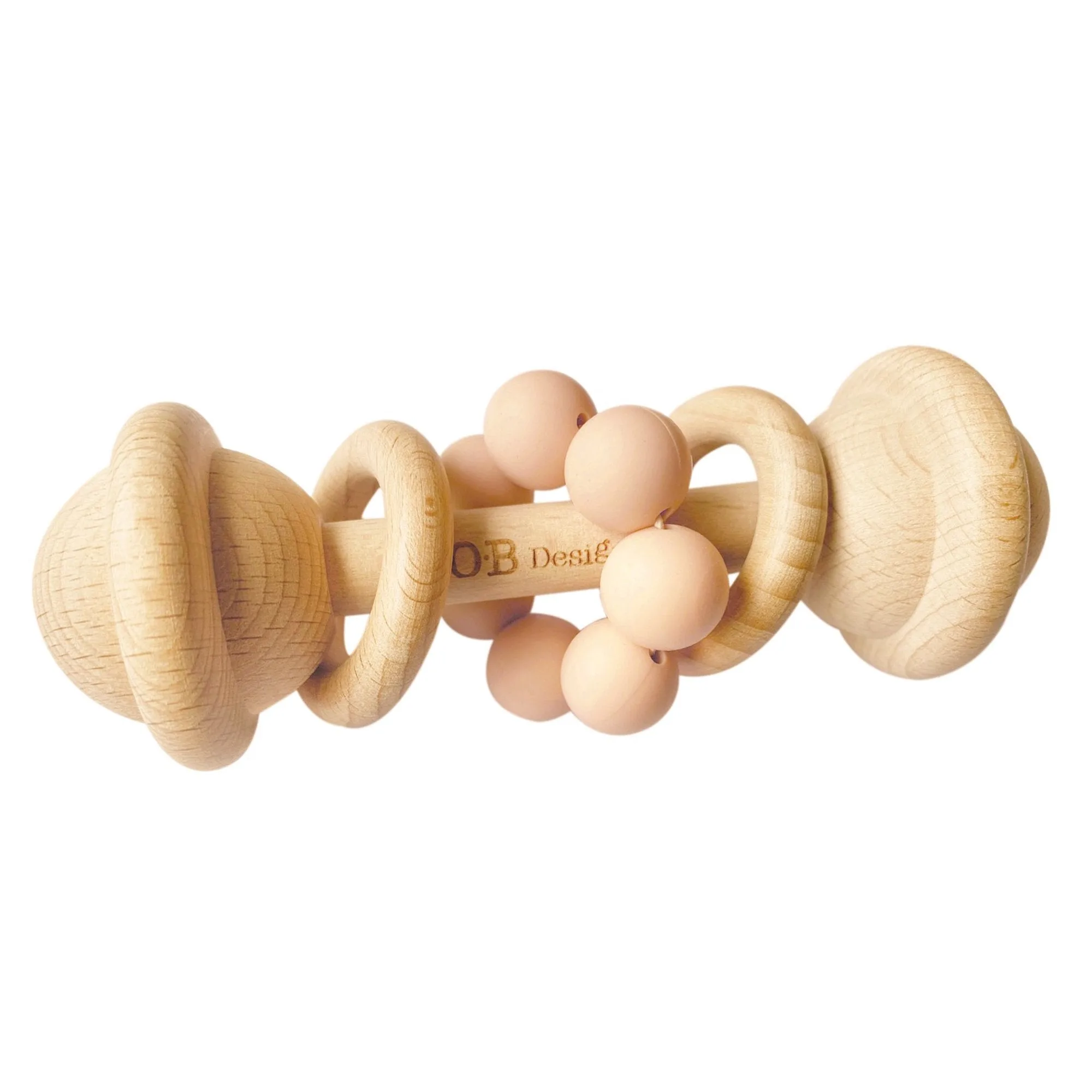
- Peach | Wooden Rattle Toy: Made from sustainable Beechwood Timber and food-grade silicone, with 100% food-grade silicone that is BPA and phthalate free and independently safety tested. A combined wood-and-silicone toy gives babies a firmer beechwood surface and a soft silicone section in one item — but because it contains wood, it should not be frozen, so follow the care guidance rather than the freezer myth.
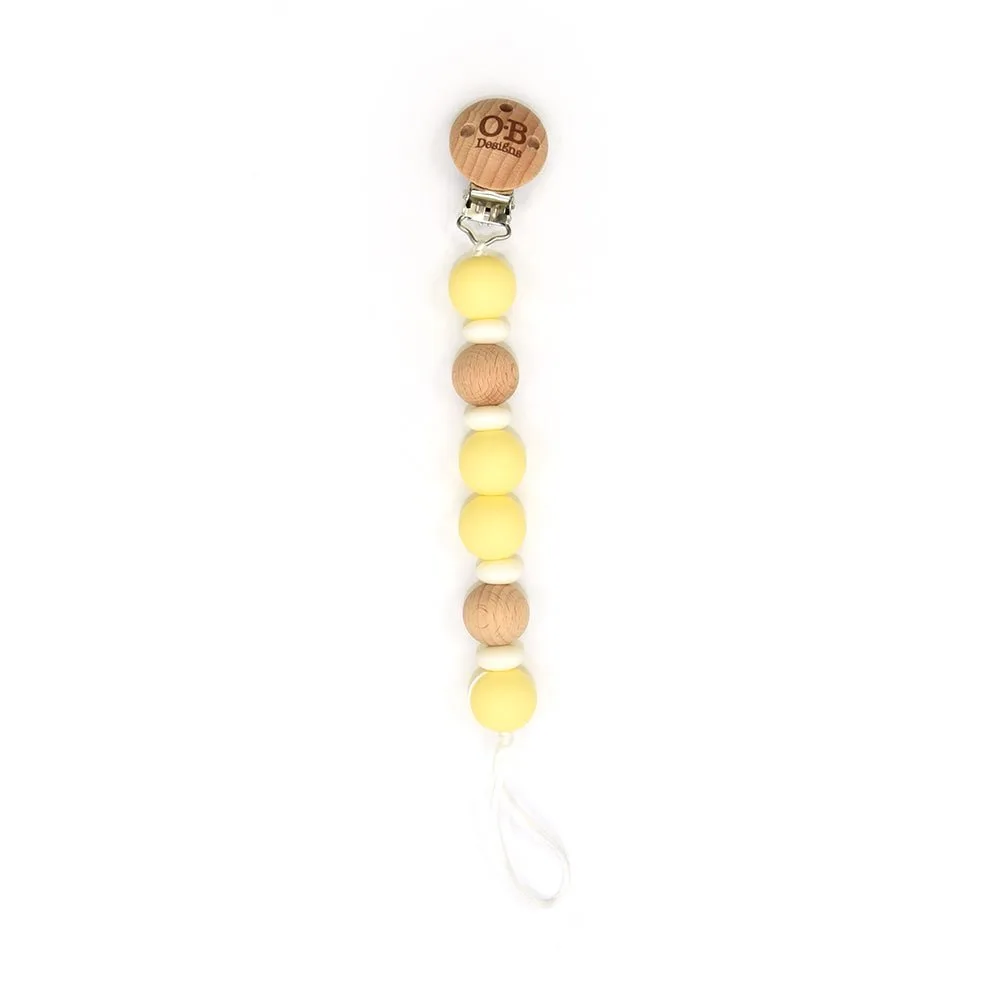
- Lemon Eco-Friendly Pacifier Chain: An eco-friendly pacifier chain made with 100% food-grade silicone that is BPA and phthalate free and independently safety tested, designed to keep a pacifier off the floor. This addresses the floor-drop problem directly, which matters more than any teether hardness claim when you are out of the house and cannot rinse a pacifier immediately.
- Bailey Caramel Bunny Soft Rattle Toy 9"/19cm: Made with premium, ultra-soft materials and independently safety tested, sized at 9 inches / 19 cm. A soft rattle covers the holding-and-shaking stage rather than the chewing stage, so it belongs in the rotation alongside a silicone teether instead of replacing it.
The useful question is not whether silicone teethers are safe in the abstract, but whether the specific toy names its material, states its exclusions, and has been independently safety tested. Check those three things, skip the freezer unless the maker says otherwise, and keep a small rotation on hand as your baby's teething needs change.