Quick answer
For most families, the right setup is a simple two-part system: one or two food-safe silicone teethers for mouthing, plus a separate silicone accessory tether that clips the teether to a stroller, carrier, or bib so it does not end up on the floor. Buy tethers and teethers separately rather than relying on a single all-in-one piece, because you can swap, clean, and replace each part on its own schedule.
Teethers and tethers solve two different problems, and parents often buy them as if they were the same product. A teether is something your baby puts in their mouth. A tether is the leash that keeps that teether, pacifier, or small toy from launching out of the stroller. When you separate those jobs, choosing gets much easier.
This guide walks through the practical decision rules: what to check for silicone teether safety, how to match a tether to your stroller or carrier, and when a clip-on tether is more hassle than it is worth. It also covers the trade-offs nobody mentions in the product photos, like how a tether changes the way a baby can explore a toy.
Start with the teether, not the tether
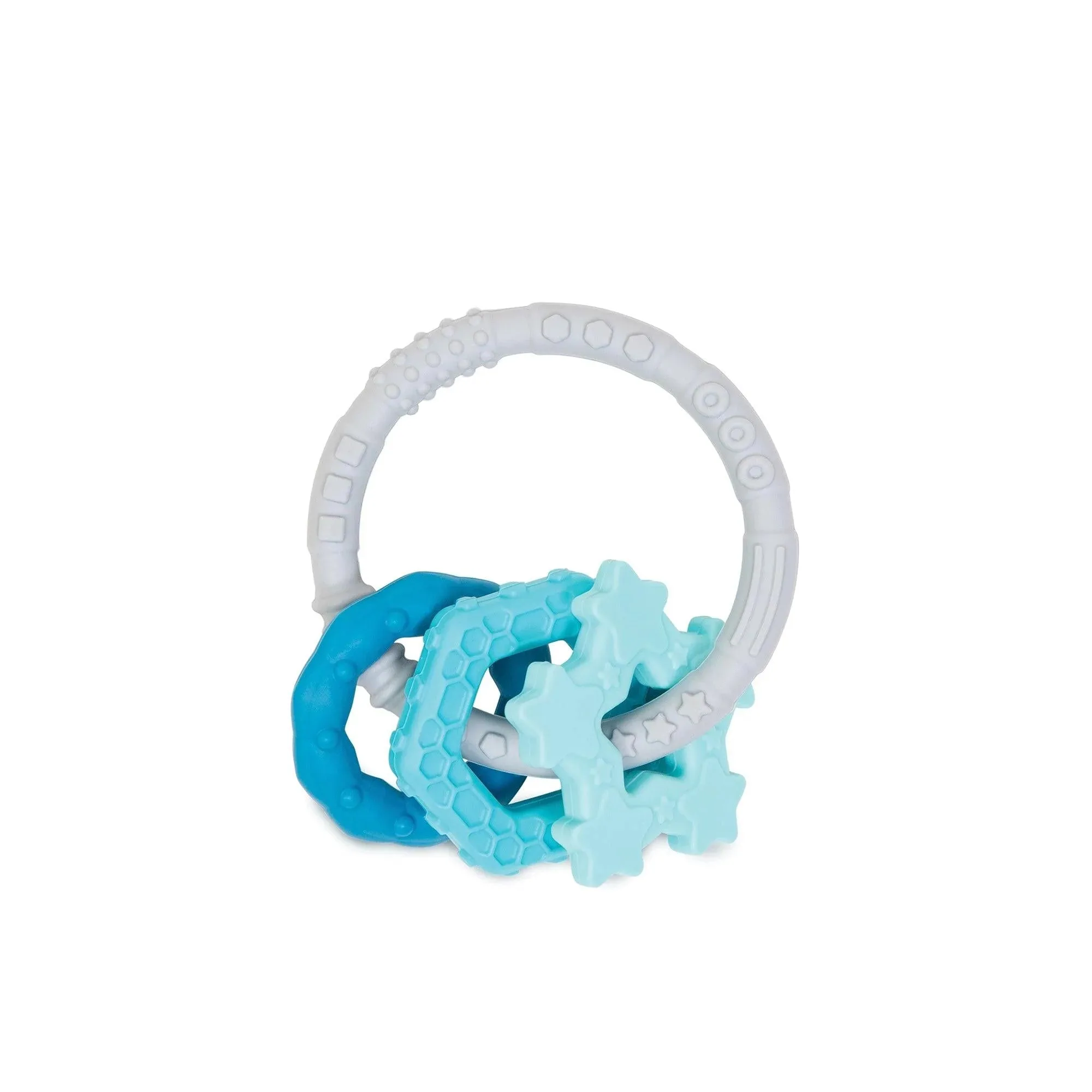
The teether is the part that goes in the mouth, so it deserves the most scrutiny. Look for food-safe silicone, a single-piece design with no small parts that can detach, and a shape your baby can actually grip. A teether that is too thick will frustrate a younger baby; one that is too thin can be a choking concern if it fits entirely in the mouth. If a listing does not state the material or the recommended age, treat that as a missing specification and keep looking.
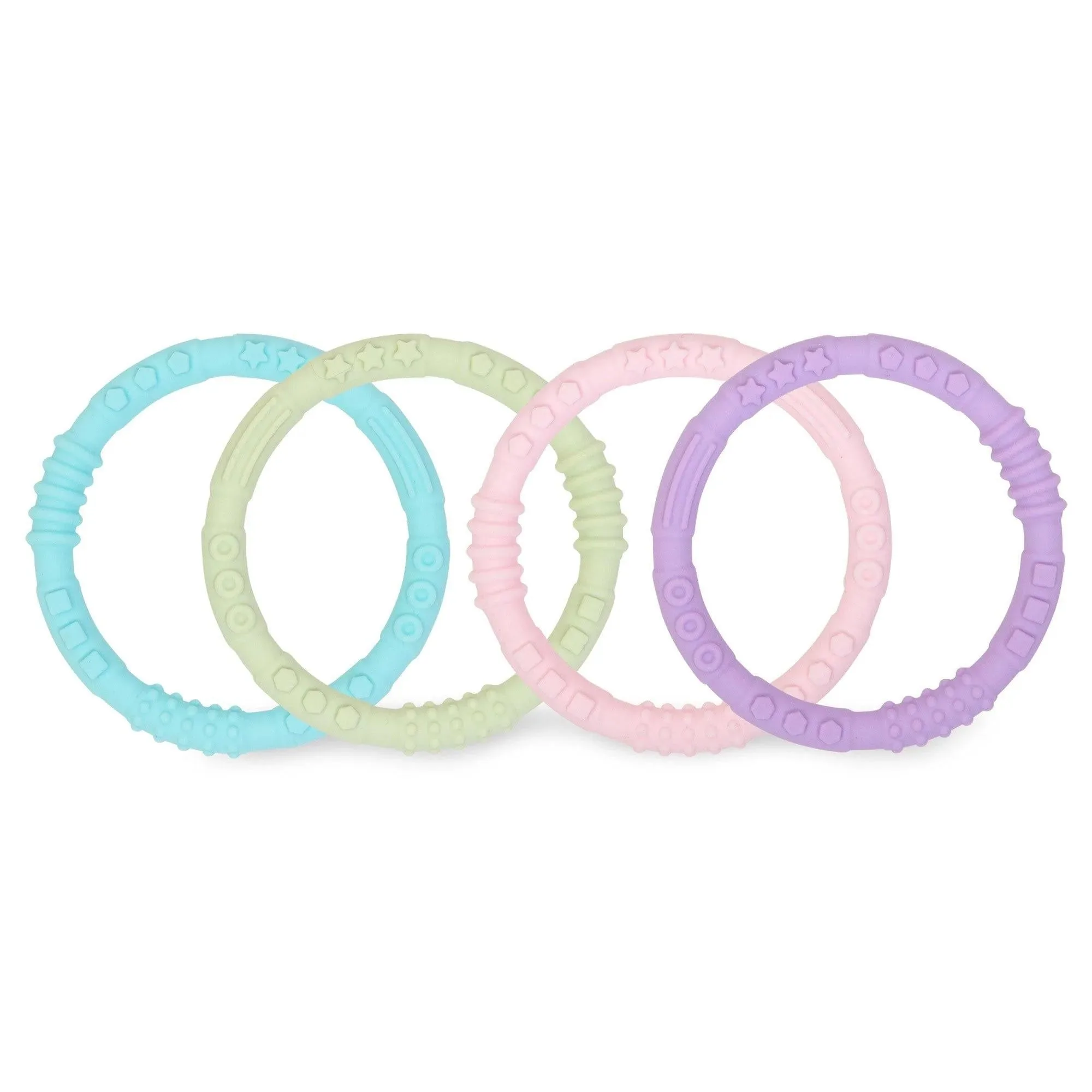
Texture matters more than color or character. A mix of smooth and bumpy surfaces gives a teething baby something to explore, and a slightly flexible body is easier on sore gums than a rigid one. If your baby is mostly chewing on the front of the gums, a flatter, wider teether often works better than a long, narrow one. If they are working on back molars, a teether with a reachable nub or corner helps them get pressure where they need it.
- Check for a single molded piece with no glued-on parts.
- Match thickness to your baby's grip and mouth size.
- Skip any teether that does not list its material or age range.
Then choose the tether by where it will live
A stroller tether for baby toys needs a clip that grips a rounded bar or fabric strap without sliding, plus a strap short enough that the toy cannot reach the ground when it drops. A carrier tether has a different job: it needs to attach to a narrower strap and stay out of the way while you walk. If you plan to move the tether between a stroller, a highchair, and a diaper bag, look for one with an adjustable loop rather than a fixed clip.
For babies who mostly use a teether at home, a tether is optional. For babies in a stroller or carrier, it is close to essential, because a dropped teether means a dirty teether and a crying baby. The trade-off is that a tether limits how far a baby can move the toy, so some babies tug against it at first. A short break-in period is normal; if your baby consistently fights the tether, use it only for travel and keep free-play teethers at home.
- Measure your stroller bar or carrier strap before buying a clip.
- Choose a strap short enough that a dropped teether cannot touch the floor.
- Keep one tether in the diaper bag so you are never caught without it.
Silicone teether safety checks that actually matter
Silicone teether safety comes down to a few concrete checks. Confirm the product is described as food-safe silicone, inspect it before each use for tears or cracks, and replace anything that has changed shape or developed a sticky surface. Wash new teethers before first use, and clean them after every outing. If a teether has a hole or a hollow section, check that water cannot get trapped inside, because trapped moisture is hard to dry and can lead to mildew.
Tethers need their own inspection. Tug the clip and the strap connection firmly before handing it to your baby. If the clip feels loose or the strap shows fraying, retire it. Never attach a tether to a crib, playpen, or any sleep space, because a strap in a sleep environment is a strangulation risk. Tethers are for supervised awake time, full stop.
- Inspect teethers and tethers before every use, not just after washing.
- Replace any silicone that is torn, sticky, or misshapen.
- Use tethers only during supervised awake time, never in a crib.
How many teethers and tethers do you actually need
Two teethers and one tether cover most families. Keep one teether clean and ready at home, one in the diaper bag, and the tether attached to the stroller or carrier you use most. If your baby is in a full-time daycare or with a caregiver, add a second tether so you are not moving the clip back and forth every morning. Buying a third teether is usually unnecessary unless your baby is a heavy chewer and you want a backup while one is drying.
Resist the urge to buy a large set before your baby shows a preference. Some babies want a firm teether, some want a soft one, and some ignore teethers entirely and prefer a cold washcloth. Start small, watch what your baby reaches for, and add a second style only after you know which one gets used.
- Two teethers plus one tether is a practical starting point.
- Add a second tether if your baby splits time between two caregivers.
- Wait until you see a preference before buying a multi-pack.
Decision rules for teethers and tethers
- If your baby is under 6 months: Prioritize a small, lightweight teether they can hold without help, and skip the tether until they have enough grip to keep hold of the toy. A tether on a toy a baby cannot yet hold just adds a strap to manage. Buy one teether first, add the tether when grip improves.
- If you use a stroller daily: Choose a tether with an adjustable loop and a clip that fits your stroller bar diameter. Test the clip in the store or at home before your first outing. A tether that slides down the bar is worse than no tether. Fit the clip to your stroller before you need it.
- If your baby chews hard: Choose a thicker, single-piece silicone teether with a mix of textures. Thin or hollow teethers are more likely to show wear quickly, and any tear means it is time to replace it. Inspect weekly and replace at the first sign of damage.
- If you are buying for daycare: Buy two tethers and label them. Daycares often require tethers to stay with the child, and a labeled tether is less likely to be misplaced. Keep a spare teether in the daycare bag. Two tethers, two teethers, both labeled.
- If you are unsure about a product: If the listing does not state the material, the age range, or whether it is food-safe silicone, treat that as a gap and choose a product that does state it. You should not have to guess about something that goes in your baby's mouth. No material or age info means no purchase.
Product facts worth knowing
- Silicone Grip Dish: Lavender: This divided plate is sized for baby and toddler portions, has a strong suction base that sticks to most highchair trays and tables, and is made of silicone that withstands low and high temperatures. It shows the same food-safe silicone material used in Bumkins mealtime gear, which is the material you want in a teether. The suction base detail is a useful reminder that silicone can be firm enough to stay put when it needs to.
- Silicone Grip Dish with Lid (3 Section): Gray: The divided plate is sized for toddler portions, has a leak-resistant lid you can write on with a washable dry-erase or wet-erase marker, and a strong suction base for highchair trays or tables. The write-on lid is a concrete example of how silicone products are designed for real family logistics. That same thinking applies to tethers: the useful features are the ones that solve a daily problem, not the ones that look good in a photo.
- Long-Sleeved Art Smock: Grounded: Made from Bumkins lightweight, waterproof, easy-wipe, stain and odor resistant fabric, with a pocket large enough to hold art supplies or catch drips and spills. It is a good reminder that easy-wipe, stain-resistant materials matter for anything a baby or toddler uses daily. Teethers and tethers get dropped, chewed, and washed constantly, so cleanability is a real buying factor.
Who this setup fits
Best for
- Parents who want a simple teether-plus-tether system they can swap and clean separately
- Families who use a stroller or carrier daily and are tired of retrieving dropped teethers
- Caregivers who need a labeled, travel-ready teether setup for daycare or outings
Not for
- Parents looking for a single all-in-one teether and tether combination
- Babies who are not yet able to hold and mouth a teether on their own
- Anyone who needs a tether for sleep spaces, cribs, or unsupervised play
Buy one good teether and one tether that fits your stroller or carrier, then add a second set only when you see a real need. Check the material and age range before you buy, inspect both pieces regularly, and keep tethers for supervised awake time only. That simple approach covers most families without a drawer full of unused teethers.