Quick Answer
For most families, food-grade silicone tableware is the safer everyday choice because it is BPA- and phthalate-free, soft on gums, and less likely to crack or leach than plastic. Plastic still has a place for lightweight travel or tight budgets, but it wears faster and needs closer inspection. The right pick depends on how you feed, clean, and store your baby's dishes.
You are standing in the baby aisle comparing two plates that look nearly identical. One is silicone, one is plastic, and both claim to be safe. The difference matters more once you consider heat, wear, and how often the dish ends up on the floor.
This comparison looks at silicone and plastic baby tableware using real product details, not hypotheticals. You will see where silicone earns its keep, where plastic still works, and how to decide based on your own feeding routine.
Material Safety: What Each Option Actually Promises
Food-grade silicone is made to be BPA- and phthalate-free, and it is independently safety tested in the products we carry. That matters because babies chew on plates and bowls long after the food is gone. Plastic tableware can also be BPA-free, but the category covers many formulations, so you need to read the specific label rather than assume.
The practical takeaway is not that all plastic is dangerous. It is that silicone makes fewer claims you have to verify. If a plastic plate does not clearly state its free-from list, you cannot fill in the blanks for it.
- Check for BPA- and phthalate-free wording on the actual product page, not just the category.
- Independently safety tested is a stronger signal than a vague non-toxic badge.
Durability and Wear: How Each Material Ages
Silicone flexes, so it survives drops, dishwashers, and the occasional throw. It does not chip the way rigid plastic can, and it keeps its shape through repeated washing. That flexibility also makes suction bases more effective on smooth highchair trays.
Plastic is lighter and often cheaper, but it scratches. Scratches create places for bacteria to hide and can make a once-clear plate look cloudy. Once plastic cracks or feels rough, it is time to replace it, which adds up over months of daily use.
- Retire any plastic plate with deep scratches, cracks, or a lingering smell.
- Silicone can go from freezer to warmer without becoming brittle.
Cleaning, Heat, and Everyday Handling
Silicone handles hot water, dishwashers, and most sanitizing routines without warping. It also does not hold onto strong food smells the way some plastics do, so tomato sauce night does not haunt the next meal. Plastic may warp in high heat, especially if it is not labeled dishwasher-safe or microwave-safe.
Both materials need a quick check before each use. For silicone, look for sticky spots or tears around the edges. For plastic, look for cloudiness or cracks. Neither material should be used if it has changed texture.
- Follow the specific heat limits on the product, not a general rule for the material.
- Hand-wash suction bases if food gets trapped under the seal.
Cost, Convenience, and the Trade-Off
Silicone usually costs more upfront, but it often lasts longer and replaces fewer pieces. Plastic wins on price and weight, which matters if you are packing a diaper bag or feeding on the go. The trade-off is that plastic needs more frequent replacement and closer inspection.
If your baby is learning to self-feed, silicone suction bowls and soft spoons reduce frustration. If you need a stack of cheap plates for daycare or travel, plastic can be the practical pick as long as you replace worn pieces.
- Buy silicone for the meals you serve at home most often.
- Keep one or two plastic pieces for travel if weight is a priority.
Trade-Offs at a Glance
- Upfront cost: Silicone costs more per piece than basic plastic, but it typically lasts through more wash cycles without cracking. If budget is tight, start with one silicone bowl and keep plastic for backup.
- Weight and portability: Plastic is lighter for diaper bags and travel, while silicone is denser and stays put on the tray. Choose plastic for packing, silicone for highchair stability.
- Wear and replacement: Plastic scratches and clouds over time; silicone flexes and resists chipping but can tear if chewed aggressively. Inspect both monthly and replace anything cracked, sticky, or rough.
Product Facts That Matter
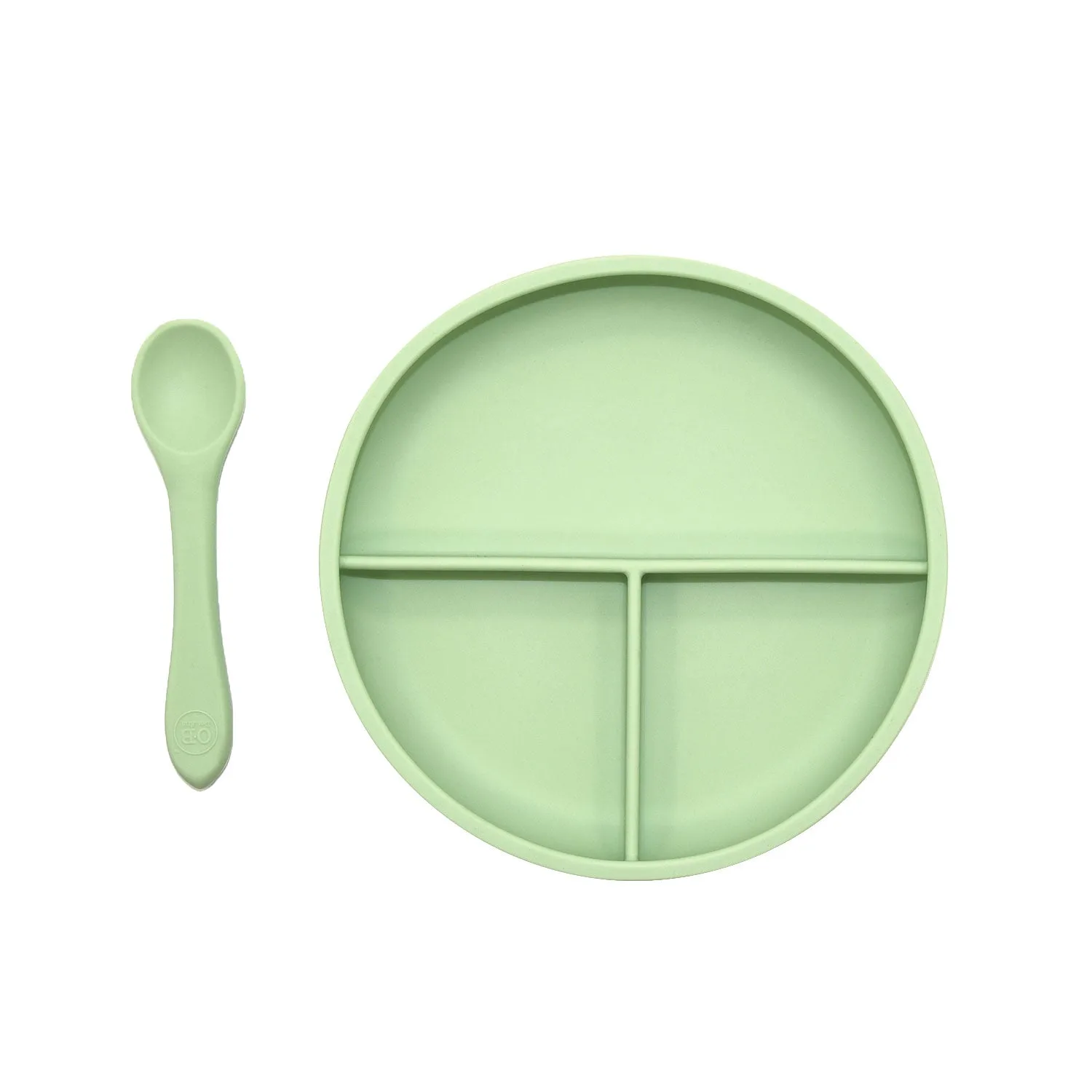
- Stage 1 Suction Bowl & Spoon Set | Mango: Made from food-grade silicone, BPA- and phthalate-free, and independently safety tested. A suction base plus a soft spoon supports early self-feeding without hard edges.
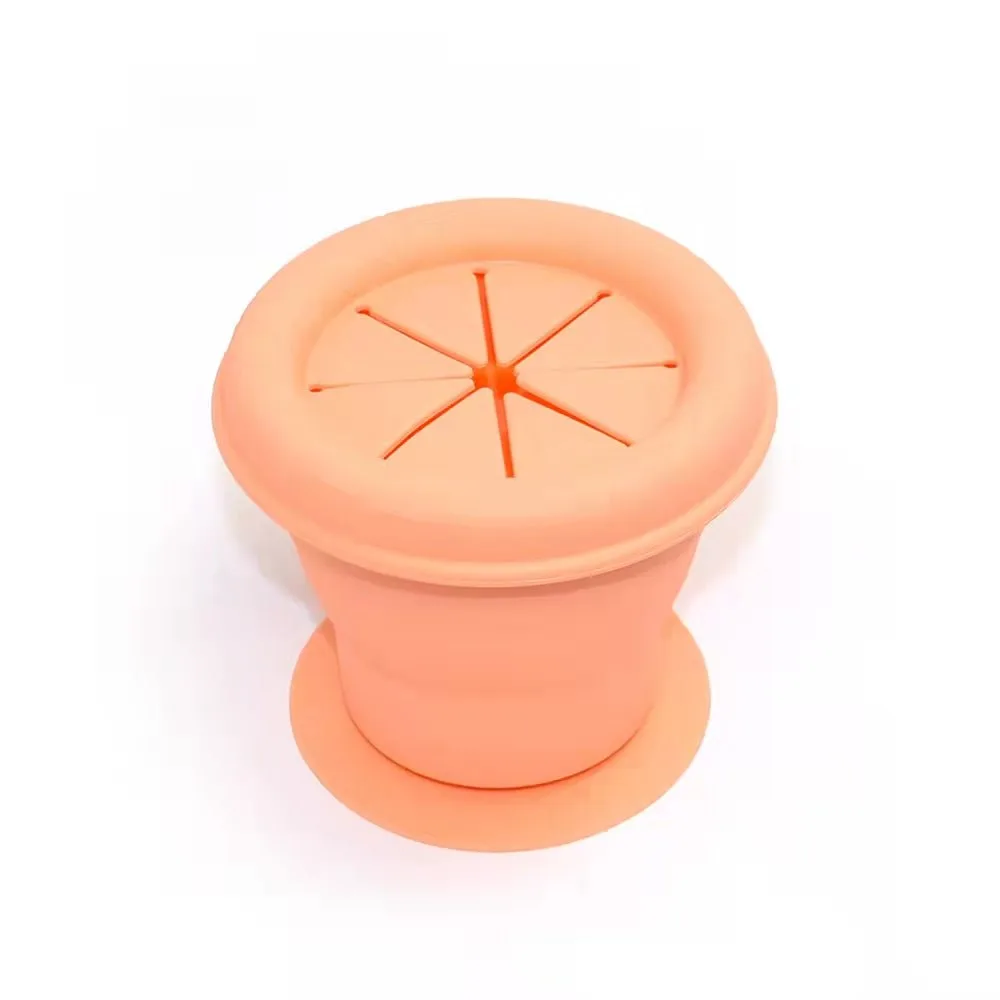
- Snack Cup | Peach: 100% food-grade silicone, BPA- and phthalate-free, and independently safety tested. A flexible snack cup travels well and does not crack when dropped.
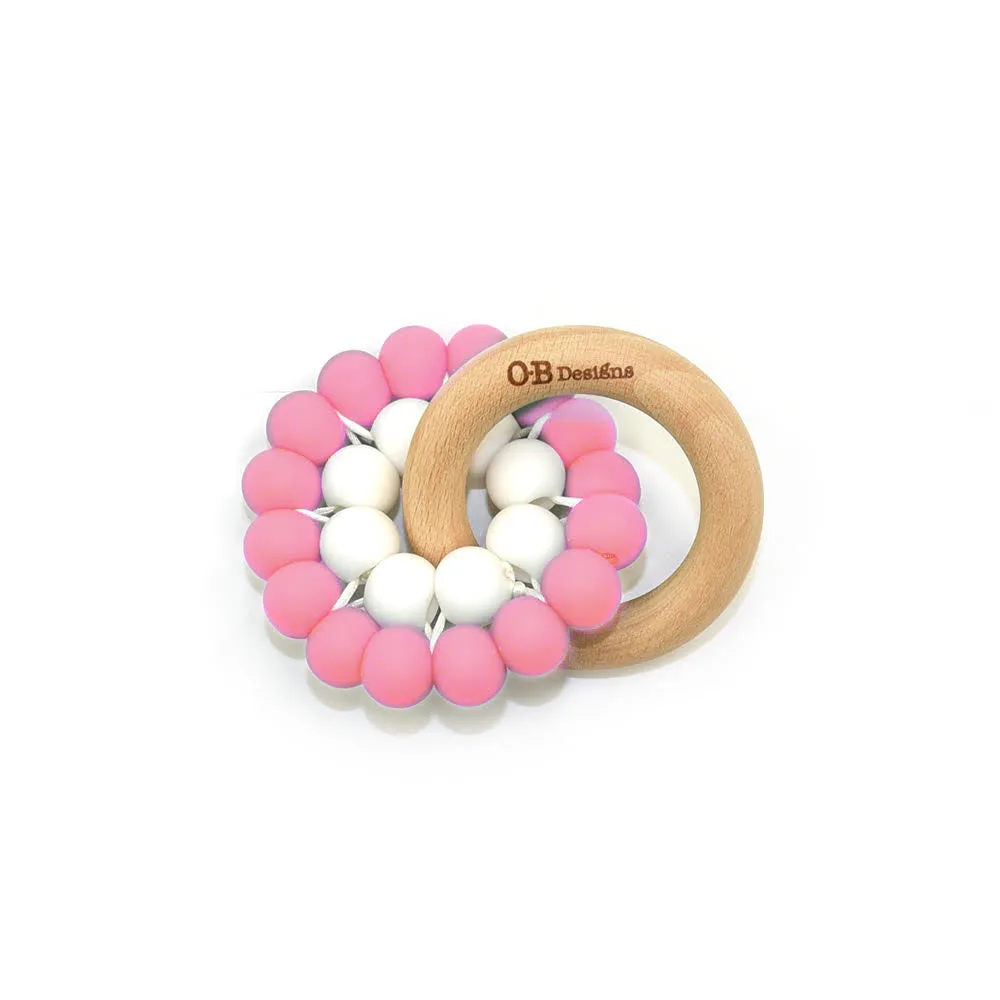
- Hot Pink Eco-Friendly Teether Toy: Made of sustainable beechwood timber and food-grade silicone. Shows how silicone pairs with wood for teething, so you can match feeding and soothing gear.
Which Should You Choose?
Best for silicone if you
- Feed at home most days and want a suction base that grips the tray
- Prefer a material that is BPA- and phthalate-free and independently safety tested
- Want dishes that handle dishwasher heat without warping
Choose plastic instead if you
- Need the lightest possible option for daycare or travel
- Are outfitting a temporary setup and want the lowest upfront cost
- Prefer a rigid plate your baby cannot flex or bend
Silicone tableware is the safer default for daily feeding because it is soft, heat-tolerant, and clearly labeled free from BPA and phthalates. Plastic still works for travel and tight budgets, but plan to replace it sooner. Pick based on where and how you feed, not on which material sounds better in the abstract.