Quick Answer
For first tastes and gum-friendly feeding, a silicone weaning spoon is the better pick. Once your baby grabs the spoon and starts self-feeding, a chunky plastic or plant-based cutlery set gives them more grip and scooping control.
Where Silicone Wins and Where It Falls Short
Silicone's softness is the whole point in early weaning. A soft tip is gentler on tender gums, and the material stays comfortable if your baby clamps down or chews between mouthfuls. That makes it a natural fit for the spoon-fed stage, roughly 4 to 6 months, when you are still loading every bite.
The trade-off is structure. Soft silicone flexes, so it can be harder for a baby to scoop from a bowl on their own, and some silicone spoons hold onto strong flavours and smells over time. Check the label for BPA, phthalate and PVC-free claims, since not every silicone spoon states this.
Where Plastic Cutlery Wins and Where It Falls Short
Chunky plastic or plant-based cutlery is built for the hand, not just the mouth. Short, thick handles are easier for small fists to hold, and wide, shallow tips help a baby scoop and pierce food without a full wrist rotation. This is the stage where self-feeding confidence is built.
The trade-off is mouth feel. A firmer tip is less forgiving on sore gums, and plastic cutlery can feel bulky for very young babies still learning to open wide. Material quality also varies, so check for BPA, latex and phthalate-free wording rather than assuming it.
The Real Decision: Match the Spoon to the Stage
Most families do not need to choose one material forever. A soft silicone spoon covers the first weeks of purees, then a chunky set takes over as your baby wants to hold the spoon themselves. Buying both is usually cheaper than replacing a single spoon that stops working.
If you only want one purchase, pick based on your baby's current behaviour. Reaching for the spoon and refusing to be fed means they are ready for a chunky self-feeding set. Still turning away or pushing food out means a soft silicone spoon will be more comfortable.
Trade-Offs at a Glance
- Comfort vs control: Silicone is gentler on gums but flexes when scooping; chunky cutlery scoops and pierces more easily but feels firmer in the mouth. Choose by whether your baby is being fed or feeding themselves.
- Safety wording: Both options state BPA and phthalate-free; the silicone spoon also states PVC-free and the cutlery set also states latex-free. Check the specific free-from claims rather than assuming all baby spoons match.
- Quantity and cost: The silicone spoon is a single spoon, while the cutlery set gives you four pieces for roughly the same small spend. A multi-pack reduces how often you wash up during the messy self-feeding weeks.
Two Options Compared
-
Callowesse Silicone Weaning Spoon – Green: Made from durable silicone and stated as BPA, phthalate and PVC-free. The soft tip suits early purees and sore gums, and the safety wording covers the main material concerns parents check first.
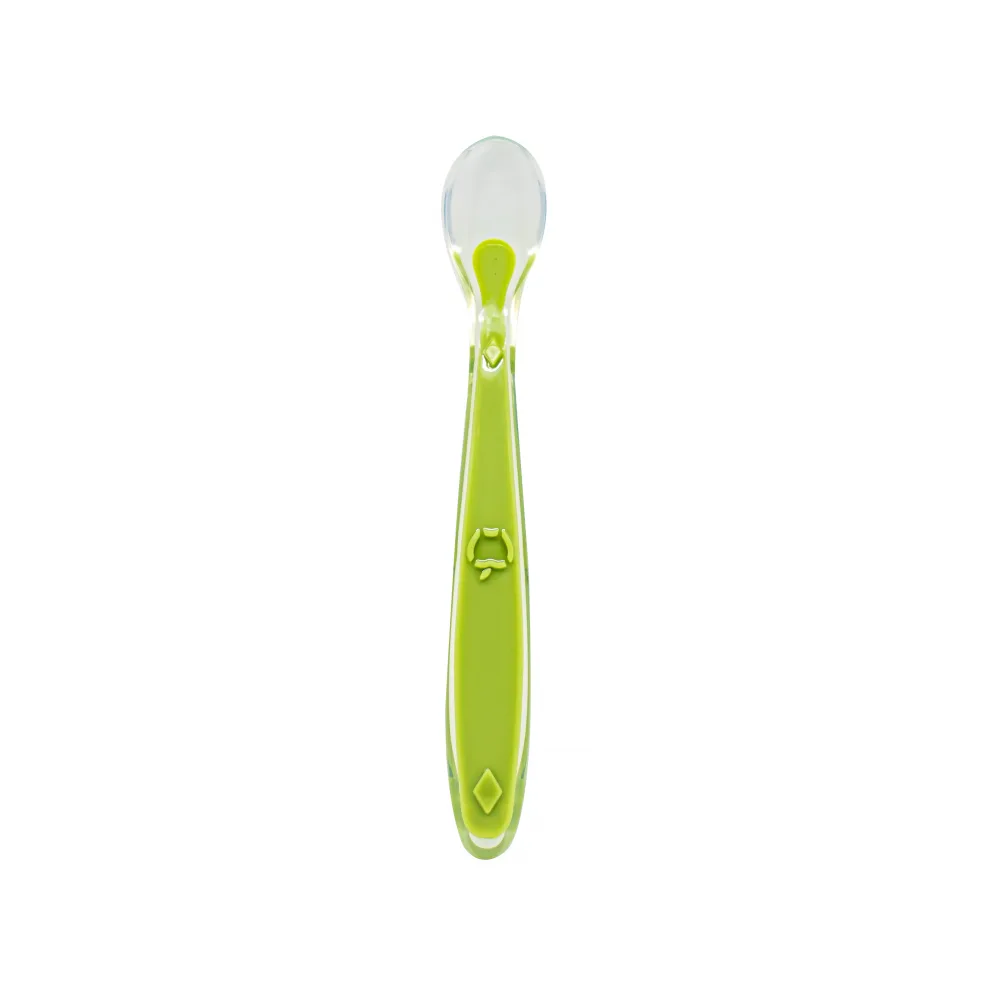
Callowesse Silicone Weaning Spoon – Green
-
Vital Baby Children's Chunky Cutlery Set - 4 Pack: Chunky handles with wide, shallow tips, in a 4-pack described as BPA, latex and phthalate-free. The short grip and scooping shape support self-feeding practice, and four pieces mean you are not caught short between washes.
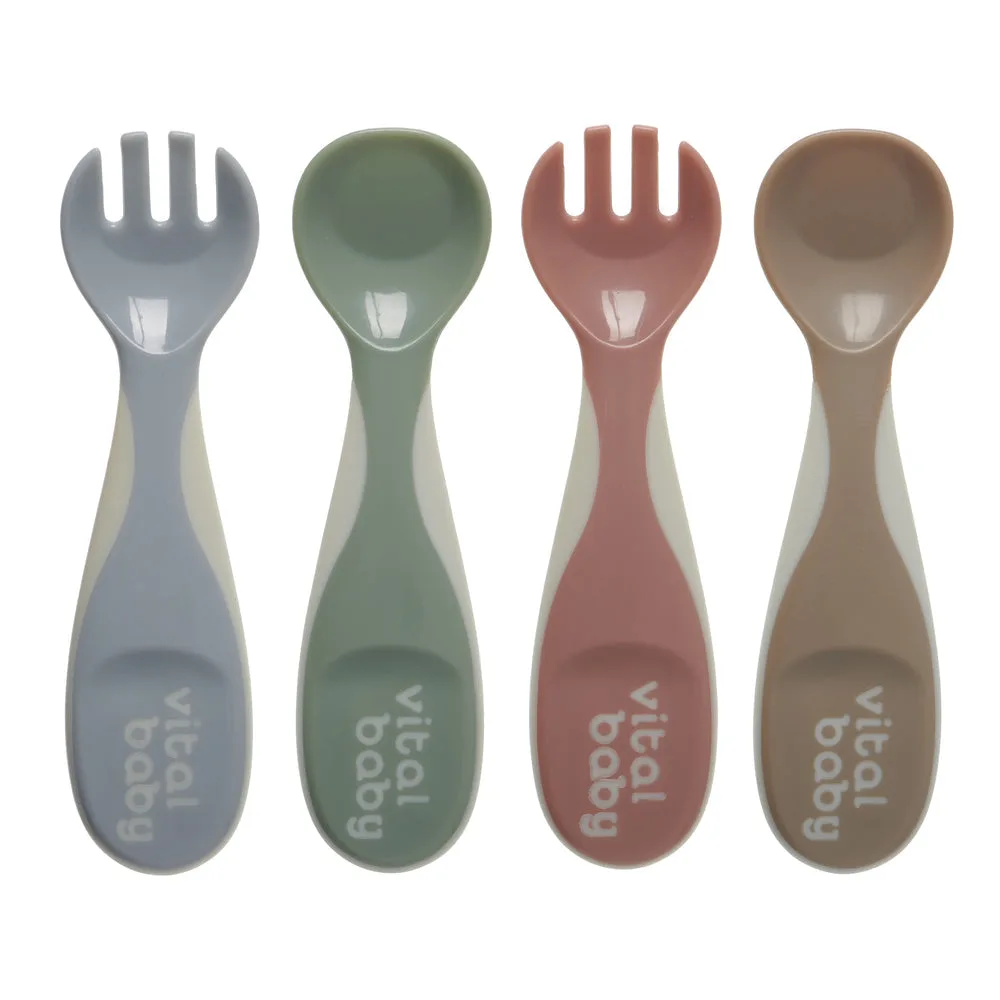
Vital Baby Children's Chunky Cutlery Set - 4 Pack
Which Should You Buy?
Best for
- Babies just starting purees who need a soft, gum-friendly tip
- Parents who want a single low-cost spoon for the spoon-fed stage
Not for
- Babies already grabbing the spoon and wanting to self-feed
- Families who want several spoons on rotation between washes