Quick answer
For most families, a silicone weaning set with a suction base is the better choice over traditional bowls because it stays put, is gentle on gums, and is easier to clean. But traditional bowls still win for older toddlers who no longer need suction and prefer a familiar, open design.
Why suction bowls reduce mealtime mess
Traditional bowls slide across the tray when your baby grabs them, often ending up on the floor. A silicone suction bowl, like the Silicone Suction Bowl & Spoon, uses a stay-put base that presses onto the tray or table. This gives your little one a stable target for scooping and reduces the chance of a full bowl being tossed.
The suction feature is especially useful during early weaning, when babies are still developing hand-eye coordination. It lets them focus on the spoon rather than chasing the bowl.
Safety and durability: silicone vs plastic
Silicone is food-grade, BPA-free, and does not leach chemicals, which is a common concern with some plastic bowls. It is also soft and flexible, so it is gentler on your baby's gums and teeth compared to hard plastic or ceramic.
Traditional plastic bowls are lightweight and shatterproof, but they can scratch over time, creating tiny crevices where bacteria can hide. Silicone is non-porous and resists odor and staining, making it a more hygienic option for daily use.
Cleaning and travel considerations
Silicone bowls are dishwasher-safe and can also be sterilized by boiling, which is convenient for busy parents. They are flexible, so they are easy to pack for trips or visits to grandma's house.
Traditional bowls, especially those with multiple parts, may have crevices that require more careful cleaning. They can also be bulkier and less flexible, making them harder to pack.
However, some traditional bowls are microwave-safe for reheating, while silicone bowls may not be recommended for microwave use. Always check the manufacturer's instructions.
Trade-offs at a glance
- Suction stability: Silicone suction bowls stay put, reducing spills. Traditional bowls slide easily, especially on smooth trays. If you have a high chair with a removable tray, test the suction on it before committing.
- Material safety: Silicone is BPA-free, non-toxic, and gentle on gums. Plastic may contain BPA unless labeled otherwise, and ceramic can chip. Check for BPA-free labels on any plastic bowl you consider.
- Cleaning and hygiene: Silicone is dishwasher-safe, non-porous, and resists stains and odors. Traditional bowls may have crevices that trap food and require more scrubbing. If you hand-wash, choose a silicone bowl with a smooth surface for easier cleaning.
- Long-term use: Silicone bowls are durable but may lose suction over time. Traditional bowls can last for years and are often more affordable. Consider whether you plan to use the bowl beyond the weaning stage.
Products we recommend
-
Silicone Suction Bowl & Spoon: This silicone bear bowl & spoon set includes a suction bowl, two matching silicone spoons, and recipe cards. The suction base keeps the bowl in place, and the included spoons and recipe cards give you everything you need to start weaning.
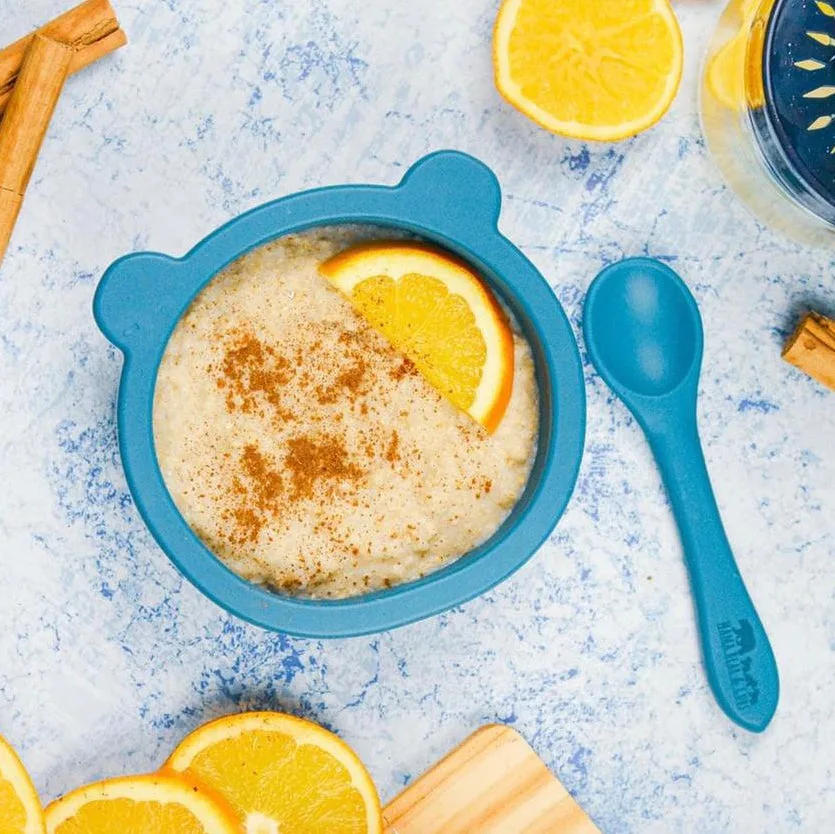
Silicone Suction Bowl & Spoon
-
Silicone Bear Suction Plate & Spoon: This silicone bear plate & spoon set features a stay-put suction base and includes a matching silicone spoon and recipe cards. The plate design is great for babies who are ready for finger foods, and the suction base prevents tipping.
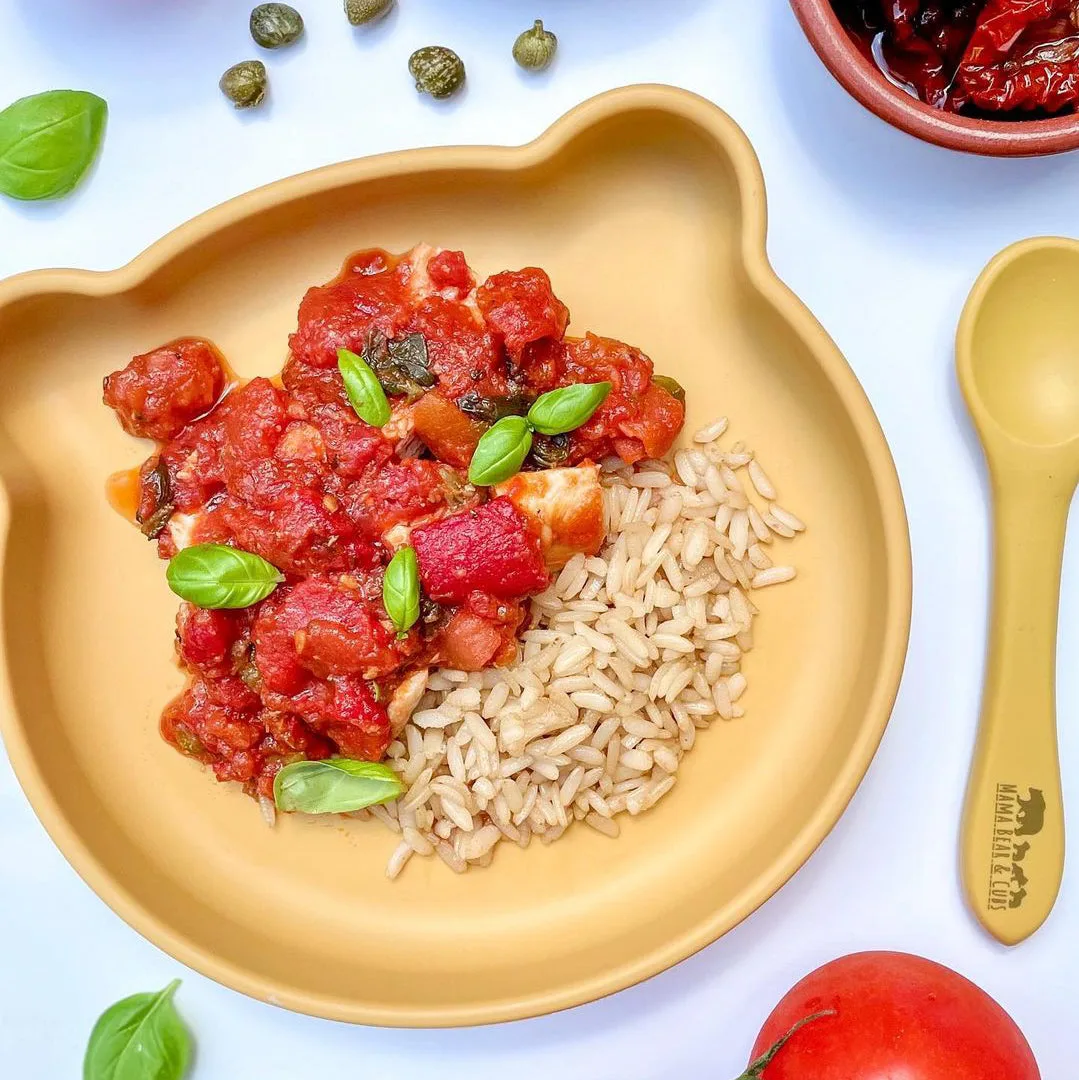
Silicone Bear Suction Plate & Spoon
Which should you choose?
Best for
- Parents of babies starting weaning who want to minimize mess and encourage self-feeding
- Families who prioritize non-toxic, hygienic materials and easy cleaning
Not for
- Parents of older toddlers who no longer need suction and prefer a simple, open bowl
- Families on a very tight budget, since traditional bowls are often cheaper