Quick answer
For most sleepers, cotton is the easier everyday choice: it is breathable, machine-washable, and forgiving on a budget. Silk wins when you want a smoother feel against skin, a more temperature-responsive layer, and a piece that doubles as elegant loungewear. If you sleep hot or wake up clammy, start with cotton or a cotton-linen blend; if you want a cool, low-friction feel and are ready to hand-wash, silk is the better pick.
Choosing between silk and cotton pajamas comes down to three things: how you sleep, how much upkeep you accept, and what you want the garment to do after lights out. Both fabrics are natural, both can be comfortable, and neither is universally better. The right answer depends on your body temperature, your skin, and your laundry routine.
This comparison looks at breathability, temperature regulation, feel, durability, and care, using real Furora pieces to show what silk sleepwear actually looks like in practice. You will finish with a clear pick for your own nightstand, plus a short list of what to avoid.
Breathability and temperature: how each fabric behaves
Cotton is a breathable, absorbent fiber that moves air well and soaks up moisture. That makes it a strong choice for warm sleepers and humid rooms, because it pulls sweat away from skin instead of letting it pool. The trade-off is that damp cotton can feel heavy and clingy, and it takes a while to dry.
Silk is also breathable, but it behaves differently: it is naturally temperature-responsive, feeling cool in heat and insulating in cooler air, and its smooth surface creates less friction against skin. That low-friction quality is one of the most cited silk sleepwear benefits for anyone who tosses and turns. Neither fabric is magically cooling, so do not expect silk to replace a fan or lighter bedding.
- Sleep hot or sweat at night: cotton or a cotton-linen blend is usually the safer base layer.
- Sleep cool or in air conditioning: silk adds warmth without bulk.
- Hormonal night sweats: choose cotton first, then test silk on cooler nights.
Feel, fit, and skin comfort
Silk has a smooth, slightly cool hand feel that glides over skin, which helps if you have sensitive skin or dislike the slight texture of woven cotton. It also drapes rather than holds a shape, so silk sleepwear tends to feel lighter and more fluid. Cotton is softer in a different way: it has a matte, familiar touch and holds its shape more firmly.
Fit matters more than fabric here. Silk shows every seam and wrinkle, so a close but not tight fit looks best. Cotton is more forgiving and hides creases. If you are between sizes, size up in silk and stay true to size in cotton.
- Sensitive skin or friction sensitivity: silk's smooth surface is often the more comfortable option.
- Prefer structure and a matte finish: cotton holds shape and hides wrinkles better.
- Always check the size chart before ordering silk, since returns are harder on delicate pieces.
Durability, care, and real cost
Cotton is the low-maintenance workhorse. It handles frequent washing, tolerates warm water and tumble drying, and gets softer over time. Expect it to fade or thin eventually, but replacement is cheap. Silk needs hand washing or a delicate cycle in cold water, mild detergent, and air drying away from direct sun. It is strong but can snag, and perspiration and deodorant can dull the shine over time.
Cost is the other factor. Silk costs more upfront and demands more attention per wear, but a well-cared-for piece can last years and double as loungewear. Cotton costs less and asks almost nothing of you. If you want the best pajamas for sleep on a practical budget, cotton wins on cost per wear; if you want a small, considered rotation, silk earns its place.
- Wash silk in cold water with a pH-neutral detergent, never bleach.
- Air dry silk flat or on a padded hanger; heat breaks down the fibers.
- Keep cotton separate from towels to reduce lint and pilling.
What silk sleepwear looks like in practice
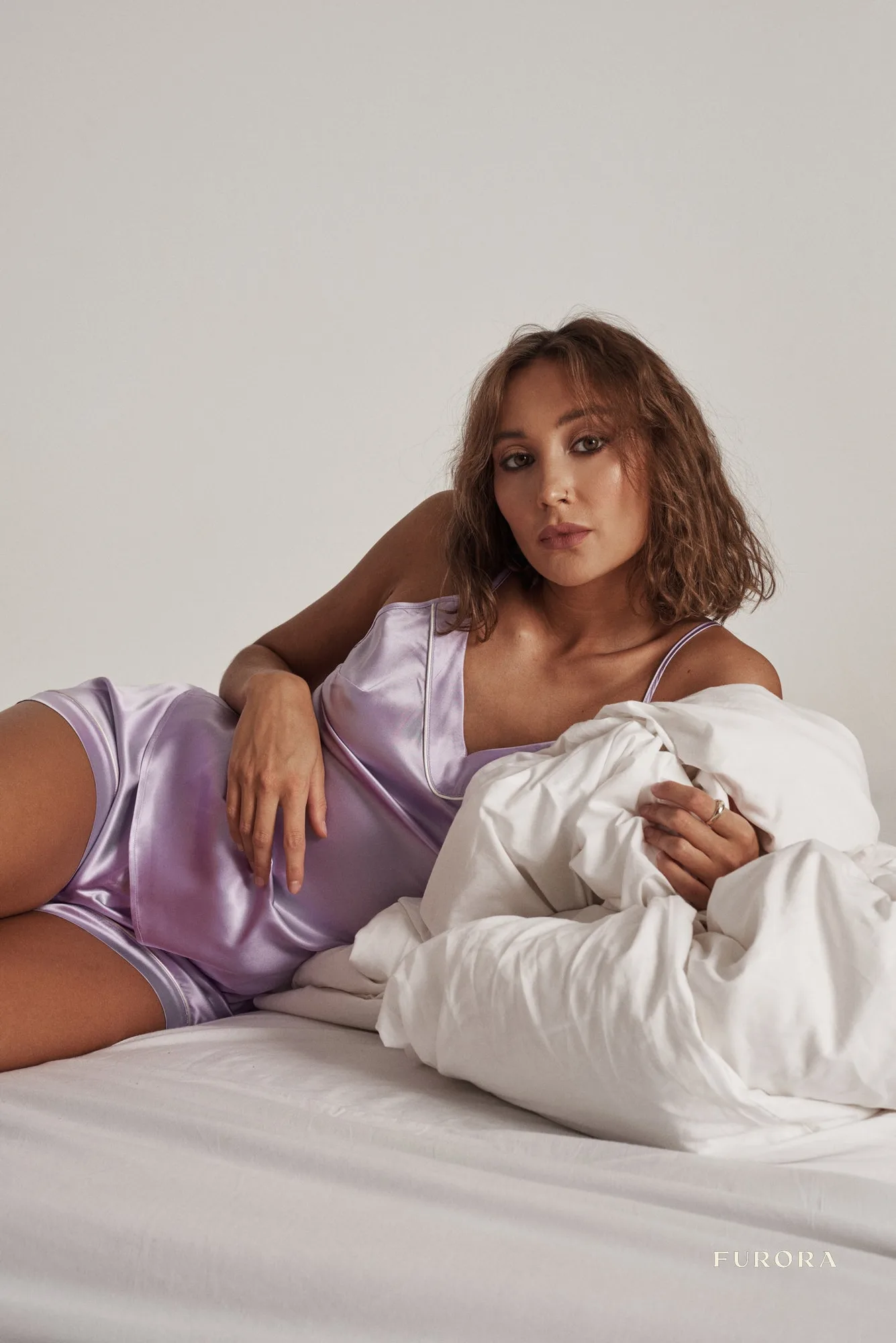
Furora's silk pieces show how the fabric translates into real garments. The Noemie Lilac Silk Pajamas pair a thin-strap top with shorts in a lilac shade with contrasting trim, made from silk produced on a special order. That two-piece cut is the lightest option for warm sleepers who still want silk, because there is less fabric across the body.
Noemie Lilac Silk Pajamas
The Emma Rouge Silk Shirt takes a different route: a deep red silk shirt with a scalloped collar, small buttons, and long sleeves finished like the collar. It is the most versatile of the group, working as a sleep shirt or as a relaxed layer over jeans. The Nightdress by Léa Marron is a single-piece alternative in a caramel-brown shade, designed to fit a range of figures with thin adjustable straps and a V-shaped neckline.
- Two-piece sets suit sleepers who run warm or want easy layering.
- Shirt-style silk pieces give you the most styling range beyond the bedroom.
- Nightdresses remove waistbands entirely, which helps if you dislike pressure at the midsection.
The trade-offs, side by side
- Breathability and moisture: Cotton absorbs sweat and dries slowly; silk is breathable, temperature-responsive, and smooth against skin but does not wick as aggressively. Hot, sweaty sleeper: cotton. Cool sleeper who wants a smooth layer: silk.
- Care and durability: Cotton takes machine washing and tumble drying; silk needs cold hand washing, mild detergent, and air drying away from sun and heat. If you will not hand-wash, do not buy silk expecting it to survive a normal laundry routine.
- Cost per wear: Cotton costs less upfront and is cheap to replace; silk costs more but can last years and double as loungewear. Buy cotton for volume, silk for a small, well-kept rotation.
- Fit and sizing: Silk shows seams and wrinkles and is less forgiving between sizes; cotton holds shape and hides creases. Size up in silk when between sizes, and check the size chart before ordering.
Furora silk pieces at a glance
- Noemie Lilac Silk Pajamas: A top with thin straps and shorts in lilac with contrasting trim, made from silk produced for Furora on a special order. The minimal coverage and light straps make this the coolest silk option here for warm sleepers who still want a two-piece set.
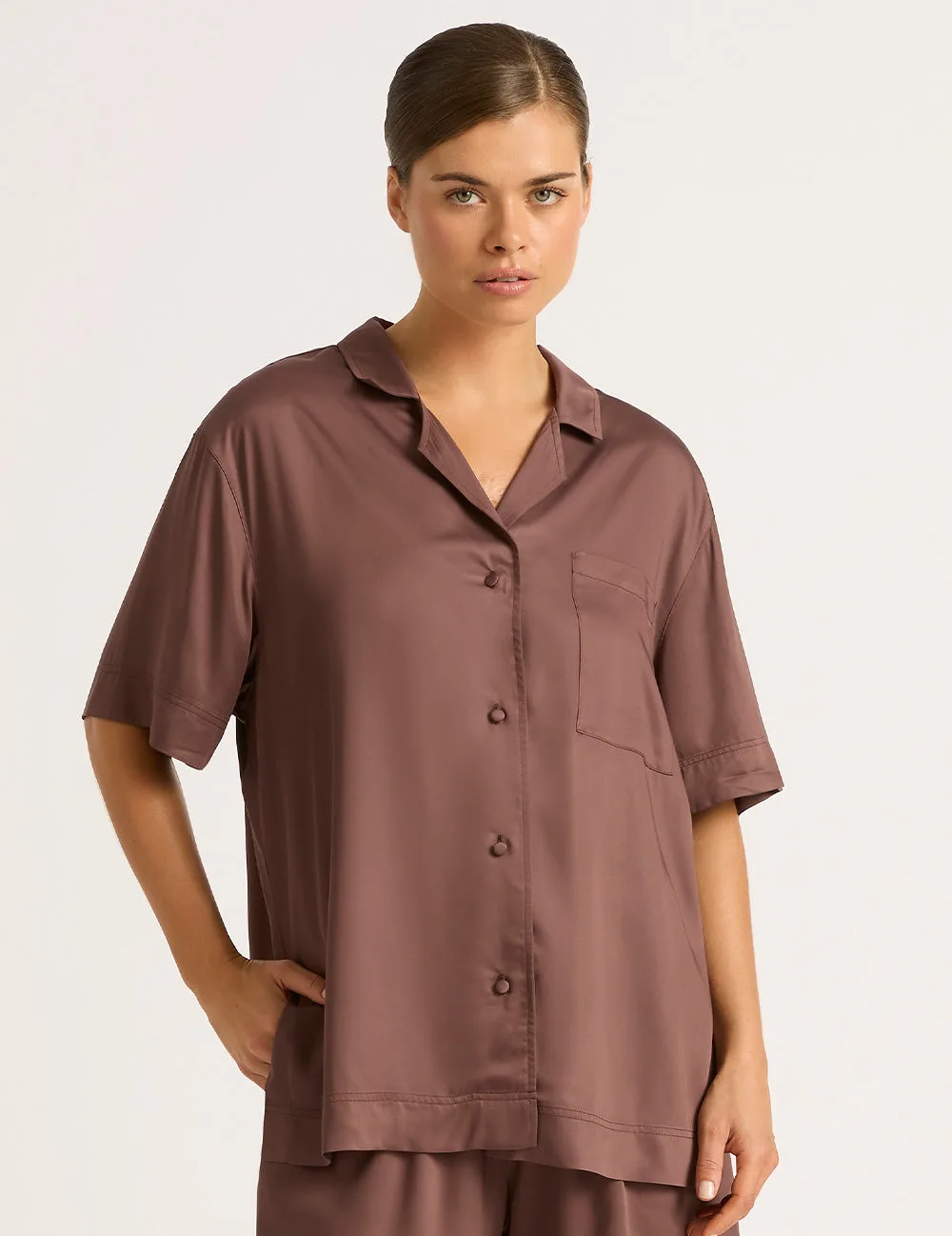
- Emma Rouge Silk Shirt: Deep red silk with a decorative scalloped collar, small elegant buttons, and long sleeves finished similarly to the collar. Long sleeves and a button front make this the most versatile piece: sleep in it, or wear it as a relaxed shirt during the day.
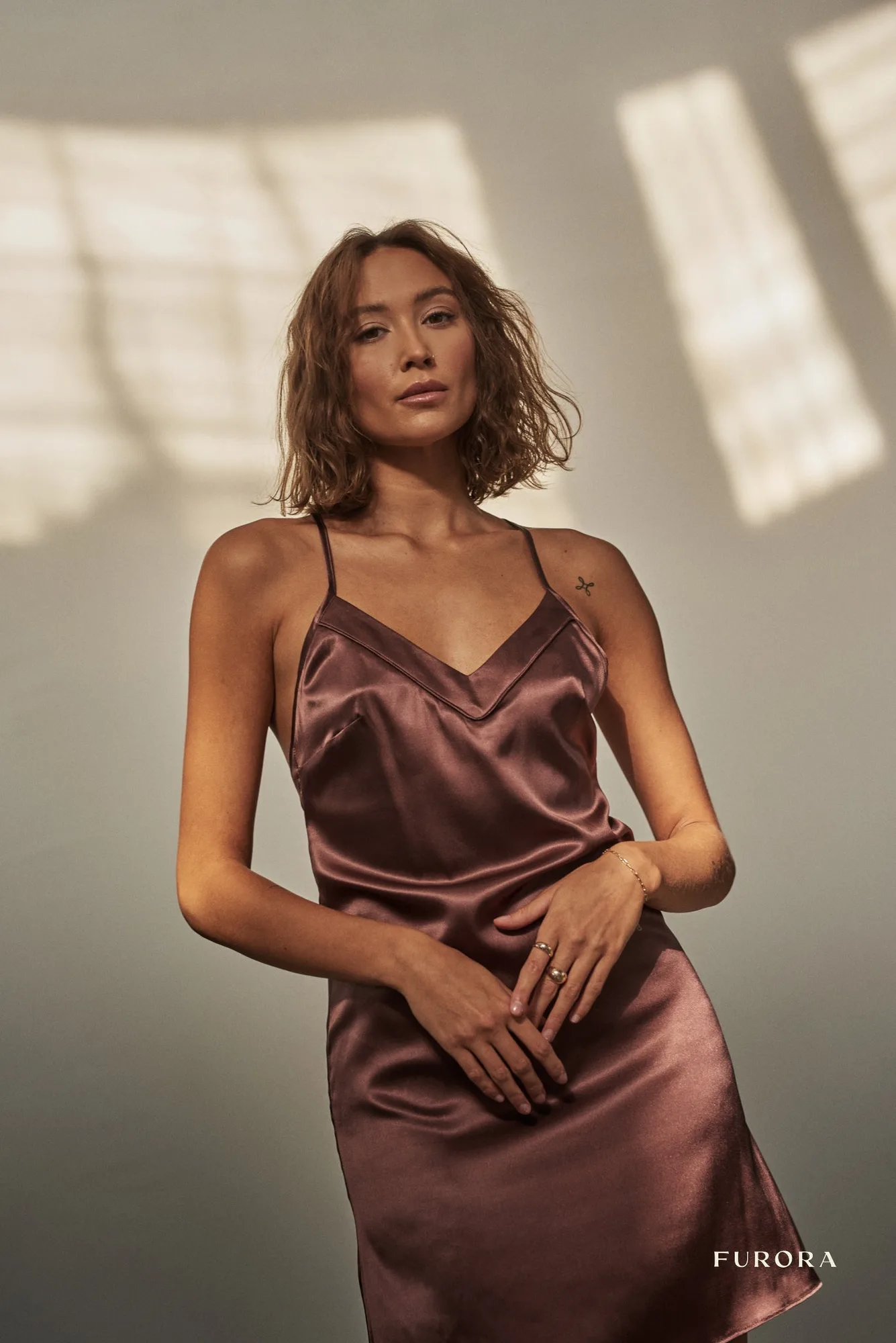
- Nightdress by Léa Marron: A caramel-brown nightdress designed to look good on every figure, with thin adjustable straps and a V-shaped neckline. Adjustable straps let you tune the fit, and the one-piece design removes waistbands for sleepers who find them uncomfortable.
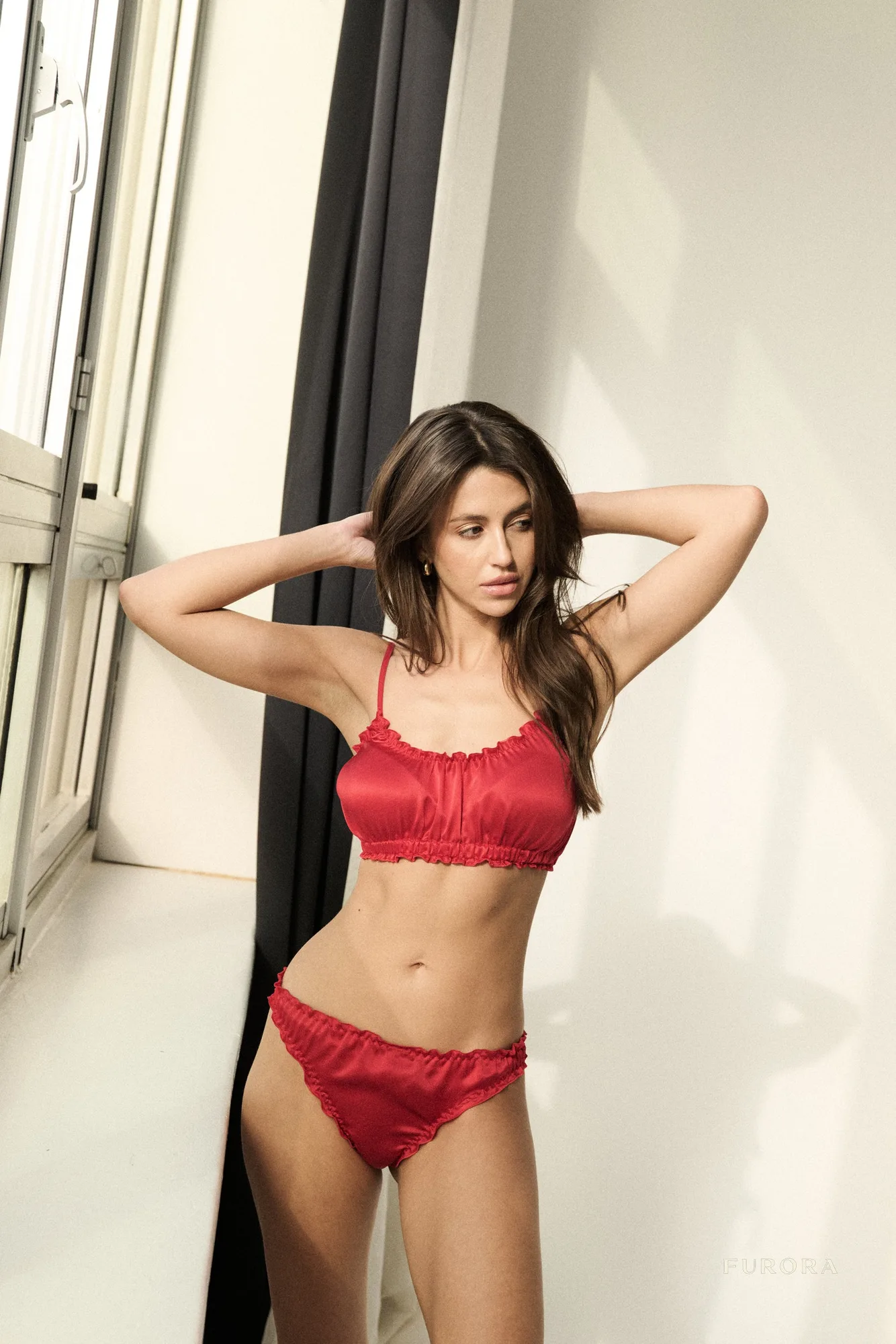
- Camille Rouge silk lingerie set: A red silk set with adjustable straps, an elastic band on the bra, Brazilian-cut panties, and delicate ruffles on both pieces. The adjustable band and straps give a more customizable fit than a fixed sleep set, which matters if you are between sizes.
How to decide for your own sleep
Choose silk if you
- Sleep cool or in air conditioning and want a smooth, low-friction layer
- Have sensitive skin or dislike the texture of woven cotton
- Will hand-wash or use a delicate cycle and want sleepwear that doubles as loungewear
Choose cotton instead if you
- Sleep hot, sweat at night, or live in a humid climate
- Want to machine wash and tumble dry without thinking about it
- Need several pairs on a tight budget or want a fabric that hides wrinkles
There is no single winner: cotton is the practical everyday choice for warm sleepers and low-maintenance laundry, while silk earns its place for cool sleepers, sensitive skin, and anyone who wants sleepwear that works after breakfast too. Match the fabric to how you actually sleep, then pick the cut that fits your routine.