Quick answer
A silver gelling fiber dressing combines a highly absorbent fiber pad with ionic silver to manage moderate to heavy wound exudate while providing broad antimicrobial protection, including against antibiotic-resistant strains.
When to choose a silver gelling fiber dressing over a plain alginate or foam
Silver gelling fiber dressings are best for wounds that are at high risk of infection or already showing signs of local infection, especially when the wound bed is moist and producing moderate to heavy drainage. Plain alginates or foams manage exudate but do not provide active antimicrobial action. If your wound is clean, dry, or only lightly draining, a non-silver dressing may be more cost-effective and less likely to irritate healthy tissue.
How does the gelling action help wound healing?
When the dressing absorbs wound fluid, the fibers transform into a soft, conformable gel that fills the wound cavity evenly. This gel maintains a moist healing environment, which supports cell migration and reduces pain during dressing changes. The gel also helps lock in exudate and bacteria, lowering the risk of maceration to the surrounding skin.
Frequently asked questions about silver gelling fiber dressings
How long can I leave a silver gelling fiber dressing in place?
Most manufacturers recommend changing the dressing every 1 to 3 days, depending on the amount of exudate and the wound condition. Always follow the product instructions and your clinician's advice. If the dressing becomes saturated or strike-through occurs, change it sooner.
Can I use a silver gelling fiber dressing on a dry wound?
No. These dressings require moisture from wound exudate to activate the gelling and silver release. On a dry wound, the dressing may adhere to the wound bed and cause pain or tissue damage upon removal. Use a hydrogel or non-adherent dressing for dry wounds.
Do I need a secondary dressing on top?
Yes. Silver gelling fiber dressings are primary dressings that go directly against the wound. They must be covered with a secondary dressing such as a foam, gauze, or adhesive film to hold them in place and prevent leakage. Choose a secondary dressing that matches the wound location and exudate level.
Is silver gelling fiber dressing safe for people with silver allergies?
Silver allergy is rare but possible. If you notice redness, itching, or a rash around the wound after applying the dressing, discontinue use and consult your healthcare provider. For most patients, ionic silver dressings are well tolerated and do not cause systemic absorption at clinically significant levels.
Can I cut a silver gelling fiber dressing to fit the wound?
Yes, most silver gelling fiber dressings can be cut to size without compromising their structure or antimicrobial activity. Cut the dressing with clean scissors to match the wound shape, ensuring it overlaps the wound edges slightly. Avoid cutting over the wound to prevent fiber shedding.
Product facts
-
Silver Gelling Fiber Dressing McKesson 8 X 12 Inch Rectangle Sterile: Absorbent, non-woven fiber sheet containing ionic silver with high silver content and fast initial elution, effective against MRSA, MRSE, and VRE. This means the dressing starts killing a broad range of bacteria quickly, which is critical for infected or high-risk wounds, and continues to manage exudate by forming a gel.
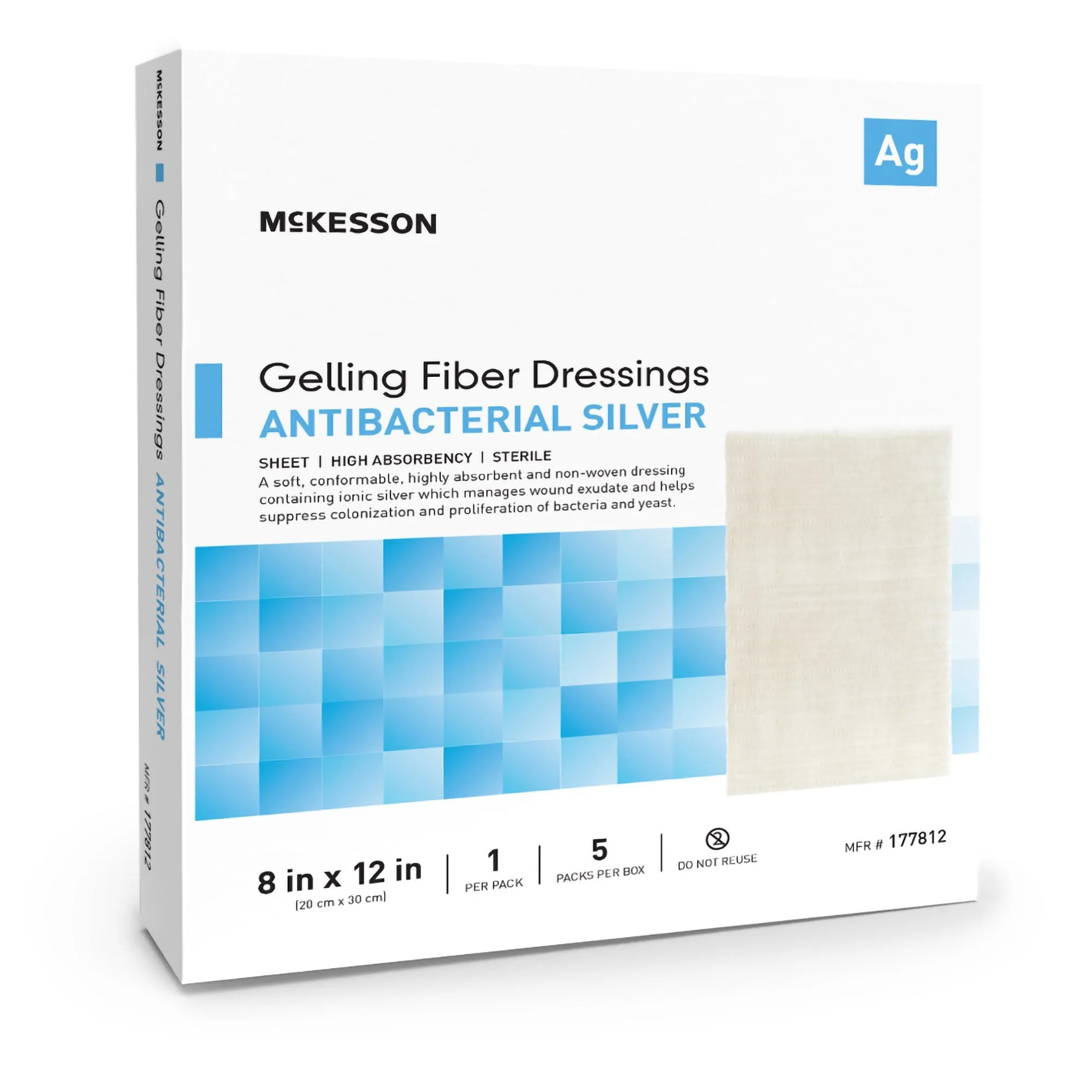
Silver Gelling Fiber Dressing McKesson 8 X 12 Inch Rectangle Sterile