What the Simple Machines Mechanical Engineering Kit Offers
The Simple Machines Mechanical Engineering kit is a hands-on way to introduce kids to the foundational physics of simple machines. It includes 26 model-building exercises that cover all six classic simple machines—wheels and axles, levers, pulleys, inclined planes, screws, and wedges—as well as gears. The kit is designed for children aged 8 and up, making it a solid choice for at-home STEM learning or as a supplement to school science lessons.
Each exercise starts with simple models to build understanding of basic principles, then moves to more complex configurations that show how machines can work together. The included spring scale lets you measure how the machines change the direction and magnitude of forces, adding a practical measurement element to the play.
Kit Contents and Key Features
-
Simple Machines Mechanical Engineering: Through 26 model-building exercises, you’ll investigate all 6 classic simple machines — wheels and axles, levers, pulleys, inclined planes, screws, and wedges — as well as gears. This shows the breadth of topics covered, from basic to advanced concepts, all in one kit.
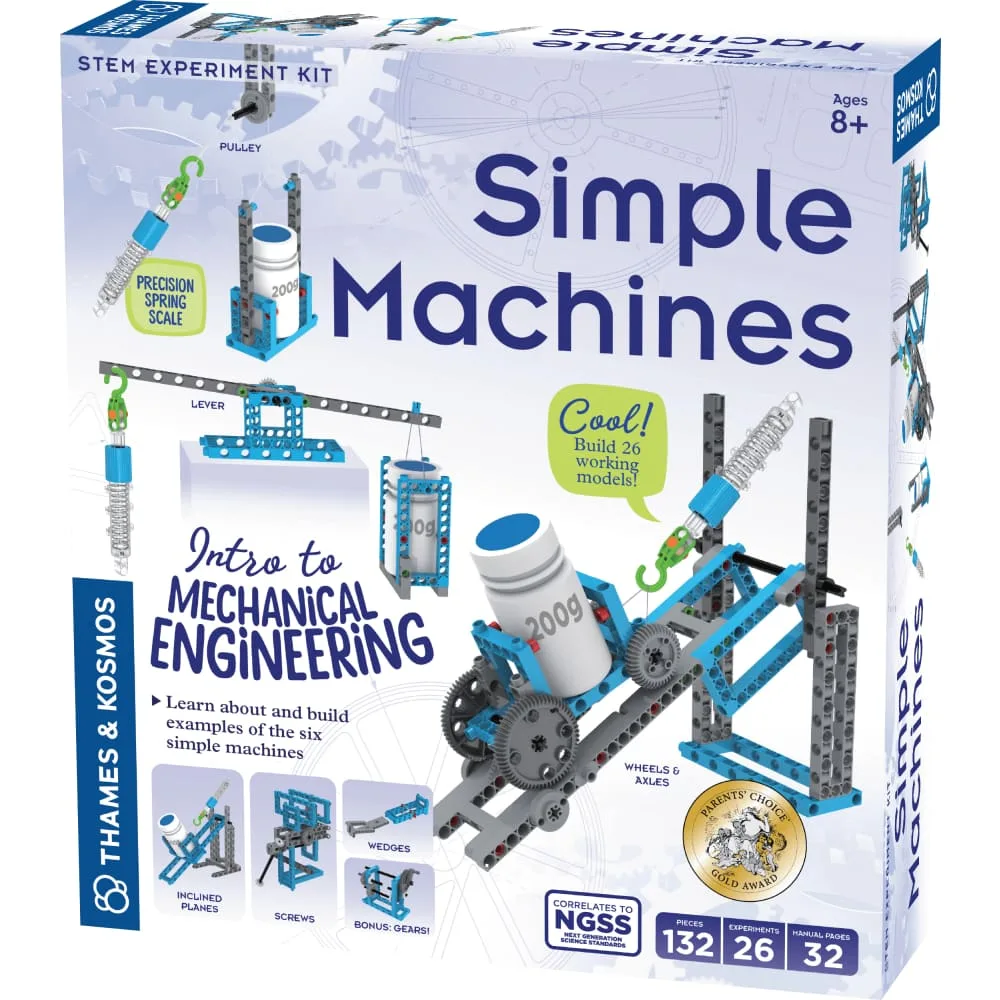
Simple Machines Mechanical Engineering
-
Simple Machines Mechanical Engineering: Also included is a specially designed spring scale so that you can measure how the machines change the direction and magnitude of forces, making work easier to do. The spring scale adds a measurement component, turning play into a real physics experiment.
-
Simple Machines Mechanical Engineering: The 32-page, full-colour manual also dives into examples of simple machines in action in everyday life. The manual helps connect the models to real-world examples, reinforcing learning beyond the build.
How to Get Started with the Simple Machines Kit
The kit's modular pieces can be assembled and disassembled repeatedly. Start with the simplest models to build confidence, then progress to more complex ones. The spring scale is used throughout to measure force changes.
- Start with a simple machine type: Choose one of the six classic machines (e.g., a lever or pulley) and follow the manual's instructions for the first model. The manual provides step-by-step guidance.
- Build and test with the spring scale: After building, use the spring scale to measure the force needed to lift a load with and without the machine. Compare the readings to see how the machine makes work easier.
- Progress to combined machines: Once comfortable, move to models that combine multiple simple machines. The manual shows how the same basic elements can be arranged differently to form each machine.
- Experiment with your own designs: The pieces are durable and modular, so you can combine them to create your own configurations. The kit encourages open-ended exploration after the guided exercises.
What the Kit Does and Does Not Cover
The kit focuses on building and experimenting with simple machines. It includes a detailed manual with real-world examples, but the supplied information does not include specific numerical measurements for force or distance beyond what the spring scale provides. The instructions guide assembly and explain principles, but you may need to supplement with additional resources if you want deeper theoretical physics explanations. The models are designed to be built and rebuilt repeatedly, so the learning can continue over time.