The real question: control vs. coordination
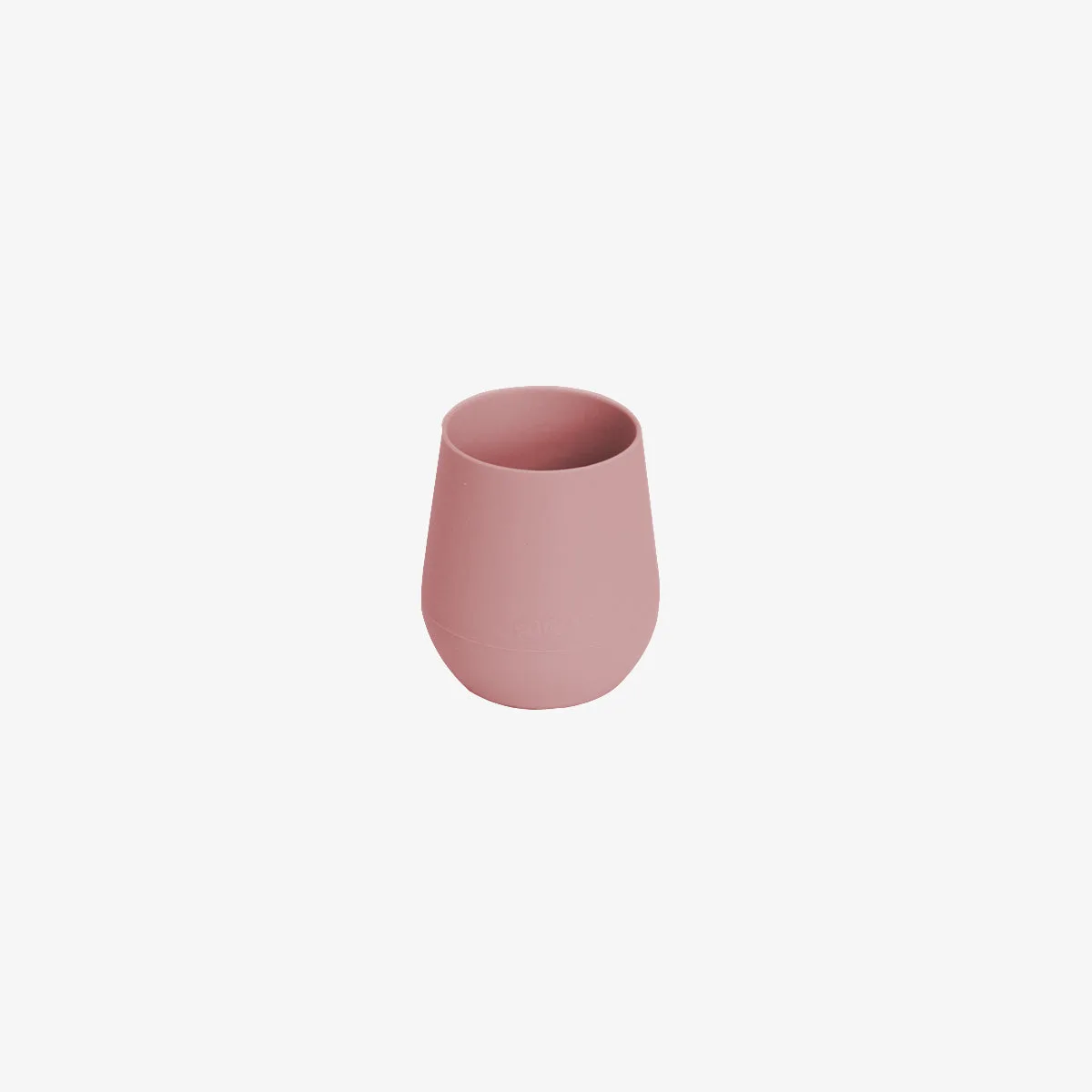
Choosing between a sippy cup and an open cup is not about which one is 'better.' It is about which kind of practice you want to prioritize first. A sippy cup gives a child a defined way to grip and tip, which can support growing independence. An open cup asks for more refined lip and hand coordination from the start. Many families use both, but the order and timing depend on your child and your comfort level.
The supplied product information for the Sippy Cup does not include an age range or a recommended introduction stage, so treat any 'first cup' decision as one to confirm with your pediatrician or feeding specialist rather than a rule built into the product.
Sippy cup and open cup side by side
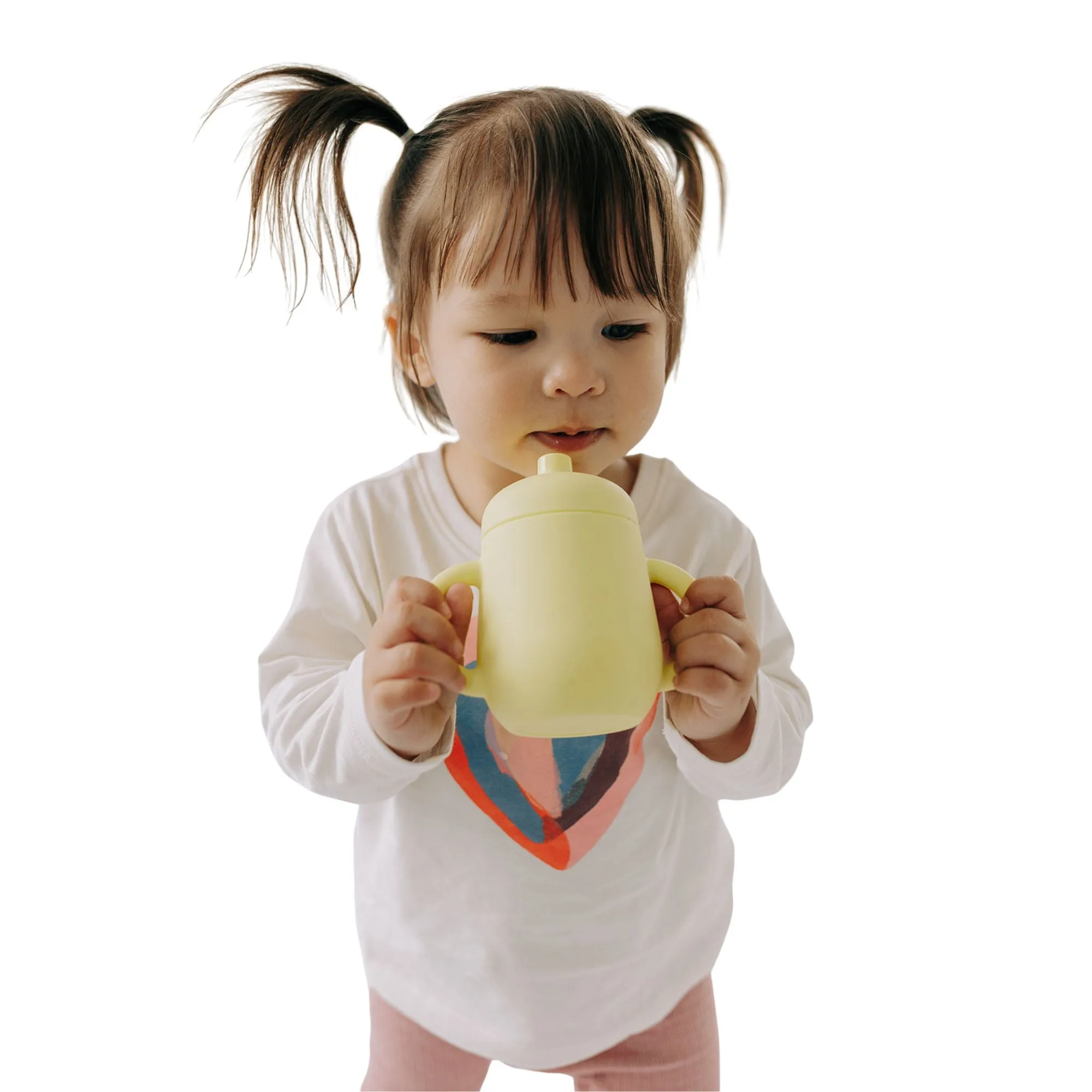
- Grip and handling: The Sippy Cup is described as made for tiny hands and growing independence, with a smooth feel and clean, simple shape that is easy to grip. An open cup offers no handle or lid, so it relies entirely on the child's hand control and your supervision.
- Mouth feel: The Sippy Cup is described as gentle on gums. An open cup has a rim the child drinks from directly; the supplied information does not describe rim material or softness, so check the cup you choose.
- Independence: The Sippy Cup is positioned as helping little ones gain confidence and control with every sip. An open cup can be introduced alongside it for variety, but it typically requires more adult help at first.
- On-the-go use: Each Sippy Cup arrives in a 100% cotton reusable storage bag for on-the-go convenience. An open cup is generally less portable unless you pack it carefully; the supplied information does not include a travel cover for an open cup.
- What to confirm: For the Sippy Cup, the supplied details do not list an age range, material, or dishwasher/microwave instructions. For any open cup, confirm material, weight, and whether it is designed for infant use before offering it.
When a sippy cup may be the easier first step
If your goal is to hand your child a cup they can hold and tip with less spill risk while they build confidence, a sippy cup is the more forgiving starting point. The Sippy Cup's smooth, simple shape and grip-friendly design are aimed at that stage of growing independence. It also comes in four colors—Lime, Cloud, Azure, and Rose—so you can assign a color per child or keep one in the diaper bag.
Keep the supplied warning in mind: the Sippy Cup is marked 'For human use only.' That is the full safety statement provided, so it does not replace your own check of the cup's material, condition, and suitability for your child's age.
When an open cup makes sense to introduce alongside
An open cup can be a useful complement, not necessarily a replacement. Some families offer a small open cup at meals for supervised practice while using a sippy cup for travel or independent drinking. The supplied information does not establish that one method speeds up the other, so treat this as a practical routine choice rather than a developmental claim.
If you are moving away from a bottle, the Sippy Cup's grip and tip design may help with the mechanics of drinking from a cup. The transition from bottle to cup is individual; the supplied details do not include a recommended timeline, so go at your child's pace and ask your pediatrician if you are unsure.
Sippy Cup details that matter for this choice
-
Sippy Cup: Made for tiny hands and growing independence, with a smooth feel and clean, simple shape that is easy to grip and gentle on gums. These are the supplied design points that support a first-cup role for a sippy cup; they do not establish an age range.
Sippy Cup
-
Sippy Cup: Each cup arrives in a 100% cotton reusable storage bag for on-the-go convenience. Useful if you plan to keep the cup in a diaper bag or car; an open cup usually needs separate packing.
-
Sippy Cup: Available colors: Lime, Cloud, Azure, and Rose. Lets you color-code cups for different children or settings without changing the cup's function.
-
Sippy Cup: WARNING: For human use only. This is the only safety statement in the supplied record; it is not an age or material specification.
What the supplied information does not tell you
Before you decide, note these gaps in the supplied Sippy Cup record. They are not product flaws—just details to confirm with the brand or your own inspection.
- Age range: No minimum or maximum age is listed, so 'when to introduce a sippy cup' cannot be answered from the product data alone.
- Material and care: The cup's material, dishwasher suitability, and microwave safety are not confirmed in the supplied details.
- Spill behavior: The record does not state whether the cup is leak-proof or valve-free, so do not assume either.
- Open cup specifications: No open cup product is supplied here; any open cup comparison must rely on the cup you already own or plan to buy.
A practical way to choose
If you want one cup to start with and your priority is grip and growing independence, the Sippy Cup is the better-supported choice from the supplied evidence. If you want to practice open-cup drinking at meals, introduce a small open cup under supervision and keep the sippy cup for travel and self-directed drinking. Many children move between both without a strict sequence.
Whichever you try first, check the cup's material and condition, offer it seated and supervised, and confirm any age or care guidance that the supplied information does not include.