Start with the materials you're actually maintaining
The Skinner Jr combines a dyed amboyna handle with black G10, brass split, mosaic pins, a brass lanyard pin, and a textured grip. The blade is S45VN American steel with an acid etch, and the knife ships with a Kydex sheath; a leather sheath is available separately under accessories. That mix matters because wood, G10, brass, and an etched blade each respond differently to moisture, abrasives, and handling.
This guide sticks to what the supplied product record confirms. Where a specific cleaner, oil, or step isn't documented, I'll say so rather than invent a procedure. The goal is a routine that protects the materials without guessing at manufacturer instructions.
Skinner Jr build facts that shape the care routine
-
Skinner Jr- Dyed amboyna, Black G10 and Brass Split, Thoya, Mosaic Pins, Brass Lanyard Pin, Textured Grip: 7.7" overall length, 3.7" blade, .10" thickness, S45VN American steel, acid etch The blade steel and acid etch are the two features most likely to be affected by abrasive cleaning or prolonged moisture, so they set the tone for how gently you should treat the working end.
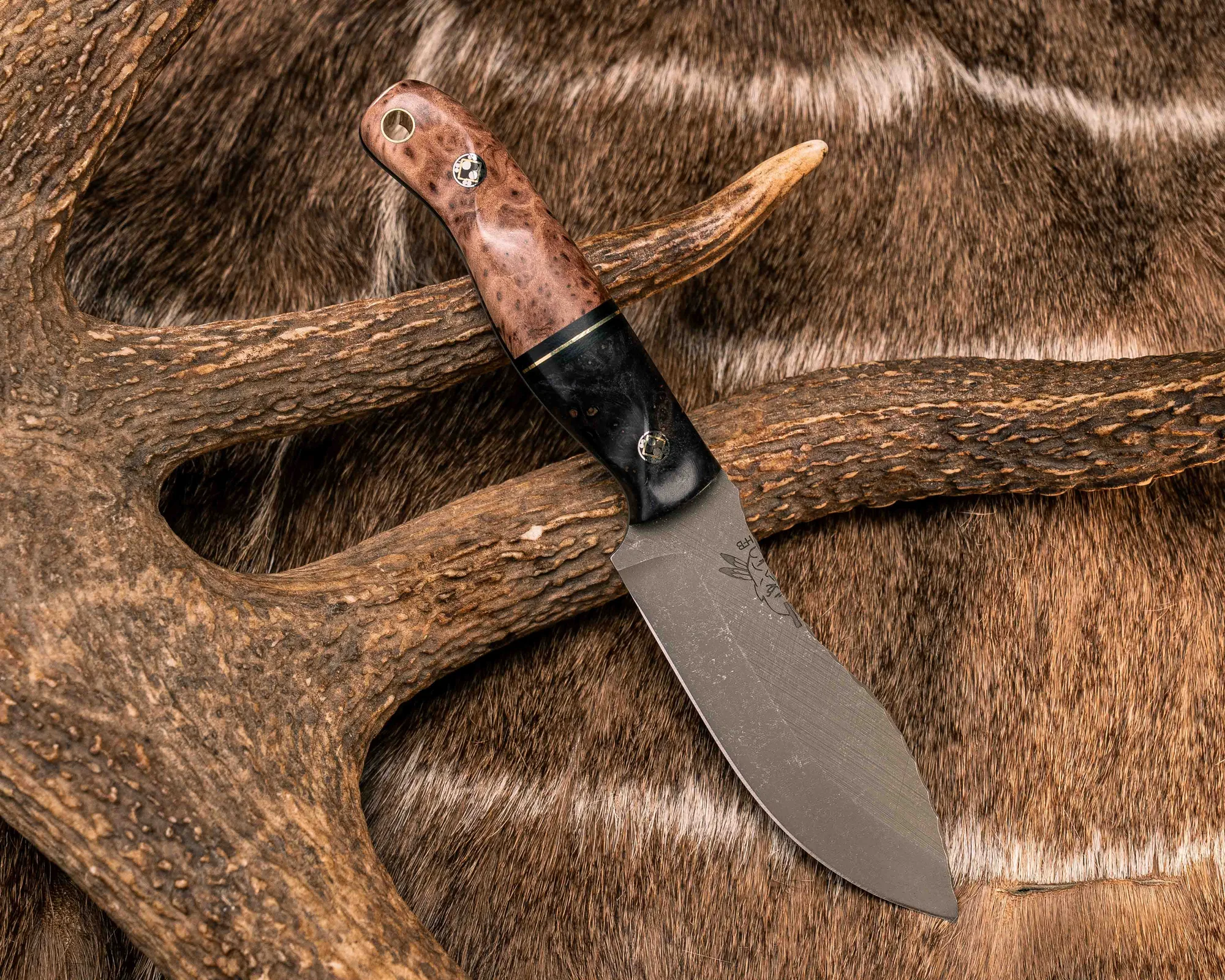
Skinner Jr- Dyed amboyna, Black G10 and Brass Split, Thoya, Mosaic Pins, Brass Lanyard Pin, Textured Grip
-
Skinner Jr- Dyed amboyna, Black G10 and Brass Split, Thoya, Mosaic Pins, Brass Lanyard Pin, Textured Grip: Dyed amboyna handle with black G10 and brass split, mosaic pins, brass lanyard pin, textured grip Wood, G10, and brass are three different materials at the handle. A single all-purpose cleaner may suit one and not the others, so the handle needs a more selective approach than a homogeneous synthetic handle.
-
Skinner Jr- Dyed amboyna, Black G10 and Brass Split, Thoya, Mosaic Pins, Brass Lanyard Pin, Textured Grip: Kydex sheath included; leather sheath can be purchased under accessories Sheath choice affects storage and moisture exposure. Knowing which sheath you have helps you decide how to store the knife between uses.
A supported cleaning sequence for the Skinner Jr
The supplied record does not include a manufacturer cleaning procedure, so this sequence is built from general material care principles applied to the confirmed build. Treat it as a cautious baseline, not a factory instruction.
- 1. Wipe the blade first, before the handle: Use a soft, damp cloth to remove residue from the S45VN blade. Avoid abrasive pads or gritty cleaners on the acid-etched surface, since the etch is a surface finish and abrasion can dull its appearance. Dry immediately after wiping.
- 2. Clean the handle with a barely damp cloth: The dyed amboyna wood is the most moisture-sensitive part of the handle. Wipe the wood, G10, and brass with a cloth that is damp rather than wet, and avoid soaking the handle or leaving water pooled around the pins and lanyard pin.
- 3. Dry around the pins and split: Brass split, mosaic pins, and the brass lanyard pin create small junctions with the surrounding materials. Dry these areas thoroughly with a soft cloth after any cleaning to prevent moisture sitting in the seams.
- 4. Store in the Kydex sheath or a dry place: The included Kydex sheath is a practical storage option. If you use a leather sheath purchased separately, be aware that leather can hold moisture, so make sure the knife and sheath are dry before storing. The record does not specify a long-term storage method beyond the sheath.
Handle upkeep: what to watch on dyed amboyna, G10, and brass
The handle is where the Skinner Jr's materials diverge most. These checkpoints are based on the confirmed components, not on a supplied care schedule.
- Dyed amboyna wood: Wood can react to moisture and dryness. The record does not specify an oil or finish for the dyed amboyna, so avoid applying unknown products. Keep the wood dry and wipe it with a damp cloth only when needed.
- Black G10: G10 is a composite material used alongside the wood. The record does not give a separate care instruction for it, so treat it like the rest of the handle: wipe with a damp cloth and dry. No solvents or abrasives are confirmed as safe.
- Brass split and lanyard pin: Brass can tarnish over time, but the supplied record does not include a brass polish or cleaning recommendation. If you choose to polish brass, test on a small area first and keep polish away from the wood, since the record does not confirm that any polish is safe for the dyed amboyna.
- Mosaic pins: Mosaic pins are decorative inlays. The record does not specify their material or care, so clean around them gently and avoid picking at the seams. No polishing or sealing step is confirmed.
- Textured grip: The textured grip is a handling feature. The record does not describe how the texture is produced, so avoid stiff brushes that could alter it. A soft cloth is the safest documented-adjacent choice.
Blade care for S45VN with an acid etch
S45VN is a stainless steel, which generally offers good corrosion resistance, but the acid etch is a surface treatment that changes the blade's appearance. The supplied record does not include a specific blade-care product or sharpening angle. Keep the blade clean and dry after use, and avoid abrasive cleaners that could wear the etch. If you sharpen the knife, the record does not specify a bevel angle or sharpening method, so follow the sharpener's guidance rather than a guessed angle.
What the supplied record does not confirm
Being clear about the limits of the evidence is part of caring for the knife without guesswork.
- No manufacturer cleaning or oiling instructions: The record does not include a step-by-step cleaning procedure, approved cleaners, or a recommendation to oil the wood or brass. Any product you apply is your own choice, not a confirmed factory step.
- No sharpening angle or method: The .10" blade thickness and 3.7" blade length are confirmed, but the record does not give a sharpening angle, grit progression, or whether the acid etch should be protected during sharpening.
- No leather sheath care details: A leather sheath can be purchased under accessories, but the record does not describe its care or whether it is treated. Follow the sheath maker's guidance if provided.
- No warranty or service information: The supplied record does not include warranty terms or service recommendations. Check with the store directly if you need those details.