Quick answer
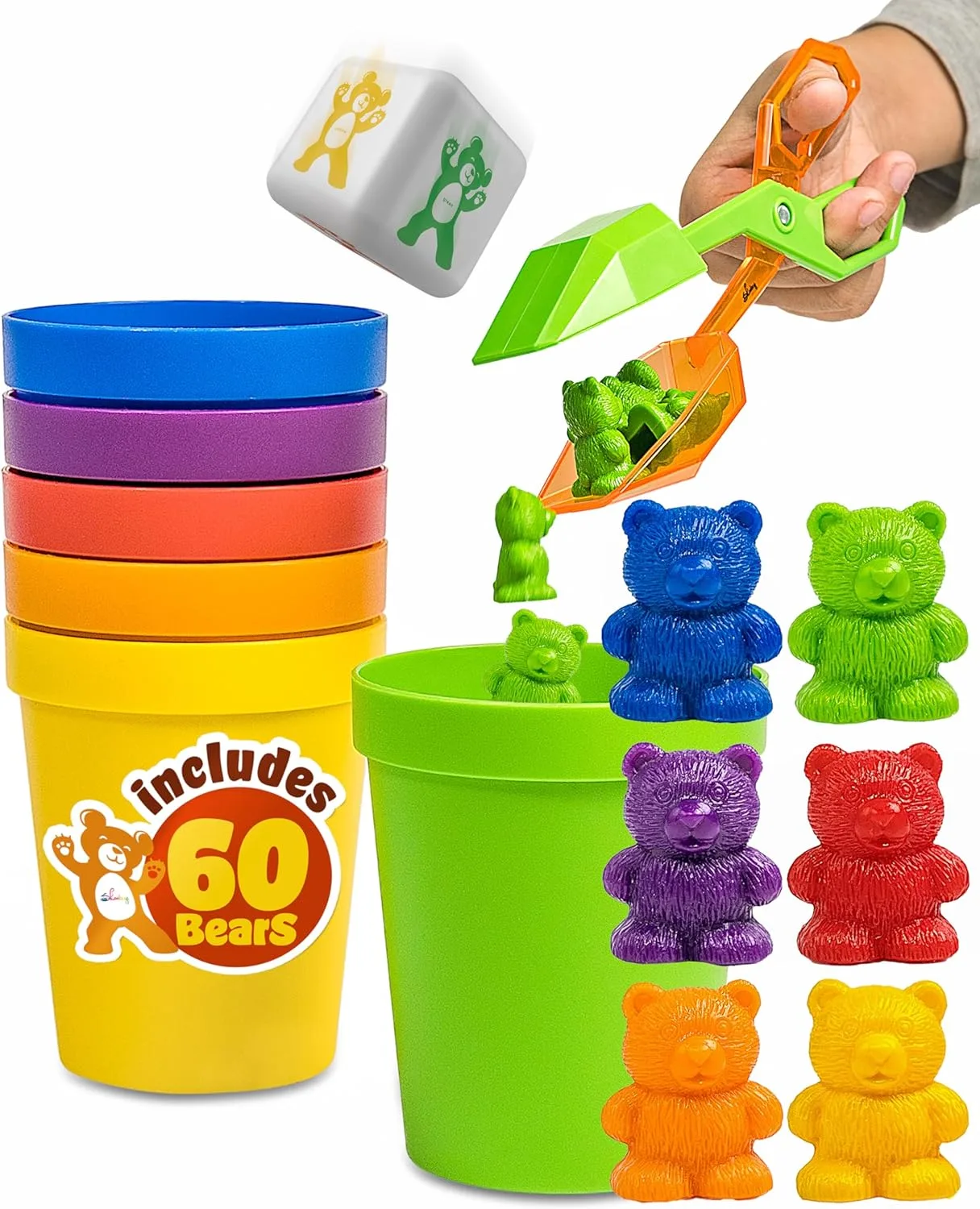
Start with one color and one cup, then add a second color once your child sorts without help. Build up to counting to 60, patterning, and simple addition using the same bear counters. A set with matching sorting cups and tongs, like the Skoolzy Rainbow Stacking Bears 69 Piece Set, covers every step below without extra purchases.
Set up the play space before you introduce the bears
Empty one tray or low table and place only the cups and bears you plan to use. A full 60-bear tub in front of a 3-year-old turns sorting into dumping. Keep the storage bag within reach so cleanup is part of the routine, not a separate battle.
- Use a mat or tray with a raised edge so bears do not roll onto the floor.
- Put the dice and tongs aside until step four; they distract from first sorting attempts.
- Sit at the child's eye level rather than across a table.
Match the tool to your child's current stage
Not every 3-year-old is ready for the same step. If your child still mouths small objects, stay with hand sorting and adult supervision. If they sort confidently by color, move to counting and patterning. The steps below are ordered by difficulty, so you can enter at any point and repeat a step for weeks without it becoming stale.
Six rainbow counting bears activities, in order
- Step 1: One-color transfer: Put a single red cup on the tray and hand your child five red bears. Ask them to move each bear into the cup by hand. Repeat with a different color the next day. Checkpoint: your child drops bears in without sweeping them across the tray. If not, stay on this step.
- Step 2: Two-color sorting: Place two cups and a mixed pile of ten bears in those two colors. Name each color as your child sorts. Add a third color only when they self-correct without prompting. Common mistake: adding all six colors at once. That turns sorting into guessing.
- Step 3: Count and check: After sorting, count each cup together, touching each bear once. Line the bears up in a row to make one-to-one correspondence visible. Checkpoint: your child says the last number as the total, not just recites a sequence.
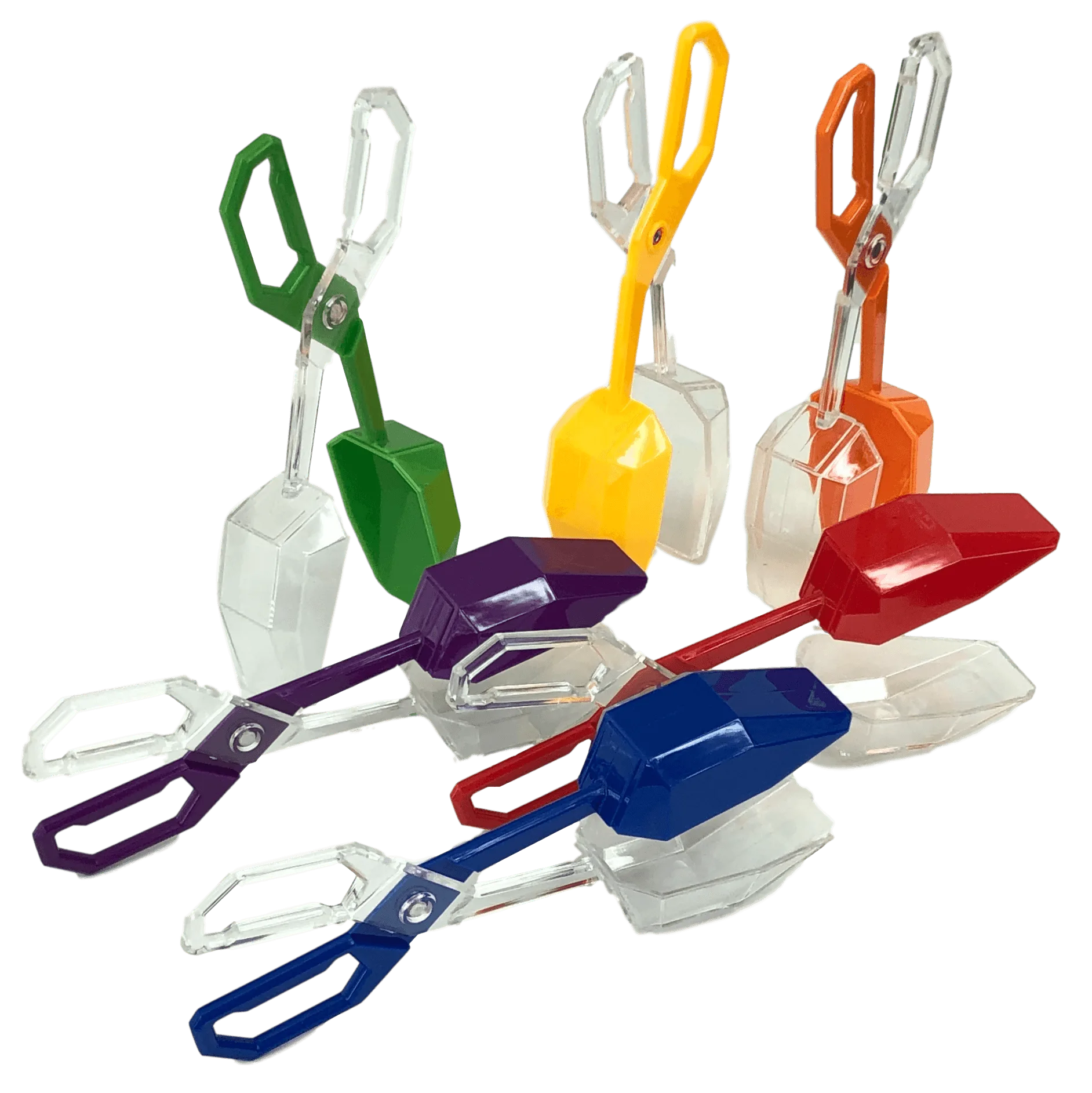
- Step 4: Tongs and scoops: Swap hands for the scissor tongs or scoop. Have your child move bears from the pile to a cup one at a time. Common mistake: correcting grip too early. Let them experiment; the tool builds hand strength either way.
- Step 5: Pattern strips: Start a repeating pattern on the tray, such as red, blue, red, blue, and ask your child to continue it. Move to three-color patterns once two colors are easy. Checkpoint: they can continue the pattern for at least four more bears.
- Step 6: Dice and bear counters math games: Roll the sorting dice, take that many bears, and add them to a cup. For older preschoolers, roll twice and add the two groups together, or race to see which color reaches ten first. Next step: use the bears for nonstandard measurement by lining them up along a book or shoe.
What the Skoolzy sets give you
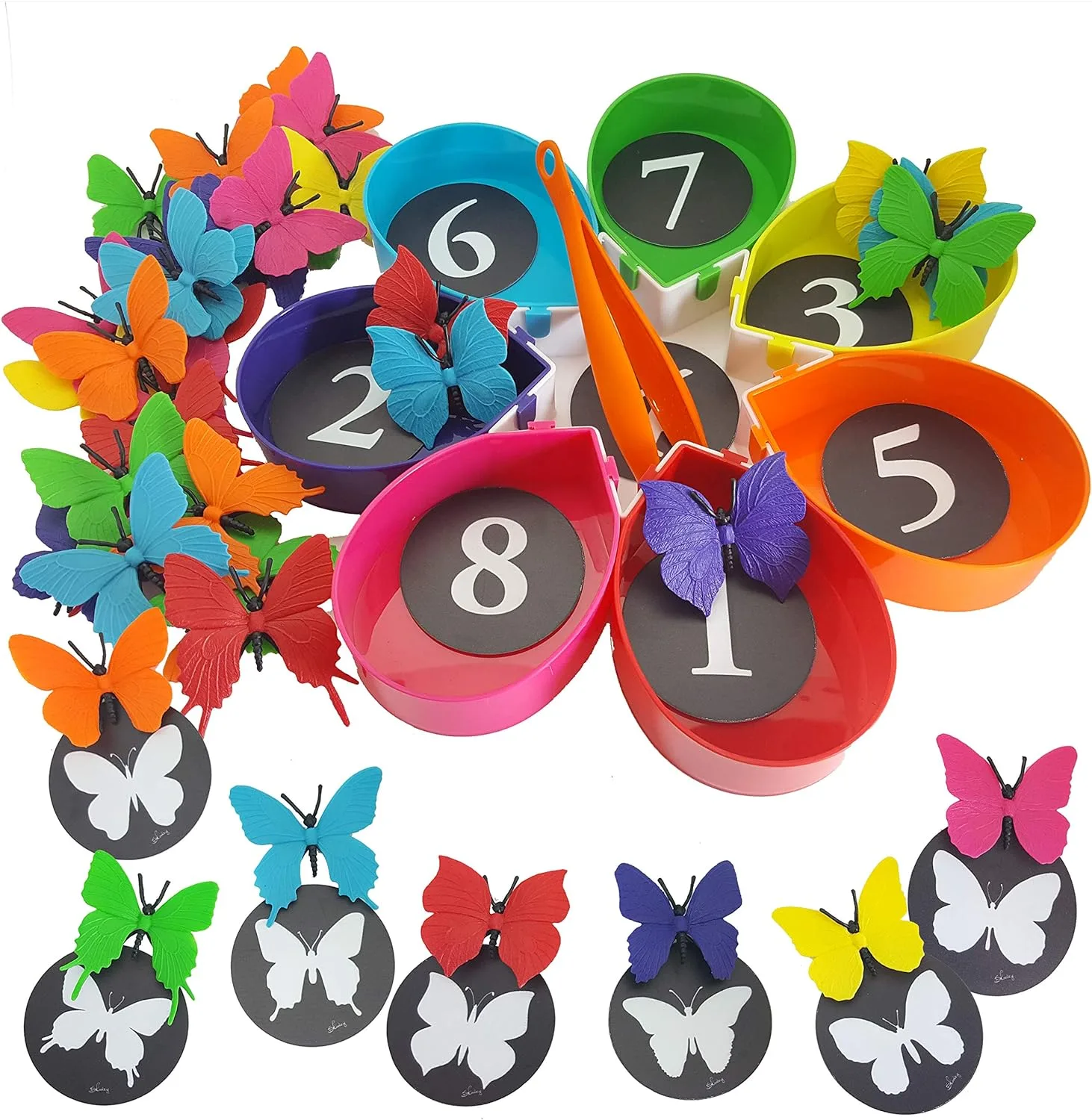
- Rainbow Stacking Bears with Matching Sorting Cups 69 Piece Set, 60 Bear counters, Scissor Tongs, Rainbow Cups, Storage Bag, Sorting dice Game: 69-piece set with 60 bear counters, scissor tongs, rainbow cups, storage bag, and sorting dice; supports counting to 60, graphing, addition, subtraction, skip counting, nonstandard measurement, one-to-one correspondence, comparison, making 10, sequencing, matching, patterning, and grouping. One purchase covers every step in this article, including the tongs and dice you need for the later games.
- Skoolzy Rainbow Counting Bears Toddler Toys For 3 Year Old Gifts Stocking Stuffers, Sorting Cups, Montessori Sensory Toys, 1 Preschool Learning Activities Math Games Dice Toy, Montessori Tongs, 2 Bags: Counting bears with color matching cups designed as a math manipulative for matching, sorting, mathematics, dexterity, hand-eye coordination, and fine motor control. A good entry point if you mainly want sorting and matching practice before adding dice games.
- Fine Motor Skills Toys - Color Sorting Toys for Toddlers Tools Set - Sensory Bin Rainbow Cups, Dice and Scoop Tongs for Kids Montessori Materials Ages 3+: Fine motor tool set with rainbow cups, dice, and scoop tongs in red, yellow, orange, green, blue, and purple; children pick, scoop, and sort, and the tools also work with beads, buttons, or blocks you already own. Choose this if hand strength and scooping are the priority, or if you already have counters at home.