Quick Answer
A slant writing board is a simple, effective tool for improving handwriting posture and comfort, especially for children and those with developing hands. Look for a board with an adjustable angle and non-slip surface to get the most benefit.
Why a Slant Board Helps
A slant board creates a gentle angle that encourages a more upright posture, reduces neck and shoulder strain, and promotes a more natural wrist position. This is particularly helpful for children who tend to hunch over their desks or grip their pencil too tightly.
The angled surface also brings the text closer to the eyes, which supports visual tracking and can make writing feel more natural and comfortable. Occupational therapists often recommend slant boards for these reasons.
Key Features to Consider
When choosing a slant board, consider the angle adjustability, size, and portability. A board with multiple angle settings allows you to customize the slope for different tasks, such as writing, reading, or drawing. A non-slip surface or clip to hold paper in place is also important to prevent frustration.
Think about where the board will be used. A larger board may be better for home or classroom desks, while a smaller, portable option works well for on-the-go use.
Potential Trade-offs
While slant boards offer many benefits, they are not a one-size-fits-all solution. Some children may need a period of adjustment, and the board may not be suitable for all tasks, such as writing on a whiteboard or using a computer. Additionally, the board adds height to the desk, which might not be comfortable for all users.
It's also important to note that a slant board alone won't fix underlying motor skill issues. It should be used as part of a broader approach that includes proper seating, pencil grip, and regular breaks.
How to Choose the Right Slant Board
- Angle Adjustability: Choose a board with adjustable angles if the user will do different activities (writing, reading, drawing). Fixed-angle boards are simpler but less versatile.
- Non-Slip Surface: Look for a board with a non-slip surface or a clip to hold paper steady. This prevents frustration and keeps the user focused on the task. Check that the board's surface works with the user's preferred paper size.
- Size and Portability: Consider the desk space and whether the board needs to be carried between rooms or classes. A larger board offers more writing area, while a smaller one is easier to transport. Measure the desk or workspace to ensure a good fit.
Product Spotlight
-
Slant Writing Boards: The Slant Writing Board creates a gentle angle that helps support posture, hand positioning and visual tracking while writing. This makes it an effective tool for improving writing comfort and form, especially for developing hands.
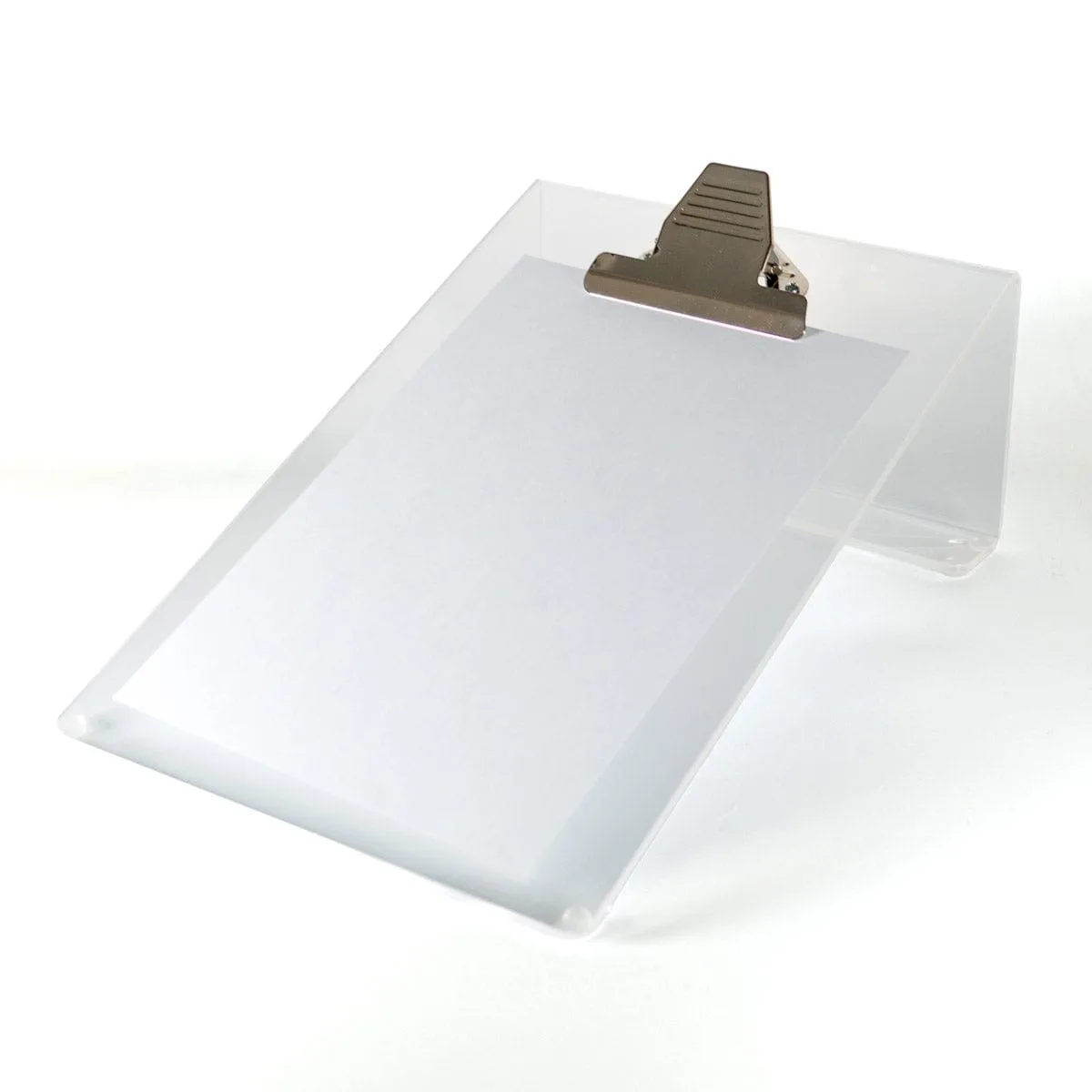
Slant Writing Boards
Who Should Use a Slant Board?
Best for
- Children who are developing handwriting skills and need posture support
- Students who struggle with visual tracking or often complain of neck and shoulder fatigue while writing
Not for
- Adults or children who primarily use computers or tablets for writing tasks
- Those who prefer writing on a completely flat surface and do not experience discomfort