Quick answer
For most small cafes with steady but modest volume, the Iberital 2 Group White is the more practical choice because two groups let you pull shots and steam simultaneously without bottlenecking. Choose the Slayer Steam Single 1 Group only if you prioritize premium build, precise temperature control, and a compact footprint over parallel capacity.
Capacity and workflow: two groups vs one
The core difference is how many drinks you can produce at once. A 2-group machine like the Iberital lets two baristas work side by side or one barista pull two shots while steaming. A single-group machine like the Slayer Steam Single concentrates everything on one group, so during a rush you may need to sequence tasks more carefully.
If your cafe regularly serves more than a few customers at a time, the second group on the Iberital reduces waiting and makes training easier because each barista has their own station. For very low-volume or highly controlled service, the single group can be sufficient and saves counter space.
Control and build: PID vs premium design
The Iberital 2 Group White uses a PID-controlled steam boiler and heat exchanger, which gives stable temperature for consistent espresso across back-to-back shots. It also offers programmable dose buttons and easy front-panel access for maintenance, making it a workhorse for cafes that need reliability and simple operation.
The Slayer Steam Single 1 Group features an anodised aluminium body with black wings and is positioned as a compact premium machine for boutique cafes and specialty bars. Its design and temperature control appeal to shops where presentation and precision are part of the experience. However, the catalog does not list group count or boiler type beyond single group, so verify any additional specifications with the store before purchase.
Footprint, price, and expansion
The Slayer Steam Single is a 1-group machine, so it occupies less counter width than a 2-group Iberital. That matters in tight spaces or mobile setups. The Iberital 2 Group White is larger and heavier, but its two groups provide headroom for growth without upgrading later.
At the catalog prices shown, the Iberital is significantly less expensive than the Slayer, which leaves budget for a grinder or training. The Slayer's higher price reflects its premium materials and brand positioning. Neither machine includes a grinder, so factor that into your total setup cost.
Key trade-offs to weigh
- Throughput vs simplicity: The Iberital's two groups let you pull shots and steam simultaneously, reducing queues. The Slayer's single group forces sequential tasks, which is fine for low volume but can slow service at peak. Estimate your busiest hour's drink count; if it exceeds what one group can handle, choose the Iberital.
- Temperature stability vs premium build: The Iberital uses PID control for stable brewing, while the Slayer emphasizes premium materials and design. Both aim for consistency, but the Iberital's programmable doses simplify training. If staff turnover is high, programmable doses on the Iberital reduce training time.
- Upfront cost vs long-term flexibility: The Iberital costs less and offers room to grow with two groups. The Slayer costs more but occupies less space and makes a design statement. If space is tight and volume is low, the Slayer's footprint may justify its price; otherwise the Iberital offers more capacity per dollar.
Product facts
-
Iberital 2 Group White - New: PID-controlled steam boiler with heat exchanger and programmable dose buttons. Stable temperature and repeatable doses help maintain consistency during busy periods without constant adjustment.
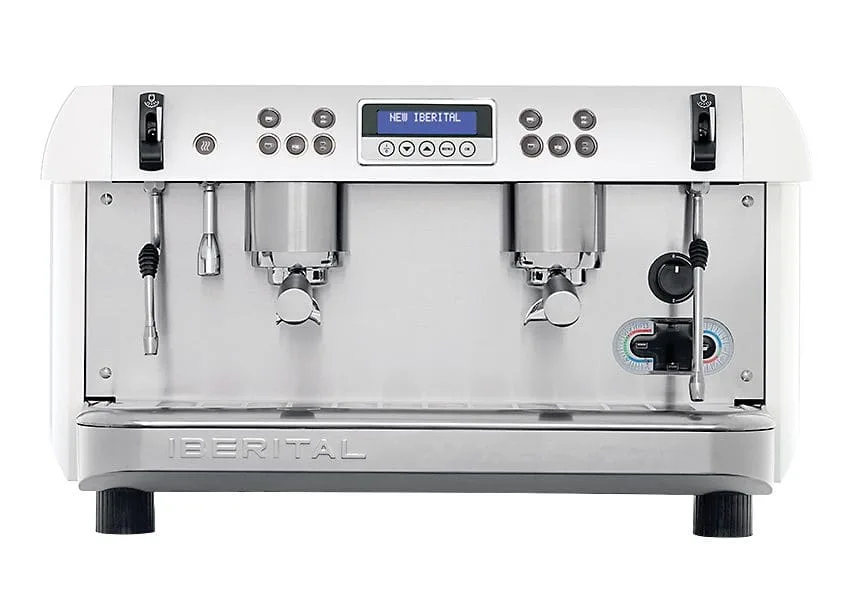
Iberital 2 Group White - New
-
Slayer Steam Single 1 Group Black & Aluminium - New: Compact 1-group design with anodised aluminium body and black wings. Saves counter space and suits boutique settings where the machine is visible to customers.
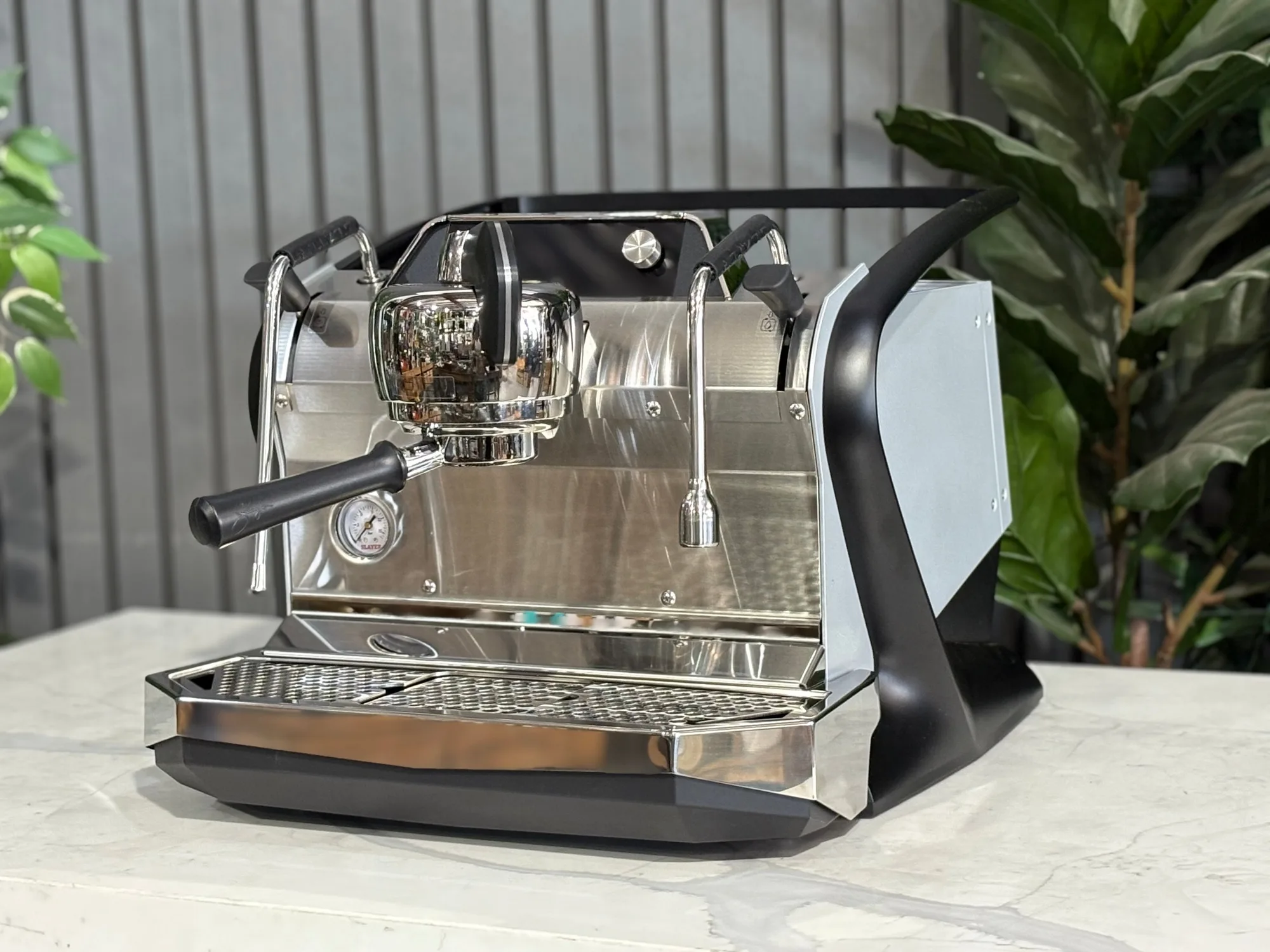
Slayer Steam Single 1 Group Black & Aluminium - New
Which machine fits your cafe?
Best for
- Small cafes with moderate to high volume needing parallel workflow
- Businesses that want programmable doses and easy maintenance access
- Operators with enough counter space for a 2-group machine
Not for
- Very tight spaces where a 2-group machine won't fit
- Cafes prioritizing premium aesthetics over capacity
- Low-volume setups where a single group is sufficient