Quick answer
For newborns who startle themselves awake, a swaddle is the right choice. Once your baby shows signs of rolling, switch to a sleep sack (wearable blanket) for safety. Pajamas alone work for warmer rooms or as a base layer under either option. Match the choice to your baby's stage, not just the season.
What each option actually does
A swaddle wraps the arms and torso to limit the startle reflex that wakes many newborns. It is not safe once a baby can roll, because they may end up face-down without free arms to push up. A sleep sack or wearable blanket replaces loose blankets: it keeps arms free and lets legs move, so it stays safe through rolling and standing. Pajamas are everyday clothing, not a sleep system on their own. They add a layer of warmth and coverage, but they do not restrain or replace a blanket.
How to choose by stage and room temperature
Under 8 weeks, most babies settle best in a swaddle. Use a lightweight swaddle in warm rooms and a heavier one in cool rooms, and always place baby on their back. From the first signs of rolling (often 3–4 months), stop swaddling and move to a sleep sack. A long-sleeve sleep sack adds warmth for winter; a sleeveless or lightweight sack suits summer. Pajamas can be worn underneath a sleep sack for extra insulation, or alone in rooms above about 75°F (24°C).
The swaddle-to-sleep-sack transition
Going cold turkey from swaddle to sleep sack can disrupt sleep for a few nights. A common approach is to swaddle with one arm out for a few nights, then both arms out, then switch to a sleep sack. Choose a sleep sack with a similar warmth level to the swaddle you were using, so your baby does not get too hot or too cold. Keep the room between 68–72°F (20–22°C) and adjust layers from there.
Trade-offs at a glance
- Swaddle: Best for newborns who startle awake. Limits arm movement, which can soothe but also frustrate babies who want to self-soothe. Stop as soon as your baby shows signs of rolling.
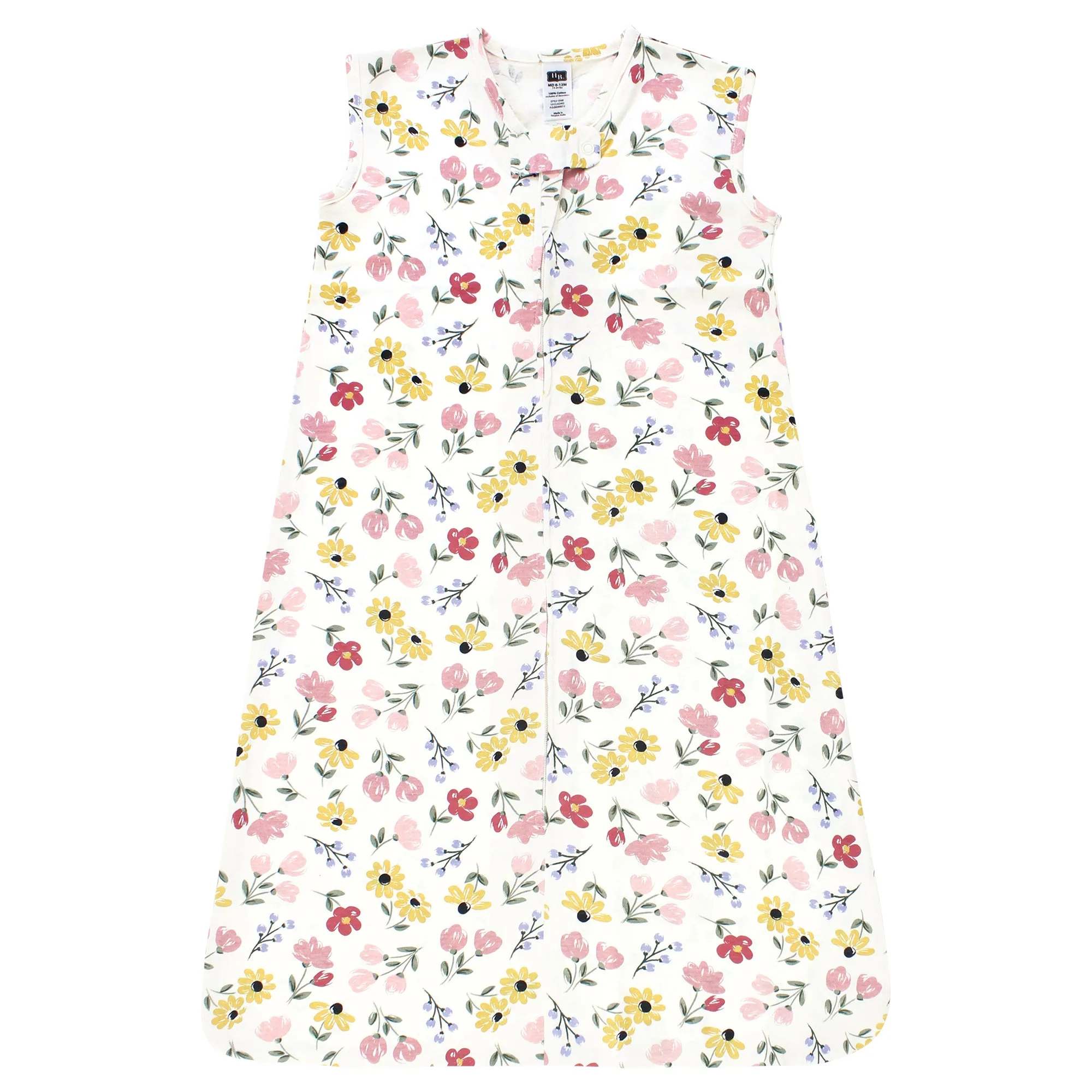
- Sleep sack (wearable blanket): Safe for rolling and standing. Keeps arms free and allows leg movement, but does not restrain the startle reflex. Choose a warmth level that matches your room temperature.
- Pajamas: Not a standalone sleep solution for newborns. Good as a base layer under a sleep sack or alone in warm rooms. Fleece pajamas plus a sleep sack can overheat a baby in a warm room.
Product facts to compare
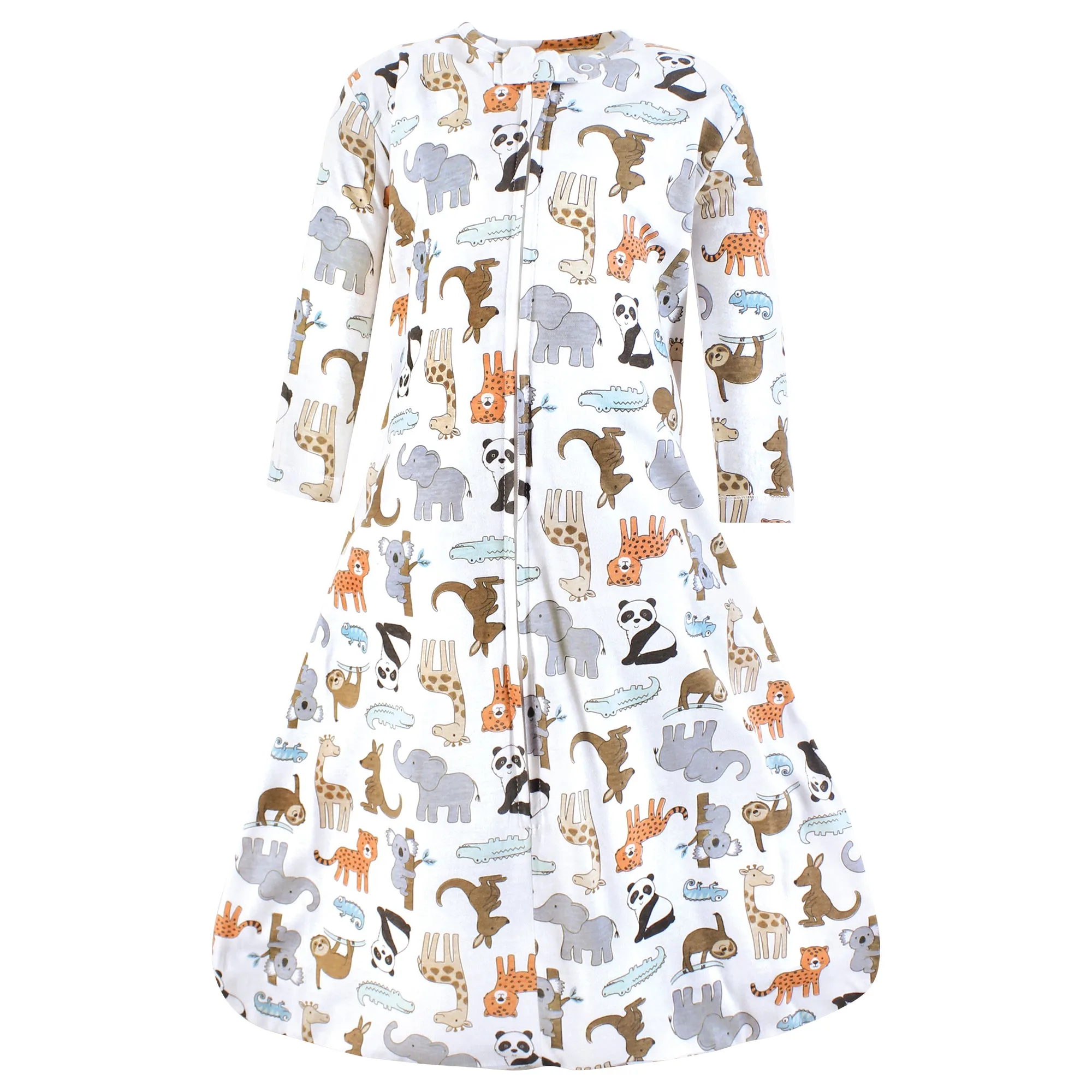
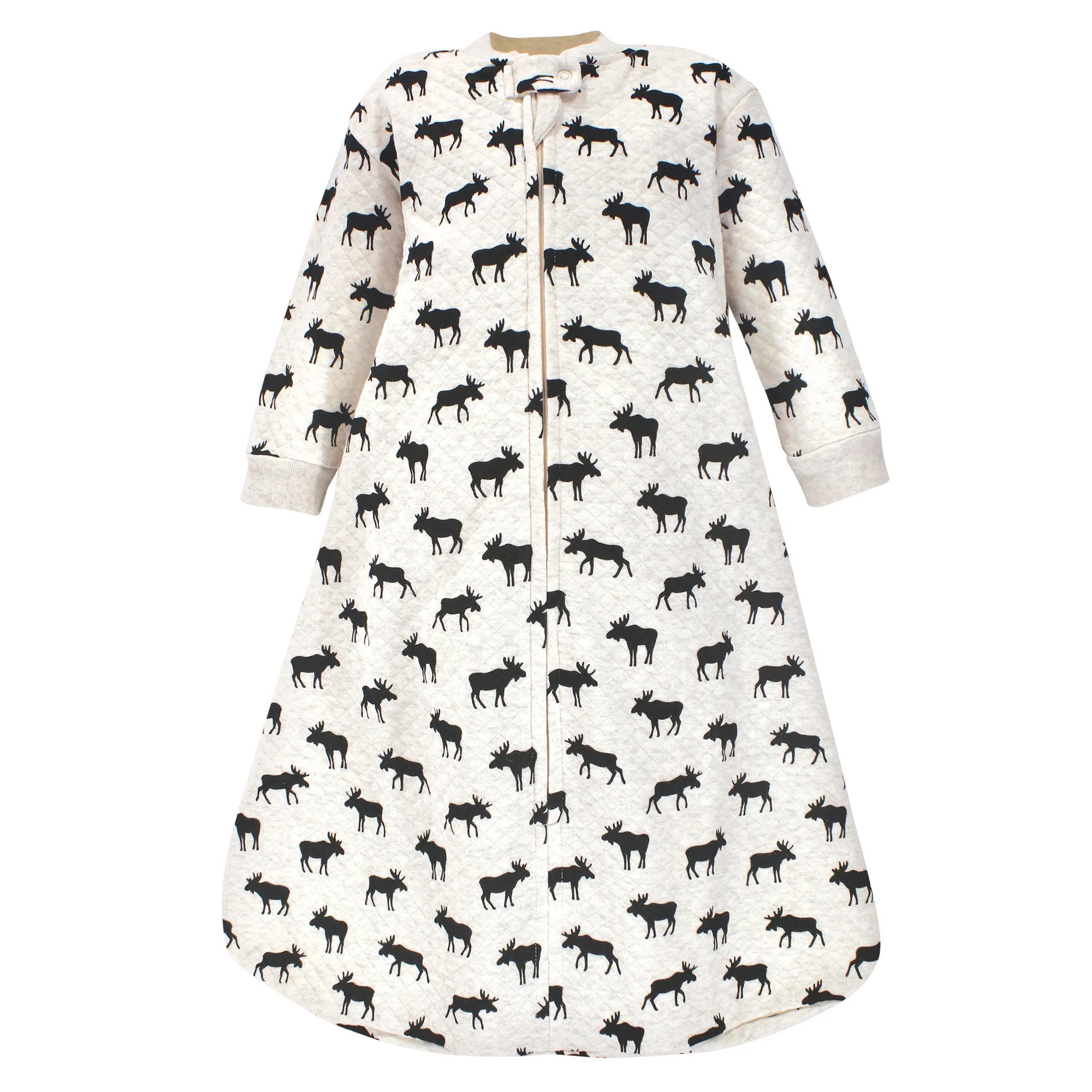
- Hudson Baby Premium Quilted Long Sleeve Sleeping Bag and Wearable Blanket, Moose Bear: Premium quilted long-sleeve wearable blanket in a Forest Friends print; machine washable. Long sleeves add warmth for cooler rooms, and the quilted fabric gives a cozy feel without loose blankets. Machine washable is practical for frequent spit-ups.
- Hudson Baby Swaddle Blanket and Cap or Headband, Forest√Ǭâ€: Swaddle blanket and cap or headband set in a pine hue; soft fabric for keeping baby snug. A dedicated swaddle set gives you the wrap you need for the newborn stage, plus a matching cap or headband for outings or photos.
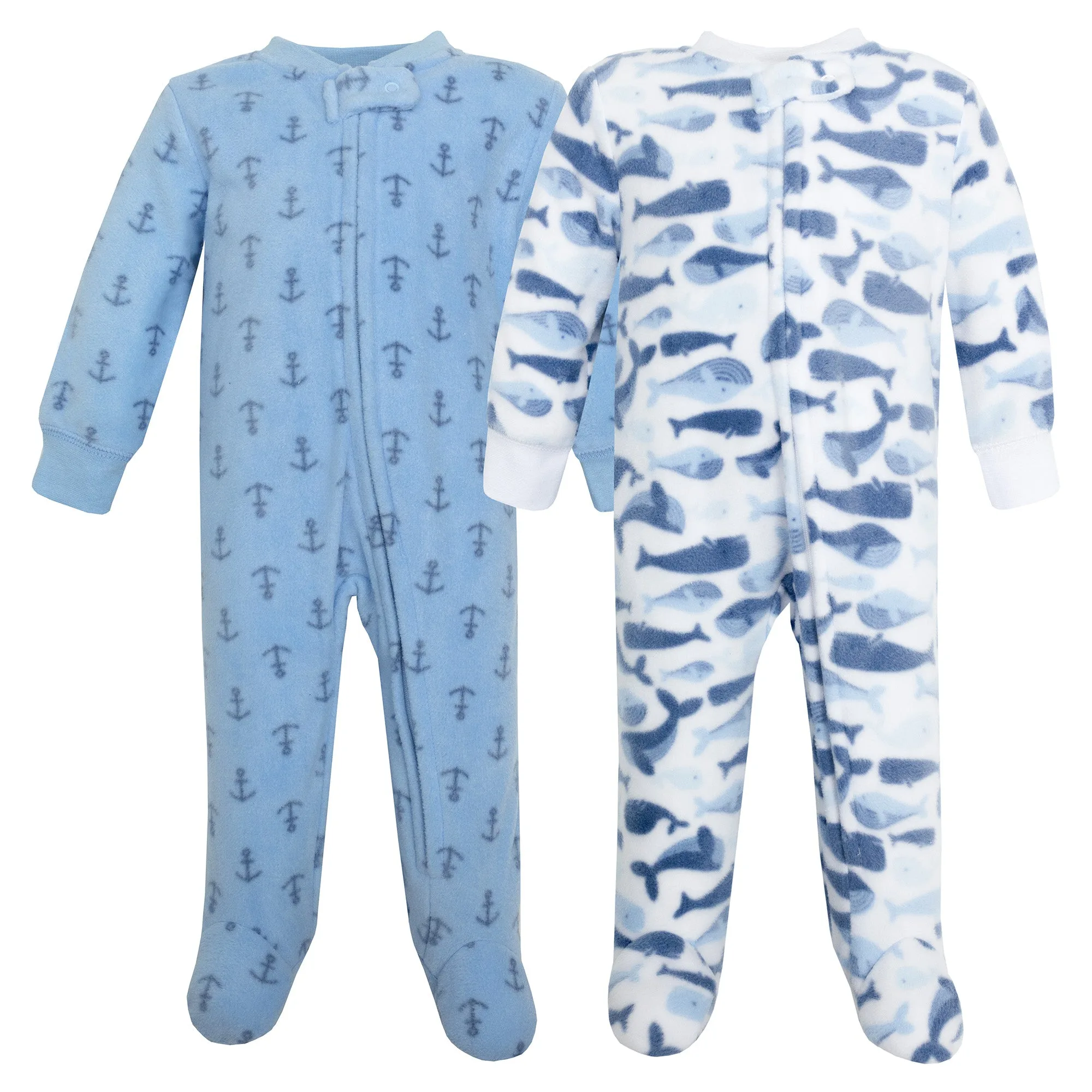
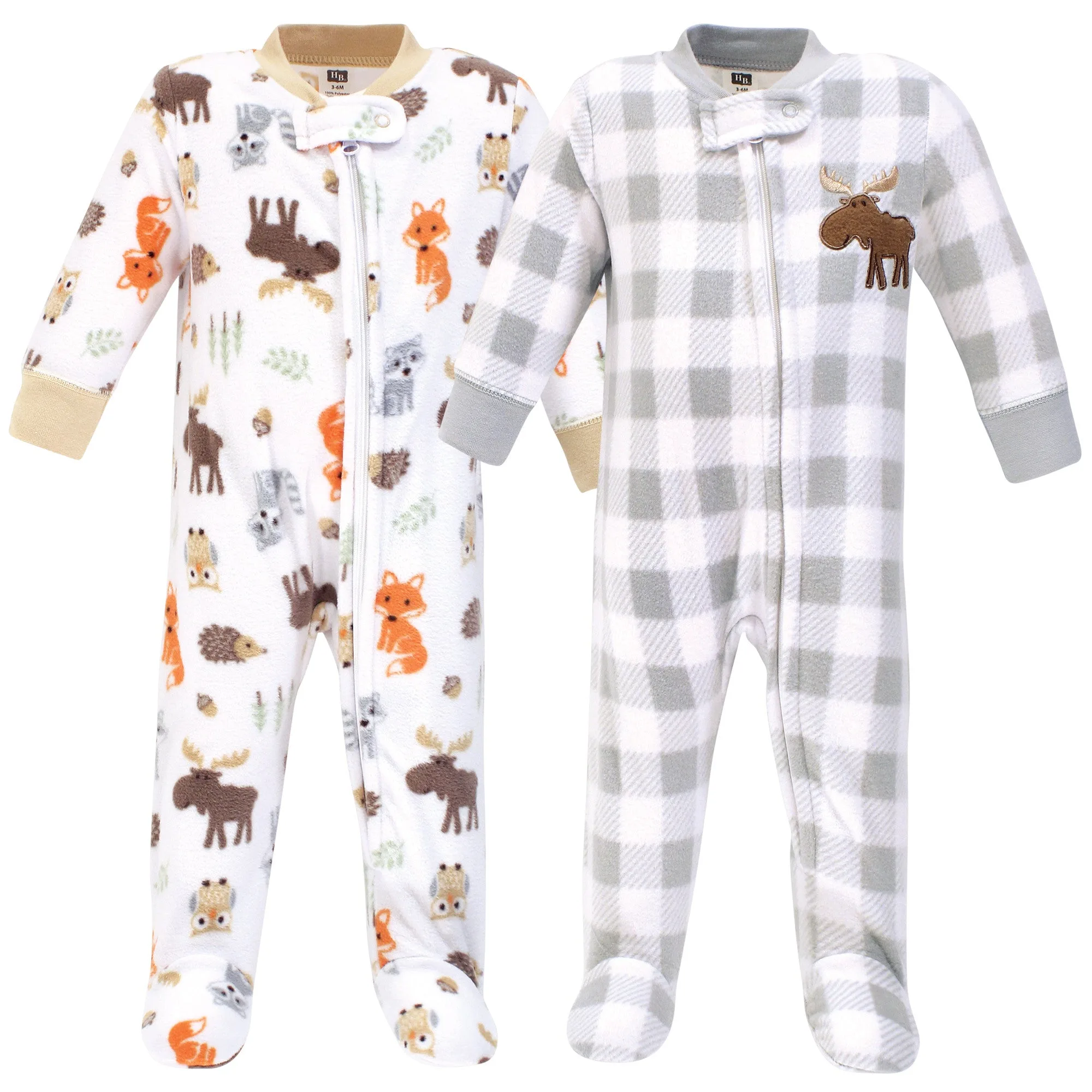
- Hudson Baby Fleece Sleep and Play, Gray Bear: Fleece sleep and play with easy-zip closure and bear theme. A zip sleeper makes diaper changes faster at night. Fleece adds warmth, so it works well as a base layer under a sleep sack in winter.
- Hudson Baby Cotton Poly Flannel Receiving Blankets Bundle 7-Pack, Brave Lion, One Size: 7-pack of cotton flannel receiving blankets in a lion design; machine washable. Receiving blankets are useful for swaddling, burping, and tummy time. Having seven means you are not doing laundry every day.
Which should you buy?
Best for
- Newborns who startle themselves awake and have not started rolling
- Parents who want a safe alternative to loose blankets for babies who roll
- Caregivers looking for a base layer under a sleep sack in cooler rooms
Not for
- Babies who can roll — they should not be swaddled
- Parents who want a single piece to cover both swaddling and rolling stages
- Warm rooms where a fleece sleeper alone would be too hot