Thickness is not a shortcut for absorbency
A common assumption says a thicker cloth pad must hold more and that a slim pad is only for spotting. Thickness is one visible clue, but it doesn't tell you how a pad is built. Fabric, layering and the leak-proof backing all shape how a pad performs, and none of those are measured by how puffy it looks in your hand.
The Imse Vimse Regular Slim 3-pack is a useful case to test these claims against. Its supplied record describes a slim pad with a real construction behind it, and it also leaves some questions open. Reading both sides is the honest way to choose.
Three slim-pad myths, checked against the record
- Myth: slim pads have no leak protection: The supplied record says the Imse Vimse pads are reinforced with a thin layer of polyurethane laminated polyester to make them leak proof. That backing is a construction choice, not a thickness feature, so a slim profile does not rule out a leak-proof layer.
- Myth: thin means flimsy fabric: The pads are described as 100% organic cotton in jersey, which the record says has more flexibility than regular cotton. Flexibility is a fabric property, not a sign that the pad is underbuilt.
- Myth: slim pads are only for light days: The supplied record does not state an absorbency level or capacity for this pad. That means you cannot confirm a light-day-only limit from the evidence, and you also cannot confirm a heavy-flow rating. The honest answer is that the record leaves absorbency unstated.
What the Imse Vimse Slim 3-pack actually documents
-
Imse Vimse REGULAR Slim 3-pack Pink Halo: The pads are made of 100% organic cotton in jersey, which the record says has more flexibility than regular cotton. This supports the comfort side of the slim-pad case without claiming an absorbency level.
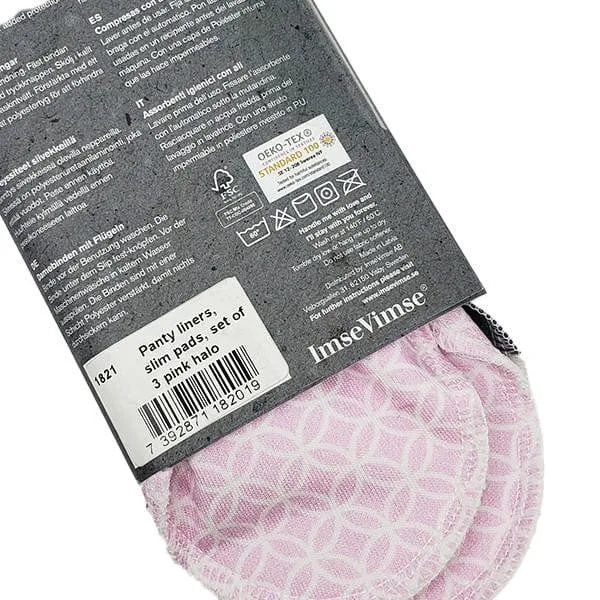
Imse Vimse REGULAR Slim 3-pack Pink Halo
-
Imse Vimse REGULAR Slim 3-pack Pink Halo: The pads are reinforced with a thin layer of polyurethane laminated polyester to make them leak proof. It shows that a slim pad can still include a leak-proof layer, which undercuts the idea that thin equals unprotected.
-
Imse Vimse REGULAR Slim 3-pack Pink Halo: The package contains 3 REGULAR pads in Pink Halo Jersey. A three-pad pack lets you rotate and wash between uses, which matters more for daily wear than raw thickness.
Where the slim-pad comfort argument holds up
If your main complaint with cloth pads is bulk, a slim profile is a legitimate reason to try one. The jersey cotton flexibility described in the record points to a pad that moves with you rather than sitting stiffly, and the button-and-wing attachment is described as securing the pad under your panties.
Comfort is personal, though. The record does not describe how the pad feels on heavy-flow days, how it performs overnight, or how it compares in absorbency to a thicker pad. Those are real decision gaps, not marketing details to skip.
Slim vs thick: what you can and cannot compare from this listing
The supplied evidence covers only the Imse Vimse Regular Slim 3-pack. It does not include a thick Imse Vimse pad record, so any head-to-head absorbency number would be invented. Use this table as a guide to what the listing supports.
- Leak-proof layer: Confirmed for this slim pad: a thin polyurethane laminated polyester reinforcement described as leak proof.
- Fabric feel: Confirmed: 100% organic cotton jersey with more flexibility than regular cotton.
- Absorbency level: Not stated in the supplied record. Do not assume light, moderate or heavy from thickness alone.
- Fit and length: The record calls the pads generously sized, but the supplied evidence does not give a length measurement to compare against other pads.
How to test the myths for yourself
- Start with a three-pad pack: The Imse Vimse Regular Slim 3-pack gives you enough pads to rotate through a few days rather than judging from a single wear.
- Attach with the wing buttons: The record says the two buttons on the wings attach under your panties to secure the liner in place. Check that the placement feels stable before you rely on it.
- Track what you actually notice: Note comfort, movement and whether the pad stays put. Do not use thickness as a stand-in for absorbency, since the record does not supply an absorbency rating.
- Ask before relying on it for heavy days: Because the supplied record does not state capacity, contact the seller if you need a confirmed absorbency level for heavy flow or overnight use.
The honest bottom line on slim pad claims
Slim does not automatically mean less protective, and thick does not automatically mean more absorbent. The Imse Vimse Regular Slim 3-pack shows that a slim pad can combine flexible organic cotton jersey with a leak-proof backing. What the record does not show is an absorbency number, a length measurement or a direct comparison with a thicker pad.
Use the listing for what it confirms: fabric, leak-proof construction, a three-pad pack and button attachment. Treat absorbency and fit comparisons as open questions until the seller or the packaging supplies them.