Quick Answer
For a slide slipper, choose a size that leaves about a thumb’s width of space between your longest toe and the front edge, and allows your heel to sit slightly off the back when you walk. When in doubt, size up for comfort, especially if you plan to wear them with socks.
Why Slipper Fit Matters More Than You Think
A slipper that’s too tight can cause blisters and foot fatigue, while one that’s too loose can make you trip or slide around inside the shoe. Because slippers are often worn without socks, the fit can feel different from your usual shoe size.
Most slipper brands use standard shoe sizing, but the shape and materials affect how they feel. A loafer-style slipper with a closed back, for example, fits differently than an open slide. Always check the brand’s size chart and read reviews about whether the style runs true to size.
How to Measure Your Foot at Home
To find your slipper size, trace your foot on a piece of paper while standing (your foot spreads when bearing weight). Measure the length from your heel to your longest toe, and the width at the widest part. Compare these measurements to the brand’s size chart.
If you’re between sizes, consider the slipper’s material. Leather and satin may stretch slightly with wear, while quilted or padded insoles can feel snugger over time as they compress. For a slide style, a little extra room is usually better than a tight fit.
Trade-Offs: Snug vs. Roomy
A snug fit keeps the slipper securely on your foot and is great for walking around the house. However, if your feet swell during the day or you like to wear socks, a snug fit can become uncomfortable quickly.
A roomier fit is more forgiving and works well for lounging, but it increases the risk of the slipper slipping off as you walk. For open-back slides, a looser fit is more common, but you should still be able to grip the slipper with your toes to keep it on.
Decision Rules for Choosing Your Slipper Size
- Measure your foot: Trace your foot on paper while standing, measure the length from heel to longest toe, and compare to the brand’s size chart. Do this at the end of the day when your feet are slightly swollen.
- Check the style: Closed-back slippers (like loafers) should fit snugly without pinching; open-back slides should have a little more room to allow for natural foot movement. For slides, you should be able to wiggle your toes freely.
- Consider socks: If you plan to wear socks, size up half a size to avoid a cramped fit. If you’re between sizes and plan to wear socks, choose the larger size.
- Think about materials: Quilted or padded insoles may compress over time, so a snug fit at first may become more comfortable. Leather or satin may stretch slightly. When in doubt, choose the size that feels comfortable now, not the one you hope will stretch.
- Use the thumb test: Slide your thumb between your heel and the back of the slipper. If it fits snugly, the size is right. If there’s too much room, consider sizing down. For open-back styles, the heel may naturally sit slightly off the back—this is normal.
A Slipper Option to Consider
-
Lady Daphne Slipper - Blush - Final Sale: The Lady Daphne Slipper features a loafer-style cut with a quilted satin insole and lining, and a sequin covering. The closed-back loafer style means you can wear it with or without socks, and the quilted insole adds cushioning—so aim for a fit that’s snug but not tight, with a little room at the toe.
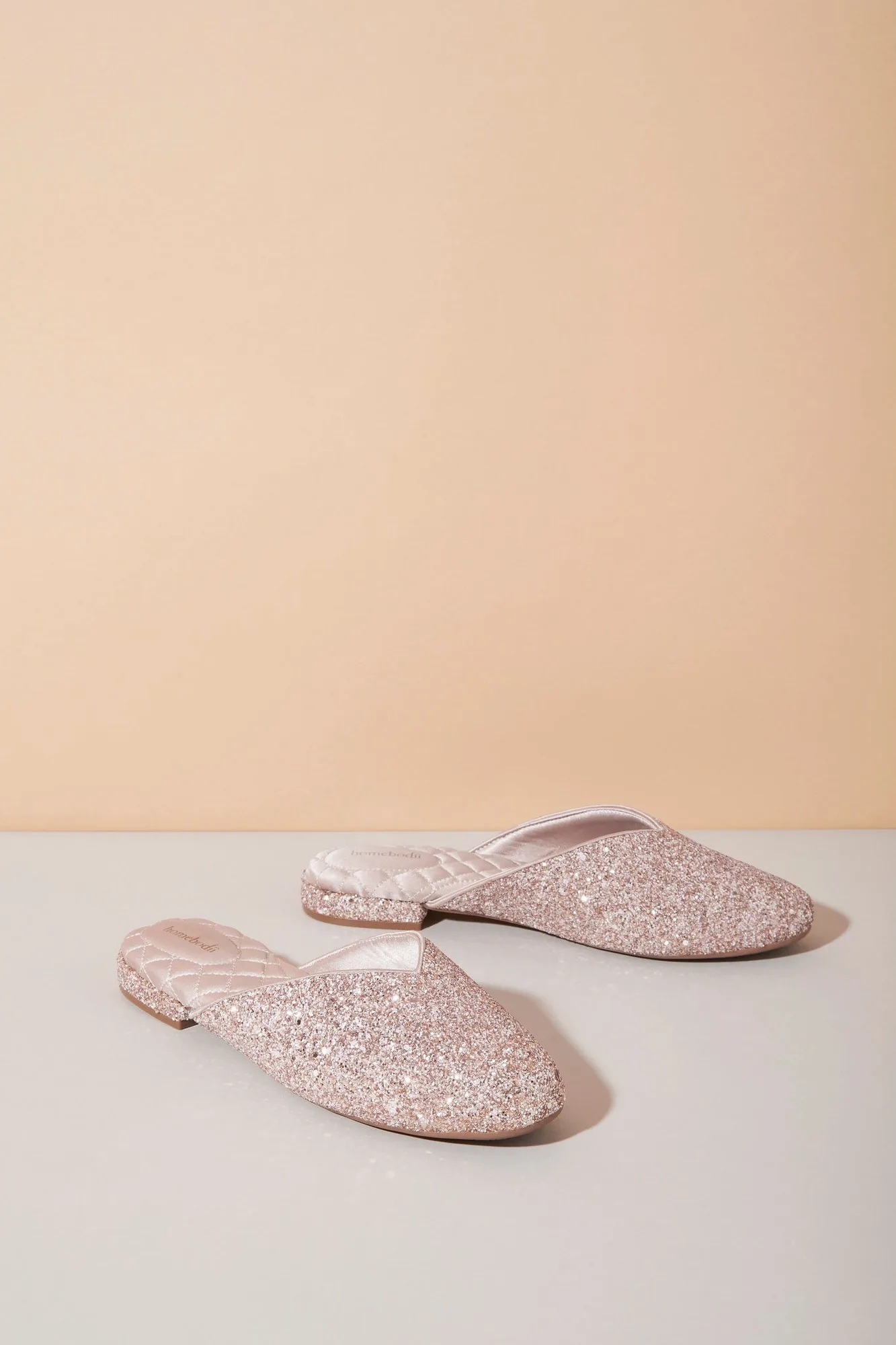
Lady Daphne Slipper - Blush - Final Sale
Who Should Choose a Snug Fit vs. a Roomier Fit
Best For
- People who walk a lot around the house and want the slipper to stay securely on their foot
- Those with narrow feet who prefer a more precise fit
Not For
- People with wide feet or high arches who need extra room, or those who plan to wear thick socks