Quick answer
Make the Sloth Kin the anchor of a short, repeatable morning sequence: wake up, check in with Sloth, move through two or three concrete getting-ready steps, and say goodbye the same way every day. The consistency, not the stuffed animal itself, is what helps anxious kids feel secure.
Why a slow morning is often an anxious morning
When a child dawdles before school, the behavior can look like defiance but often comes from uncertainty about the day ahead. A comfort kin gives that uncertainty a place to land: the child can hold, talk to, or simply see the Sloth Kin while the adult handles the clock. The Sloth Kin's catalog focus on routines, relaxation, and self-care fits this job because it frames the morning as a series of small, predictable choices rather than a countdown.
Keep the routine short enough to survive a bad night's sleep. Three to five steps is usually plenty; a ten-step chart becomes another thing to fail at. If your child is very young or very anxious, start with just two steps and add more only when the first two feel automatic.
What the Sloth Kin can and cannot do
The Sloth Kin is a routine helper, not a timer or a behavioral fix. It will not make a child hurry, and it should not be used as a threat or a reward you withdraw. Its value comes from being a stable, familiar object that signals what happens next. If mornings are consistently chaotic because of a schedule problem, such as a too-early bus or a rushed breakfast, fix the logistics first; the kin works best when the routine itself is realistic.
Also consider whether your child prefers a smaller companion for the car or backpack. The Sloth Kin is a full-size comfort object, so some families keep it at home as the morning anchor and use a mini kin for the actual school transition. That split can work well, but decide it in advance so your child is not surprised at the door.
A step-by-step slow-morning routine with the Sloth Kin
- Set up the night before: Place the Sloth Kin where your child will see it first thing, such as on the breakfast table or by the bedroom door. Lay out clothes and pack the bag at the same time. Common mistake: introducing the kin in the middle of a rushed morning, which makes it feel like one more demand. If your child is anxious, let them choose the spot for the Sloth Kin the night before.
- Start with a two-minute check-in: When your child wakes, hand them the Sloth Kin and ask one simple question: 'What does Sloth need this morning?' Let them answer with a feeling, a word, or a shrug. This is not a therapy session; it is a signal that the morning has started and their state has been noticed. Common mistake: turning the check-in into a lecture about hurrying. Keep the check-in under two minutes, even if the answer is 'nothing.'
- Walk through two or three getting-ready steps in the same order: Choose a short sequence, such as bathroom, clothes, breakfast, and say each step aloud while your child holds or watches the Sloth Kin. Use the kin as a visual anchor: 'Sloth is waiting by the shoes.' Common mistake: adding steps mid-morning or changing the order on busy days, which undermines the predictability you are building. If a step is skipped, name it and move on rather than restarting the whole routine.
- Use a goodbye ritual at the door: End the same way every day: a specific hug, a phrase, and a place for the Sloth Kin to wait. For example, the kin sits on a hallway shelf and 'keeps an eye on the afternoon.' Common mistake: sneaking out to avoid a meltdown, which can increase anxiety over time. Decide in advance whether the Sloth Kin goes to school or stays home, and stick to that rule for at least two weeks.
- Review after school, not during the rush: Ask one question later in the day: 'What part of the morning felt okay?' Note what worked and adjust only one thing for the next day. Common mistake: debriefing in the car when everyone is already tired and hungry. Change one variable at a time, and give each change a full week before judging it.
Product facts
-
Sloth Kin: The Sloth Kin is designed to promote routines, relaxation, and self-care. Those three themes map directly onto a morning sequence: a predictable order, a calm body, and small self-care tasks like dressing and eating.
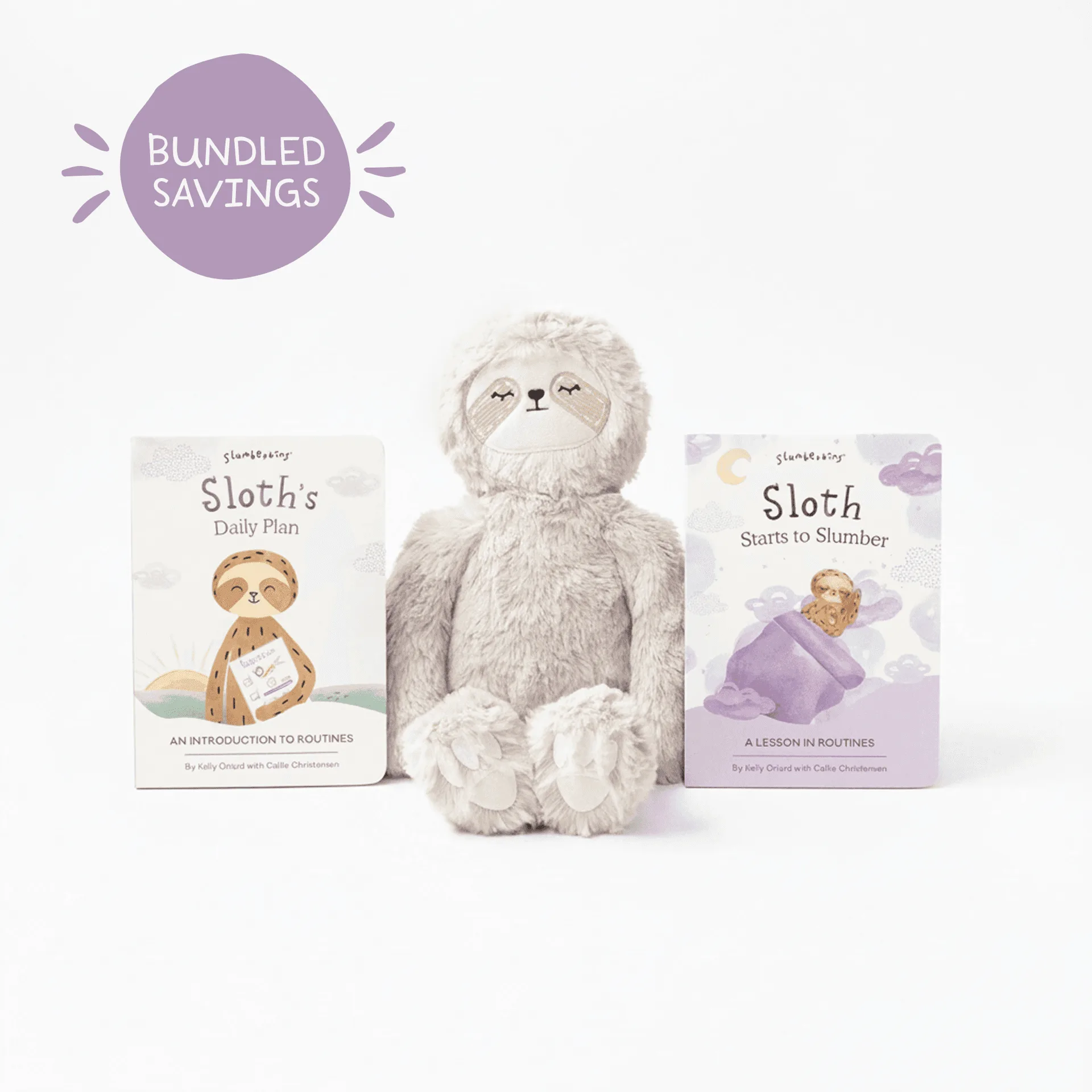
Sloth Kin